
RSS

Category Archives: Childhood

And Pre-K For All

blackboard

“Pre-K for all!” As rallying cries go it’s a bit sweet and conjures up some pretty adorable images: Tiny people with finger painted signs toddling their way to Capitol Hill. It’s an expensive proposition but one that is difficult to argue. “It’s for the children!” “Children are our future!” You know the rest. But beyond the sentimentality and cynicism is the truth. The world has changed tremendously and we need to catch the hell up.

It is no longer the norm that small children spend their days with a parent, and it hasn’t been for quite some time. Childcare can be expensive and uneven in quality. Some toddlers are deposited in front of a television set for 8-10 hours and some are learning Dvorak on miniature violins. Of course these childcare discrepancies always existed. But there was a time when 5 year olds from every background arrived at kindergarten to start from zero together. Kindergarten (often held for 1/2 days) was for cutting, pasting, coloring, letter learning and learning to stand in line and raise one’s hand. There was story time and maybe some music and snack. Today’s Kindergarten is a bit more serious and most likely an all-day affair. The academics start much earlier than years past.

The day is spent learning letters, numbers, science, social studies, and yes, standing in line and hand raising. What was once an entire year consisting of an easing away from the home and into the world is now much more like the real thing. It’s understandable, there’s an awful lot to learn after all. In the past Kindergarten might have been the first time little people spent their day with other little people. (Socialization is serious business.) It makes a great deal of sense to beef up this precious year of public education. We know that early education makes an impact on life long learning (the good people of Sesame Street ran with that ball 40 years ago.) We also know that children come from vastly different backgrounds and opportunities. Those who can afford it or are fortunate to live in states with it, are already sending their tykes to pre-Kindergarten. Public education, despite its ideals, is not equal. Some schools are far superior to others. Some parents are far savvier than others. Any moves we can make to democratize education and prepare children for life long learning should be supported and applauded. I join those little people carrying the finger painted placards in setting down my juice box, and putting my hands together for universal pre-K.

 
Leave a comment

Posted by on February 16, 2013 in Childhood, Education


Tags: , , , , , , , , , ,

A Chance For Happy Days

arnolds

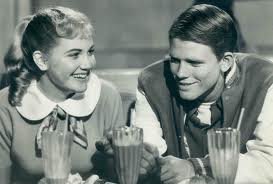
Adolescence is not fun or pretty. There is nothing “How lovely to be a woman” or “I am 17 going on 18” about it. It’s a wretched maelstrom of physical and emotional change. Everything feels chaotic and unending and there’s not enough life experience to offer a glimmer of hope. This is why teen suicide is so very tragic. No one would deny a teen’s real and crushing psychic pain. But we would probably challenge them in their sense of permanency. ‘Wait’ we collectively say; ‘it gets better.’ And we mean it, and it’s likely to be true. For some time the news of teen suicides has be packaged with pleas for adolescent mental health care. Articles and news desk pundits tell us how to identify a child in crisis and where to get help. But today’s news that 55% of suicidal teenagers had received mental health care is jarring. Yes, there are still 45% of suicidal teenagers not receiving care. But the majority of teens in crisis are getting help. Therapy is tricky business of course. Finding the right therapist for a patient can be challenging. Finding gifted and accessible adolescent specialists can be tough. Prescribing just the right medication to someone who isn’t growing and changing daily is difficult. Monitoring the taking of medication is…well if you’ve ever met (or been) a teen, you know how crafty they can be.

Whether we think that ending one’s life is a personal choice is irrelevant when it comes to adolescents. We may believe that grown people who have exhausted themselves and every option to alleviate their physical and/or psychic pain are entitled to just stop, but that’s not applicable to discussions of children. Teenagers are by definition closer to children on the maturity spectrum. They simply don’t have the life experience or fully developed brain to make such a decision. There are teens who have serious physical and/or mental health issues. There are teens who’ve witnessed or been victims of horrific acts. If they were middle-aged people still suffering intensely this would be a different conversation. But they are teenagers. They are not allowed to drink, vote, live alone or rent a car. They are simply incapable of making a rational terminal decision.

So what can be done? We know that boys are more ‘successful’ at attempts than girls. We also know they tend to be more violent overall. Unfortunately it does not go without saying that there should never be weapons in a home that includes children. There also should be no access (no guns or other weapons in cars, workplace, sheds, trailers, etc.) No weapons ever. There needs to be talking lots of talking. Most teens are sullen and uncommunicative at times, but adults should not be. Your teen may be bigger and stronger than you, but you are still the adult. If your child is more sullen than not, and/or has lost interest in activities (did he/she quit a team or a friend?) tell the school’s administration and teachers. The more people watching out the better. If the child is utterly noncompliant (won’t come out of room, won’t go to school, etc.) it’s time to involve more people and perhaps inpatient care.

It’s hard to think of an adult-ish appearing person with a full vocabulary as a child. But they are. For some purposes a teenager is more akin to a newborn than an adult. They are on the brink of learning an entirely new way of engaging with the world. They are often frightened of leaving the security of the home and entering the world on their own. We, (i.e., all adults in a teens life) must think back to how we scrutinized every movement and development in their newborn lives. We must revert back to the parenting that intervenes when something seems off. It’s frightening to challenge anyone let alone your child who makes your heart ache. It’s scary to exert authority over someone who might be larger then yourself. It’s terrifying to think that you might say the wrong thing; the thing that will actually drive him/her over the edge or out of your reach. Silence never saved anyone.

 
Leave a comment

Posted by on January 9, 2013 in Childhood, Well-Being


Tags: , , , , , , ,

It’s All About We

me

Individual freedom is at an all-time high in our country. It’s actually been on the rise for quite sometime. You may be old enough to recall the ‘Me’ generation. Elders were alarmed to see the younger folk intone that ‘greed was good.’ There was hand wringing and prophesying that our nation was going to hell in a hand basket. Many of the beleaguered moaners had been genuine placard carrying protesters and sitter inners. “What means this ‘in it for me’?” the asked. How can those so young be so cynical they wondered? But in many ways this new generation was just a product of social evolution. Their values seemed alien on the surface, but at their core they were really quite familiar.

The individual and the declaration of his/her pursuit of happiness is as old as, well, as our nation. It’s what constitutes happiness that has changed over time. Our individual rights, many of them the result of hard won fights by protesters and sitter inners, have brought a new reality. One need only take a quick look around to see how we have changed our orientation to the larger world. It is not one single thing, but the mosaic of; S.U.V.s, double-wide strollers, texting while walking, driving or in religious service, grooming or performing personal hygiene in restaurants, standing in the doorway of the subway car, letting doors slam on faces and behinds, that lead us to consider that the individual now reigns supreme.

There is much to say for individualism of course. It is a sign of creativity and a self-actualized life to stay true to oneself. But there is tricky terrain to tread when we consistently choose our individual rights over the collective good. Legally we have the right to arm our entire family and ourselves as if the British are coming. We also have the legal right to shelter our children from public services and mental health care. Do either of these individual rights benefit society in any way?

Legal rights are designed for the betterment of society. They reflect our collective ideals and values. Is enacting law a panacea? No, but it’s a start. It’s true that seat belt laws don’t make good drivers, but they might just protect you from the bad ones. What car laws do (and we have many of them) is say; “No, your individual rights cannot infringe upon the rights of others.” All reasonable people can agree that in fact that is where we draw the line.

No, you may not own any and every kind of gun you desire because doing so infringes upon the rights of others. No, you may not deny your child care and support because doing so infringes upon (his/her and the) rights of others. We must collectively provide such care and support with a fervor. We must remove the stigmas and euphemisms surrounding mental illness. We must agree that the only shame in any illness is that of a culture that doesn’t care. If we care, we must find a way to move on from the ‘Me’ and towards the ‘We.”

 
1 Comment

Posted by on December 20, 2012 in Childhood, Cultural Critique, Well-Being


Tags: , , , , , ,

The Kids Are Alright


Wailing about kids today is a wholesome and robust tradition. Contrast and comparison is also a very effective way to understand one’s own self. “Parent Orientation!; my father slowed the car down when we got to campus!” when spoken out loud might expand one’s understanding of one’s own self-reliance. About two generations now have been grumbling and pontificating about the self-absorbed populace planted and sowed after 1980. Those in the earliest crop are now parenting themselves. Many born before 1980 or raised outside of the family-friendly entertainment industry/my child is an honor student/kindergarten graduation influence, find themselves wondering what will become of all these kids when they reach adulthood and discover there is no audience? Don’t worry; it’s not gonna happen.

No one grows up and enters their elder’s world anymore. In the 21st century our industry is ideas (via technology.) We are not building cities, roads and bridges. We are not harvesting national resources and building empires. Most of our cultural institutions and landmark buildings are just that; institutions and landmarks. There are not many young men and women going into the business of their parents’. Even if the ‘business’ goes by the same name, it probably looks quite different day-to-day. If dad went into his dad’s profession of banking, the work wouldn’t have varied that much. Sure dad would now be working with or for women, and maybe there would be no smoking, but the actual work; money in, profits out, wouldn’t have changed all that much. But by the time junior comes along the business is international and technology is king. Junior and his cohorts have never heard the term “banker’s hours” and if they did would assume it refers to 24/7. There are very few paths left where one could actually follow footsteps. Each generation now machetes their way through.

Nowhere is this more evident than in media and technology. Reality show proliferation doesn’t happen by accident. Dozens of channels specializing in ‘Queen for a Day” programming is calculated. It’s calculated by the television staff whose orientation to the world renders a “Look At Me!” premise totally plausible and laudable. It’s calculated by a television staff who also knows (or projects onto) its audience; “Who doesn’t want to be the center of attention?” And social media is not the result of a whole lot of leftover parts. Slowly but surely developers discovered that there was an insatiable appetite to ‘be seen.’ Certainly social media sites such as Facebook are a wonderful tool for connecting and reconnecting with friends. But it’s also an easy way to create a familiar and familial sense of importance. Status updates are filled with information that only a (helicopter) parent could possibly find interesting. Twitter is possibly one of the greatest ‘democratizer’ of our time; allowing for personal curation and access to previously unattainable information. But it’s also a way to type incessantly (and perhaps inanely) in the pursuit of attention.

Media and marketing have become so linked as to often be indistinguishable from one another. There is nothing surprising about this evolution. It is the natural by-product of generations who would not see a value in doing anything without an audience. All entertainment media now integrates Twitter and Facebook into their production. Try to even find a television program without a hash tag prompt on the lower left corner or a promo to “Like” the show on Facebook. Much of this marketing is relatively noninvasive and at times even informative. It’s nothing to shirk or even bemoan, but it is quite telling.

There are lots of real things to worry about. We can wring our hands over K-12 curriculum or childhood obesity. We can worry about higher education accessibility for our ‘best snack providers.” But we needn’t worry about how these kids will fare once the camcorders are turned off. As long as there are iPhones (or their yet to be born offspring) and mirrors, they’ll be just fine.

 
Leave a comment

Posted by on October 29, 2012 in Childhood, Media/Marketing


Tags: , , , , , , , , ,

The Drink Dope


A lawsuit has been filed against a manufacturer of ‘energy’ drinks. The suit is the result of injury (and death) of children after consuming the caffeine-laced beverage. It is logical to assume that this will be the start of regulation. To the average non-Red Bull, Cocaine(!),Monster, 5-Hour Energy, Rock Star, consumer this would seem pretty intuitive. Caffeine is a drug; a legal drug that has evaded regulation in this country. Nicotine used to enjoy that kind of status as well. Cigarettes were available for sale (or given away for free) any and everywhere. Cigarette machines eventually had little adhesive labels declaring cigarette sales being intended for people over age 18. What teenager doesn’t tremble and back away from an adhesive label? Cigarettes haven’t (slowly) shied from the teen market because of the hazards of the drug nicotine, but of the smoke inhalation. But it still makes for a plausible template.

A beverage whose very intention is to alter the body chemistry is not appropriate for children. On a good day most of us would concur with this. But we would also agree that regulating anything is just a giant pain in the behind. The beverage industry is no doubt gearing up for a fight as we speak. They will counter with examples of unregulated sources of caffeine. Charts and graphs will be exhibited declaring chocolate milk as laden with as much of the drug as a grande macchiato. Gatorade and vitamin-laced waters will enter into the arguments. Coffee carts will form a single-file demonstration. In short, a circus will ensue.

Let us assume (for the sake of all that’s decent) that parents are not purchasing caffeine-laced drinks for their children. What would be more effective (and less hair raising) than outlawing sales to children is to outlaw marketing of drug products to children. Children aren’t buying caffeine delivery beverages because they thought of it on their own. They buy them to look cool and be like their friends who buy them to look cool and be like the advertisement. Of course they’ll never admit this. Don’t believe me? Go to a school right now and ask the guzzlers why they’re guzzling. “Gotta wake up” “Gotta test” They believe they need the effects of the beverage. Do we really want our kids believing they need drugs to get through the day?

Death and serious illness/injury from caffeine is probably rare. But this lawsuit speaks to something more universal. There is no reason in the world to train children to use drugs to improve their performance. Their bodies and minds are still developing. Soon enough they will be fully grown and can make informed decisions.

 
3 Comments

Posted by on October 23, 2012 in Childhood, Media/Marketing


Tags: , , , , , , , , , , , ,