RSS

Tag Archives: Brenda Tobias

Hot Town

Back of my neck getting burnt and gritty

When I was 6, we moved to Brooklyn on the 1st of July.  We were welcomed by the sound of illegal fireworks.  Day and night.  For a week.  That was my introduction to the very uniqueness of summers in the city.  My little suburban self knew nothing of italian ices, ice cream men, fruit men, and perhaps the most magical of all; the carnival ride man.  Actual rides (hopefully) bolted onto trucks would arrive on our block.  Real rides!  It was a step beyond awesome. 
On the more sweltering of days, a grown-up would open the hydrants for us.  The braver and older of us, would charge right into the spray.  The smaller and lighter-weight of us, played in the puddles.

We moved out of the city the following winter, but I still think of these city summer hallmarks.  They mingle with the images of people sleeping on fire escapes and sunbathing on tar roof, and the mass of humanity at Coney Island.

Yesterday I experienced a brand new (to me) summer in the city phenomenon.  It was about 87 degrees (not sweltering, but a breeze would have been nice.)  I made my way into the subway (at a location I had never frequented) and saw grown men (18-35 years) using the subway platform as a clubhouse.  Some had brought folding chairs.  Now what is still so puzzling about choosing to hang out on a subway platform, is that we were all of 2 blocks from Riverside Park.  What kind of bet do you think they lost?  Do they do this every day?  Perhaps only on weekends?  Did I mention that there wasn’t a cloud in the sky?  I’m so very puzzled.

 
Leave a comment

Posted by on August 20, 2011 in Cultural Critique


Tags: , , , ,

Table Manners

Celebrity interviews seem to always include a question about celebrity itself.  This question is answered more often than not with the wholesale disingenuous; “Well, it does get me a good table in a restaurant.”  No doubt this reply has become shorthand for; “I am hesitant to admit what we all know, which is in fact that I am worthy of special treatment.”  Okay, that’s fine.  I have no issue, per se, with self-delusion.

What does baffle me, is what in the world a “good table” is?  For me it means; clean, not directly under the air conditioning or speaker system, non-teetering and the right size for the party.  But I think it means something entirely different in this context.  Recently I watched a (current) movie in which a diva character pitched a fit about not being at a “good table.”  I’ve even had dining companions make reference to “getting a good table.”  Clearly, once again, I am socially clueless.

I am almost certain that there are few if any tables actually by the kitchen door.  (I’m thinking of the night club scenes in On The Town and certain Carol Burnett sketches.)  So what then is the criteria for a “good table” and what exactly does it have to do with the dining experience?  I suspect perhaps it has something to do with visibility?  But this is where it gets tricky.  To be seen or not to be seen, that is the question.

If you consider yourself a celebrity, is being seen a plus?  Can’t being too visible threaten one’s air of elusiveness?   Doesn’t being front and center in a venue filled with one’s lessers merely tempt intrusion and hangers on?  Or is a “good table” one in fact that allows a peaceful dinner, similar to those had by mortals?  If so, wouldn’t the party be better served in private (a la Nicky Arnstein?)

Perhaps it means nothing.  A temporary and disposable bon mot meant to fill a void.  If you look at a paper moon long enough…

 
Leave a comment

Posted by on August 20, 2011 in Cultural Critique


Tags: , , ,

The Uncle Junior Defense

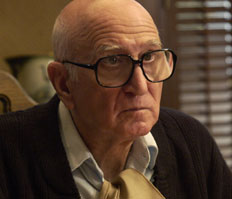
Schadenfreude aside, it’s hard not to be somewhat mesmerized by the Murdoch debacle.  Media is a religion for this family.  Manipulating the story and being the story seems to be their raison d’etre.  Just weeks before this story broke, and people “resigned” both the Murdoch family and Mrs. Murdoch III, had lavish puffy stories (with tons of ink and tons of glam photos) in posh magazines.  Much was made  of Rupert edging his son towards competency with the impending Sky television deal (think: Time Warner.)  He seemed to be pulling the strings just so, to make it appear that James was in fact a good business person.Now fast forward.  A week.  I have only watched mere seconds of the questioning, but what I have seen makes me wonder if Rupert is trying to set the stage for an Uncle June defense.  Seeming flustered when questioned  and in need of rescue, this 80 year old mogul is giving the impression of being frail.  I’m not saying a pie prank was staged, but if it had been, it certainly would make sense.If in fact, during the span of two weeks, Rupert has become terribly terribly unwell, I am sorry.  But if, as I suspect, he may be headed for the Uncle June defense, I have to ask: as a media mogul, shouldn’t he know that other people have watched the Sopranos too?

 
Leave a comment

Posted by on August 20, 2011 in Cultural Critique


Tags: , , ,

Master Class – Review

Before even discussing the Manhattan Theatre Club production of Master Class, can we take a moment to appreciate the incredible photo of Tyne Daly?  To quote Norma Desmond; they don’t make faces like that anymore.
In fact, they’ve slowed down the production of actresses like Tyne Daly.  She has what is known as presence.  She changes the electricity in a room.  She has a smile (not employed in this production) that starts in her eyes and goes down to her toesIt does not rely upon precision dental work, but on her using her entire body as her instrument.
How apt then that she should portray a fictionalized Maria Callas as written by Terrence McNally.  Master Class is a well crafted, less than riveting play about Maria Callas in her later years.  It lacks the overall power of the more recent; “artist as subject of a play,” Red.  However it has many prolonged moments which satisfy and linger.
The setting is an auditorium in which Ms. Callas is holding a master class for advanced opera students.  Her narcissistic ramblings and outbursts will remind you of your worse workplace moments.  Underneath her posturings and hurtful tongue however, are some truly golden nuggets of teaching. 
The two-act play, directed by Stephen Wadsworth, is interspersed with very gracefully set flashbacks of Ms. Callas.  Original recordings are used to great effect.  The music, live and recorded, helps to give this play some needed dimension.  Two of the three opera students are given the opportunity to really sing, and it is truly magical.  It was during those moments that I stopped “watching” and became entranced.
The flashback scenes are when things really get interesting, dramatically speaking.  This is both a product of the script and of having Ms. Daly perform monologues.  I must admit an emphasis on the latter, as the script did nothing to prevent me flashing back to Ms. Daly performing “Rose’s Turn.”  It is a testament to the actress embodying the character, that I cringed at her portrayal of Aristotle Onasis.  Tyne Daly could probably utter those vulgarities, but as Maria Callas?  It was horrifying.  In a good way.
As the premise of the play is a master class, the house lights are often up and the fourth wall is more scrim than wall.  I grew increasingly tense each time Ms. Daly lobbed (what I considered to be rhetorical) questions at the eager to participate audience.  I think this could have been somewhat offset by not having the house lights as high.  The script probably does not dictate a wattage.  While I’m at it, I would probably lobby for a smaller house.  It is a small play, and while the Samuel J. Friedman theatre is not huge, it’s a bit out of proportion.
Tyne Daly last performed with the Manhattan Theatre Club in Rabbit Hole.  Like Rabbit Hole, the reason to see Master Class is the opportunity to see Tyne Daly.

 
Leave a comment

Posted by on August 20, 2011 in Uncategorized


Tags: , , , , , ,

Betty Ford

Betty Ford has died.  I will never be confused for a political analyst, and my childhood memories are as suspect as anyone’s.  However, I am struck with the idea that Mrs. Ford was an American pioneer.  Long before the Huffington Post, the country knew Mrs. Ford’s opinions on serious social issues.  Decades (and generations) before any First Lady would be criticized for being politically vocal, Mrs. Ford made her position known on such subjects as legalized abortion, the ERA and premarital sex (remember, this was the 1970s, premarital sex was still up for discussion as a social ill.)

Before we had the luxury of watching newsreaders have their colon examined on national television, Betty Ford went public with her bout of breast cancer.  Before there were little pink ribbons, Mrs. Ford inspired tens of thousands of women to be screened and seek treatment.

Forty years before people would make a career from their public struggles with addiction, Mrs. Ford went public with her struggles.  She helped to create the treatment center which is now such a part of the American vernacular it is used as a verb.

Long before Gawker or AwfulPlasticSurgery.com, the world knew (and saw) Betty Ford’s face lift.  Almost unrecognizable to the yet untrained American eye, Mrs. Ford lifted her face proudly.

I know little, if anything of her husband’s politics (save for the pardon) but I am willing to venture that Mrs. Ford’s “firsts” outweigh her husband’s.  For better or worse, she really was our nation’s first; Public Figures, They’re Just Like Us!Bet

 
1 Comment

Posted by on August 20, 2011 in Cultural Critique


Tags: , , , , , , ,