RSS

The Mayor, The Giant & The Bad Smell

green giant

What does New York City, frozen green beans & deodorant have in common? Stumped? They are all backing self-esteem campaigns for kids. What is a self-esteem campaign, you ask? Well, NYC, Green Giant & Secret are splashing out on media that lets kids know they are good enough gosh darn it. There are subtle differences in the campaigns however. The beans and roll-on focus is on bullying, and NYC is on the side of positive body image.

Mayor Bloomberg is telling girls he loves them just the way they are. This $330,000 initiative is partly a visual campaign exalting girls of all shapes and colors and a fitness program. Mixed message aside, the point is to combat the imagery with which girls are daily confronted. The Giant & deodorant on the other hand are focused on victims of bullying. Their’s seems a much more bland campaign with the goal of prompting conversation. (Is anyone not talking about bullying these days?!) What these three initiatives have in common are targeting the victim.

None of this bullying propaganda deals with the bully. Green Giant implores parents to; “Help Her Stand Up To Bullying.” Interestingly, bullying almost by definition, suggest more than a one-on-one experience. The bullies are almost always plural and the bullied is most definitely singular. (That’s why it works!) Simple math would suggest that more bean buying parents have a bully at their table than a victim. Forgetting the misguided calculation for a moment; what in the world does it mean to “stand up to a bully?” How is it helpful to throw such platitudes around? The way to combat bullying is to grow strong children. Children who feel confident and secure do not bully. Children who are told (through words and deeds) that they are simply the best build arrogance not self-esteem. Strength comes from mastering challenges not from trophies and ribbons. All children want to be liked (and hopefully grow out of that weakness by the time they’re parents.) It is perfectly natural for a child to crumble from bullying. As long as that child has friends, interests and activities outside of the bullying vortex they should be fine. But suggesting that he/she is somehow at fault is not fine.

A (meager) $330,000 campaign aimed at convincing girls they’re beautiful is also not fine. This drop in the bucket is ridiculous at best and patronizing at worst. Girls are raised in an overt feminized, and sexualized environment today. They are swathed in pink and glitter and bombarded with objectifying imagery. There are high-heeled shoes in toddler sizes now. Perhaps a campaign encouraging parents to turn off the television, stop buying celebrity magazines and get a little more gender neutral would have an impact. (Surrounding little girls with princess narratives and imagery is not terribly empowering.) Trying to grow strong girls in a climate of hair extensions, false eyelashes, silicone, twerking and botox is not easy. A subway poster or youtube video isn’t really gonna change much of anything. Particularly if they get off the subway and are confronted with softly pornographic posters in the station and above ground.

I don’t doubt everyone’s good intentions, but nothing short of being all in is going to work here. Focusing on the victims not only sends the wrong message but is simply not effective. If the bean people really want to be a meaningful voice in the bully conversation how about a graphic novel-esque serial of the Jolly Green Giant instigating an online attack against Sprout? This comic strip could illuminate the weakness and insecurity of the Giant and Sprout could demonstrate coping skills. If NYC is worried about the body image of its smallest female residents, perhaps Mayor Bloomberg could hire models to do before and after photos? Children could see the smoke and mirrors for themselves. At the end of the day it’s really hard to combat the 24/7 buzz. Girl children have never had so many negative messages and role models. There are so many ways and so many chances for girls to be objectified. There are new ways (every day) for bullies to hide and perpetrate their self-medicating ways. We (the grown-ups) created this and we can fix it. There isn’t one answer, it’s more of a collective of measures. Children have different needs and parents are in the best position to address them. One method that will never work, however, is to blame the victim.
 
Leave a comment

Posted by on October 1, 2013 in Childhood, Cultural Critique


Tags: , , , , , , , , , , , , ,

You May Find Yourself In Another Part Of The World*

Judy&Mickey

We are all creatures of our environment, often to a degree not realized until we step out of that environment. It is tempting and predictable to assume that one’s small sliver of the world is an accurate sample of a larger reality. It is only when we step away, even briefly that we have a “Yowza!” moment. If you’ve ever spent time in Times Square you’ve seen the “Yowza” expression synchronized on hundreds of faces. Many of those people have never seen anything so brash, so bright and so ludicrous in one place. They will go home & tell their friends how overwhelming New York City is. And they’d be right; for them NYC is overwhelming. For a New Yorker the equivalent experience would be traveling anywhere that is not NYC.

For many the disorientation starts with food. We all know that seafood should not be eaten in landlocked areas, and that Chinese food is best prepared by those who’ve eaten it. A decent bagel or thin crust slice of pizza can be challenging to find between coasts. However seeking something as mundane as skim or soy milk for a good cup of coffee can also take on mythic proportions. (The holy grail of morning beverage can become all-consuming and sometimes it’s best to just switch to tea for the duration.) Familiar foods are very important to people; it’s why there are McDonald’s and TGIFridays in Times Square. But eventually a traveler adjusts (an average adult can go for three weeks without food) and can take a good long look around.

Much of what we know about the mood of the nation is through what we read or watch. We might be tempted to cherry pick stories and developments that suit our own political agenda. We might be lulled into thinking that people think as we do (a dangerous and narcissistic assumption if there ever was one.) It is by traveling out of our comfort zone that we discover how discomforting the world really is. It is embarrassing to discover how ignorant we really can be about our fellow Americans. There are few issues in America that are as topical a gauge as race and gay rights. It is tempting to assume that we’re rounding a corner and headed towards a finish line of sorts. Popular culture and media would have us believe that gay is the new, well, the new black. And black? Well black has been beautiful for almost fifty years, no? No.

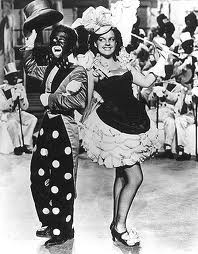
One person’s experience in a Midwestern area (right outside of a major city) is hardly scientific, but it is illuminating nonetheless. Walking through downtown areas, socializing at large events, dining out and taking in culture, I was struck by the racial divide. Beyond the staff & entertainment there were few if any faces of color. I saw only heterosexual couples (which is barely anecdotal let alone scientific.) Far more telling were the conversations I overheard. If any reference was made to homosexuality it was in regards to entertainment. (Some readers might recall a time when African Americans were often only discussed in terms of entertainment.) I overheard an educated woman discuss attending a Halloween party in black face. It was so popular amongst the party guests that she did it again the following year. Twenty years ago Ted Danson, at the very height of his popularity, almost lost his entire career because of a similar antic. Twenty years ago.

I’ve no doubt that many of the people I encountered would find my way of life confusing if not abhorrent. Without question people are entitled to live the way they wish. It is imperative however that we all realize there is a larger world. We may choose to live amongst people who are like us (i.e., of like mind, religion or skin color) but we must stay conscious of the bigger picture. We cannot lose sight of the fact that not everyone views human rights as progress. We cannot discount what may very well be the majority sentiments of this country. It is far too tempting to look around our mini universes and slide towards complacency. Yes, it’s comforting to be surrounded by what seems “right” to us. But it’s important to keep in mind the larger reality. Taking that decaf cap with skim for granted is one thing (we can always get tea) but we should never take progress for granted.

*Once In A Lifetime (1981) – Talking Heads

 
Leave a comment

Posted by on September 28, 2013 in Cultural Critique, Travel


Tags: , , , , , , , , ,

Blaming The Messenger

Naked_girl_a_box_of_rabbit_fur_1920s

Human beings do stupid things; in fact we’re kinda known for it. We are impulsive, petty and opportunistic. (We are also all kinds of wonderful things but those aren’t what get us in trouble.) We make bad choices particularly in our youth. It’s why parents and sealed criminal records were invented. We tend to get better at staying out of trouble and accruing regrets as we age. But if we are doing any kind of living, mistakes will be made.

Recently there’s been some chatter about jerry-rigging the repercussions of our bad choices. This post-behavior regulating centers on the internet. You know, the internet, that thing that apparently not only has changed how we communicate and access information but has changed the very core of human behavior. Not. Nothing about human behavior has changed. The fact that bad decisions can now live forever and be accessed by all has changed. But people have not just discovered; lying, bullying or taking nude photos. Having a naked image of oneself has always been tricky (there’s a reason that prostitutes were often hired by painters.) Since the invention of photography a woman’s (it’s almost always a woman) life could be upended in later years by the discovery of racy photos. Many an aspiring actress has had to survive having early “modeling” photos published upon her newfound fame. The internet didn’t invent disseminating naked pictures. Nor did it create the motive to do so.

The internet did also not invent bullying, or the incentive to do so. It is tempting to say otherwise as reports of bullying have grown as internet usage has. Causation and correlation are very different. Sales of ice cream increase at the same time that sex crimes increase. Eating ice cream does not cause an increase in sex crimes, but both behaviors do happen in warmer weather. The internet has grown in popularity as our lives have become much more external. Our children’s first photos now happen in utero (or pee stick.) Those photos are shared with the world. Our children now “graduate” kindergarten and those photos are shared with the world. They are taught from the very beginning that life occurs with an audience in place. Every action, or inaction is captured in still or moving image. Life is a performance and therefore far more external than it once was. It is challenging to develop a strong sense of self (and hence esteem) when so little is done independently or internally. It can happen, but it is difficult. A shaky sense of self is a breeding ground for bullying. Strong, confident people do not bully. Children with parents who are in control, strong, authoritative and present, know there’ll be repercussions for their nasty behavior. The reported rise in children committing suicide as a result of bullying is sobering. Children with a strong sense of self will be miserable when bullied. But children with an internal life will turn off the computer (as instructed by a parent) and refuse to look at the nastiness. A child with a sense of self will find other outlets and activities outside of the bullying sphere. Do adults have to pay closer attention? Absolutely, but it’s not the internet that’s causing this behavior.

It’s not the internet that causes people to make false claims about products or services. Fake reviews have existed since there’s been something to review. (“The Epic of Gilgamesh is a must read!!!!!”) Even legitimate reviews are manipulated to sell. Open any old-fashioned print newspaper and you’ll see adverts with blurbs unrecognizable to the reviewer. It’s always been a buyer beware world. Unless a review is authored by a trusted source, it’s safe to assume it’s not all that reliable. Do we really need laws to try and regulate fake reviews on the internet? If it was even possible to regulate false claims (and it’s not) why focus on the internet? There are people promising me instant weight loss, better skin, teeth and hair every minute on television. My newspaper is filled with press releases posing as articles, blatantly selling products, people or places. When did being discerning become something we can regulate?

The internet and social media have changed the speed and range of our communication. Globally we have access to information and entertainment previously unimagined. It’s a little bit archive, a splash of Town Square, a news ticker and an entertainment center. Many people simply have no frame of reference for something so expansive and it is tempting to anthropomorphize technology. It’s a fool’s errand to regulate human behavior on the internet. Technology is ever changing and people will find ways around any awkward measure to regulate. Teaching our children (and reminding ourselves) that nude photos can be embarrassing, bullying is a pitiful behavior of the weak, and liars usually get caught would serve us better.

 
Leave a comment

Posted by on September 24, 2013 in Cultural Critique, Media/Marketing


Tags: , , , , , , , , , ,

A Mental Health Crisis

illness

Once again extensive and lengthy mental health issues are revealed after a heinous crime. Once again we are left wondering how can this happen? How can anyone living in today’s over-exposed world manage to evade authorities and/or medical attention? How can a person with repeated exhibitions of mental illness have access to weapons? These discoveries of warning signs and bells usually crop up during the first 24 hours of investigation. This speed suggests that the perpetrator’s mental health status was pretty well known. How does this happen?

How do police listen to a man talk about hearing voices and microwave vibrations and not have him hospitalized? How does someone retain his military security clearance after violent and erratic behavior? How does someone with a well-known history of mental imbalance own and keep a gun? It’s actually quite simple. We don’t want to get involved. We see examples of this aversion every single day. When you use a restroom and discover there is no toilet paper, it’s because at least one person before you did not tell management. We don’t want to get involved in even the most benign situations let alone one that might be complicated. And nothing is quite as complicated as mental illness. We are equally consumed with fears of offending someone behaving questionably as we are for our own safety.

We are woefully under equipped both personally and on a larger infrastructure level to deal with mental illness. If you work with someone who exhibits troubling behavior you might screw up your courage and go to personnel. Then what? A competent personnel officer may talk with the employee in question about services and counseling. Then what? Does the veil then lift from the employee’s eyes? Do they trot off to up until that moment an unknown resource known as counseling and become cured? Only in a Lifetime movie. What if it’s your next-door neighbor, the guy in the diner, or the woman on your bus? How do you alert anyone? Who do you tell?

When a person’s behavior becomes impossible to ignore, the police are often called. The police may or may not be well versed in the signs of mental illness. The police usually have some leeway as to whom they can have transported to an emergency room. Then what? If a person in distress makes it to the emergency room they are held for less than two days. If they are not a danger to themselves or others (which is determined by the patient saying the words; I am a danger to myself and others) they are released.

Over the years we’ve become more comfortable with the concept of mental illness. We bandy around terms like post-partum depression, P.T.S.D., eating disorders, O.C.D., etcetera. Many people are comfortable taking psychotropic medication and/or sedatives. But mental illness is far more vast and varied. There’s a whole lotta real estate in between social anxiety and paranoid schizophrenia and most of us are a bit vague about it all. Compounding the confusion is the fact that mental disease can be scary for spectators. Of course in our most rational moments we know that it is far scarier to ignore erratic behavior. But we can hardly be blamed for listening to our own little voice inside saying; “run the other way!”

In a world in which people often assume that someone else will take care of something, mental illness is mysterious and scary and our mental health infrastructure is flimsy at best it is no wonder that we have what we do on our hands. We’ve heard people (including politicians) say that guns don’t belong in the hands of the mentally ill. We’ve never heard what that means. Surely not all mental illnesses are considered in this classification. What has been spelled out is that “people with mental illnesses” will be identified as those who have sought help. This is a ludicrous and meaningless classification as it’s a deterrent to people to seek help, and we don’t really have many options for those seeking help. And that is the issue.

We’ve shrouded mental health issues for which there isn’t a kicky acronym or a medication to be peddled, in a thick cloud of secrecy and shame. We’ve manifested that sentiment in the abysmal mental health system with which we’ve settled. It’s great that you can get a flu shot and blood pressure check while picking up some cat litter. But what of prevention and detection of diseases that could affect public safety? How much devastation does it take before we face this issue? How many lives must be destroyed until we can say; we have a mental health crisis in this country?

 
4 Comments

Posted by on September 18, 2013 in Cultural Critique, Well-Being


Tags: , , , , , , , , ,

A Mark, A Yen, A Buck Or A Pound*

RedBanker

Few of us are billionaires, and even fewer of us would have our child sue her uncle for millions. It’s an unusual situation and is not all that relatable. Or is it? Ronald Perelman is not a typical billionaire in that he spends an inordinate of time in the gossip pages. He seems to enjoy the spotlight more than most; he did marry a NY Post Page 6 columnist after all. But his desire for attention is relatable, isn’t it? Most of us don’t live in a world of ten or eleven figure wealth or Vanity Fair and/or Town & Country gossip columns. But all that’s just excess make-up and costuming. If we peel away the drag performer layers and hold up a mirror, we may see something quite familiar.

Money often substitutes for many things beyond the gold system. Once people’s basic needs (e.g., food and shelter) are met money becomes quite fungible. Accumulating money often is a pursuit of security and stability. Spending money can be more complicated and fulfill a myriad of needs. Fighting about money is usually pretty straightforward. Most often it boils down to; “enough about you, what about me?” We can dismiss last will and testament contention as bold-faced greed, and certainly there is a nugget of truth to that. But often it’s more complicated & personal. True, it’s hard to fathom what’s personal about the fight over Huguette Clark’s fortune. (Distant relatives who had never met Ms. Clark are lining up with their hands held out.) It’s pretty clear that Mr. Perelman, having already lost this legal case against his ex-brother-in-law once in 2008, is willing to pay more than $60 million to be called a winner. Theoretically what’s at stake is $350 million for Mr. Perelman’s adult daughter. It’s nothing to sneeze at (unless of course you happen to have personal wealth of more than $14 billion.) None of the players need this money (except perhaps those representing the parties.) But haven’t we all at one time or another played tug-o-war over something barely worth holding on to? Aren’t our dealings with money often about how we want people to respond to us? Don’t we make choices about external displays of wealth (cars, homes, jewelry) because we want strangers to think we’re “worth” it? Haven’t we experienced mini (and not so mini) meltdowns in restaurants, on airplanes and in shops because of not being treated like a V.I.P.? Most everyone wants to feel valued, and in our country money is the most calculable symbol of that value. A multimillion hair pulling fight is really no different. “Enough about you, what about me?”

Appearing in gossip columns might not appeal to the majority of us but is there anyone who still holds dear the goal of appearing in the media only upon one’s marriage and death? People don’t wake at 5:00 AM to stand outside of the Today Show window because they don’t have access to television; they come to be on TV. We’ve become (over many decades) a much more extroverted culture who by and large basks in our close-up. Social media took off because it fulfills a need. We want to be heard, we want to be seen. Selfie anyone? There is an argument to be made in favor of this extroversion, and perhaps attention-seeking behavior. It could be seen as a harmless way to fulfill a very pressing need. If we consistently feel as if we have our moments to strut and fret upon the stage, perhaps it bodes well for our real life relationships. It’s easier to be more empathetic and generous of spirit if we feel valued in some aspect of our lives. It’s not far-fetched to posit that if attention is being paid in our social media life, we can pay closer attention in our real life world. It’s not entirely nuts to consider that interactions with (3-dimensional) friends and family can be more “enough about me, what about you?” And if we heightened the rose colored hue on our perspective, and perhaps close one eye; we might even see a future in which money could lose some of its emotional power.

*Money (1966) – John Kander & Fred Ebb


Tags: , , , , , , , , , , , ,