RSS

The Darkest Decade

4428686002_f632b5be11_z

A museum when done right should teach, inspire and evoke an emotional response. There are some museums whose content and themes are so inherently powerful they must rely on the absence of stimuli to evoke a response. Often some section of the museum is devoid of audio or descriptive copy. There is a four-story glass sculpture of freedom, or a pile of suitcases or a melted police car. The power of these selected image(s) can be breathtaking and utterly unnerving.

The Newseum (in Washington D.C.) has not a single quiet space. It is like the topic itself, unrelenting, riveting and compelling. Headlines, newsprint, broadcasts, artifacts and photographs form a cacophony of meta and micro information. “Oh right, THAT event! And how was it covered?” No stone is left unturned in answering the question. (Did you know a journalist created the FBI 10 Most Wanted list? See that!) The Pulitzer Prize Photography gallery is an embarrassment of riches. There are 70 years worth of stunning imagery to be admired and absorbed. Factoring in that the prize was offered in two categories beginning in 1968, that’s a lot of photos. It’s easy to become overwhelmed and mentally mutter “Nice” “Well done” in a monotonous tone. But something unexpected happens by the time you reach the 1960s-1970s section. A theme, spanning over 10 years, begins to develop, and a lump in the throat and pit of the stomach forms.

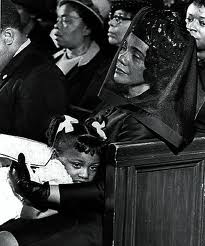
We’ve seen (most of) these photos over the years individually. The image of Jack Ruby shooting Lee Harvey Oswald (Robert H. Jackson) has become part of how we talk about Kennedy’s assassination. We’ve all seen, and perhaps turned our heads, from the image of a naked child running from napalm (Huyhn Cong Ut) and of the Saigon execution (Edward T. Adams). We may recall the university campus gun violence (Kent State and Cornell.) But it is the (1967) photo of James Meredith (the first African-American student to attend the segregated University of Mississippi,) shot on a Mississippi road displayed in proximity to a photo of Ted Landsmark being attacked with the United States flag a full ten years later that is horrifying. And that is the point of this startling decade of American history. There was simply so much, so very much violence. Even the uplifting photos are a reminder of violence and sorrow. The unadulterated joy on the faces of Col. Robert L. Stirm’s family upon his return is a reminder of the heartbreak of Viet Nam soldiers Missing In Action. The war, the assassinations, the racism, the plight of the migrant workers and the violence; it’s all there in obscene excess in those 10 years.
King

 
Leave a comment

Posted by on February 21, 2013 in Cultural Critique, Media/Marketing


Tags: , , , , , , , , , , , , , , , , , , , , , , , , ,

The Endurance Of No-Neck Monsters

intermission

The squalling band of no-necked monsters in Tennessee William’s Cat On A Hot Tin Roof makes their presence known. They screech and howl and run amok in an attempt to get on our very last nerve. And oh what a fine job they do. They evoke a mental “get the hell off the stage” audience response. They are to Cat what the Save the Soul mission band is to Guys and Dolls: a loud grating interruption of what we came to see. And that is the point. We are to experience those no-neck monsters, as do the primary adult characters. Their mother is a familial terrorist and her children are her weapons. It is a testament to Mr. Williams that his monsters still horrifying in the 21st century.

The 1950s (when Cat On A Hot Tin Roof was written) was a period known for “seen but not heard” children. Adults enjoyed a post-war life and children had their place, and that place was often upstairs in their rooms. Children were introduced to adults (whom they called by their surname) and were ushered out of the room/party. The manners and behavior of a child was a direct reflection of the parent. The fifties were nothing if not the exaltation of propriety. Manners and appearances mattered (which goes a long way in explaining girdles and white gloves.) For children this manifested itself in a clear understanding of limits. Adults belonged to the world and knew best. It was a frustrating but secure paradigm in which to grow.

Just imagine the shock of the 1950s adult (children did not attend the theatre) audience upon seeing those no-necked monsters. Those grating little characters were hauled out and scattered like confetti on a parade. There they are playing Dixie at the airstrip to greet Big Daddy (who reacts with the same horror/disgust of the audience.) There they are “performing” at Big Daddy’s birthday party to which adult friends have been invited. (Big Daddy voices our wishes and asks for an intermission.) There they are barging into bedrooms and demanding adults engage in play. And there they are repeating hateful remarks to their aunt. It’s enough to evoke a gasp. That it still does that today is remarkable.

Children are not sequestered today. In fact if anything the world has become theirs and adults are seen but not heard. Adults can often not be heard over the din of children in restaurants, theatres, museums and funerals. Babies and children are not so much integrated into adult lives, as adults are integrated into the lives of children’s. We’ve created retail empires for babies and children. Broadway has discovered the steady income stream of children and the white way is dotted with flying people and talking teapots. Infants and children unfamiliar with the term “indoor voices” are dining out at 7:00, 8:00 and even 9:00 PM. They don’t shy from the highest end restaurants either. A simple dress code of: No Pull-Up Pants would put an end to that; but we digress. The point is that the world has changed tremendously since Mr. Williams created those no-neck monsters. Yet they still have the power to horrify. That is partly due to the scenic background of their terrorizing. They are clearly in an adult environment. The house in which they are running rampant is stately; there is no great room, there are no toys. It is clearly adult space.

Cat On A Hot Tin Roof is about living and dying and truth telling. The struggles within and between the characters are fascinating. The children are a reflection of the vulgarity of their parents: Gooper and Mae (the least interesting characters in the play.) The no-neck monsters’ antics threaten to get in our way as we try to learn about the adults. But by the middle of the play they are gone. Put to bed (or out to pasture); they are gone and that’s when things get really interesting.

 
Leave a comment

Posted by on February 18, 2013 in Childhood, Cultural Critique


Tags: , , , , , , , , , , , ,

And Pre-K For All

blackboard

“Pre-K for all!” As rallying cries go it’s a bit sweet and conjures up some pretty adorable images: Tiny people with finger painted signs toddling their way to Capitol Hill. It’s an expensive proposition but one that is difficult to argue. “It’s for the children!” “Children are our future!” You know the rest. But beyond the sentimentality and cynicism is the truth. The world has changed tremendously and we need to catch the hell up.

It is no longer the norm that small children spend their days with a parent, and it hasn’t been for quite some time. Childcare can be expensive and uneven in quality. Some toddlers are deposited in front of a television set for 8-10 hours and some are learning Dvorak on miniature violins. Of course these childcare discrepancies always existed. But there was a time when 5 year olds from every background arrived at kindergarten to start from zero together. Kindergarten (often held for 1/2 days) was for cutting, pasting, coloring, letter learning and learning to stand in line and raise one’s hand. There was story time and maybe some music and snack. Today’s Kindergarten is a bit more serious and most likely an all-day affair. The academics start much earlier than years past.

The day is spent learning letters, numbers, science, social studies, and yes, standing in line and hand raising. What was once an entire year consisting of an easing away from the home and into the world is now much more like the real thing. It’s understandable, there’s an awful lot to learn after all. In the past Kindergarten might have been the first time little people spent their day with other little people. (Socialization is serious business.) It makes a great deal of sense to beef up this precious year of public education. We know that early education makes an impact on life long learning (the good people of Sesame Street ran with that ball 40 years ago.) We also know that children come from vastly different backgrounds and opportunities. Those who can afford it or are fortunate to live in states with it, are already sending their tykes to pre-Kindergarten. Public education, despite its ideals, is not equal. Some schools are far superior to others. Some parents are far savvier than others. Any moves we can make to democratize education and prepare children for life long learning should be supported and applauded. I join those little people carrying the finger painted placards in setting down my juice box, and putting my hands together for universal pre-K.

 
Leave a comment

Posted by on February 16, 2013 in Childhood, Education


Tags: , , , , , , , , , ,

Springtime For Galliano

The Producers

The fashion industry isn’t exactly known for its high ideals. It is an industry that maintains its mystique with a finely orchestrated and rarified air of exclusivity. It is an intricate web of people and professions with a handful of uniquely talented people. At the very center of the web are the design houses. There is usually one person (perhaps with the same name as the label) at the core of the house and hundreds if not thousands surrounding him/her. The work is done by; designers, merchandisers, buyers, sewers, fitters, publicists, and so on and so on. The larger web of the fashion industry consists of media, models, hair & make-up technicians, event planners…and so on and so on. It is a vast industry that’s profitability is dependent upon the marketability of those few at the center of the web.

If the (buying) public doesn’t believe in the unique fabulousness of a designer or brand the brand fails. Nobody needs a designer garment. Unless you are a collector (of which there are very few) a high priced item is not an investment, in fact it is most likely a seasonal item. What the industry relies on is the profitability of its glamour. Consumers are not buying an expensive shirt they are buying a (insert designer name.) The result is an entire industry predicated on being cool. In every area of the fashion world people are vying to be the coolest kid in the class. And just like high school, the pursuit doesn’t bring out the best in people.

Models engage in some dark behavior, as do the people who hire them. Media can make or break careers and often do. This power can result in some unattractive goings on (young have been eaten.) The media are of course the most closely aligned with designers & labels. They’re the head cheerleader and the quarterback if you will. Together they are a beacon of popularity and power. Intricate and unseemly relationships are forged and maintained and all their minions profit from the alliance. And at times the alliance can be wholly unholy.

When those in a position (they have carefully cultivated) of power defend, support and protect a man convicted of anti-Semitic and racial remarks no one should be all that surprised. That so many people have had a hand in aiding and abetting Mr. Galliano is a bit of a surprise however. In 2011 when the news broke and a video was produced of Galliano’s vitriolic tirade, it was not surprising when Natalie Portman spoke out and dropped out of a Dior campaign. It was not surprising when Dior let Galliano then go. It wasn’t surprising when a stylist (aka professional shopper) known for her work in a Candace Bushnell franchise, rallied to Mr. Galliano’s defense comparing his actions to that of Mel Brooks. (The surprise would’ve been if she had said anything less outrageous.) In the two years since Galliano’s exposure Oscar de la Renta and Anna Wintour (and their followers) have been quietly and clandestinely grooming him for his comeback. It is reported that Ms. Wintour secured a mysterious position for Galliano with de la Renta. Together they have created a precise scenario designed to remind people of Galliano’s talent while keeping their hands technically clean. Galliano has no official title, but the (media created) buzz is that he was behind the Fall 2013 line.

People make mistakes and should not lose their entire lives because of a drunken outburst. But Mr. Galliano still denies just about everything and has yet to apologize publicly. It is unlikely that the tirade wasn’t a reflection of his true feelings. People rarely do anything drunk that they didn’t wish they could do sober. A person should be allowed to have their thoughts and feelings; as long as they’re kept private. If a camera had not captured the ugliness most people would never know, but there’s no unringing that bell. Instead what we have is an ousted and shamed designer who is having his popularity secretly rehabilitated by the head cheerleader and the quarterback.

 
Leave a comment

Posted by on February 14, 2013 in Cultural Critique, Media/Marketing


Tags: , , , , , , , , , , , , , ,

Nobody Knows Our Sorrow

Sally Field

Pain and loss are deeply personal states and often very lonely ones as well. We share in each other’s joy and accomplishments with ease. Happiness is not complex, it simply is. But pain and loss are layered and very specific. Despite our own personal experiences we can never truly know how someone else feels. This doesn’t matter when we are celebrating happiness. Nobody celebrating a marriage, birthday, or addition to the family needs empathy. It’s when our world has become small and dark and hollow that we crave understanding.

There are people who are comfortable with the loss of others. They are often drawn to professions that care for and about the bereaved. However the majority of people follow the evolutionary dictum of trying to avoid loss and pain. We shy from the enormity or contagion of pain and loss. Often we don’t know what to say, or in our nervousness spew forth a ridiculous (and potentially painful) cliché. Even people who themselves have endured their share of sh*&storms don’t necessarily know what to say. “I’m so sorry”, while honest and empathetic, doesn’t seem sufficient.

The throes of anguish and despair can feel very lonely. How can the world go on as if nothing has happened? The weight of the personal pain often wants to make its presence known. A stranger’s reflexive “How’re ya doing?” sounds like a serious inquiry. It may feel disloyal to a memory or oneself to answer; “Fine.” Expressing our loss and pain is important, but it can exacerbate the misery if we do so indiscriminately. We all want to feel understood and comforted. The former is far trickier than the latter. Only those who really know you can understand you,up to a point. Pain is personal. We can rail, blog, and rant about nobody understanding our specific hurt, and perhaps the very act of purging is of comfort. But expecting others to comprehend the intricacies of our experience while understandable doesn’t advance our own understanding. Self-care, and ultimately recovery necessitates that we understand our own pain. Fully understand it, care for it, and find a place for it.

 
Leave a comment

Posted by on February 11, 2013 in Well-Being


Tags: , , , , , , , ,