RSS

Tag Archives: television

Behind The Scenes Reality

nymed

You can’t make it through a week in New York City with out spotting a Haddad’s dressing room trailer. Movies and television shows are shot continuously throughout the year and throughout the boroughs. Whether the shot is an exterior (there is no substitute for the real city) or interior, the streets are lined with trailers and crews. In certain neighborhoods it’s next to impossible to not be in a background shot. Less elaborate shooting is harder to spot but most likely happens more frequently. Student films, illegal shoots (done without permit and too much attention), news crews, ‘celebrity’ interviews at events (oft times the category of ‘celebrity’ is broad enough to include those recognized only by their extended family), and the creator of ‘celebrity’; reality shows.

In this town, you can not swing a restylane filled cat without hitting a reality show participant or shoot. Cooking, chatting, mating, dieting, contest, gossip & housewife shows are all shot here. In addition there are several more niche shows that go in and out of production. There was a restaurant show, not a sitcom like It’s A Living (that was a nice little show) but a behind the scenes show (like anyone wants their worst fears of what happens in a restaurant kitchen confirmed). Currently a hospital reality show is being shot in NYC. A previous season was shot at a Boston hospital and now it’s our turn. If memory serves; an intern (or two or three) are followed and recorded and we learn a bit of their personal life (or it being a perpetually on-call intern; their lack of a personal life.) I suppose the premise is interesting for anyone contemplating a life in medicine. If it’s an interest in blood & gore one has, there are shows that do that kind of thing better. This series almost poses as eduinfotainment. Almost.

Ignoring for a moment the ethics (or simply good taste) of filming people experiencing a medical emergency (and it’s always a medical emergency being filmed; elective surgery rarely provides drama.) Let us instead consider the reality of this reality show. I was on set (otherwise known as accompanying someone to the E.R.) yesterday and had the opportunity to witness the sausage being made. Upon check-in I noticed a gaunt unnaturally white man clad in scrubs and carrying a handheld television camera like it was a scythe. There he was in Admitting. Oh look who’s that guy in Radiology? Wait didn’t I just see you in the ambulance bay? He’s Waldo sniffing out an ’emergency.’ And like a good made for T.V. movie, his prayers were answered. An elderly woman arrived in the throes of anaphylactic shock. She could speak and she could breathe, but it was serious. It was as if a bomb went off; the floor emptied and every nurse, doctor, and other scrub wearing personnel crammed into the bay. The 10 foot by 10 foot space came to resemble a clown car, with countless people entering and exiting. There was not a single nurse or physician available to the other patients in the E.R. for 45 minutes. The woman was intubated and moved to a room within 15 minutes. So what’s wrong with the math? Why did it take at least a dozen people to intubate a compliant elderly woman? Why did a 15 minute procedure waylay personnel for 45 minutes? Waldo. Not only did each doctor retell the horror and drama directly to the camera, a nurse slowly enacted calling for a room (which was already procured) for the camera. Doctors spoke fervently about the extreme danger and mystery of anaphylaxis and then disappeared back into the bowels of the hospital. The granddaughter of the patient, a weeping shaking teenager was all alone; except for the hospital handler guiding her to speak to the camera. If you’re still reading this, you might want to stop now.

For the next hour the nurses, interns, and attending physicians chatted excitedly about the event. Overheard was; “Oh my god I was like okay we can do this” and “Wow that was wild.” Now if I’m not mistaken an emergency room (in a world famous teaching hospital) sees its fair share of emergencies. Anaphylaxis is dangerous and certainly an emergency but is it rare? Is any emergency rare enough to warrant an OMG from the staff? The chatter, tempo and general ambience was that of a junior high school fire drill. Was it all for the benefit of Waldo? Does the very presence of a camera alter people’s behavior? Usually. Were there personnel that showed up for this particular emergency knowing the footage would make it into the final cut? A quick Google search verified those emergency guests are regulars on the show.

My guess is that this event will make for 10 minutes of footage (5 real minutes and 5 slow motion & recap moments.) What won’t make it onto the show are the patients that we left alone for 30-40 minutes at a time. We’ll never see the elderly incoherent patient never seen by a hospital handler let alone an actual doctor. The camera did not pick up on the man left on a gurney in the hallway for 7 hours while many bays were empty. The camera missed the attending physician checking on a patient without looking at the chart or asking any questions. The audience will never see this doctor making a surreal diagnosis completely unrelated to the presenting issue, answering his cell phone, and rushing out for his one-on-one with Waldo. Maybe I’m darker than most, but I’d watch that show.


Tags: , , , , , , , ,

Where Have All The Good Hosts Gone?

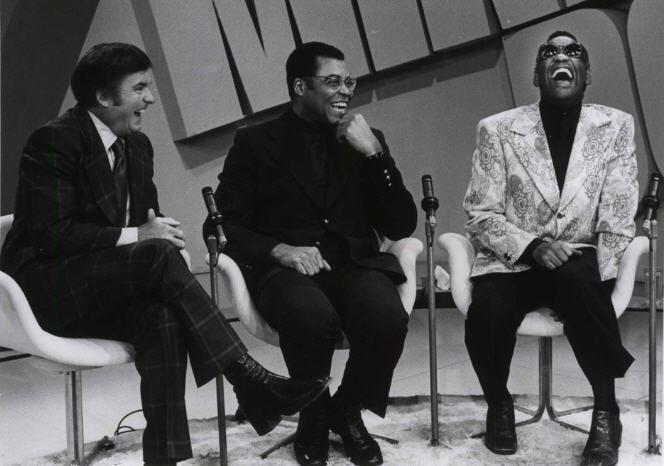
TV - Mike Douglas, James Earl Jones, Ray Charles - 19740204

Does anyone remember Mike Douglas? Not Kirk’s son, but the singer, or more to the point the talk show host. If you’re old enough to know what the dial is in “don’t touch that dial” you remember talk shows. There were the urbane slightly sexy late-night variety, that is still offered, though diluted, today. Mike and his contemporaries; Dinah Shore and Merv Griffin were on during the daytime hours. They had each been singers during the big band era and were all incredibly affable.

Each weekday, Mike, Dinah and Merv would host guests, sing a little tune and perhaps perform in an iffy sketch. But it was the guests one really tuned in for. The known and unknown would flock to the couches (and chairs) to chat. Maybe they would perform a bit, but mostly they were there to chat. There was nothing being sold or pitched or positioned. The host (whether M, D or M) would engage the guest (as a good host does) and entertain us with their conversation. The guests were incredibly varied and included political and controversial figures (they also included dancing dogs.) Many of the guests were boldfaced names of Broadway and Hollywood. Others were simply great conversationalists. Some guests were clearly friends of M, D or M, some just dropped by while passing through town. The guests would not then reappear spouting the exact same quips on the couch of the remaining M, D or M. There wasn’t a circuit being run guided by handlers.

Daytime television has changed much over the decades. The popular rhetoric is that people are not home during the day to watch television. But of course this does nothing to explain the spate of news-lite talk shows. For at least a decade the networks, and others, have filled their morning programming with chattering, relatively unscripted talk shows. There are usually a gaggle of hosts sitting around drinking out of large mugs and perhaps a guest drops by to sell his/her wares. There are a small handful of afternoon talk shows built around a host. Every pilot season a new “oh is that what happened to him/her?” celebrity is packaged and (hopefully) sold as a talk show host. Some find their groove some do not. It hardly matters for the guests are exactly the same on each and every show. The questions asked are the same (as written and contracted by handlers) the answers and ‘ad libs’ are the same. The movie, book, show, image, is pitched, the host fawns and everyone goes home happy. You could spend a week clicking the remote and see and hear the exact same thing on each and every show. There is no longer a place for Tiny Tim (look him up), Norman Mailler, a yogi, Martin Luther King Jr., Liberace, Truman Capote or Spiro Agnew (look him up) on the couch, unless of course they were selling their reality show.

Is memory rose colored? One would desperately hope. Who wants to spend their later years remembering anything but hazy romantic perfectly lit moments? But even if the memories are completely faulty and that of a child, even if Minnie Pearl was in fact selling a line of hats, wouldn’t it be grand to have Mike, Dinah and Merv back on the air? How much more entertaining would it be to hear extended conversations without being sold anything besides soap and canned soup? Wouldn’t it be fun to see stars of yesteryear and the yet undiscovered side by side? How interesting would it be to hear from actual writers and artists and even politicians? And to have all of it delivered with a thousand watt smile and a song? Don’t touch that dial.

Merv Griffin Show Theme Song

 
8 Comments

Posted by on March 12, 2013 in Cultural Critique, Media/Marketing


Tags: , , , , , , , , , , , , , ,

The Generational Divide is Garbage

Social scientists (and critics) are forever trying to decipher a generational fulcrum that transcends the year one was born. What is today’s quick and easy litmus test to discern wherein lies your allegiance? A dozen years ago email was the magic crystal. Those who preferred it to telephone calls were clearly in the “What’s an answering machine?” camp. How one experiences media is a favorite litmus of seers today. Still watching television on a television? It might be time to up your iron and ginkoba. Still reading printed materials? Have you updated your long-term care policy lately?

The sticking point with some of these formulas is that they tend to rely too much on new technology. While it’s true that in broad terms, younger people are more intrigued/gullible and will adopt any and everything new, it is also true that some older people will do the same. There are younger people (we’ll call them hipsters) who actually eschew technology and/or gadgets. They choose to demonstrate their rugged individualism by roughing it with LPs, land lines, a pocket full of quarters and a mental map of pay phones. There are people well past their retirement age who are wickedly plugged in. Some of these seniors use technology to literally and figuratively connect with their grandchildren (“hey if I buy something new, Braydon/Aiden/Jayden will come over and set it up.”) Other older tech adopters actually like technology and enjoy staying current.

What might be a more useful tipping point is that of consumption habit. Without any data whatsoever, and armed only with a dark sinking sense of the world leaving me behind, I posit that generation Y and incoming Zs, view major consumer goods as disposable. There was a time when purchasing a television (that thing that older people use to watch programs) was a major event. They were expensive and the size of a credenza. They got smaller but remained pricey for quite some time. A 30-inch color television set was a lavish retirement or 35th anniversary gift. If something went awry with the set a repairman could be summoned to the house. When is the last time you saw a television repair shop? Was it somewhere near a pay phone? People not only toss a set into the trash when it falls ill, but toss perfectly healthy sets when it’s time to “upgrade.” As televisions get smaller, flatter and then bigger again, people buy them. The programs haven’t changed, but we feel more accomplished watching it on a brand-new device. Now, it’s not a hard and fast rule, but you’d be hard pressed to find people of a certain age tossing out perfectly good appliances. Generation X and boomers may adopt new technology, but they don’t necessarily toss the old stuff out. (Is it all that surprising that older people see the worth in older things?) Don’t believe me? Let’s take a virtual road trip to Florida. Fear not, I have a cooler of whole foods and an iPod set on shuffle. We’ll be fine. Let’s pull into a gated retirement community shall we? Now surely there are no discarded t.v.s dotting the sidewalks. And good thing too, can you imagine the hazard to pedestrians and golf cart drivers? After visiting many of these communities you will see that…Oops, what’s that?! A rather new looking set with a friendly sign stating; “perfectly good set. my son the big guy with the fancy banking job bought me a new set. if you can show me how the hell to turn it on, this perfectly good set that I liked very much is yours for free.”

Things aren’t made as well as they once were. No one would argue that. But cars really should last more than ten years, no? Furniture (unless it came with a plate of swedish meatballs) should last between twenty years and forever. Though you wouldn’t know it to look at a landfill, appliances do in fact last longer than their style or color fashion. However there are generations without any first hand knowledge of a depression, military draft or odd and even days at the gas station, whose orientation to big ticket items is that of disposability. Capitalism, consumerism, it’s what makes the world go round. There’s nothing wrong with that. But there is something telling about generations who covet the newest iPod simply because it’s new. To put it into generation X terms; Do you remember how you clutched that hard won walkman with all your might? Do you remember the months of babysitting, lawn mowing or burger slinging that bought you that little box? How much birthday/christmas/graduation pleading led to that cherished high tech gadget? You kept that sucker past the ill-fated discman didn’t you? There is no shame in that, but for the record you’re now probably too old to take up wakeboarding; says the woman who ain’t too proud to tweet she prefers David Cassidy to Justin Bieber.

 
2 Comments

Posted by on July 30, 2012 in Cultural Critique, Media/Marketing


Tags: , , , , , , , , , , ,

We Got Trouble*

A study has been conducted which examines depression and computer usage.  The researchers evaluated participant’s indications of depressive characteristics and correlated those to computer usage.  People who viewed email compulsively, or viewed a lot of videos on-line also showed signs of depression.  The report concludes with recommendations for a software to alert users of depressive behaviors.  Any intervention or awareness regarding mental illness is a good thing.  But before we start organizing a keyboard awareness day or choosing a color for our ribbons and rubber bracelets, let’s consider this study.

Isn’t the very crux of depression that of an inward orientation?  Are we at all surprised that people who are depressed are not out in the world socializing?  Isn’t the desire to turn on the computer actually a positive sign?  (Versus drawing the curtains and taking to one’s bed?)  Virtual connections are virtual, but sure beat cutting off all contact with the world.  Why would the researches make such a concerted effort to ignore the possibility that increased screen time leads to depression?  I’m not trying to start a rumor or anything, but could it be that they were funded by a mental health software company.

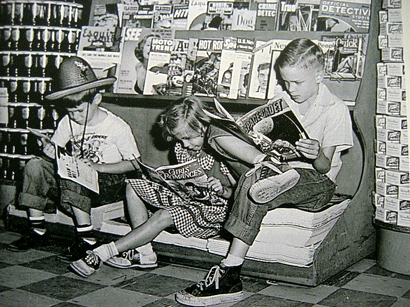
In the end, all this internet sound and fury is reminiscent of the Great Television Scare or Video Game Scourge of years past.  Comic books, dime store novels and packs of sen-sen conjured these same fears once. None of these trends/novelites have the power to ruin.

Depression is an illness it is not an allergic reaction to circumstances.  Do people enter a depressive state due to cataclysmic life events?  Certainly.  But that is a depressive state not depression.  Potato Potahto?  Not exactly.  There are many serious differences between a normative response to sad and/or traumatic events and that of a state of being.  For one thing a depressive state has a beginning, middle and end and a cause.  Knowing there is a cause to feeling so bad is the difference between night and day.  Having your world close in and become gray and fuzzy for no discernible reason is both frightening and self-perpetuating.  Our natural inclination is to move towards pleasure and away from pain.  If you can not see pleasure, if everything you see and feel is dark and thick and unrelenting, you’ve no reason to believe that there is a different world.  The darkness is the reality and it can be difficult to claw your way towards something you can’t detect.

Social isolation can certainly exacerbate depression.  Humans (even the most anti-social of us) are meant to interact.  (As a species we would perish without the desire to mingle.)  However people with depressive tendencies are a diverse group.  Their depression can be triggered or worsened by physical changes (hormonal transitions, illness, sleep deprivation, etc.) by life changes (moving, job changes, marriage, divorce, etc.) by nature (cycles of the moon, seasons, etc.) or by a myriad of other triggers/events.  That said, as an illness whose hallmark is inward focus, forced external interaction can be very effective.  Volunteer work can alleviate symptoms of depression.   It would seem that the very act of doing something for someone else, gives the brain a break from its persevering.

Living in a culture which extols the virtue of self above all else is powerful nourishment for the growth of depression.  If we were to pay attention to all the messaging, we should be painstakingly obsessing over every body part/function and moment in our lives.  We are to chronicle every; party, meal, trip, pee stick, grade promotion, softball game, and sonogram to the world and thereby give us the patina of great significance (Because It Happened To Us.)  We are encouraged not to experience life and its many moments, but to “create memories.”  So much self-consciousness is not good for the self.  Isn’t it a culture of; “your special day” “best snack provider-friendliest-rookie-player trophy” and general sense of entitlement that is far more socially isolating than technology?

When the first books were mass printed, the townspeople were up in arms.  What would happen to communal oral storytelling traditions.  There goes the neighborhood!  The first home radios caused some anxiety no doubt.  Families were now holed up in their living rooms staring at a box.  Little did they know, that box-staring was just beginning.  Television took people out of communal movie theaters (which were/are communal only in the sense of shared germs, smells and noise, not in any actual ‘communing’)  Personal music devices were said to be bad, yet I have never seen a campaign to bring back the boom-box, and I’ve never quite understood how the iPod affects behavior any differently than transistor radios did.

Invention and innovation do not come from the sky to do evil to our land.  They are not the flying monkeys.  Products/progress succeeds because there is a hunger that it satiates.  The fact that consumers represent the population and are thus diverse and include those with mental illness, is expected.  How one behaves, with or without technology will always be a lens into an individual’s inner workings.  Unfortunately it will always be far more tempting to design research or blame which looks to demonize the new and inanimate.  Mental illness, criminal behavior, gambling and pornography obsession are real issues.  Spending our valuable resources to shout; “No, no, look over here, the internet is to blame” does not seem wise.

*The Music Man – Meredith Wilson (1957)

 
3 Comments

Posted by on June 17, 2012 in Cultural Critique, Media/Marketing


Tags: , , , , , , , , , ,

The Boobie Tube

More than half of American babies watch television for about two hours a day.  One third of babies have televisions in their bedrooms.  Babies.  Those under two years of age.  What little I know of human development, I’m guessing they are not using the remote.  This suggests that an adult is turning on the television for the baby.  I have so many questions I hardly know where to start.

I think I understand the concept of putting a baby down in front of a television.  It has to do with giving the adult a reprieve, yes?  May I suggest a moratorium on the demonization of the playpen.  You remember the playpen?  It is a box filled with toys, books, and cuddly things that kept tykes safe.  It was how we controlled their environment, versus gating and locking our environment.  Babies could happily entertain themselves while floors got cleaned or adults took showers.  Now, if my presumption is accurate, that television is being used in lieu of a playpen, I have to ask; what show is being watched?  Does it matter?  Is it just the sound that is pacifying the babe?  If so, how about music and a busybox?  Forget the quality of television for a moment.  Can anything be gained, developmentally, from staring at a screen?  (That is not a rhetorical question.)

The nursery television leaves me a bit more confused.  What in the world is going on there?  Is the baby being left alone with the television on?  To what end?

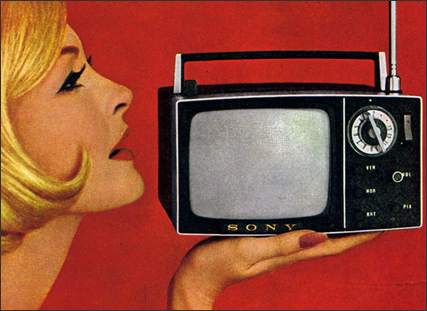
Before you think I am anti-media or (gasp) anti-television, let me assure you I am most certainly not.  At 14, I ecstatically received a hulking 35 inch wood-framed black and white television set.  Painted yellow.  That only got channel 7, which was fine as this was during ABC’s heyday.  For my 16th birthday my wishes were granted with my very own portable television, which received all seven channels!  I brought it with me to college.  I love t.v.  It’s one of my best friends.

What I don’t love is blanket social inequities.  According to the Kaiser Foundation, in families with incomes under $30,000, 64% of children younger than 8 had televisions in their rooms.  In families with incomes above $75,000. the number drops to 20%.  I doubt 100% of the blame shouldn’t be placed upon the importing of cheap electronic goods.  It certainly doesn’t help that a television is no longer a luxury item.  But perhaps something larger is at play.  Even back when televisions were far too dear for the middle-class, Muffy and Biff were not squired away in their nursery watching television.

While I shy from being an alarmist, I truly suspect that there is something a tad sinister in play.  “Progress” has brought us inexpensive food-like substitutes, flavored “drink” and access to electronic noise.  There is a school of thought that maintains that the plethora of liquor stores, cigarette ads and cheap goods in low-income neighborhoods is part of a scheme to quell the underclass.  Television is a very effective pacifier.

 
Leave a comment

Posted by on October 25, 2011 in Childhood, Media/Marketing


Tags: , , , , , , , , , , , ,