RSS

Tag Archives: Brenda Tobias

There Is A Castle On A Cloud*

An appointment in Soho on Thursday afternoon, found me bobbing and weaving through tourists and folding tables groaning under the weight of vaguely ethnic tchotchke.  Making my way to Prince street, I wedged myself between the Chanel store and gaggles of visitors carrying knock-off bags .  Nearing my destination I approached yet another local obstacle; television cameras, lights, barricades and police officers.  The police vans, dogs, and CSI units seemed to outnumber the news vans.  That’s when I noticed that they were real news vans and there were no Haddad trucks (a caravan of Haddad dressing room/equipment hauling trucks must be written into city film permits.)

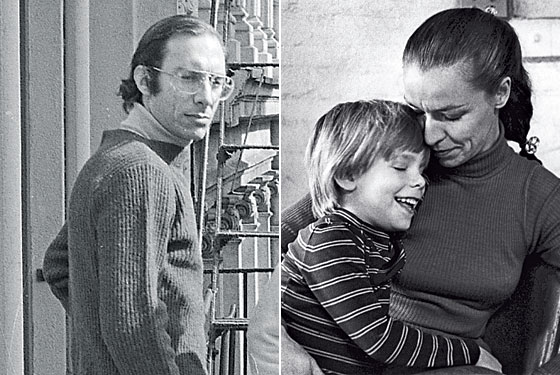
I recognized a (former colleague) reporter and discovered that this was in fact a real event.  After 33 years, a basement search was being conducted for Etan Patz.  The search has concluded, and nothing of consequence has been discovered.  It is impossible to not feel heartbreak for the parents of Etan.  No doubt it has been years, if not decades, since they lost hope of any closure.  One can imagine the tempered optimism they allowed themselves to feel during the first dozen or so years after his disappearance.  Maybe he had been kidnapped and once he turned 16 or 18 or 20, he would contact his parents?  After all, he was 6 1/2 when he vanished, he would remember his early life in Soho.  But after 33 years, with the suspected murderer imprisoned; jackhammers, press conferences and a media circus could not have been welcome.  If remains of their son had been found, perhaps the frenzy would have been worth it.  And frenzy it was.  Local news stations wasted no time in creating “Search for Etan” graphics.  Had the search lingered, no doubt CNN would have used a Gaelic melody to accompany updates.  The irony of course is that Etan disappeared in 1979; before cable news and a 24 hour news cycle, when perhaps it could have done some good.

Etan disappeared from a sleepy neighborhood where everyone knew each other.  Small children walked alone (and played) on the street.  A 6 year old “helping out” a handyman would not have been seen as suspect.  A first-grader not showing up for school would not have sounded any alarm.  It was Etan’s disappearance which spurred the ubiquity of the “milk carton” children and missing child awareness.  Ronald Reagan created Missing Child Day (May 25th) in honor of Etan Patz.  Highway alert systems and heightened security have followed as has school protocols.  Aging software was created to show how a child might appear in later years. It was the disappearance of Etan that galvanized a consciousness.

Perhaps this legacy is of some small comfort to his parents. However, I suspect that living amidst the delirium of the past 5 days might instead just be excruciating.  As they still do not know what exactly transpired that day 33 years ago, they may believe that a little of this 2012 frenzy in 1979 may have saved their boy.

* Les Miserables (1985)


Tags: , , , ,

The Food Desert Mirage

Recently two studies have published findings disputing the popular wisdom of “Food Deserts.”  (A phrase just begging to be misread, or perhaps I am just far too fixated on cake.)  For some time now; health experts, food security advocates and the like, have maintained that diminished access to whole foods has contributed to increased rates of obesity and obesity related illness.  Arguments go further, suggesting that inexpensive fast food is often the only food choice in lower income neighborhoods.

It’s understandable where this theory comes from.  Poorer neighborhoods have more fast food establishments (and liquor and check cashing stores.)  People with lower incomes tend to be in poorer health and suffer higher obesity rates, ergo…  But viewed from another angle, say at 180 degrees, there is a “sexual assault occurs more in the summer therefore ice cream must be to blame” aspect to this theory.  For food desert theory to be true, a couple of factors must be in place, chief among them lack of access to whole foods.  (“Whole Foods” is an apt phrase to use, as anyone who’s ever been on the subway can report that people travel quite some distance to lug home shopping bags from a store filled with tastefully displayed organics.  Proving that proximity to groceries is a relative concept.)  Second to the issue of lack of access is that of fast food being less costly than whole food.  Excluding any clearance sales of shamrock shakes, prepared food is always more pricey than (very healthful) dried beans and rice.  Lastly, if the income level is low enough, children will be eating two meals a day (for ten months) in the public school.  (Ketchup as vegetable aside, school lunches are more healthful than fast food.)

So then how do we explain the rise in obesity levels in lower income neighborhoods?  How did a country which once demonstrated wealth by the enormity of one’s waistband become a mirror image of itself?  First we look at the nation as a whole.  It is not just lower income people who are growing.  Second, we focus on where we can make an impact; the children.  Why are children, across a wide swath of economic levels, growing in size?  What has changed?

In the 1950s (or even 1960s) a child’s day may start with a nutritionally balanced and perhaps even cooked breakfast.  Eggs, hot and cold cereal, real juice and milk were often the order of the weekday.  Fancy carbohydrates (pancakes, waffles and french toast) were a weekend treat.  Many children came home for lunch, often to a sturdy hot meal.  Lunchbox toting tots unpacked portable versions of home lunches and augmented them with a carton of (whole) milk.  One thing was noticeably absent from the average child’s day: a Wonkaville world of processed snacks and treats.  “Sugar” cereals were relatively new to the game and made rare appearances on breakfast tables.  Microwaveable or toastable bakery-like confections were yet to be invented.  Once out of the house, children were not barraged with processed snacks as they are now.  Vending machines were in factories and offices, and issued more sandwiches and half-filled cups of coffee colored acid, than they did snacks and candy.  Pocket money (if a child had such a thing) would be spent on a favorite candy bar, comic book or gum.  If fast food (which was in its infancy) made it into the house as an evening meal, it was a treat (for the children) and a respite (for the parents.)

The proliferation and availability of processed food snacks has changed our culture’s orientation towards “junk food.”  Ice cream and cake were often the highlight of a child’s birthday party (versus the bespoke goody bags and Vegas entertainers of today.)  Edible treats are now viewed as an integral part of a child’s day.  (Just try and find a playground, zoo, or museum that doesn’t have a snack bar perimeter.)  Children have money to buy snacks on the way to and from school, not to mention IN the school.  Those that do engage in organized play are supplied snacks during their 15 minutes of actual activity.  From the earliest of ages, children are being taught to prefer the taste of processed foods.  Baby yogurts(!) line grocery shelves.  Yogurt IS baby food (what’s next? baby-baby food?)  Toddlers cannot make it one full block in their stroller without carbo-loading on goldfish crackers or cheerios.  Special toddler meals now join baby food ranks.  Plying children with food stuff in nugget form is the norm.  For at least a decade now, a portable lunch rich in nitrates and sugar can be purchased and tossed into a backpack.  All of these “foods” came from a grocery store, not a food desert.

To really understand what’s going on and how to ensure we’re not on the brink of being an obese nation suffering from malnutrition we must let go of the notion of food deserts.  There is enormous special interest and billions of dollars involved in this issue.  It is no wonder we are loath to really examine what is in essence a “food amusement park.”

 
7 Comments

Posted by on April 18, 2012 in Childhood, Cultural Critique, Well-Being


Tags: , , , , , ,

The Time Of Their Lives

There was a time when the Catskills were the summer destination of thousands of New Yorkers. The bungalows and hotels of the area were known collectively as The Borscht Belt, as the clientele was predominantly Jewish.  Some families came for the entire season (the father coming up for the weekend) others for a week or two.  The heyday was in the 1940s and 1950s, and started to ebb in the 1960s.  Tastes change, the world changed.  Today, middle and working class families rarely vacation together for an entire season.  Private space is far more coveted than communal living and/or dining.  The grandchildren and great-grandchildren of the Catskills take their families to the Hamptons, The Rockaways or down the shore.

A few of the Catskill’s famed physical structures still remain and have been converted for modern use, with varying degrees of success.  But looking at them, it is not possible to even begin to imagine what that world was like.  At least two movies (A Walk on the Moon and Dirty Dancing) capture the mood and social dynamics of both the bungalow world (A Walk on the Moon) and the resort (Dirty Dancing) world of the Catskills.  There were two hallmarks of the Catskill experience; the food and the entertainment.  Comedians, singers, musicians and dancers made a steady and hefty chunk of change by “playing the circuit” every summer.  Few remember these icons of their time.  Perhaps the exceptions would be Woody Allen and Joan Rivers.  Almost everyone who had a hand in creating television (and by “creating” I mean ‘inventing the very concept of programming”) played the Belt; Milton Berle, Carl Reiner, Burns and Allen, Sid Caesar, Molly Berg.  Theatre people played the Catskills too; Betty Garrett, Camden and Green, Molly Picon, Fanny Brice.  All the big names played the Catskills; it was close to the city and it wasn’t a bad way to make some real money.

The entertaining in the Catskills went beyond the stage however.  A tummeler (pronounced: toom-e-ler) was the court jester of their day.  Tummelers were jovial, extroverted fellows whose primary job was to get the party started.  They cajoled people into gaiety, usually while wearing something quirky.  The recent death of Lou Goldstein, a tummeler’s tummeler if there ever was one, may be the last bit of spark to sputter from the Borscht Belt ash.  (You may remember seeing Lou on daytime talk shows in the 1970s.  He was famous for his Simon Says.)

The Catskills (as they once were) are gone and they’re not coming back, but tummelers are still doing quite well.  Have you been to a Bar or Bat Mitzvah in the past 25 years?  You can’t swing a rubber chicken without hitting some festooned guy or gal encouraging middle-aged guests to drop it like it’s hot.  (Twenty-five years ago, Aunt Shirley was being told she was too sexy for her shirt.)  The good news for tummelers is that the gigs are now all year long and women may apply.

It is interesting that the tummeler is the only thing to emerge from the rubble of the Borscht Belt.  Seasonal communities don’t exist in the same manner.  They do exist in an ad hoc manner, but not as a large collective and certainly not with the same degree of familiarity.  Actors, musicians, comedians and the like, have nowhere to earn a stable income while perhaps trying out new material and cultivating new audiences.  Performers were able to work (and play) with their friends and sometimes make enough money to make it through a lean year.  Yes, today some do work cruise lines and casinos, but those are finely choreographed shows and are usually reserved for the boldest faced names on the B list.

There are new ways for entertainers to breakout and find new audiences, online and off.  The proliferation of televised contests assures that a new finely coached belter/wailer will be discovered every week.  Comedians have their pick of new media as well as consistent traditional outlets (someone will always have to prep live audiences to laugh at tepid television shows.)  But what may never be replicated is a place for performers of different genres to perform in the same place at the same time.  Like the Catskill guest experience, it’s the collective that will be missed.

 
1 Comment

Posted by on April 16, 2012 in Cultural Critique, Travel


Tags: , , , , , , , , , , , , , , ,

Woman v. Woman

Can you hear it?  It’s bubbling up again.  There it is!  The woman wars.  Every so often (usually precisely timed to an election cycle) the media is abuzz with the ‘in the home versus outside the home’ battle.  There are so many flaws in this campaign it’s difficult to know where to start.  But I hardly see why that should slow me down.

  • There is no war – this is completely made up.  Nobody cares what you (or I) are doing with our lives.
  • If I’m wrong (and it’s been known to happen) and there are snips and snarks and snide remarks, they are being made by people who feel insecure about their own choices.  In other words, it is a very biased opining.
  • Semantics matter: “Working inside the home” means a person “works from home” – for money.  It doesn’t make anyone’s efforts less worthy to properly identify them.  Managing a household and perhaps children for no compensation is difficult and unrelenting labor and warrants its own term.  It is confusing to use euphemisms such as “working inside the home” simply because we’ve become allergic to terms such as housewife and haven’t come up with anything better.
  • Where a woman spends the majority of her time has little to do with how she votes.  Women can see the world as a larger place than what is directly in front of them.
  • When is it time for men to be pitted against each other in a fictional sophomoric war?

The whole point of feminism is freedom of choice.  Women should be free to choose the life that works for them at any given point.  Women should also be free from being a subcategory or manipulated to fulfill a stereotype.  Women are not a numerical minority, but historically have had limited access to opportunities.  Our country has a long history of creating fictional fracases within minority groups for the purpose of distraction.  Eventually people do catch on.

 
1 Comment

Posted by on April 12, 2012 in Cultural Critique


Tags: , , , , ,

The Lyons – Review

The Lyons is an incredible one-act play conjoined to an impaired second act.  Linda Lavin is simply magnificent as Rita Lyons, a woman (literally) waiting for her husband Ben (Dick Latessa) to die.  Some of the most riotous sidesplitting moments come from the sparring between the two.  Mr. Latessa is wonderfully cast and plays Ben with such candor and sensitivity.  Rita’s dialogue is peppered with such bon mots one can only wonder of the ruin in lesser hands.  But under Mark Brokaw’s direction, Ms. Lavin’s interpretation is simply perfect.  When a play seems to have such perfectly timed humor it’s difficult to review.  If the summary is completely accurate, readers will have a skewed expectation that the reviewer did not have.  How then do you communicate the sophistication and spot on accuracy of the very funny dialogue, without potentially disappointing an audience?  Well, once the curtain rose in the dainty Cort Theatre for the second act, that particular conundrum ebbed.

While Ben and Rita’s adult children (Curtis and Lisa) appear in the hospital room in the first act, their parents are still there to do the heavy lifting.  Curtis (Michael Esper) and Lisa (Katie Jennings Grant) are ‘adult children’ in the truest sense.  They have victimized themselves to the point of utter infantile dysfunction.  (No doubt much will be said about this play (by Nicky Silver) being about a dysfunctional family.  I did not see any signs of a family not interacting effectively.  The adult children have ruined their lives but that does not make the family itself dysfunctional.)  The actors are solid interpreters of very dull characters.  Both “children” are on the other side of 30.  Curtis is incapable of ever having a romantic relationships; ever.  He’s also never supported himself, but that’s almost beside the point.  Lisa is an alcoholic with a self-destructive streak to beat the band.  She seems to have some sort of savior impulse that does not extend to her family and does not seem to have an organic root.  Damaged characters can be interesting, (Ms. Lavin’s previous gig in Other Desert Cities proves that.) These two people are not an example of that particular genre.  Drawing them the way Mr. Silver has, does evoke a response in the audience.  But as it is frowned upon to get up on stage and perform a duo of “snap out of it” smacks, there’s no outlet for the frustration.

The second act opens with a scene in an empty (for sale) apartment.  It is a long awkward scene (following an intensely paced and hysterical first act) that takes far too long to make a minor point, which could have been made off-stage.  According to the Playbill, there is normally a scene preceding this scene; depicting Lisa at Alcoholic Anonymous.  Omitting entire scenes seems a radical move during previews, but no doubt it’s been done before.  In its place (it seems) is a walk-on by dead Ben.  Never a fan of the dead returning for an encore, I found this very jarring.  The Lyons is a starkly realistic play and there’s really no room for ghosts.

It is comforting that the final scene takes place in the hospital room of the first act.  We are reminded of the promise of that first hour.  It must be said that The Lyons has a very satisfying ending.  Surrounded by a different audience I might have actually leapt to my feet and whooped.  The fact that the second act is (currently) in such disarray, should not stand in the way of seeing this play.  Simply to see Linda Lavin and Dick Latessa spar and jar is worth the trip.  It is safe to say that no one will ever play this role like Ms. Lavin does.  She is simply remarkable.  There are beautiful moments and resonating truths throughout the play.  Quite frankly, The Lyons is like most of us; it could use a little improvement.

 
2 Comments

Posted by on April 12, 2012 in Uncategorized


Tags: , , , , , , , , , , ,