
RSS

Tag Archives: Brenda Tobias

Mental Health In Crisis

Unknown

During the first few hours after the school shooting in Connecticut there were vague and conflicting reports. The shooter was still being misidentified as the first rumblings of mental health issues began to surface. Amateurs and professionals began to pontificate on the need for meaningful support for first responders, victim’s families and witnesses. We have become much more comfortable in acknowledging the profound psychological impact of trauma. We can look at a (massively media covered) tragedy and think; “ah yes, this will have an impact.” What we have a bit more trouble discerning is mental health challenges that may not stem from widely covered events. We are also a bit challenged in trying to foresee lasting effects.

Our first thought when hearing about murdered children is about their parents. If we’ve been lucky, it is beyond our first hand comprehension. It is simply unfathomable to lose a child let alone in such a horrific manner. The parents’ lives, now unrecognizable to themselves, are forever marked by this loss. Our minds grasp for any detail that we can construe as offering comfort. Are there surviving siblings, someone to motivate the parent to go on? And then we remember that while it is a gift to survive it is a burden as well. The siblings, no matter their age, will forever be survivors. They will feel that label and internalize it in varied ways. Even siblings not yet born will wear that identity. It could color (and potentially burden) their entire lives.

Similar survivor issues may well develop in adults and children who could have been included in the count. It is tempting to not give survivor mental health issues the attention they warrant. These people still have their lives after all. But if we’ve learned anything from this (and other) barbaric acts it is that mental health care cannot be ignored. Many will need and should have access to a lifetime of mental health support. In the coming days we will learn more about the perpetrator and the details leading up to the massacre. We will demand serious and desperately needed real gun control. We will light candles and say prayers. And we must, if we hope to ever live in a humane world, give mental health care the respect and importance it deserves.
 
Leave a comment

Posted by on December 15, 2012 in Well-Being


Tags: , , , , , , , , ,

The Stigma of Psychopathy

balcony

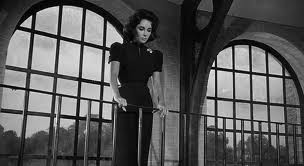
It’s fascinating to consider how our attitudes change over time. It is almost amusing to flip through a magazine from more than 40 years ago. Advertisements, editorial content and choices speak volumes about our priorities and concerns at the time of publication. Old movies also tell us much (often in the guise of propaganda or by virtue of what’s left out of a story.) While it’s doubtful that any newlywed couple ever slept in separate twin beds it is for certain that Hollywood wanted us thinking so. A study of older cinema is illuminating in what it tells us about what people held dear and what they scorned. Some of these values are practically foreign to many of us. You might need a crib sheet to understand the subtlety of a woman scorned for working outside the home, or the degenerating effects of a broken home. You may very well need to hit the pause button to consider what exactly ‘ruined’ a woman or what a ‘deserter’ was and what it supposedly said about a person.

How intriguing that we once felt so strongly about issues that have lost their power to shock or hurt. It must be a sign of some sort of progress? Our attitudes about marriage, relationships, parenthood, working, religion, and the public versus the private world have changed drastically since married people were shown sleeping in twin beds. If they choose to be relevant, media (in all forms) must somewhat reflect the realities of the time. Slowly but surely families are depicted as the freeform drawing they often are, rather than the coloring within the lines they might have once been. The melding of the public and private means most of us now know far more than we care to about strangers. Diseases and ‘conditions’ that were once private, feared, or barely noted, are discussed in loud outdoor advertising voices. There really are no private parts anymore. Except one: the mind.

Mental illness, despite all of our progress is still quite demonized and stigmatized in our media. Certainly we can all comfortably bandy about pop-psycholoigy terms. We could probably rattle off the names of a handful of medications for depression or anxiety. Thanks to reality television we think we know what obsessive compulsive disorder is. What we know and what we’re comfortable discussing is cocktail party chatter. Any mental illness serious or complex enough to not warrant a television commercial, magazine advert, awareness campaign or walkathon is a no-go zone. Shrouding mental illness in shame in secrecy only fuels our misunderstanding yet we hold onto this attitude.

When the newsreader intones (in sotto voce) “The suspect sought counseling” we get the message: ‘Oh, he/she is crazy.’ (For the record you know what’s actually crazy? Thinking you’re not crazy.) The toxicity of this message; 1) seeking help for mental health is suspect 2) mental illness is synonymous with criminality is the very definition of stigmatization. The only thing all criminals have in common is that they committed a crime. Mental illness takes many forms and very few of them involve any violent behaviors. People with illnesses are much more likely to hurt themselves (passively or actively.)

It’s the ambiguity of mental illness that is at the core of these attitudes. The mind is confusing. It is difficult to talk about personality disorders in 60 seconds. Many mental illness can be quite complicated and often incurable. A true understanding of the subtleties and complexities is probably best left to the professionals. But we don’t need to understand something to accept it. What we need to do is rebrand mental illness. Newsreaders think nothing of loudly broadcasting starlet rehabilitation for drug addiction or eating disorders (psst: nice lady reading the teleprompter – addiction and eating disorders are mental illnesses.) We speak publicly and loudly about post-traumatic stress disorder and post-partum depression (mental illness, mental illness.) If all mental illnesses were called by their proper name(s) perhaps we could shed the shame. Words are powerful (just think of all the ones you no longer feel comfortable using.) Once mental illness is seen as diverse expansive and existing any and everywhere, we can celebrate and support treatment in a meaningful way.

 
2 Comments

Posted by on December 10, 2012 in Media/Marketing, Well-Being


Tags: , , , , , , , , , ,

Santa Claus Is Coming To Town

santa

I’ve been thinking about Santa lately. That’s not really all that unusual given the time of year and all. But as I have not accepted Santa as my personal gift-giver, thinking of him at all is moderately novel. I’ve always had deep affection for him in all his fictional forms. Edmund Gwenn (as Kris Kringle in Miracle on 34th Street), Mickey Rooney’s voice (in two classic animated tales) even the Norelco (shaver) cartoon Santa have swept me off my feet. But the real Santa? I hadn’t given him much thought.

This all started with the (not nearly as distressing as it might first seem) thought of sitting on his lap as an adult. I wondered what would I, as a grown woman capable of filling my own stocking, ask from the bearded stranger. This led me to thinking of his raison d’etre. Santa, it would seem, exists as a repository of dreams. Children visit the jolly fellow and (if they’re not crying uncontrollably or rendered speechless by his Oz-like presence) tell him what the really want. This dynamic works well as children will rarely filter with Santa. They will not tell Santa what they think he wants to hear, but instead what they in fact want. Many is the Santa (post 1970) who has heard “I want my mommy & daddy to get undivorced.” Children know what they want and rarely have shame in asking for it.

How does this scenario play out for an adult who has been (somewhat) socialized and mostly expresses herself with a (somewhat flawed) filter? What it seems to entail is doing a little hard work and digging deep to uncover what one really wants. Santa (to my understanding) cannot cure disease or enforce cease fires. Santa seems to deal on an individual basis, addressing only the personal. So then what, if given the chance, would I ask Santa to bring on Christmas morning? An idea sprang to mind, and then one more, and before you know it I had a score. They all seemed to be of a similar ilk and to the untrained eye would appear to be New Year”s resolutions.

And that’s when it dawned on me for the first time ever; New Year is Christmas for grown-ups! The eve of the New Year is spent in sparkly clothes sipping sparkling wine, waiting for something to happen. Instead of listening for hoof sounds on the roof, or jingling of sleigh bells, our ears are primed for noisemakers and countdowns. When the moment arrives we whoop and holler and when it’s all over there’s a big mess to clean. And the next day is when we receive the gift of fresh starts and begin to play with the resolutions we’ve made.

There is still plenty of time to write your letter to Santa. When you’re standing in line (at the bank, the post office, the store, the wrapping desk) let your mind wander. Ask yourself; ‘what do I want?’ Let your imagination run wild. There is no wrong answer. “I want to be more patient with my teenager” is just as valid (and perhaps as daunting) as “I want to become a doctor.” Discovering what you really truly want is not complicated but it isn’t easy either. You might just need to jump start the process with a little visit to Santa. Sure you might feel a little self-conscious, but trust me, Santa’s seen it all. You needn’t sit on his lap, maybe just a “hello” and a hearty handshake will do the trick. The thing is, once you’ve stage whispered, “I’m working on my list” to Santa, you’re going to finish the list. Santa never loses his power to motivate. This is a man who knows when you’ve been bad or good.

 
Leave a comment

Posted by on December 7, 2012 in Holiday, Well-Being


Tags: , , , , , , , , , , , , ,

The Anarchist – Review

Unknown

The Anarchist is a brief (in length and run) new play by David Mamet. It features two characters on stage for an uninterrupted 70 minutes. Cathy (played by Patti LuPone) is a convict serving her 35th year and Ann (played by Debra Winger) is a wardenesque woman serving her last day at the penitentiary. They are together performing the dance of “I’d like to be released now please.” And the dance is not well choreographed.

Cathy proclaims her interest in Christianity as an indication of her worthiness of release. This device is a bit blurry. She was born and raised by Jews (who it would appear gave her the name Catherine) and has discovered the New Testament in prison. Does she speak with the fervor of a tent preacher to impress the cross wearing Ann? If not, why work so much of the theology into the dialogue?  A sense of urgency is implied with the device of Ann’s last day, but why? Ann is not particularly lenient or empathetic. Maybe Cathy’s chances for being sprung will improve with a new administrator. If there is dramatic tension it’s buried too deeply to detect.

Mamet’s dialogue seems to have undergone a conversion as well. A Sunday school teacher would be pleased. However the rhythm is still quintessential Mamet. Ms. Lupone is comfortably at home in this musicality. She is at complete ease and utterly graceful with the dialogue. Ms. Winger is much less so and is not served well by Mr. Mamet’s direction. He has created a wooden and opaque portrayal in her Ann.

There are certainly interesting ideas conveyed throughout the play. Cathy’s (Weather Underground) crimes promise to evoke mixed feelings in audiences of a certain age. The psycho/social scholar will be intrigued with the debate over rehabilitation. There is also much to gain from watching Ms. LuPone stripped of song and embracing her dramatic roots. But watching The Anarchist is more akin to watching a (good) poetry reading than a play. Inserting dramatic tension into the script, recasting the role of Ann, and not having the playwright as director might result in a nice little play.

 
Leave a comment

Posted by on December 6, 2012 in Uncategorized


Tags: , , , , , , , , , , ,

Coming To The Rescue

spidey

Second guessing the behavior of others without benefit of any insight or personal experience is a national (and perhaps international) pastime. There is even a sport metaphor for such behavior, something to do with an armchair and quarterbacks. Part of our fascination with celebrity is the sheer enjoyment we derive from critiquing their decisions (which we learn from finely tuned propaganda.) We quickly come to conclusions about what we would do in the same situation. We make these declarations with limited data and zero experience. After all, no one has ever been in anyone else’s situation. Not really. We all bring our own baggage and outlook into each experience. Yet why let that fact get in the way of good water cooler chat!

The other day a man was killed in the subway. This happens from time to time. It is always horrific and always sends a temporary chill down the spine of commuters. This latest tragedy doesn’t appear to be completely random which is perversely comforting. The victim is no less dead and his friends and family no less shattered because it was not random. Witnesses report that the suspect was talking loudly to himself. There is video footage of the victim in close proximity to and facing the suspect as the suspect screamed directives. The footage could be deceiving and could mean other things, but it certainly looks as if the two had engaged in some back and forth. They had connected in some manner and it ended very tragically.

Attention is now being paid to the fact that there were many people on that subway platform who did not engage. After the victim was pushed onto the track he tried to get back up to the platform. No one helped. This was not entirely a flashback to the murder of Kitty Genovese (when 38 people admitted to hearing her cries for help and chose to not come to her aid) as at least one person did more than stand by. A professional photographer used his camera’s flash to alert the oncoming train (49 times.) He is now being criticized for capturing the image of the victim rather than pulling the man to safety. (The conductor did see the flash and did slow down.) The photographer, with his own life experience and orientation, did what he thought best. It is not clear how close he was to the victim. It’s easier to question his behavior because we have tangible proof of what he did. But what of everyone else on that platform who did nothing but scream? Could everyone had been far enough away from the victim that they assumed someone else would come to the rescue? Perhaps, subway platforms are long. Was the assailant still very close to the victim and people feared for their own safety? That could be the case. We may never know exactly why the victim was not saved.

What we can be certain of is that violent behavior is scary. We are biologically wired to be frightened by frightening things. But we’ve been socialized to rise above that fear to help those in need. If we choose to second-guess those individuals on the subway platform let’s also internalize that criticism. Let’s use the horrific event to remind ourselves that keeping our head down and ignoring the plight of others is only a short-term survival strategy. Sure we might get through life completely unscathed but what kind of life would it have been and what kind of world would we have?

 
2 Comments

Posted by on December 5, 2012 in Cultural Critique, Well-Being


Tags: , , , , ,