RSS

The Fun Of Getting There

Millions of dollars are spent on selling travel as glamorous and/or restorative. There are entire magazines dedicated to this pursuit and big chunks of space reserved for it in newspapers & travel blogs aplenty. Television shows and networks are dedicated to the cause. There are clothing and accessory manufacturers specializing in travel accouterment. The fashion industry still adheres to a season-ette known as Holiday/Cruise in mid-winter. Everyone’s in on the action (except for travel agents, g-d rest their souls.) Let the good times roll.

Yet have you ever heard (or experienced) anyone traveling commercially, return and declare; “Well bust my buttons that certainly was glamorous and/or restorative?” Probably not. Getting there (and sometimes even being there) can often be one big pain in the bum.

It used to be you would pack your bags, grab your ticket and head to the airport. Today, after packing your bag with teeny tiny sample sizes of health and beauty aids (in ziplocs or out, depending on the airport) planning an outfit without metal embellishment or laced shoes, packing enough food to make it through the flight and the predictable delay; you are, woohoo, on your way. But to where exactly? You booked your flight on one airline (or so you thought) but these days they are cross-listed. You trek to the USAir terminal only to discover that USAir flight 6403 is in actuality a United flight 760 (and listed as Lufthansa 23, but that’s too odd to even address.) If you’re lucky those two terminals have a shuttle system. So maybe, just maybe, if the g-ds are smiling upon you, you make it to your gate. You must go buy a bottle of water however since bringing one with you would jeopardize national security (as would a nail clipper which is amusing when you think that a punch to the jugular is far more impactful than threatening to manicure someone.) Your $7 bottle of water secured, you bypass the food-like options that fill you with a school (or prison) cafeteria wistfulness. (Airports might be the only place where a chef known for inventing gourmet duck topped pizzas is now serving orange slop in containers emblazoned with his name.) You sit and watch the parade of (pajama-clad) humanity elbow their way to special treatment; “We’re a family, we’d like to sit together.” “My husband needs a seat without an armrest” What century are you people in? You will be lucky to get on this overbooked flight even with a seat assignment, checked luggage and wearing an airline uniform.

Getting onto the plane takes all the chutzpah and sharp elbows usually reserved for a Macy’s white sale. Overhead space is the holy grail. As the plane fills the desperation is palpable. Your goal is to avoid the attendant being “pleased to check your bag for you.” You’ve made it this far; you will not give up without a fight. Finally as the passengers settle down and it looks as if every bag is secured, the stand-bys appear. These people have made it onto the plane. They have a killer instinct and a rugged determination that is certain to squash your hat or break your duty-free liquor bottles. The more extreme sport of these stand-bys will make it work. The guy sauntering on with both his case of wine and of entitlement? His attempts might not end as well.

But everyone’s seated and here we go! Here we go. We’re not going. Why are those reflective vested people walking on and off the plane? Why is it 20 minutes past our departure time and we’re still sitting still? Ah, an announcement. It seems a light bulb is out. Well better safe than sorry (whatever the hell that means on a plane with over a hundred bulbs.) So we wait. And wait some more. An hour after departure time the mystery unfolds and a lesson is learned. Don’t ever have your light bulb go out during a maintenance worker shift change. The (it’s almost the end of my shift) worker refused to get the bulb and would not tell the (it’s the start of my shift) worker about the need for a bulb. One hour and fifteen minutes later, the bulb was replaced (at a cost we won’t even begin to imagine) and we’re on our way. So glamorous, so restorative.

 
3 Comments

Posted by on September 5, 2012 in Travel


Tags: , , , , , , , ,

The Selflessness Mystique

How many times have you heard someone described as ‘selfless?’ It’s always meant as a compliment and often attributed to someone who may have gone unnoticed. There’s a chance the term is attached to men, but most likely it’s a woman who’s received the ‘praise.’

It’s interesting that anyone would ever consider having an absence of self to be a virtue. In some cases it might just be a matter of semantics. Perhaps what they really meant was not selflessness as much as generous of spirit or empathetic. True selflessness conjures the most depressing of images: an individual whose only sense of purpose is external, who expends all of their creative energies on the perceived needs of others. How is neglecting oneself ever virtuous? Any person over the age of 15 or so, in their most honest bravest moment, will admit that it’s always easier to focus on others than oneself. It’s why teenagers lose themselves in the lives of boy/girlfriends. Some of us never grow out of that impulse.  Showering others with attention takes boatloads of physical energy but not a whole lot of emotional energy. Listening to one’s inner voice and having it guide our life’s path is work. It takes focus, daring and fortitude to know who we really are and what we want.

There’s one undertaking that is forever being linked with ‘selflessness’: Motherhood (like the flag and apple pie) is a loaded term. Popular culture is rife with images of aproned women scrubbing floors to provide their child with a better life. Mothers are spoken of in hushed reverent terms usually reserved for saints. Nobody talks about fathers that way. Fathers are not perpetually giving (unless we’re romanticizing their wallets.) If they are thought of at all it’s as disciplinarians or buffoons. There is no glowing light that surrounds them. Nobody has ever chastised a curser with the phrase; “Do you kiss your father with that mouth?!”

Newsflash: women are not necessarily encouraged to have a strong sense of self. They are (in 2012!!!) lauded for being behind the scenes making other people’s lives happen. They are, if you will, the woman behind the curtain. This of course is part of the lingering backlash to the second wave of feminism. It’s understandable that woman are continuously being pushed back in time as they make real strides in the world and economy. The marketing of 6-inch heels, girdles, fake hair, and means to Barbie bodies, doesn’t happen in a vacuum. Conspiracies, even passive ones, do exist. It’s somewhat predictable that as women outpace men in 4-year degrees television programming of the ‘girls gone wild’ ilk has increased. It makes sense.

What doesn’t make sense is why women are such willing players. How did a generation (or two) raised during the Title lX years aspire to be the water-girl? Did they get their fill of being in the game?  And what of the children? What do we teach our children when we exhibit selfless behaviors? Do they grow up with a skewed sense of importance? Do they not grow up having witnessed what awaits them? Are they handicapped for not learning how to do for themselves? Wouldn’t they be further ahead learning that empathy and generosity of spirit are integral parts of what makes us fully formed and actualized human beings?

 
Leave a comment

Posted by on August 30, 2012 in Childhood, Well-Being


Tags: , , , ,

Throwing Weight Around

Why in the world is it okay to make fun of (New Jersey) Governor Chris Christie’s weight? The barbs and remarks began to gain momentum when he ran for office. By now they’ve become practically a requirement when his name is mentioned. These (usually very un-funny) jibes aren’t political in nature (though likely invoked by non-supporters.) They don’t reference his platform or governing. They’re more of the junior high school “fatty fatty” genre.

Why? Is it merely because it’s so easy? We see a large person in front of us and the (lame) comments come to mind? Probably not. Is it because he’s not just obese but bombastic? If he were affable, less caustic and perhaps a bit humble, would we not feel the need tease? Maybe.

People in the political spotlight will always endure some teasing. It’s how we manage our “Stars! They’re just like us!” issues. For at least a decade we’ve made every joke (and non-joke) about HIllary’s pantsuits. Sarah Palin’s choice of clothes, hairstyles and accessories were more newsworthy than her speeches. Male candidate’s hair is often the subject of junior high school-ey note. But these all seem playful (slow news day) observations versus the mean spirited remarks about Christie’s weight.

Perhaps people see the accumulation of his poundage as the result of his character. Maybe, despite every marketing attempts of the diet industry, we really do believe that obesity is the result of our own doing. Maybe, as we ‘grow’ as a nation we are also increasing our sense of self-loathing. Or maybe we just don’t like what the guy says or stands for and we’re not terribly clever in how we express it. Hopefully that is not the case. There are many valid reasons to dislike the governor and they should be expressed. Making fun of his weight isn’t just distasteful it detracts from what we should be discussing.

 
2 Comments

Posted by on August 29, 2012 in Cultural Critique


Tags: , , , ,

Shameless

The University of Colorado, Denver has been conspicuously silent about their former graduate student turned gunman. There’s nothing particularly surprising about that. Universities are loath to discuss their students or alumni unless doing so will bring glory to the institution. Universities are also part of the elite group of organizations known as suffering from acute “litigation paranoia.” But onlookers accept the silence as being a vague yet misguided attempt at protecting someone’s privacy.

If what we were discussing was a physical disease or impairment, patient privacy would be a valid and even laudable motivation. As a society we’ve determined that patient privacy, even when a diagnoses could involve potential contagion, is necessary. We’ve also determined that when a disease poses an imminent public threat the afflicted will be quarantined (and thereby outed.)  In other words; public good trumps the individual. On the most basic level we apply this same principal to mental health as well. If a person states (unequivocally) that he/she is going to hurt him/herself or others, they are held (usually for a very short period) until they can be examined and either sent on their way or hospitalized.

This flaccid approach to protecting individuals and the public stems from the deinstitutionalized of mental healthcare several decades ago. The “expression of specific harm” is employed to prevent people being hospitalized against their will. One only need sit with the preceding sentence a bit to see the absurdity of this approach. People struggling with mental health issues rarely are clear and conscientious enough to seek hospitalization on their own. We leave it to the ill to state clearly their intentions to do harm before highly trained professionals are allowed to intervene. That’s a problem.

Adding to that little issue is the fact that we are freaked out by mental health issues. Yes, we’ve been Oprahfied enough to (sometimes) toss around the right terms. But we are glaringly uncomfortable dealing with real life mental health. If we see someone, day in and day out, who we consider odd, what do we do? Maybe we mention it to a friend, but beyond them who would we actually tell? And what is exactly do we say? Is the guy who only comes out at night and keeps his door covered in aluminum foil a danger to anyone? Are his odd behaviors actually highly honed coping skills for his illness? Maybe he sees a psychiatrist every day and is adequately medicated. Maybe he’s just eccentric (versus ill.) More often than not, we say nothing and just hope to avoid someone who makes us uncomfortable.

There is somewhere where aluminum foil should send an observer directly to the phone, and that’s at a university. Most students (graduate and undergraduate) are under 30 years of age; a primetime for the onset of very serious mental illnesses. Students are often sent away to school already presenting symptoms and perhaps fully medicated. The beauty of a controlled environment (like a university) is that elaborate and accessible systems are in place. A professor who observes disturbing behavior knows exactly how to report it immediately. No doubt, they sometimes do. But too often we err too heavily on the side of our own discomfort (which we shroud in “patient privacy” rhetoric.) It’s very unsettling to be the person who may upend someone’s life. However it’s far worse to be the one who stayed silent.

When we stop seeing mental health issues as being somehow shameful we will be a safer and more humane society. When newsreaders no longer intone (in sotto voce;) “He even spent time in a mental hospital” we will be further ahead. When a political candidate gains sympathy points for a spouse with a physical illness and looses popularity for one with a mental illness, we will be further ahead. When we stop using the word “rehab” (invoking images of large sunglasses and hangovers) as a euphemism for mental health facility, we will be further ahead. And when celebrities stop claiming to be suffering from “exhaustion” (as if it’s the 1900s) versus having depression, we will be much further ahead. There is no shame in illness of any kind. The only shame is silence.

 
Leave a comment

Posted by on August 27, 2012 in Cultural Critique, Education


Tags: , , , , , , ,

What Comes After We Choose To Go To The Moon?

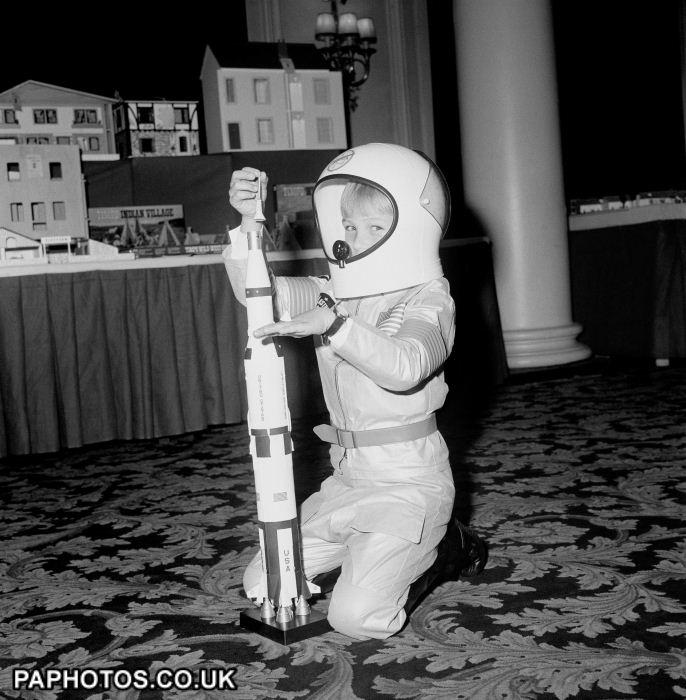
During the 1960s there were lots of little kids jumping into newly fallen snow and shouting “First Man On The Moon!” when their boots left a print. Little boys (and some liberated little girls) dreamed of and played at being astronauts. Even if children weren’t old (or sophisticated) enough to follow NASA’s doings, there was I Dream of Jeannie. Popular culture was drenched in all things space-age and planetary. The space program was in the air if you will. Being an astronaut was to a 1960s kid what being a cowboy was to a 1950s kid. Adventure, exploration, and glamour were all packaged into a very cool outfit. Astronauts, like cowboys, even had special food. They had belts that held their lifesaving apparatus. But they also had science. For a kid who loved rocks, or space, or climate, or chemistry, he/she too could dream of being a superhero.

No one will dispute that the space program has lost some of its glamour and pizzazz over the decades. Space is not new anymore. Technology has progressed and men and women in space suits are no longer required to achieve the mission. NASA has shrunk and no one dreams of being an astronaut any longer. But what has taken its place in the imagination of children? What is there today that encompasses exploration, science and glamour? Surely there are lots of careers that hit on 2 out of 3. But is there anything, not involving sport, celebrity for celebrity sake, or undefined means of accumulating wealth, that is universally compelling to children today?

One could posit that computer programming (in the form of gaming, biomedical, etc.) is our new space program. It is the new frontier. But only for a select few and there’s nothing particularly heroic about it. On a more practical level how in the world do you play “computer programmer” in the backyard? (But then again, does anyone freestyle play in the backyard anymore?) Even if it were fun to do so, only a small percentage of children would ever aspire to sit at a desk and write code. Every kid everywhere played cowboy (1950s) or astronaut (1960s.) Did a kid from the Bronx really stand a chance of homesteading and ranching someday? (Could his mother have survived it?) Did a rural kid with an allergy to moon dust and zero interest in science make it into the space program? Not without a miracle and some sudafed. But they had a shared dream/fantasy.

For all the glamour of being an astronaut (and the sports cars, groupies and ticker-tape parades add up to a whole lot of glamour) it was a serious (and at times deadly) profession. The space program was staffed with; test pilots, scientists and engineers. These were highly educated people with talents and skills of, well of rocket scientists. There was a whole lot of there there. They were glamorized for having the right stuff. Children were right to idealize these grown-ups. Their play, whether building cardboard box rocket ships, or jumping into snowbanks, was rooted in something real and admirable. For too long we have not provided children (and therefore humanity) with a universal dream. We once heeded the call to do something not because it was easy but because it was hard. Perhaps it’s time to suit up and have another go at it.

 
Leave a comment

Posted by on August 26, 2012 in Childhood, Cultural Critique


Tags: , , , , , , ,