RSS

A Helluva Town

New York City is incredibly diverse. If you’ve only seen the city on television or in (modern) film you might not have a full appreciation of its variations. You’d have every reason to believe that it’s a playground of opulence for its many residents. You may think that a woman who earn 5 cents a word buys $600 shoes, and everyone leaves their lovely high rise place of work in a black car. If you visit New York, either through a tunnel every weekend, or with the family every Christmas, you might think this is a city of bright lights and cobble stoned streets. Small parts of it are. But most of it is simply neighborhoods. New York City is comprised of five boroughs, Manhattan being the smallest of them all. On the island of Manhattan there is a different neighborhood every 10 blocks or so. Public housing high rises stand across the street from modern multi-million dollar condominiums. Check cashing stores are three blocks from $15 million Central Park view penthouses.

Ordinarily there is a simmering discomfort with this stark economic diversity. It (naturally) starts to boil when resources become even more scarce. Unemployment and economic strain exacerbates the tension and a disaster shines a bright spotlight on the strain. It seems clear a week after Hurricane Sandy that many people in public housing are now homeless. (Current estimates are that between 20-40,000 people are homeless and they are predominantly residents of public housing.) There are people left in the dark who rely on government aid under normal circumstances. EBT cards (aka food stamps) don’t work without power. School lunches don’t get served when there’s no school. Much of the worst destruction in New York City was in waterfront communities. With few exceptions these communities are working class. Several of them, Staten Island being in the lead, are home to NYC police officers and firefighters. These are not vacation homes and communities that were lost.

As schools begin to reopen this week we will see more of this disparity of neighborhoods. Children are being shuttled to schools that can reopen. New bus drivers are learning new routes. Some schools will open while also serving as shelters (and it’s too daunting to consider all the ways that can go wrong.) Special needs children may not have access to their services. Many children will have experienced trauma and might have a long road of instability in front of them.

There is some chaos that is universal. This week many of us may wait in line for gasoline or to vote. If we pay close attention to what frightening concepts scarcity, chaos and vulnerability are we might just have a tiny sense of what is being experienced by hundreds of thousands of people.

 
Leave a comment

Posted by on November 5, 2012 in Cultural Critique


Tags: , , , , , , , ,

Running Before You Can Walk

south ferry subway station

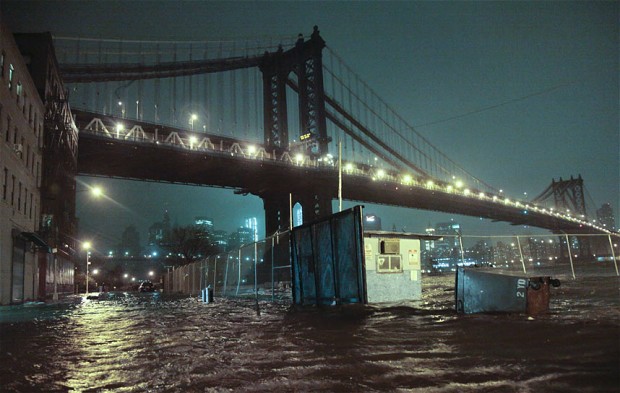
Most likely it will be some time before the full effect of Hurricane Sandy is known. It’s been over 48 hours since the hurricane hit and what we do know is that it was as bad as predicted. What could not be predicted was the unprecedented damage to infrastructure. Residents of Zone A (which includes all five boroughs) have not been allowed to return to their homes. Power is still off below 34th street in Manhattan and across all boroughs. NYC schools will be closed all week. The subways will start running (in a limited fashion) this morning while some stations are still being pumped out. There are sections of New York City (and certainly New Jersey) that are simply gone. Hospitals are still being evacuated. Human lives have been lost.

Yet the decision has been made to hold a marathon across these five boroughs in 72 hours. The NYC marathon is a huge event and brings money, tourists and international attention to the city. It draws resources, particularly those of first responders and congests traffic and walkways. No doubt many of the runners had flown in (to train on American soil) before the hurricane hit. The airports are slowly opening again, so perhaps the remaining can still get here. Those hotels not filled with evacuees, hospital, city and media staff are probably open. But for the love of decency is this really the time to have such a spectacle?

The runners start their journey on Staten Island which might just be the hardest hit area of the city. The ferry is still not running and the south ferry subway station is probably still under water. Even if they all can get there, should they? People have lost everything and are living (in the cold) without power or telephones. How will they feel seeing police and firefighters shepherding elite (and amateur) runners past their devastated homes? Will there be thousands of spectators offering cups of water to runners throughout the boroughs? Where will the water come from? Will it be trucked in and labeled “for runners only?”

High Occupancy Vehicle rules are in effect for the bridges and tunnels into Manhattan. Drivers (perhaps without access to electricity and/or information) will be turned away if there are not 3 people in the car. This restriction is necessary as without full subway service it is next to impossible to move through the streets of Manhattan. (The reason the President of the United States did not just bop on over from his visit with New Jersey is that he would have had to been airlifted into Manhattan. There are no spare traffic lanes for emergency vehicles let alone a motorcade.) But by all means, bring in more people and close streets for the runners.

The runners finish in Central Park, no doubt that section was given first priority in the clean-up efforts. Scaffolding and bleachers need to be built for the marathon. Parks employees and firefighters are needed to create that structure. It has been suggested (by non-city dwellers) that the marathon is a “sign of recovery” or a “welcome diversion.” Perhaps from a bird’s eye view this is the case. But down here in the decimated nest it feels terribly insensitive and disrespectful.

 
6 Comments

Posted by on November 1, 2012 in Cultural Critique


Tags: , , , ,

The Kids Are Alright


Wailing about kids today is a wholesome and robust tradition. Contrast and comparison is also a very effective way to understand one’s own self. “Parent Orientation!; my father slowed the car down when we got to campus!” when spoken out loud might expand one’s understanding of one’s own self-reliance. About two generations now have been grumbling and pontificating about the self-absorbed populace planted and sowed after 1980. Those in the earliest crop are now parenting themselves. Many born before 1980 or raised outside of the family-friendly entertainment industry/my child is an honor student/kindergarten graduation influence, find themselves wondering what will become of all these kids when they reach adulthood and discover there is no audience? Don’t worry; it’s not gonna happen.

No one grows up and enters their elder’s world anymore. In the 21st century our industry is ideas (via technology.) We are not building cities, roads and bridges. We are not harvesting national resources and building empires. Most of our cultural institutions and landmark buildings are just that; institutions and landmarks. There are not many young men and women going into the business of their parents’. Even if the ‘business’ goes by the same name, it probably looks quite different day-to-day. If dad went into his dad’s profession of banking, the work wouldn’t have varied that much. Sure dad would now be working with or for women, and maybe there would be no smoking, but the actual work; money in, profits out, wouldn’t have changed all that much. But by the time junior comes along the business is international and technology is king. Junior and his cohorts have never heard the term “banker’s hours” and if they did would assume it refers to 24/7. There are very few paths left where one could actually follow footsteps. Each generation now machetes their way through.

Nowhere is this more evident than in media and technology. Reality show proliferation doesn’t happen by accident. Dozens of channels specializing in ‘Queen for a Day” programming is calculated. It’s calculated by the television staff whose orientation to the world renders a “Look At Me!” premise totally plausible and laudable. It’s calculated by a television staff who also knows (or projects onto) its audience; “Who doesn’t want to be the center of attention?” And social media is not the result of a whole lot of leftover parts. Slowly but surely developers discovered that there was an insatiable appetite to ‘be seen.’ Certainly social media sites such as Facebook are a wonderful tool for connecting and reconnecting with friends. But it’s also an easy way to create a familiar and familial sense of importance. Status updates are filled with information that only a (helicopter) parent could possibly find interesting. Twitter is possibly one of the greatest ‘democratizer’ of our time; allowing for personal curation and access to previously unattainable information. But it’s also a way to type incessantly (and perhaps inanely) in the pursuit of attention.

Media and marketing have become so linked as to often be indistinguishable from one another. There is nothing surprising about this evolution. It is the natural by-product of generations who would not see a value in doing anything without an audience. All entertainment media now integrates Twitter and Facebook into their production. Try to even find a television program without a hash tag prompt on the lower left corner or a promo to “Like” the show on Facebook. Much of this marketing is relatively noninvasive and at times even informative. It’s nothing to shirk or even bemoan, but it is quite telling.

There are lots of real things to worry about. We can wring our hands over K-12 curriculum or childhood obesity. We can worry about higher education accessibility for our ‘best snack providers.” But we needn’t worry about how these kids will fare once the camcorders are turned off. As long as there are iPhones (or their yet to be born offspring) and mirrors, they’ll be just fine.

 
Leave a comment

Posted by on October 29, 2012 in Childhood, Media/Marketing


Tags: , , , , , , , , ,

Text And The Single Girl

Every few years someone develops a treatment and possible cure for heterosexual female singlehood. This is also known more commonly (at family gatherings) as ‘why you’re not married.’ Somebody, usually a woman, looking for fame and fabulous prizes, develops a method and/or writes a book that will help you find a man. Not necessarily a good man, but damn it, a man. The strategies (which can be yours if you act now) are in one of two camps; ‘the 5-10 step strategy’ in landing a husband OR the ‘this is what’s wrong with you and why you can’t’ land a husband. Both of these approaches are based upon the theory that husbands are to be sought and to be enticed into matrimony. ‘Hold the rotary phone!’ you say? This is the 21st century! Women own homes, and have babies alone. Husbands have never been more socially or financially unnecessary.

But people wouldn’t be buying these books or the media wouldn’t be covering these stories if there weren’t an interest. While it would be thrilling to think there is parallel target marketing happening for men, the truth is there isn’t. Centuries have passed and single women are still being told that “what gentlemen say and what they thinks is two different things (and I ain’t noticed Mr. Ashley asking for to marry you.”) In other words; play the game and win the prize. The latest game focuses on the ‘be available to all men at all times and hope that someone will consider you the one‘ approach. Don’t expect to ever be asked out on a date or even called (he only texts), just always be available. That text at 2:00 AM? Answer it! Won’t it make for a cute bedtime story for your children some day? Go home with the guy who seems harmless enough. You never know where it might lead (except that you do, that’s why you’re going home with him.)

There is nothing wrong with enjoying the company of men (clothed or unclothed) but the very idea that the way to a committed lifetime partnership is by having zero standards or expectations is absurd. Is there a guy that you’d like to know better? Is he not making any actual moves towards a date? ASK HIM OUT! You are not locked in a tower and and needing to lower your hair extensions. You live in the same world as he does. Ask him out: for a specific date and time. (FYI: “You wanna go out sometime” doesn’t mean anything and will not result in a date.) If you’d rather not have your communications solely via text, then don’t answer the text, instead call him back and hear his voice. You needn’t be scary or stalky about it; a simple “I’m a lousy texter” should do the trick.

Getting to know new people and (YES) dating is supposed to be fun. There is nothing fun about accepting whatever male attention scraps are dropped in your path. People want to feel special and appreciated; those are the first steps to romance. Unless that 2:00 AM text is originating from space or contains the message; “Just landed in Rome and realized I can’t live another moment without you” it’s not going to make you feel too special or appreciated. Ask for what you want, behave the way you wish others would behave, and you might just create the life you were always meant to live.

 
1 Comment

Posted by on October 25, 2012 in Cultural Critique, Marriage/Wedding


Tags: , , , , ,

The Painted As Performance

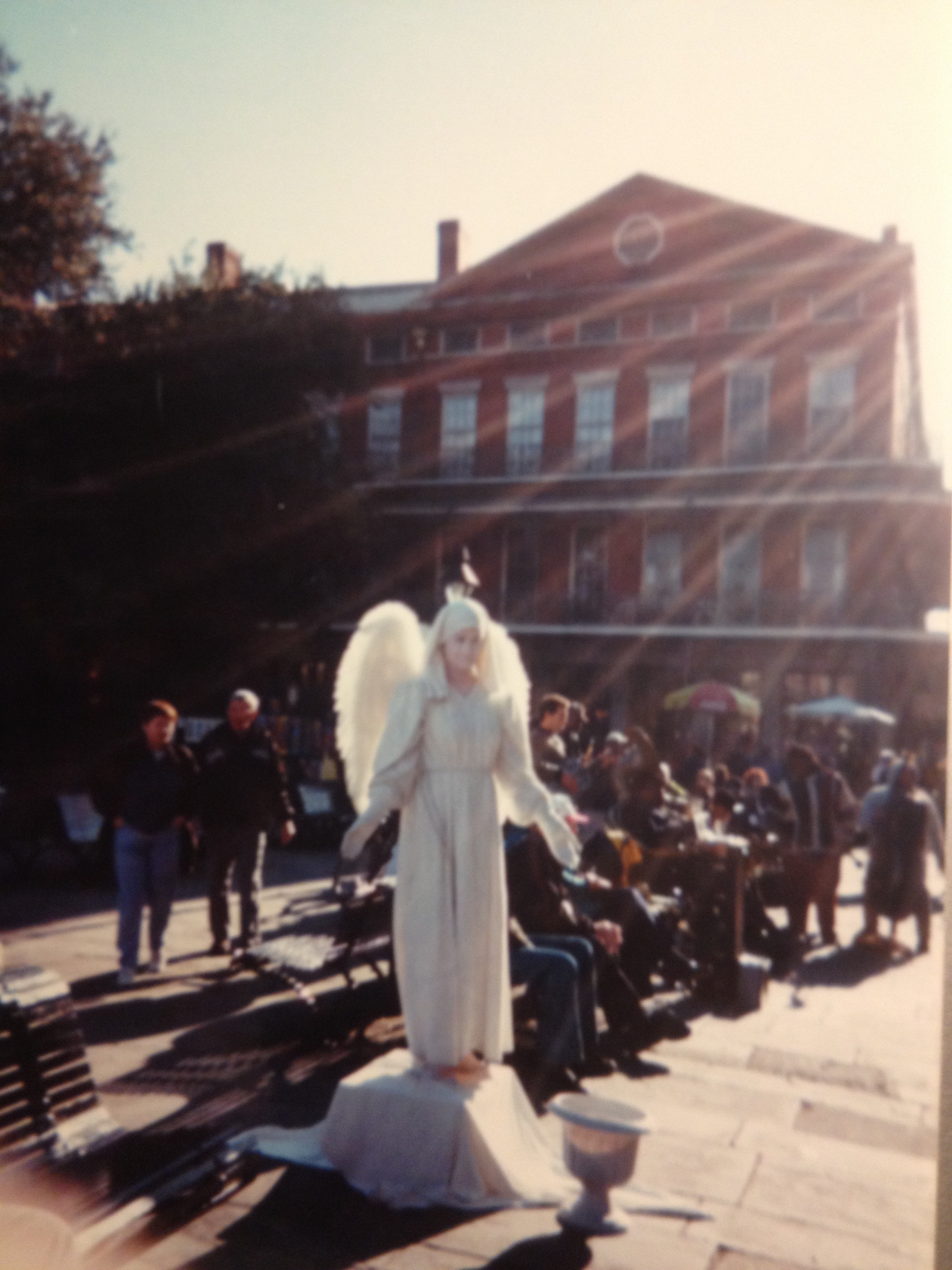
I remember the first time I saw someone wearing body paint as performance art. It was in New Orleans at the dawn of the 21st century. I was so startled by the minimalist art of the performance that I took a photo. I attributed the monochrome wings to the locale; steeped with after-life mysticism. It was a statement, one that eluded me, but a statement nonetheless. Perhaps the painted lady intended for us to contemplate the fine line between the living and the dead and accepted coins and paper money for her illuminative efforts. Or she was just a savvy out of work mime.

Fast forward to the latter part of 2012 and you can’t swing an angel without hitting a painted person accepting your coins and paper money. If you’ve been to any city lately you’ve no doubt had the thought; “body paint! I should invest in body paint!” In New York City painting oneself green and holding a torch is all the rage. There is no accurate head count, but there must be dozens of these elongated green people (they seem to often be on stilts or boxes which speaks to a commitment that cannot be ignored.) And while it’s challenging to consider how one’s life can lead to being covered in green paint working across the street from the Plaza, it is theatre of a sort. Certainly he or she can start each day, contemplating his or her perpetually stained cuticles and think; there are actresses all across this great land Defying Gravity and scraping green paint from under their Wicked nails. Or perhaps the performer, while greening up, repeats; “bring me your tired, your poor” in a slightly sultry french accent. Sometime during the long tourist pawing, bad joke hearing, horse poo smelling day; the performer may bolster his/her self with the thought that the final scene of The Way We Were was shot on this very spot. One way or another, the green can (through creative thinking) consider his or her self an actor.

But what of the silver guy? Or the bronze man? There are people who cover themselves in metallic paint and stand stock still and then move slightly. That is their “talent”! Come on! Everyone’s got something they can do, even if it’s just covering yourself in lightbulbs. But standing still and then moving? Perhaps these metallic motionless men misunderstood the trend in the 1980s of human mannequins? There was a (mercifully) brief period when humans would be hired to pose as mannequins in store windows. Passers-by would be surprised when the mannequins moved (ever so slowly.) This particularly gimmick works once; or twice for the easily entertained. The mime couple (yep! there was such a thing) Shields & Yarnell were mannequin act royalty. But you see the mannequin gimmick is based on the fact that mannequins aren’t expected to move. Metallic people have no reason to be standing still in the first place. They need a backstory. What’s their motivation? Perhaps if they were to carry an ax and wear a funnel on their head? For a small donation passers by could work the oil can. It would be interactive and fun for all ages. It would also curtail those mutterings from passers by; “I don’t get it, I just don’t get it.”

 
Leave a comment

Posted by on October 24, 2012 in Cultural Critique


Tags: , , , , , , , , ,