RSS

Having Vision

Lucy

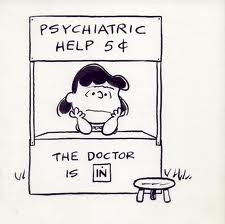
“Background checks!” “Assault rifle ban!” “Mental Health Registry.” I can’t be the only person completely flummoxed by the latter of these gun control cries. There’s been plenty of chatter and innuendo but little if any real explanation as to what in the world is actually meant by a mental health registry. How will illness be identified and categorized? Is the inclusion of a mental health codicil simply a way of saying ‘a registry of people who have exhibited violent behavior in the past and had treatment.’? If so, that is quite the branding overreach. People who commit violent acts are by definition violent. People who harm strangers are not of sound mind. But neither are people who commit white-collar crimes.

Mental health and violence are only linked in terms of a one-way relationship: people who commit violent acts=unwell. But the vast majority of people who are unwell do not commit violence (to others anyway.) A glance through the Diagnostic and Statistical Manual of Mental Disorders IV (DSM) will (takes quite some time but) will result in concluding there is simply no single mental disorder commensurate with violence towards others. If we were to analyze mass murderers we may see similarities. They might have social phobias or a narcissistic personality, they may even have hallucinations. Those are three distinct disorders that are also symptoms of several other disorders. What of people with substance-related disorders? They very well may have induced psychotic disorder, or not. And all psychosis is not the same. Psychotic episodes rarely result in shooting up a pharmacy.

So what do we really mean when we talk about a mental health registry? Even if we scrape away the Pollyanna delusion that the majority of unwell people seek and obtain good mental health care, we are still left scratching our heads. Are we saying that mental health professionals need report when a patient vocalizes intended harm? That already is the case, so if that’s what we mean we should just stop talking about this. Will mental health professionals be asked to expand the reporting paradigm to include those patients they suspect will do harm? Even if that type of Ouija board, tea leaf reading were possible, we’d still be left with a tiny population of people who are on a path of violence and are actively seeking help. In this magical scenario where therapists with any and every kind of training and credentials can see into the future and place someone on a registry; what exactly is the goal? Perhaps (in this lollipop and unicorn made for T.V. scenario) a violence prone person will be prevented from buying a new gun. Fabulous, great. Does it prevent him or her from accessing their mother’s stockpile? Does it stop them from using the guns they already own?

Focusing on the mentally ill is very much needed in this country. People are suffering and need care. Those in a fragile state shouldn’t be expected to do battle with insurance companies or general practitioners. We need to stop whispering when we speak of mental health issues. There is nothing shameful about needing help; but there is much shame to be shared in turning our backs. It shouldn’t be challenging to find good help, it shouldn’t be financially out of reach either. The path towards help shouldn’t be so opaque that people have to ask, “where do I find a therapist.” Professionally staffed mental health clinics, offering consistent and continuing care should be as ubiquitous as LensCrafters. There is no shame in needing help; most everyone needs glasses at some point.

 
Leave a comment

Posted by on February 9, 2013 in Cultural Critique, Well-Being


Tags: , , , , , , , , ,

These Are The Days

Edith Bunker

“We’re not getting any younger.” “You know, they are getting older.” How many times a week do you hear or say something similar? Unless you’re referencing someone who’s flat-lined you are 100% right. If we are alive we are by definition getting older (or less young.) From the moment we are born we are aging. We begin the journey calculating our age in hours, then quickly advance to days, months, years and eventually decades. In fact there are three age stages of ‘man’; boastful, gob smacked, and boastful. Our small selves broadcast our proximity to our older selves (ex. I’m 7 3/4!) Our middle selves approach each birthday with a bit of shock and awe. At some point, somewhere around the time we realize we’ve outlasted contemporaries, we boast (ex. I’m 83!) We begin with age pride and (hopefully) end with age pride. It’s just those awkward in-between 60 or so years that fill us with angst.

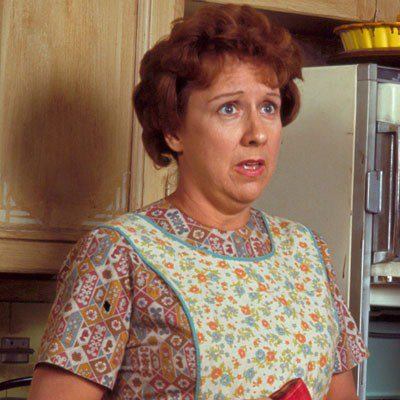
For many, age is a measuring device. (Think of a very long ruler whose bone density diminishes toward the end.) Each decade brings expectations or comparisons; each milestone year involves a self-audit. Self-analysis can be greatly beneficial, but comparing oneself to others or abstractions rarely is. We live in the best of lifespan times. We are healthier, we are more active and engaged, and we look good. Did I lose you on that last one? You doubt me perhaps? Do yourself a favor and turn on a retro-television network. Take a look at Edith Bunker at 47, or Lou Grant at 47. Ignoring the aging effects of living with Archie or keeping a bottle of scotch in one’s desk drawer; Edith and Lou look much older than today’s 47. The age rules have loosened and that loosening may be increasing the angst.

There are women and men sporting (and rocking) looks of people half their age. People who remember UHF and encyclopedias are (successfully) adopting trends of those in their 20s and 30s. Looking and feeling youthful (not young) is a great mood booster and a fabulous frame of mind. But it’s not much of a leap to consider the cognitive dissonance that occurs with each birthday. There we are speed walking through life with our yoga bums and long luxurious hair and WHAM! it’s Happy 45th, 50th, 55th, 60th Birthday! The numbers can be jarring because we no longer feel constricted by them, yet our childhood reference points did. We have reinvented our careers, lives, and families to a degree and at a rate that would’ve even shocked Maude.

No doubt the generation easing into their 30s (and out of our basements) will experience age differently. They seem to have a more liberal notion of adulthood and maturity. As they creep up in age, we will be their Edith and Lou. It’s likely that when they gulp upon hearing “Happy 60th!” it will be more about mortality and less about “but I don’t look/feel 60!” But what about us? How do we reconcile those ridiculous numbers with how we feel? Throw out the ruler! If we can start seeing the numbers (45, 50, 55, 60, etc.) as just math (and a means towards discounted movie tickets) we’d be further ahead. If a self-audit (at any age) confirms that we are happy and are the best version of ourselves we can be, than number is immaterial. But if we do focus on age let it be as our small selves did. Let us exclaim; Happy __th Birthday to me; I’m Still Here!

 
1 Comment

Posted by on February 8, 2013 in Well-Being


Tags: , , , , , , , ,

Make Someone Happy*

making hearts

Ah Valentine’s Day, the mercifully timed holiday to break up the dark dreary winter months. It is a holiday filled with red & pink hearts, candy and flowers. It is also a holiday rife with the opportunity to make people feel sad or hurt. Its ability to singe is utterly democratic. Children don’t receive enough classroom cards, teenagers don’t receive carnations or cupcakes at school, and grown people find themselves questioning (or despairing over) their relationship status. Of course there are many who receive the flowers, candy, jewelry, attention and are greatly relieved. Overall, a lot of people spend February 14th unconsciously holding their breath.

It would be easy (and sane) to cite the fact that Valentine’s Day is an enormous economic creation for the greeting card, flower, restaurant, and candy business. We could bah humbug our way through, mumbling mood bolstering ‘commercialism’ and ‘suckers’ affirmations. But what if we tackled it from the other end? What if instead of risking disappointment we went back to our construction paper roots? Remember the days of safety scissors and oak tag? There was a delicious pride in creating a reasonably shaped heart. Colored tissue and white paper doilies were used in excess; the results often resembling a powder room gone wrong. The creation(s) were steeped with love (and spilled glue) as they were most likely made for a parent or grandparent. There was an unbridled anticipation that caused many child to thrust the (slightly sweaty) valentine into the recipient’s hand before the 14th. The adult would coo and swoon and the child would feel five feet tall. It wasn’t until later in the week or childhood, that Valentine expectation and disappointment were introduced.

So let’s all take a collective leap back in time. Let’s spend this next week creating something for others. Gifts of homemade baked goods are always divine, but they’re not everyone’s bailiwick. Perhaps there’s an old photo you could frame? Maybe you have a favorite poem you could write on a beautiful piece of stationery (with proper citation of course.) Is there a friend (or acquaintance) who could use a respite? Bringing them coffee, taking them out, or watching their child/loved one is a wonderful gift. If you are one of those lucky creative types, break out the glitter (it’s not just for Saturday night you know) and make some gorgeous bespoke cards.

Yes, it is positively dreamy to receive lovely gifts that make us feel understood and appreciated. Who doesn’t want to be swept up in a sea of romance and a soaring soundtrack? Love is one of the greatest gifts of life. Whether we are the recipient or the giver (or ideally both) love simply makes sense of life. Acts of love make life fun. So make someone happy this Valentine’s Day, and you will be happy too.

*”Make someone happy, make just one someone happy, and you will be happy, too.” Jule Styne (1960)

 
Leave a comment

Posted by on February 6, 2013 in Holiday, Well-Being


Tags: , , , , , ,

Dealing Prescription Drugs

Pill

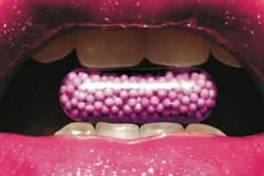
Drug abuse has existed since the dawn of time (or at least since the first person ground a leaf into powder.) Just about any substance can be misused or abused. Many drugs lend themselves to misuse/abuse due to their mood altering effects. However in recent years antibiotics have become misused as well. As a culture we are not entirely comfortable with discussing prescription or over-the-counter (OTC) drug abuse. We know what drug abusers (a.k.a. junkies) look like; we’ve seen them in movies and magazine features. Surely the (pill taking) carpooling mom next door can’t be abusing drugs; look at her! Those honor students doing homework in the media room can’t be abusing A.D.H.D. medication; look at how well they’re doing! What adds a heavy opaque veil to the detection is that these drugs come from doctors. Doctors know a thing or two about the human body and what is good for us, no? In theory, yes.

Detecting drug abuse during a 3-5 minute office visit is not easy. There are those who live with people day in and day out and still have no knowledge of drug misuse/abuse. This is by no means to suggest that doctors shouldn’t prevent and detect misuse/abuse. Quite the contrary. We need to incentivize the doctors to limit prescription writing (kind of the way drug companies give incentives to write the prescriptions.) Primary doctors need to spend time asking pointed and probing questions and not merely relying upon questionnaires to make diagnoses for mood altering drugs. Doctors must know the signs of dependency and always err on the side of lower dosage. Doctors know the signs of mental illness and should be on alert for signs of self-medicating behavior. Doctors should refer patients to a mental health practitioner if there are any doubts about stability. The mental health practitioner and referring doctor must decide in concert what medication (if any) is best for the patient.

Pharmacies are already set up to detect prescription abuse. But there are gaps and it’s not considered abuse to fill legitimate prescriptions. We need to start with source (or ‘dealer’ as he/she is known on the street.) Doctors are not looking to get people ‘hooked’, not consciously anyway. For the most part they want their patients to be healthy and happy. They certainly don’t want to see their patients in pain, physical or psychic. Pain medication is tricky business and that’s why there are specialists and pain clinics. Managing pain and pain amelioration can’t happen in a 3-5 minute general practitioner’s office visit. General practice is not the place for treating a cognitive, behavioral or mood issue either. Psychologists and psychiatrists are trained to diagnose learning disorders, and behavior and mood disorders. Relying on general practitioners to treat all aspects of the human condition is quaint and ridiculously. No one person can possibly be up to date on all the medical developments of the 21st century.

We’ve become rather blasé about medicine; ironically as it’s become space age in its sophistication. But we are wrong to do so. Often times, dangerously wrong. Drugs are drugs; whether they come in a childproof bottle or a tiny ziploc bag. They can be life saving or ending, and should be treated as such.

 
Leave a comment

Posted by on February 3, 2013 in Cultural Critique, Well-Being


Tags: , , , , , , , ,

A Health Care Reformation Proclamation

doctor

Medical Insurance (or as it’s less accurately known; health insurance) is on its way to reformation. It’s not clear if the results of the reform will render the; coverage, procedures and rights of the users any more decipherable than they are right now. But what is clear is that the more something is examined the more flaws are brought to light.

We can all probably agree that good medical care should be available to all. Whether insurance is the means to that end is highly questionable. But we seem to be stuck with that particular paradigm. Anyone who has ever sought treatment, payment or reimbursement would probably be happy to swear on a big towering stack of bibles that insurance companies seem to be in the business of making money not providing good healthcare. But as we established; we are stuck with this paradigm. In the interest of making lemonade out of the soul crushing demoralizing oligarchy of the paradigm, let’s consider how government involvement might improve things. (There will be no rolling of the eyes.)

The most obvious improvement will be filling gaps in the current usage of medical care. Insured people are presumably less likely to use emergency rooms as their general practitioner. This is good for both continuity of care and preventive efforts. It is also an enormous cost savings. Insured people are more likely to visit doctors before a condition become acute. They are also more likely to take the full dosage of their prescribed (co-pay) medicines, when not compelled to ration. In theory medical insurance for all will lead to medical care for all. Whether it’s ‘good’ medical care is another issue altogether (that was less of an eye roll and more of a ‘whatever’.)

Where things potentially get exciting and sane is the possibility of payment parity. Currently medical insurance is sold in two sizes; individual and family. The individual plan is discreet and self-explanatory. The family-size is an unlimited free for all. There is nothing equitable about this framework. A two-person family is paying the same rate as a ten person family. A parent with one child is in essence subsidizing larger families. Two options of coverage (individual and family) only benefits large families (and no doubt insurance companies.) There is no other insurance plan (of which I’m aware) that operates this way. You don’t buy homeowner insurance for either one home or an unlimited amount of homes. You don’t purchase auto or life insurance in this manner either. You purchase insurance plans for each entity that needs coverage.

I would like to think that as the thinkologists are drawing up this new way of doing medical care business, they will take note of this inequity. (Can’t really see my eye rolling behind these rose colored glasses, can you?) Perhaps when all people (not covered by employers) have to purchase insurance they will balk at the two sizes fits all framework. People probably don’t spend a lot of time scrutinizing each pay-stub and considering their pre-tax contributions. But it’s hard to ignore being overcharged when you are writing the check.

Sometime during the last four decades or so we’ve convinced ourselves that medical insurance is mandatory and good. It is not a coincidence that healthcare costs have skyrocketed as we succumbed to this thinking. There are too many bad medical practices and less than good doctors hiding behind insurance. There is far too much money and time spent trying to keep costs down versus caring for people. Good care that focuses on what’s best for the patient is what we need. We’re on our way to medical insurance for all. Now how about some actual health care reform?

 
2 Comments

Posted by on January 31, 2013 in Cultural Critique


Tags: , , , , , , , , , ,