RSS

Category Archives: Well-Being

Corseted Voices

corset

The teeny tiny breathy voice caught my attention. At first I attributed it to the elderly woman sitting at the front of the bus. The fragile smallness of the tone certainly fit the profile. But then I noticed the breathy almost Marilyn quality beneath the tinny squeak. The come hither tone coming from the throat rather than the diaphragm could be the result of a pulmonary condition, but it sounded too controlled, too intentional to be medical in origin. After a few unsubtle craning of the neck I spotted the source, a young woman in her early 20s. Where on earth did she learn to speak like a sexy grandmother? And how do I wrangle an introduction to her grandmother?

Since that mass transit incident I’ve come in contact with hundreds of women ranging in their late teens to late 20s speaking in tiny breathy voices. How did this happen? As little girls did they dream of one day sounding like sexy grandmas? Did they foresee a lucrative career in senior phone sex? Or was it just an adolescent affectation, like dotting ‘i’s’ with hearts, that simply got way out of hand? And what kind of teenage girl wants to sound decrepit? Or could it be what you and I hear as fragile breathy grandma, these uber-indoor voiced gals hear as submissive and thereby somehow enticing? We’ve all been there; the home perms, the blue eye shadow, the clogs. We’ve all done our time in the adolescent hall of mirrors, trying on one misguided identity after another. But I’d like to think had I continued on any of my (many) misguided paths one parent or another would have said something. In fact they did. During the height of my adolescent years I spent all of 5 minutes with an affected voice; having just spent an enriching day with some upper east side girls. I was told in no uncertain terms to unlock my jaw and open my mouth immediately. My country club affectation was quashed before I even made it up to my room, let alone onto a public bus.

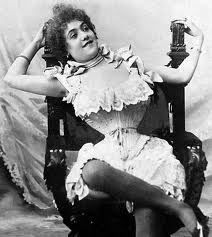
Do parents not hear their own children? Does their adoration tinker with their ears giving every utterance the deep solid tones of a young Helen Reddy? Do teachers no longer send students to speech therapy? Do doctors not notice the panting and squeaking? And what of peers; merciless, punishing, unrelentingly critical peers? Shouldn’t there be taunting and antagonizing? Where are the Depends jokes, the lockers draped in support hose? Or are the geriatric geisha voiced gals admired?! Is having a tiny voice whose sole purpose is to entice men, the 21st century equivalent of a 16-inch waist or the ability to play the harpsichord? Is fragile the new black? Are young woman creating virtual corsets resulting in smaller people with diminished voice? If so, to what end? Surely the job interviewing process is not aided by appearing weak and tremulous. My guess is that by 30, their mouths start to open and they find their real voice. Traditionally that’s what metaphorically happens in one’s thirties. The alternative is simply too hideous to contemplate! No one wants to hear quarterly projections or medical test results in a breathy shaky voice. It would be hard to believe the state of the union is anything but doomed hearing it spoken in a squeak. But just in case these women don’t naturally grow out of the contrivance, congratulations to all you vocal coaches and speech therapists, your ship has come in!

 
Leave a comment

Posted by on March 11, 2013 in Cultural Critique, Well-Being


Tags: , , , , , , , , ,

All aTwitter

comicbooks

There are two (polar opposite) views of modernity. There are the early adopters who froth and queue up for new and shiny gizmos and gewgaws and then there are the progress curmudgeons. These curmudgeons sit on their metaphorical porches and attribute the downfall of society to; ‘those dadgum moving picture shows.’ Most of us fall somewhere in the middle of these two opposing views. The early adopters aren’t a new concept (please don’t tell them that it would just kill them) people have been running to buy what’s being sold since the first wheel kiosk opened. It’s the progress curmudgeons that are far more fascinating. Nobody is born a progress curmudgeon. Every kid is intrigued by something newer, faster, and shinier. No, a curmudgeon must be created. They must find a time in history and stick with it. Any and all things that came after these glory days must not be trusted.

This is not an entirely irrational perspective; some things simply aren’t made as well as they once were. For instance clothes used to be made to last a lifetime, although who would want to wear the same clothes for their entire life alludes me. Cars were far less disposable, but they were also lethal (both for riders and for anyone in the car’s path.) Certainly items were easier to use once upon a time. Picking up the phone and asking the operator to connect you was easier than…pushing a speed dial button? Well a typewriter was certainly easier to use than a computer. You only need insert a ribbon (use lye to remove the ink from your fingers,) insert paper, reinsert paper after you realize the lye missed some spots and ink has leached onto the paper, insert paper again with carbon paper (use lye to remove carbon from fingers) commence typing, commence searching for white-out, miraculously finish letter, try and type address onto envelope, give up and handwrite envelope, find stamp, walk to mailbox, repeat. Fine, communication is easier but what about music. Don’t you miss records? You remember records don’t you? There were those paradoxically highly fragile yet extremely heavy items you had to lug around with you through life. They crackled and skipped and sounded nothing like the real thing.

I think we can all agree that progress is just that; progress. We don’t have to like it and we don’t have to adopt it, but we cannot argue with the fact that it is progress. No one wants to feel left behind or to have his/her rituals upended. But discounting progress, or worse imbuing progress with negative consequences is misguided. How many times have you heard people blaming modern movies and videos for increased violence (as if silent movies weren’t horrifically violent)? And what of this notion that social media is to blame for increased bullying. It’s not lax parenting, or the soul crushing experience of a Kindergarten graduation ceremony that leads to the self-esteem issue that is always at the root of bullying. Nope, it’s social media that is to blame. The same social media that allows for positive reinforcement that simply does not exist in any other domain of the real world with the exception of group therapy. Before the advent of (social media) Linkedin did anyone ever publicly endorse your skills? Whether it is a meaningful gesture or has any validity at all is beside the point. It is a public attaboy that simply did not exist in the past. Before we tweeted, did we publicly support other’s views or endeavors? Do we even remember a life before Facebook and the villages it’s created? When, beside a reunion (family or class) did we ever cheer accomplishments, offer sympathies and coo over baby pictures?

Expanding our sense of community is always a good thing. It reinforces our attachment and obligation to the larger world. Humans despite their many differences are at their core the same; they need to be connected to other people. It is not the gaming or chatting that encourages antisocial behavior; it’s the fact that people are using these outlets to avoid social behavior. In that sense the video game is no more detrimental than the comic book (which was also decried as the downfall of civilization.) The progress doesn’t create maladjusted people, it’s that maladjusted people still crave human interaction, simulated or not. Banning or demonizing the tangible is always more tempting than dealing with the elusive. The only way to reach troubled people is to reach out to troubled people. Blaming something we don’t care for or don’t understand is distracting and disingenuous. Social media, comic books, dime novels or pool do not create trouble. Troubled people are drawn to things that make them feel less alone.


Tags: , , , , , , , , , , ,

Nobody Knows Our Sorrow

Sally Field

Pain and loss are deeply personal states and often very lonely ones as well. We share in each other’s joy and accomplishments with ease. Happiness is not complex, it simply is. But pain and loss are layered and very specific. Despite our own personal experiences we can never truly know how someone else feels. This doesn’t matter when we are celebrating happiness. Nobody celebrating a marriage, birthday, or addition to the family needs empathy. It’s when our world has become small and dark and hollow that we crave understanding.

There are people who are comfortable with the loss of others. They are often drawn to professions that care for and about the bereaved. However the majority of people follow the evolutionary dictum of trying to avoid loss and pain. We shy from the enormity or contagion of pain and loss. Often we don’t know what to say, or in our nervousness spew forth a ridiculous (and potentially painful) cliché. Even people who themselves have endured their share of sh*&storms don’t necessarily know what to say. “I’m so sorry”, while honest and empathetic, doesn’t seem sufficient.

The throes of anguish and despair can feel very lonely. How can the world go on as if nothing has happened? The weight of the personal pain often wants to make its presence known. A stranger’s reflexive “How’re ya doing?” sounds like a serious inquiry. It may feel disloyal to a memory or oneself to answer; “Fine.” Expressing our loss and pain is important, but it can exacerbate the misery if we do so indiscriminately. We all want to feel understood and comforted. The former is far trickier than the latter. Only those who really know you can understand you,up to a point. Pain is personal. We can rail, blog, and rant about nobody understanding our specific hurt, and perhaps the very act of purging is of comfort. But expecting others to comprehend the intricacies of our experience while understandable doesn’t advance our own understanding. Self-care, and ultimately recovery necessitates that we understand our own pain. Fully understand it, care for it, and find a place for it.

 
Leave a comment

Posted by on February 11, 2013 in Well-Being


Tags: , , , , , , , ,

Having Vision

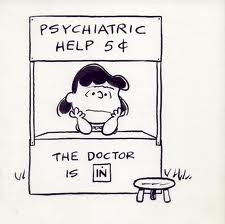
Lucy

“Background checks!” “Assault rifle ban!” “Mental Health Registry.” I can’t be the only person completely flummoxed by the latter of these gun control cries. There’s been plenty of chatter and innuendo but little if any real explanation as to what in the world is actually meant by a mental health registry. How will illness be identified and categorized? Is the inclusion of a mental health codicil simply a way of saying ‘a registry of people who have exhibited violent behavior in the past and had treatment.’? If so, that is quite the branding overreach. People who commit violent acts are by definition violent. People who harm strangers are not of sound mind. But neither are people who commit white-collar crimes.

Mental health and violence are only linked in terms of a one-way relationship: people who commit violent acts=unwell. But the vast majority of people who are unwell do not commit violence (to others anyway.) A glance through the Diagnostic and Statistical Manual of Mental Disorders IV (DSM) will (takes quite some time but) will result in concluding there is simply no single mental disorder commensurate with violence towards others. If we were to analyze mass murderers we may see similarities. They might have social phobias or a narcissistic personality, they may even have hallucinations. Those are three distinct disorders that are also symptoms of several other disorders. What of people with substance-related disorders? They very well may have induced psychotic disorder, or not. And all psychosis is not the same. Psychotic episodes rarely result in shooting up a pharmacy.

So what do we really mean when we talk about a mental health registry? Even if we scrape away the Pollyanna delusion that the majority of unwell people seek and obtain good mental health care, we are still left scratching our heads. Are we saying that mental health professionals need report when a patient vocalizes intended harm? That already is the case, so if that’s what we mean we should just stop talking about this. Will mental health professionals be asked to expand the reporting paradigm to include those patients they suspect will do harm? Even if that type of Ouija board, tea leaf reading were possible, we’d still be left with a tiny population of people who are on a path of violence and are actively seeking help. In this magical scenario where therapists with any and every kind of training and credentials can see into the future and place someone on a registry; what exactly is the goal? Perhaps (in this lollipop and unicorn made for T.V. scenario) a violence prone person will be prevented from buying a new gun. Fabulous, great. Does it prevent him or her from accessing their mother’s stockpile? Does it stop them from using the guns they already own?

Focusing on the mentally ill is very much needed in this country. People are suffering and need care. Those in a fragile state shouldn’t be expected to do battle with insurance companies or general practitioners. We need to stop whispering when we speak of mental health issues. There is nothing shameful about needing help; but there is much shame to be shared in turning our backs. It shouldn’t be challenging to find good help, it shouldn’t be financially out of reach either. The path towards help shouldn’t be so opaque that people have to ask, “where do I find a therapist.” Professionally staffed mental health clinics, offering consistent and continuing care should be as ubiquitous as LensCrafters. There is no shame in needing help; most everyone needs glasses at some point.

 
Leave a comment

Posted by on February 9, 2013 in Cultural Critique, Well-Being


Tags: , , , , , , , , ,

These Are The Days

Edith Bunker

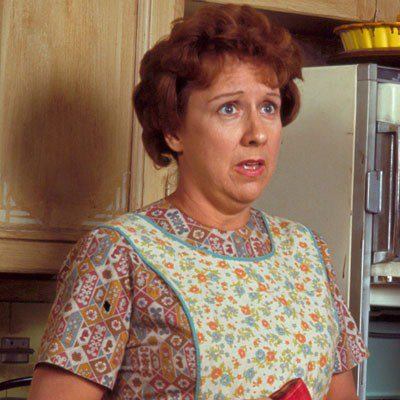
“We’re not getting any younger.” “You know, they are getting older.” How many times a week do you hear or say something similar? Unless you’re referencing someone who’s flat-lined you are 100% right. If we are alive we are by definition getting older (or less young.) From the moment we are born we are aging. We begin the journey calculating our age in hours, then quickly advance to days, months, years and eventually decades. In fact there are three age stages of ‘man’; boastful, gob smacked, and boastful. Our small selves broadcast our proximity to our older selves (ex. I’m 7 3/4!) Our middle selves approach each birthday with a bit of shock and awe. At some point, somewhere around the time we realize we’ve outlasted contemporaries, we boast (ex. I’m 83!) We begin with age pride and (hopefully) end with age pride. It’s just those awkward in-between 60 or so years that fill us with angst.

For many, age is a measuring device. (Think of a very long ruler whose bone density diminishes toward the end.) Each decade brings expectations or comparisons; each milestone year involves a self-audit. Self-analysis can be greatly beneficial, but comparing oneself to others or abstractions rarely is. We live in the best of lifespan times. We are healthier, we are more active and engaged, and we look good. Did I lose you on that last one? You doubt me perhaps? Do yourself a favor and turn on a retro-television network. Take a look at Edith Bunker at 47, or Lou Grant at 47. Ignoring the aging effects of living with Archie or keeping a bottle of scotch in one’s desk drawer; Edith and Lou look much older than today’s 47. The age rules have loosened and that loosening may be increasing the angst.

There are women and men sporting (and rocking) looks of people half their age. People who remember UHF and encyclopedias are (successfully) adopting trends of those in their 20s and 30s. Looking and feeling youthful (not young) is a great mood booster and a fabulous frame of mind. But it’s not much of a leap to consider the cognitive dissonance that occurs with each birthday. There we are speed walking through life with our yoga bums and long luxurious hair and WHAM! it’s Happy 45th, 50th, 55th, 60th Birthday! The numbers can be jarring because we no longer feel constricted by them, yet our childhood reference points did. We have reinvented our careers, lives, and families to a degree and at a rate that would’ve even shocked Maude.

No doubt the generation easing into their 30s (and out of our basements) will experience age differently. They seem to have a more liberal notion of adulthood and maturity. As they creep up in age, we will be their Edith and Lou. It’s likely that when they gulp upon hearing “Happy 60th!” it will be more about mortality and less about “but I don’t look/feel 60!” But what about us? How do we reconcile those ridiculous numbers with how we feel? Throw out the ruler! If we can start seeing the numbers (45, 50, 55, 60, etc.) as just math (and a means towards discounted movie tickets) we’d be further ahead. If a self-audit (at any age) confirms that we are happy and are the best version of ourselves we can be, than number is immaterial. But if we do focus on age let it be as our small selves did. Let us exclaim; Happy __th Birthday to me; I’m Still Here!

 
1 Comment

Posted by on February 8, 2013 in Well-Being


Tags: , , , , , , , ,