RSS

Category Archives: Well-Being

The Hunger Bane

No doubt you’ve heard of Americans flocking to Canada (virtually or really) for inexpensive pharmaceuticals?  There’s nothing necessarily back-alley about it, it’s just that the name-brand legitimate pharmaceuticals are less expensive in other countries.  But it seems that Canada may also be a destination for surgical procedures that are not exactly F.D.A. approved.  People with life threatening diseases (with resources) have often flocked to other countries in pursuit of treatment not available/legal in this country.  However, the recent surge in maple leaf medical tourism is for weight-loss surgery.

Since 2006 Canadians can have a balloon inserted into their stomachs.  (Think of it as angioplasty for your tummy.)  The balloon makes you feel full.  I’m guessing nobody in the lab screamed “Eureka!” when they developed this device.  To my (very) non-medical self, there is nothing necessarily all that different between this and any other inflatable device one would have inserted somewhere.  Unless there’s some sort of high stakes patent wrangling in play, no doubt this procedure will be available in the lower fifty states soon enough.

But should it?  All weight-loss surgeries involve reducing the amount of food the patient can comfortably ingest.  In essence they are the modern-day equivalent of wiring one’s jaw shut.  The theory behind these “solutions” is that people need to be physically blocked from responding to their desires.  Rarely is putting a lock on the refrigerator door a sustainable weight-loss plan.

What would be most helpful to people, either in concert with surgery or not, is learning to cope with the sensation of hunger.  Hunger is not necessarily a cue to eat.  Needing nutrition is a cue to eat.  Someone who is constantly thirsty shouldn’t just be watered, they should be checked for diabetes.  A person who feels constant hunger needs help determining why and learning to manage the sensation.  Beyond the standard analysis of; are you bored, thirsty, sad, lonely? is addressing the feeling of emptiness that might be present.  The world is not a friendly place for the obese.  Clothes, furniture, seats, etc. are all geared towards average sized people.  Prejudice, mockery and serious health consequences lurk at every turn.  In other words, nobody wakes up and decides that what they really want to be is obese.  It tends to just happen.  Over time.

Since the F.D.A. seems to be dragging its feet in approving the balloon method, I’d like to think it’s because they are giving serious thought to reforming the protocols of weight-loss surgery in general.  While it is a slippery slope to mandate counseling before medical procedures, we do have precedent.  Since its invention, a person can not undergo gender reassignment surgery without structured preoperative psychological counseling and clearance.  (No doubt this protocol was created by male doctors who had their own issues about loss.)

If we agree that obesity is a problem, and that people are entitled to pursue good health, than we need to stop offering quick fixes in a vacuum.  There is no such thing as any surgery without risk.  But by ignoring the psychological side of the patient we are adding the risk of failure to the mix.
 
Leave a comment

Posted by on April 11, 2012 in Cultural Critique, Well-Being


Tags: , , , ,

New To The Neighborhood

Why is it that time and time again we are ill prepared for entirely predictable events?  We know that giving birth and having an infant in the house will be all consuming and exhausting, but still feel surprised to find it to actually be so.  Freelancers, consultants, contract workers and artists, are serial professional monogamists, yet still experience disorientation at the end of each gig.  It stands to reason that (if we’re lucky) our parents will age.  Yet, with each incremental stage of their decline we feel ourselves breathless and floundering.  It’s in our best interest to be able to feel frightened or sad (lack of affect is a sign of serious trouble!) but why do we also feel “caught off guard?”

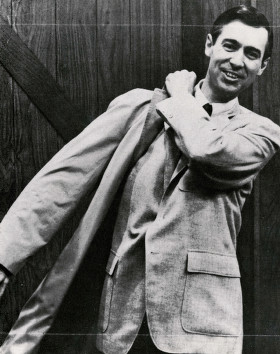
Nobody likes surprises (which is why surprise parties are only fun for the people planning them.)  One of Mr. Rogers‘ most insightful and comforting songs was I Like To Be Told.  He understood that children, with no frame of reference, find most of life surprising and unsettling.  But we grown-ups are supposed to be pretty well versed in the vagaries of life.  Of course events which could never be foreseen (both good and bad) occur, but it’s not those that leave us feeling as if we “really should have a better handle on this.”

Could it be that being truly conscious and cognizant of future hurdles and hardships is just not a pleasant way to live?  Would being at full boyscout readiness at all times rob us of the joys of spontaneity and hopefulness in life?  That could be the answer, if in fact cynics and pessimists find themselves in ship shape when things go a bit awry.  Does a gloomy Gus face a parent’s accident, illness or decline with an attitude of “finally! something I’m good at!”  Maybe.

What is really at the heart of the issue is that of mastery.  We feel caught off guard because of the novelty of the event in our own life.  Yes, we know the event is inevitable, but until we’ve tackled it head on and survived, we feel uncertain.  Life tilting events, by their very nature are not extremely repetitive (if you’re lucky) so there is little chance for mastery. With each of these events (illness, job loss, death, etc.) we feel as insecure as we did as children, yet the situation calls for us being our most adult.  The solution to our feelings of helplessness and insecurity is not to wish for more opportunities to develop mastery.  What we can do is remember that we know enough to do the very best we can do.  We’ve experienced bumps in the road before; this is not our first time at the rodeo if you will.  Hurdles are just that; hurdles.  There is quite a distance between each one (otherwise hurdles would be called bridges.)  When the floundering sensation becomes too much, never underestimate the restorative powers of a cup of tea, and a little Mr. Rogers.

It’s such a good feeling to know you’re alive.
It’s such a happy feeling: You’re growing inside.
And when you wake up ready to say,
‘I think I’ll make a snappy new day.’
It’s such a good feeling, a very good feeling,
The feeling you know that we’re friends. (Fred Rogers,1967)

 
2 Comments

Posted by on March 29, 2012 in Cultural Critique, Well-Being


Tags: , , , , ,

Mama I’m A Pretty Girl

When the woman was asked why she covered her gorgeous freckled face in thick pancake make-up she replied; “I was teased about my freckles as a child.”  The woman is now in her forties.  Another woman when questioned about her militant avoidance of grooming and style, explained that no one ever complimented her until she was 9 years old.  She too was in her forties.  Habit, is habit.  We all have them, some are more charming than others.  Kissing the spouse before leaving the house?  Charming.  Leaving the bathroom door open and carrying on conversation, not so charming.  But enough about me.

The issue with behaviors that harken back to childhood is that they are rarely helpful in moving us forward.  That is not to say that our childhood and adolescence are not part of us, they are.  But I’m not sure we want to take our behavioral cues from our 9 year old selves.  The point of aging (and yes, I’m told there is a point) is that we presumably get a little smarter with each passing year.  We learn from our own mistakes and successes, we learn through our relationships with others, and we learn from witnessing life.  By the time we are in our late twenties we know what “I’ll call you” means and not to take a craigslist ad at face value.  Somewhere in our thirties we might discover that the operative term in “work friend” is “work” and we are all extremely expendable in the workplace.  We may also discover that we don’t in fact “have a type,” but goodness, love and laughter comes in all shapes and sizes.  In our forties, it is my fervent hope that we learn to block out all the internal criticism (well almost all.)  We see media for what it is; photo-shopped, laugh-tracked means to sell us something, and stop comparing ourselves to what we’re being shown.  We realize that we are never going to be as young as we are right this very moment.  We stop wasting another minute being stuck and silence the mental loop of childhood indignities.

Recently a friend shared a story with me.  During a work crisis, my friend kindly drove a colleague from the office.  During the trip the woman regaled my friend with stories of how her mother ruined her life.  In the dark of the car, held captive, he listened to tale after tale of maternal slights.  That colleague was in her late seventies.  Her entire life (thus far) has been dedicated to keeping that hurt alive.  If you believe that this life, the one you are in right at this moment, is the only one you get, I suggest not wasting another moment.  Choose happiness.  Grab it with both hands and don’t let go.

 
2 Comments

Posted by on January 31, 2012 in Style, Well-Being


Tags: , , , ,

Hello Gorgeous!

Rumor has it that October 19th is Love Your Body Day.  (Note: I would do some fact checking before assuming opposite side of the street parking has been suspended.)  While I’m not sure that schools and banks should close, I do applaud the occasion.  From what I read, see and hear (mostly by way of eavesdropping) this day is called for.  From tweens to seniors, there is a great deal of self war being waged.  We all have an off day, but there is something tragic about hating yourself every day.

I am a woman from a western culture, I am not impervious to the internalized merciless critic.  However, a couple of adult decades under my belt has pretty much muted that little voice.  Has my body gotten better with age?  I doubt it (if so, I could probably sell myself to science!)  To be utterly reductive, I think I’ve (finally) stopped comparing myself to avatars.

As soon as I was allowed, I became a devotee of ‘Teen magazine.  I poured over that magazine, not for fashion pointers, but for role models.  Like a Talmudic scholar, I wore those pages out trying to decipher the secrets.  Coming to adolescence with the zealot belief that life would be like an MGM musical, I desperately wanted to look the part.  ‘Teen magazine promised to be the most instructive.  I was self aware enough to know that Charlie’s Angels, and even Julie, the cruise director, were out of my reach.  But perhaps the fashion models, only a few years older than I, would hold the key.  The fifteen year old me, with a thin layer of baby fat, studied those photo-spreads like nobody’s business. I also, unfortunately, compared myself mercilessly to their perceived perfection.

I still find fashion magazines potentially instructive.  I now, however, understand the wonders of lighting, styling, airbrushing and photo-shopping.  (Hopefully, today’s young teens are much more media savvy than they used to be!)  All this is to say, that the first step to honoring “Love Your Body Day” is to stop comparing it to fiction.  The second step, is to stop comparing it to others.

“Others” being a version of your younger self, or the gal sitting next to you.  As far as the ravages of gravity and/or aging go, let me be the first to point out that you are never going to be as young as you are right now.  Don’t waste another moment bemoaning the fall of your bum.  Buy better pants if necessary.  (Truly, the virtue of good undergarments can not be stressed enough.)  And about that “perfect” gal sitting across from you?  She feels fat.

No one sees our perceived imperfections, they are far too interested in their own.  Whatever our shortcomings, we’re here aren’t we?  Isn’t that everything?  Life is too short to not treat everyday like a potential MGM musical.  Now as far as those off-days?  Change your inner critic’s voice to that of Irving Berlin’s: “Never saw you look quite so pretty before.*”

* Easter Parade

 
2 Comments

Posted by on October 17, 2011 in Style, Well-Being


Tags: , , , , , , , , , , , , ,

What Would Bill W. Do?

Not too long ago, there was some media buzz about the efficacy of addiction therapy.  This is not a popular subject.  If one works in the rehabilitation (rehab) industry one is understandably resistant to any metric devices that might prove the methodology ambiguous.  Addiction is a very resistant phenomenon.  There are occasions, when a society of thinking people can agree, that lacking a 100% guarantee, erring on the side of empathy and care is optimal.  For some addicts, the simple act of stopping something in motion, is enough to change their lives.  Rehabilitation can be that barricade.

Addiction to alcohol, drugs or eating disorders has never seemed quiet or private to me.  I recognize someone in the throes of the phenomenon (whether they are using or not.)  People with a Faustian relationship with food are very obvious to me, and I completely understand the entertainment value of metaphorically playing with one’s food.  Of course, when it spills into passive suicidal tendencies, all bets are off.  It is torture to be in the life of an addict.  Addicts can be very unpredictable and by definition, not reliable (their primary relationship is to their addiction.)  Empathy can wear thin after multiple incidents.  It is helpful to remember that people use drugs, food, and alcohol to the point of personal destruction, NOT because the substances or processes are so tempting, but because without them, life would be unbearable.  In other words; drugs, eating disorders and alcohol work.  They numb and distract from an inner pain that for some people is devastatingly crippling.

Posh rehab centers are part of the American lexicon.  Most of us can rattle off one or two without thought (Hazelden, Betty Ford.)  Colleges and universities now address eating disorders via education campaigns, marketing (‘all you can eat’ dining have been replaced with ‘all you care to eat’ dining) staff training and additional counseling staff.  Certainly excessive/binge drinking (which can be an indication of alcoholism) has been the bane of higher education for some time (drug abuse, because of its inherent illegality poses more of a conundrum.)  Employers contracting with treatment providers has become de rigueur.  Clearly, there is treatment available for some.

But what of the veterans?  Veterans are returning, and mercifully will continue to do so in even greater number now.  They will come back to what kind of treatments and where?  This week it was reported that 1 in 5 suicides is that of a veteran.  Now, I’d be the first to say that NOT screening people for mental illness before enlistment is absurd.  But regardless, we have a problem here.  I don’t mean to imply that veterans (or anyone) who commits suicide is an addict.  Not at all.  But there is overlap.  Suicide, most often, is not a well thought out end of life plan, but an act of someone who feels they have no options.  Addiction is also the result of feeling there are no feasible options.  Teaching people to recognize their pain for what it is, and providing them tools to pull themselves out of that pain, is effective.  Rehabilitation, at its best, does just that.

So what’s our plan?  If rehabilitation is accepted by the wealthy, the educated and corporate America, as viable treatment for addiction, shouldn’t it be available to all?


Leave a comment

Posted by on October 12, 2011 in Cultural Critique, Well-Being


Tags: , , , , , , , , , , , , , , , , , ,