RSS

Category Archives: Well-Being

Just Say Know

A new diet pill is about to be approved!  All our cares are about to be over.  This magic pill (approved by our very own Federal Drug Administration) will put an end to our nation’s demise d’jour; obesity.  The drug is not new, its approval is though.  The drug hasn’t changed.  It’s still a wonder pill which; a) causes tumors in rats b) damages (human) heart valves c) and doesn’t cause much weight loss.  Happy Days are indeed here again!

So why, after 13 years of diet pill drought, is the F.D.A. approving a drug they previously deemed not worthy of approval?  Why do we think.  Peer pressure is not just for teenagers.  There are (to my way of thinking) only two diet pill designs that could work.  A medication can either prevent or eradicate the absorption of calories or it can render a person incapable of eating (i.e., create permanent nausea.)  It’s hard to fathom how either of those approaches can be safely achieved (not to mention why anyone would want to risk malnutrition of feel permanently car sick.)  Why then, with all the diseases out there, would the F.D.A. (or any drug manufacturer) spend time and resources on this endeavor?  Money.

Insurance companies would be all over a diet pill.  Individuals will be clamoring for it.  Can you imagine the advertising?  I’m picturing men and women being unchained from their heft, the sound of angels, an appearance of a rainbow, and the hushed rushed intonation of “may cause tumors, death and does not lead to significant weight loss.”  Good times.  (An aside: There was a time when cigarettes were marketed to Americans as a weight loss device.)

Might I suggest that if the federal government has fear of being left behind in this 21st century scourge, that the Department of Agriculture steps up?  A simple labeling policy that sets a limit to the processing a food can undergo and still be deemed food, would change our country.  There is precedence for this kind of intervention.  There was a time when anything could be sold as juice.  It was only through the intervention of the government that our nation began to enjoy “drink.”  If ultra-processed foods were deemed the equivalent of “drink” they could no longer be served to children in federally subsidized programs.  These ‘food-like’ products could not be purchased with any funds linked to the government at all.  Food-like items and purveyors would be limited in their advertising and marketing.  The trickle down would mean a shift in product placement in movies and television.  Amusement parks, movie theatres and other holding tanks for children would identify food and food-like products.  Children would grow up knowing the difference between; whole foods, processed foods, and food simulated products.

It seems so easy doesn’t it?  No chaos, no chastising, no food pyramids getting mauled into new shapes.  So why isn’t this happening?  Money.  It is very hard to become morbidly obese from eating real (21st century) foods.  It is also not all that profitable to grow/produce and sell whole foods.  But you know what’s really profitable?  Selling products as food (with all the subsidized benefits that implies) with enormous mark-up, that’s what.  There isn’t much room for mark-up on a head of broccoli, but on frozen and boxed food, the sky’s the limit.  Without sounding too cloak and dagger, there is a lot of money at stake and not just for the pockets of the food producers (conspiratorial wink here.)

Yes there are greater nefarious doings going on in the world.  But every time a government entity waves the banner of the “Obesity Epidemic” we are reminded that we are supposed to keep our eyes on the banner, and never ever look behind it.  It seems that whenever we declare “war” on a social ill, it’s actually a sign that we’re giving up.


Tags: , , , , , , ,

One For My Baby

Parents have been arrested for throwing their children a booze infused party.  Perhaps I’m being a bit incendiary with the phrase; “throwing their children a (party)”  However, I suspect that teenagers and their tons of friends did not buy the alcohol themselves, and certainly not with their own money.  The justification that these gated community Queens parents make is the standard: “I’d rather they did it at home.”

Can we just tease that apart a bit?  It’s sounds so wholesome on the surface, doesn’t it?  “Baking: I’d rather they did it at home.”  It suggests supervision and perhaps even an informal tutorial.  Nobody is hosting wine tasting parties for their teens (to my knowledge.)  These kids are drinking to get drunk.  That is the goal.  Drinking as a social behavior takes a level of sophistication and social ease that teenagers rarely possess.  They drink to get drunk, they use prescription drugs to get high or stoned, they use street drugs (and freaking aerosol cans!) for the same reason.  Would these same parents host a few dozen teenagers and pass out methamphetamine?  It happens (usually not in gated communities) and (with any luck) those children go into protective care.

I’m all for parents teaching children how to be fully functioning adults.  If they feel that teaching their child to drink responsibly is part of that, so be it.  But hosting your kid’s friend’s booze bash is not about that.  It’s about wanting to feel cool.  Children from this gated community are going to the hospital for alcohol poisoning (delivered by parents to avoid detection.)  Do you know how much alcohol needs to be ingested to result in poisoning?!  Banish all thoughts of Liesl having her first sip of champagne at the ball.  You’ve got to power drink serious alcohol (or be a toddler) to be poisoned.

They’d rather they did it at home.  What does that mean?  One parent suggested that he’d rather his kid was drinking at home than at the beach.  Why’s that?  Is drowning a concern?  What about the dozens of teenagers getting drunk in your house?  Are they all sleeping it off in your bonus room?  How do you feel about your cherub getting drunk at their friend’s house?  Is that okay?  I’m guessing not.  I’m guessing you want the party at your house.  You know what would make you even cooler in a 16 year old’s eyes?  Invite tattoo artists to the next bash.

Let’s put aside class discrepancies (people of means don’t usually lose custody of their children for indiscretions) and even issues of physical danger for a moment.  Instead let’s focus on what this behavior actually teaches children.  1) The rules don’t apply to you 2) It’s not breaking the law if you don’t get caught 3) Behaving irresponsibly is not only a natural part of adolescence it’s a healthy part of middle-age.

Kids do stupid things.  It’s their job.  It’s only by going too far that they find their own limits and comfort levels.  The best protection you can offer a child is a strong sense of self.  A teenager who feels he/she has worth is less prone to trying to prove it in questionable ways.  The same could be said for parents.

 
9 Comments

Posted by on May 8, 2012 in Childhood, Well-Being


Tags: , , , , , ,

The Race To The Cure

“28 days” has become shorthand for a detoxification program.  Perhaps you doubt me.  Perhaps you grew up only hearing “28 days” intoned by a distracted health & hygiene teacher while she directed her pointer towards an image evoking more cartoon bull’s head than uterus.  Trust me, four weeks (categorized in as days) means something else now.  Feel free to give it a test run and announce to your co-workers that you’re taking some time off; 28 days to be precise.  Then sit back and watch as one by one your office mates slide up to you and give you an awkward pat on the back, or shyly tell you about their own/their spouse/their parent/their child’s struggle.  Be prepared for the happy hour invitations to taper off as well.

28 Days” has become the normative addiction treatment time to such an extent that a movie was given only that title.  No subtitle was necessary; the masses knew exactly what was in store for Sandra Bullock.  But how in the world did we get to a point of this time period being synonymous with becoming sober?

Have you ever tried to cultivate a new behavior?  Perhaps you’ve quit smoking (if not, you really should consider it) or adopted an exercise program.  Maybe you’ve tried to modify someone else’s behavior, say, trying to get an infant to sleep through the majority of the night.  The first two weeks are hell.  Pure unadulterated hell.  Every morning brings the realization that; yes, you have to do that THING again.  At two weeks a change in diet is still feeling punitive and perhaps constipating.  By three or four weeks, the sulking starts to ebb and a begrudging buy-in takes its place.  By six weeks most new behaviors have found their firm footing.  Yes, you might still find yourself with a cigarette in your hand (perhaps at your high school reunion where you become a 17 year old trapped in a 42 year old’s body.)  But, by week six, your body and mind now have a sense memory and you have gotten past some unconscious triggers.  You can have a drink without smoking, finish a meal without smoking, etc.  It may always take effort to keep from lighting up, but it doesn’t take every cell in your body to resist.

Keeping that analogy in mind; how in the world is four weeks sufficient time to a) rid the body of substance b) discover why you use the substance c) develop coping mechanisms beyond using d) learn to be in the world without substances?  I don’t think there is anyone in the medical profession who would recommend such a brief treatment stint.  Six weeks might be sufficient time for some people who do not have multiple diagnoses (ex.; addiction + bipolar) or have not been addicted for too long a period.

Abbreviated treatment, whether 28 days inpatient or 6-10 therapy visits, is the brainchild of insurance companies.  There is no doubt that there are many many people who can greatly benefit from short-term problem solving based therapy.  But viewing all psychological conditions as the same is as nutty as considering every physical condition as equal.  A hospital stay for a tonsillectomy is not the same as that for brain surgery.

Addiction treatment is tricky.  Addicts are crafty folk.  Their relationship to their substance is the most important thing in the world to them.  The substance one is addicted to is not the issue.  Removing access to alcohol, drugs, starvation, for 28 days is meaningless.  Addicts don’t use because of how it makes them feel, they use to stop feeling like they do without it.  Helping someone to find comfort in their body, soul and the world without their substance of choice is hard work.  There are no shortcuts.  Four weeks is a significant time, it is.  It’s a long time to miss a traveling spouse.  It’s a long time to wait for test results.  It’s a long time to wait for an electrician.  But I don’t think it’s enough time to change the fundamental wiring of a human being.

 
2 Comments

Posted by on May 3, 2012 in Cultural Critique, Well-Being


Tags: , , , , , , , ,

The Mother’s Day Mystique

Mother’s Day is coming around. Even if you don’t own a calendar app, you would know. You can not open a newspaper, walk through a pharmacy, or click on anything, without a pinkish flower festooned banner reminding you that the day is near. The ‘holiday’ was first conceived as a call to disarmament (a family friendly version of Lysistrata) and later revised as a way to honor mothers. But it did not take hold in the public’s imagination until an enormous department store got behind it (evidently the miracle of motherhood takes place on 34th street too.) So it really should come as no surprise that the day is seen as such a major retail event.

What always does take me somewhat by surprise is how marketers and publicists view mothers and motherhood. If you were to try and understand motherhood by reading greeting cards (presumably created for adults to give to their mothers) you would believe that throughout her entire lifespan a mother gives selflessly of herself, denying herself to the extent of needing a ‘special day’ on which she can put up her feet. You would be hard pressed to find even one card that speaks to how an adult may feel about his/her mother (ex. “Thank you for helping to make me the person I am today.” OR “Isn’t it nice we’re still speaking?”)

The gift suggestions that have been bombarding consumers since midnight on Easter would have us believe that every woman who has ever parented is in fact Donna Reed (who in fact is not even Donna Reed.) Her interests (if I can use that term) include; decorative scarves, perfume, manicure devices, make-up sets or cardigans.This time of year is when any and every version of “chicken soup for the postnatal soul” is strategically placed on a table front and center of the store. (Noticeably absent from the displays are copies of Mommie Dearest or that lovely book by Bette Davis’ daughter.) There are stores that offer specially decorated (cue pink and roses) gift cards for the day. You know, for the person who’s never actually met his/her mother.

Mother’s Day is one of the more profitable days for retail. Some of that cash is coming out of husband’s wallets (which from a psychological perspective seems a bit icky.) I suppose when a macaroni necklace simply won’t do… Grown men purchasing gifts and passing them off as being from their children (which is kind of the inverse of Santa, isn’t it?) might explain the Mother’s Day marketing of some youthful apparel. An adult is not buying his/her mother “whimsical/retro apparel” unless there’s a biologically improbably minute difference in their ages. Nor are most adult children buying mommy a diamond tennis bracelet (I said, most; I can just hear the dissent of professional athletes, captains of industry and show people.)

Many of us have (or are) mothers who have actual interests, and who read books not pitched to them from a mass retailer or talk show hosts. We delight in the many gift options we enjoy giving and receiving, and don’t use promotions or advertising to guide us. But isn’t it just mildly offensive to walk through these few weeks with a vague sense of being caricatured? If we were to jot down each and every message being broadcast (re: Mother’s Day) and try to distill it into a portrait of motherhood, we’d find ourselves with some sort of apron wearing, vapid drag version of motherhood. Isn’t the whole point of this holiday to honor the woman (not the cartoon) who has played an important part in our lives?

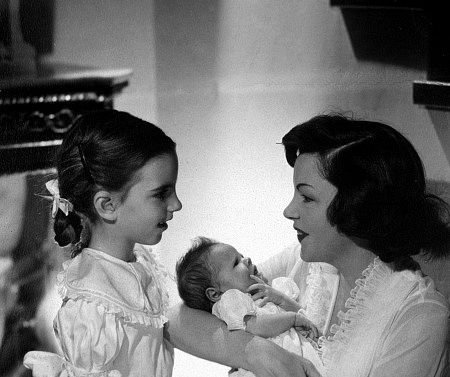
*Photo – Liza Minnelli, Lorna Luft and Judy Garland


Tags: , , , , , ,

The Food Desert Mirage

Recently two studies have published findings disputing the popular wisdom of “Food Deserts.”  (A phrase just begging to be misread, or perhaps I am just far too fixated on cake.)  For some time now; health experts, food security advocates and the like, have maintained that diminished access to whole foods has contributed to increased rates of obesity and obesity related illness.  Arguments go further, suggesting that inexpensive fast food is often the only food choice in lower income neighborhoods.

It’s understandable where this theory comes from.  Poorer neighborhoods have more fast food establishments (and liquor and check cashing stores.)  People with lower incomes tend to be in poorer health and suffer higher obesity rates, ergo…  But viewed from another angle, say at 180 degrees, there is a “sexual assault occurs more in the summer therefore ice cream must be to blame” aspect to this theory.  For food desert theory to be true, a couple of factors must be in place, chief among them lack of access to whole foods.  (“Whole Foods” is an apt phrase to use, as anyone who’s ever been on the subway can report that people travel quite some distance to lug home shopping bags from a store filled with tastefully displayed organics.  Proving that proximity to groceries is a relative concept.)  Second to the issue of lack of access is that of fast food being less costly than whole food.  Excluding any clearance sales of shamrock shakes, prepared food is always more pricey than (very healthful) dried beans and rice.  Lastly, if the income level is low enough, children will be eating two meals a day (for ten months) in the public school.  (Ketchup as vegetable aside, school lunches are more healthful than fast food.)

So then how do we explain the rise in obesity levels in lower income neighborhoods?  How did a country which once demonstrated wealth by the enormity of one’s waistband become a mirror image of itself?  First we look at the nation as a whole.  It is not just lower income people who are growing.  Second, we focus on where we can make an impact; the children.  Why are children, across a wide swath of economic levels, growing in size?  What has changed?

In the 1950s (or even 1960s) a child’s day may start with a nutritionally balanced and perhaps even cooked breakfast.  Eggs, hot and cold cereal, real juice and milk were often the order of the weekday.  Fancy carbohydrates (pancakes, waffles and french toast) were a weekend treat.  Many children came home for lunch, often to a sturdy hot meal.  Lunchbox toting tots unpacked portable versions of home lunches and augmented them with a carton of (whole) milk.  One thing was noticeably absent from the average child’s day: a Wonkaville world of processed snacks and treats.  “Sugar” cereals were relatively new to the game and made rare appearances on breakfast tables.  Microwaveable or toastable bakery-like confections were yet to be invented.  Once out of the house, children were not barraged with processed snacks as they are now.  Vending machines were in factories and offices, and issued more sandwiches and half-filled cups of coffee colored acid, than they did snacks and candy.  Pocket money (if a child had such a thing) would be spent on a favorite candy bar, comic book or gum.  If fast food (which was in its infancy) made it into the house as an evening meal, it was a treat (for the children) and a respite (for the parents.)

The proliferation and availability of processed food snacks has changed our culture’s orientation towards “junk food.”  Ice cream and cake were often the highlight of a child’s birthday party (versus the bespoke goody bags and Vegas entertainers of today.)  Edible treats are now viewed as an integral part of a child’s day.  (Just try and find a playground, zoo, or museum that doesn’t have a snack bar perimeter.)  Children have money to buy snacks on the way to and from school, not to mention IN the school.  Those that do engage in organized play are supplied snacks during their 15 minutes of actual activity.  From the earliest of ages, children are being taught to prefer the taste of processed foods.  Baby yogurts(!) line grocery shelves.  Yogurt IS baby food (what’s next? baby-baby food?)  Toddlers cannot make it one full block in their stroller without carbo-loading on goldfish crackers or cheerios.  Special toddler meals now join baby food ranks.  Plying children with food stuff in nugget form is the norm.  For at least a decade now, a portable lunch rich in nitrates and sugar can be purchased and tossed into a backpack.  All of these “foods” came from a grocery store, not a food desert.

To really understand what’s going on and how to ensure we’re not on the brink of being an obese nation suffering from malnutrition we must let go of the notion of food deserts.  There is enormous special interest and billions of dollars involved in this issue.  It is no wonder we are loath to really examine what is in essence a “food amusement park.”

 
7 Comments

Posted by on April 18, 2012 in Childhood, Cultural Critique, Well-Being


Tags: , , , , , ,