RSS

Category Archives: Media/Marketing

Skout: It’s Not For Boys & Girls

There is no ignoring a headline of 3 child rapes being linked to social apps.  Child rapists have successfully posed as teenagers on Skout and attacked children.  It’s awful, it’s disgusting, it’s devastating, but demonizing social media is shortsighted.

Perhaps I am too literal, but I’m not entirely comfortable categorizing software application whose sole purpose is to bring strangers together as “social” media.  It’s not just the semantics that trouble me, it’s that the category of social media or networking is far too large and vague now.  (As technology grows, our language needs to keep up.  It’s too tempting to make sweeping generalizations otherwise.)  Skout, to my understanding, is an app that children over the age of 13 can legally use to find strangers.  Why?  What could possibly be the reason for such a thing?  What corporate brain trust decided that the teen market was a must-have for this app?  Were the decision makers reassigned from the Joe Camel ad campaign?  Has the dream machine behind flavored vodkas and wine coolers moved on to software marketing?  Have we really in fact allowed corporations to now actively lure children into talking to strangers?

What kind of teenager do we think would be interested in meeting strangers on-line?  Would it be strong, stable children with solid social networks and adult relationships?  I’m guessing not.  Teenagers are nothing if not acutely socially aware.  They know who’s in and who’s out at any given moment.  The adolescent social world shuns strangers.  It is likely that a teen would only seek out strangers if he/she felt alienated by the real social world or had a propensity towards risky behavior.  So let’s make an app available for that!

I worry that this story will cause the villagers to take up arms.  Not against Skout, which seriously needs a trip to the woodshed, but against the bogeyman of social networking.  Should children have access to social networking sites (whose intention are to connect people to those they actually know?)  I’m not sure it’s necessary, but then again I don’t think children need to sport fake sleeve tattoos, so I might not be the best judge. What would be wonderful is if the news of these attacks on children prompts family conversations.  Strangers are people you do not know.  The fact that a friend knows them doesn’t make them less strange.  Someone you’ve heard of is not a friend (that’s why Beyonce isn’t returning your calls.)  I would go so far as to suggest that an adult is not a friend either.  An adult might be a teacher, coach, therapist, tutor or friend of a child’s parent, but not a friend of the child.  But then again, I think putting a toddler in high heels, a sequin dress and fake fur jacket is a slippery slope.

It’s always tempting to blame an outside force, particularly a consumer product.  In this case it actually is appropriate to enforce changes to the product.  But let’s resist the urge to demonize everything we find unfamiliar.  Let’s not run to blanket our airwaves with every child “expert” or media “expert” exposing catchy, yet utterly vague sound bites about children and social networking.  Let’s do our best to remember that technology isn’t the issue, human beings are the problem.  Child rapists by definition will seek out children.  Our job is not to hide our children; our job is to pay attention to who they are and what they need.  We need to know about their world and how they are living in it.  Unless they actually paid for their phone and monthly bills (insert; ‘ha ha ha’) parents have every right/obligation to access the phone on a regular basis.  A child who knows he/she is not living in a secret alternate world from their parents is more likely to make good decisions.  Part of what we teach our children is how to live in the world not how to hide from it.  There will always be dark and dangerous forces in the world.  Strong children with well honed coping tools grow into resilient and successful adults.

 
1 Comment

Posted by on June 13, 2012 in Childhood, Media/Marketing


Tags: , , , , , , ,

The Personal Is Political

During the rare moments I was cognizant of a presidential election occurring in France, I wondered why we never heard of the candidate’s personal life.  I chalked it up to my own media feed not being as international as it should be.  Being an American, my experience with presidential races is that the public is wildly interested in high school antics, college-age romantic dalliances, inhaling, spouse’s income sources, how the dog travels, etc.  If you aren’t assured that a candidate watches the same television shows as you do or eats the same snack foods, how in the world can you make an informed decision?

Now that President Hollande is in office, a bit of his personal life is finding its way into our media.  His first lady (Ms. Trierweiler) is a twice-divorced mother and works for Paris Match.  They (somewhat surprisingly) will be the first non-married first couple of France.  This seems to be of interest to the French from the perspective of protocol.  After all, the highest offices are nothing if not bastions of antiquated protocols.  President Hollande was not living in secret; the voters knew of his marital status and voted for him.  It’s hard to imagine this happening in the United States.  Yes, the governor of New York is living with his partner without benefit of marriage.  But would voters have been disinterested in this arrangement if he wasn’t the son of a former governor and she didn’t have her own television show?  Doubtful.  Americans love a good scion story as much as they love celebrity.

Who one chooses to whisper goodnight to at the end of every day has nothing to do with job qualifications.  The only time when one’s personal life should become public is when his/her position and/or office are involved.  So why is it that we obsess over such things?  Why do we care whom and how people love?  I’m not so sure we actually do.  I think it is far easier to understand someone’s personal life (we all presumably have one of those) than to wrap one’s brain around the complexities of the issues.  International economics, national security, international relations, national economy, higher education, medical care, aging nation, worker readiness, jobs, housing, climate… Need I go on?  The issues are endless, particularly during a time of economic uncertainty.

If our candidate’s messages are being parceled out into lunchable size (and quality) it’s because we buy them and gobble them up.  If there really was a time that we sat down and read lengthy narratives about a candidate, it’s long gone.  Are we just lazier now; our attention spans withered into nubs?  Maybe.  Is it that with globalization comes too much information?  Probably.  Perhaps I’m romanticizing, but to my mind fifty years ago, the most one had to know about the rest of the world was; “we can kick their ass, right?”

If we’re lucky there will be one presidential debate in which the candidates discuss their ideas and what their plans are for implementation.  Will we watch it (either in real time or streamed?)  Or will we rely on what others tell us?  Can a candidate really be blamed for going for the soundbite when it stands to reason that is what the greatest majority of voters will actually hear?

There’s so much noise now living along side so many vital issues.  These are not the makings of a good marriage.


Tags: , , , , , , ,

Just Say Know

A new diet pill is about to be approved!  All our cares are about to be over.  This magic pill (approved by our very own Federal Drug Administration) will put an end to our nation’s demise d’jour; obesity.  The drug is not new, its approval is though.  The drug hasn’t changed.  It’s still a wonder pill which; a) causes tumors in rats b) damages (human) heart valves c) and doesn’t cause much weight loss.  Happy Days are indeed here again!

So why, after 13 years of diet pill drought, is the F.D.A. approving a drug they previously deemed not worthy of approval?  Why do we think.  Peer pressure is not just for teenagers.  There are (to my way of thinking) only two diet pill designs that could work.  A medication can either prevent or eradicate the absorption of calories or it can render a person incapable of eating (i.e., create permanent nausea.)  It’s hard to fathom how either of those approaches can be safely achieved (not to mention why anyone would want to risk malnutrition of feel permanently car sick.)  Why then, with all the diseases out there, would the F.D.A. (or any drug manufacturer) spend time and resources on this endeavor?  Money.

Insurance companies would be all over a diet pill.  Individuals will be clamoring for it.  Can you imagine the advertising?  I’m picturing men and women being unchained from their heft, the sound of angels, an appearance of a rainbow, and the hushed rushed intonation of “may cause tumors, death and does not lead to significant weight loss.”  Good times.  (An aside: There was a time when cigarettes were marketed to Americans as a weight loss device.)

Might I suggest that if the federal government has fear of being left behind in this 21st century scourge, that the Department of Agriculture steps up?  A simple labeling policy that sets a limit to the processing a food can undergo and still be deemed food, would change our country.  There is precedence for this kind of intervention.  There was a time when anything could be sold as juice.  It was only through the intervention of the government that our nation began to enjoy “drink.”  If ultra-processed foods were deemed the equivalent of “drink” they could no longer be served to children in federally subsidized programs.  These ‘food-like’ products could not be purchased with any funds linked to the government at all.  Food-like items and purveyors would be limited in their advertising and marketing.  The trickle down would mean a shift in product placement in movies and television.  Amusement parks, movie theatres and other holding tanks for children would identify food and food-like products.  Children would grow up knowing the difference between; whole foods, processed foods, and food simulated products.

It seems so easy doesn’t it?  No chaos, no chastising, no food pyramids getting mauled into new shapes.  So why isn’t this happening?  Money.  It is very hard to become morbidly obese from eating real (21st century) foods.  It is also not all that profitable to grow/produce and sell whole foods.  But you know what’s really profitable?  Selling products as food (with all the subsidized benefits that implies) with enormous mark-up, that’s what.  There isn’t much room for mark-up on a head of broccoli, but on frozen and boxed food, the sky’s the limit.  Without sounding too cloak and dagger, there is a lot of money at stake and not just for the pockets of the food producers (conspiratorial wink here.)

Yes there are greater nefarious doings going on in the world.  But every time a government entity waves the banner of the “Obesity Epidemic” we are reminded that we are supposed to keep our eyes on the banner, and never ever look behind it.  It seems that whenever we declare “war” on a social ill, it’s actually a sign that we’re giving up.


Tags: , , , , , , ,

By The Power Vested In Me

Did you know that you can be credentialed as a life cycle celebrant?  Nor, did I.  But I’m not surprised.  If we are a nation who can sustain life coaches, baby sleep coaches and stylists, there’s certainly room for life cycle celebrants.  (Is it me, or are grown-ups playing Barbie with their chosen professions? – “My Barbie is a fairy princess library lady who is a movie star and eats cookies.”)  Hey, there must be a demand, right?  Bed bug whisperers didn’t develop in a vacuum.  Clearly, people need their life cycles professionally celebrated.

When you think about it, it’s really not a bad gig.  There could be costumes, maybe linked to the life cycle event?  What does one wear to a “Your first pair of big girl underwear” party?  Certainly some theme on foundation garments comes to mind.  Imagine the fun of planning the “Now you are a woman” party for 12 and 13 year old girls (and younger I hear.) Certainly all aspects of reproduction create their own niche festivities.  When is the last time you were invited to a really rockin’ vasectomy celebration.  Of course, it couldn’t be a dance; the puns would be too tempting.  But a nice sedate affair where we honor the snipped and toast his future uninhibited personal life sets the right tone.  Suggesting a market for the onset of menopause seems a little 5 years ago at this point.  Many a mojito has been raised in sisterhood celebration without the assistance of a celebrant.  But there’s probably still an opening in the menopausal swag bag market.  (Let your imagination soar.)  People have also taken matter into their own hands in planning; “The gender of our fetus is now known” parties.  But has anyone cornered the market on the “My milk has come in” party?  If I got to choose, and why shouldn’t I, I would love to create the ultimate; “Congratulations on losing your virginity” celebration.  Done tastefully, it could be the most important party of a guy or gal’s life.  Of course the key to a really awesome event would be the element of surprise.  The party should happen immediately after the act.  I mean the split-second after the deal has been sealed.  Wouldn’t that be special?

I don’t mean to suggest a life cycle celebrant is nothing more than a party planner.  Far from it.  There must be solemnity, and perhaps smudge sticks.  There must be excruciating respect paid to any and everything that feels important to the celebrated.  Without people paying attention and even applauding, how would you know that you’re alive?

 
2 Comments

Posted by on April 29, 2012 in Cultural Critique, Media/Marketing


Tags: , , , ,

There Is A Castle On A Cloud*

An appointment in Soho on Thursday afternoon, found me bobbing and weaving through tourists and folding tables groaning under the weight of vaguely ethnic tchotchke.  Making my way to Prince street, I wedged myself between the Chanel store and gaggles of visitors carrying knock-off bags .  Nearing my destination I approached yet another local obstacle; television cameras, lights, barricades and police officers.  The police vans, dogs, and CSI units seemed to outnumber the news vans.  That’s when I noticed that they were real news vans and there were no Haddad trucks (a caravan of Haddad dressing room/equipment hauling trucks must be written into city film permits.)

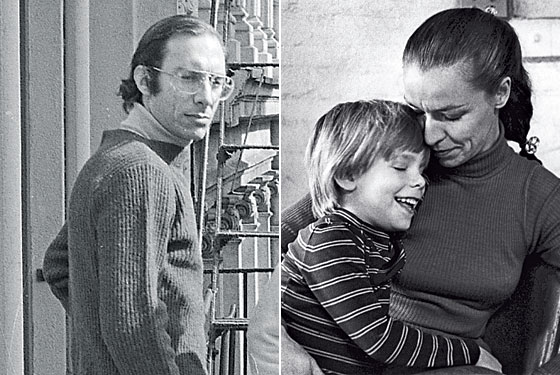
I recognized a (former colleague) reporter and discovered that this was in fact a real event.  After 33 years, a basement search was being conducted for Etan Patz.  The search has concluded, and nothing of consequence has been discovered.  It is impossible to not feel heartbreak for the parents of Etan.  No doubt it has been years, if not decades, since they lost hope of any closure.  One can imagine the tempered optimism they allowed themselves to feel during the first dozen or so years after his disappearance.  Maybe he had been kidnapped and once he turned 16 or 18 or 20, he would contact his parents?  After all, he was 6 1/2 when he vanished, he would remember his early life in Soho.  But after 33 years, with the suspected murderer imprisoned; jackhammers, press conferences and a media circus could not have been welcome.  If remains of their son had been found, perhaps the frenzy would have been worth it.  And frenzy it was.  Local news stations wasted no time in creating “Search for Etan” graphics.  Had the search lingered, no doubt CNN would have used a Gaelic melody to accompany updates.  The irony of course is that Etan disappeared in 1979; before cable news and a 24 hour news cycle, when perhaps it could have done some good.

Etan disappeared from a sleepy neighborhood where everyone knew each other.  Small children walked alone (and played) on the street.  A 6 year old “helping out” a handyman would not have been seen as suspect.  A first-grader not showing up for school would not have sounded any alarm.  It was Etan’s disappearance which spurred the ubiquity of the “milk carton” children and missing child awareness.  Ronald Reagan created Missing Child Day (May 25th) in honor of Etan Patz.  Highway alert systems and heightened security have followed as has school protocols.  Aging software was created to show how a child might appear in later years. It was the disappearance of Etan that galvanized a consciousness.

Perhaps this legacy is of some small comfort to his parents. However, I suspect that living amidst the delirium of the past 5 days might instead just be excruciating.  As they still do not know what exactly transpired that day 33 years ago, they may believe that a little of this 2012 frenzy in 1979 may have saved their boy.

* Les Miserables (1985)


Tags: , , , ,