RSS

Tag Archives: Broadway

Merrily We Roll Along – Review

There is the “greatest generation” and then there’s the generation that came right after.  Coming of age in the late 1950s and early 1960s provided a unique blend of adult optimism to a generation.  Post World War II access to higher education meant more people than ever now saw college as a viable option.  A young, attractive first family was changing the White House and creating cultural pride.  It was the start of the space age and all things seemed possible.  (Which is why people built bomb shelters; all things were possible.)

NY City Center’s production of Stephen Sondheim and George Furth’s Merrily We Roll Along captures that time beautifully.  In flashback, the story of Mary (Celia Keenan-Bolger,) Frank (Colin Donnell) and Charlie (Lin-Manuel Miranda) is told; three friends making their way artistically through life.  We are introduced to their middle-aged selves in 1976.  The fashions, and the circumstances are a bit grim.  Frank is a Hollywood sensation (and all that goes with that) and his friends feel forsaken.  Mary’s relationship with alcohol is now a full-blown love affair, and while her antics are funny, she’s terribly sad.  Luckily we don’t linger too long in the mid-70s.  Two decades worth of seamless flashbacks ensue, and we are left at the end in 1957, when all things seemed possible.

There is much that is wonderful about this show, but the creakiness of the first act is also worth mention.  The first scenes (in the 1970s) feel as bland and self-conscious as the actual 1970s.  Perhaps it was intentional.  There are some great songs in the first act, and I’ll admit to tearing up at the first three notes of Not A Day Goes By.  The second act is nothing but perfect, as it should be; it’s when we see how they got to be who they are.  In this sense, the play itself echoes the creative process.  (It’s always far more interesting to create than it is to analyze the finished product.)  The second act flies by with fast-paced story telling.  It is rare, and exceedingly delightful when it feels as if the curtain comes much too soon.

NY City Center Encores! (musical director: Rob Berman) is a gem, bringing lesser produced musicals to the stage in concert version.  Merrily, directed by James Lapine, is the first Encores! to be presented in the newly refurbished City Center.  Whether because of that status, or not, this is a very different staging of an Encores! production.  The productions have not been pure “concert” versions for years.  Performers are completely off book (even if they do carry the script for comfort or affect) and the numbers are fully staged.  There are lavish costumes and set pieces as well.  Merrily We Roll Along does not have any “numbers” but has one number-lette in the second act, which is mostly tongue in cheek.  What Merrily has is a realism similar to Sondheim/Furth’s Company.  This starkness might feel disorienting to some, and this staging seems to only highlight the condition.  The (ravishing) 23 member orchestra is on a platform one story above the stage.  The performance space is black and there are about a dozen set pieces that get wheeled on and off.  The only set direction is a very large video screen built into the orchestra platform.  The first scene is a slide show of passing decades.  Real New York City photos are shown as are photo-shopped iconic shots.  There is a Forest Gump element to it all that can be very distracting.  Later the screen is used very successfully to portray a theatre and a yacht.  One of the best visual moments is when through clever positioning and video, the actors look to be actually sailing away.

As always with Encores!, the ensemble is first rate.  There are some performances that will really linger.  A small child, Zachary Unger, proves that excellent child performers do exist.  Celie Keenan-Bolger is a remarkable chameleon.  While Mary, is the most interesting of characters in the show, Kennan-Bolger adds dimensions that would be lost in lesser hands.  Lin-Manuel Miranda also has a great character with Charley, and does it wonderful justice.  His number; Franklin Shepard, Inc. is just delicious.  Speaking of numbers; in Act II the three principal characters perform on two typewriters (look it up, they’re like computers without a screen) and a piano.  I find myself wondering what in the world the score looked like for that.

NY City Center Encores! is a beacon of hope for musical theatre lovers.  Their focus on quality of content and excellence of performance makes us believe that all things are possible.


 
Leave a comment

Posted by on February 20, 2012 in Uncategorized


Tags: , , , , , , , , , , , , ,

How I Learned To Drive – Review

It is difficult to write of something which everybody feels they know everything about.  How do you take a story about pedophilia and make it nuanced, new and compelling?  Paula Vogel did it with How I Learned To Drive, earning a Pultizer Prize (1998) for her effort.  The writing is so exquisite, it’s difficult to imagine a production faltering.  Yet, the first major revival of any play of importance stirs apprehension.  Could anyone match David Morse’s unique blend of innocent man child and demonic predator?  His presence is so distinct, that having never seen the (1997) original, I still could visualize him on the stage.  (Morse, is only rivaled in innocuous/sinister duality, by a young Richard Masur.)

However there is absolutely nothing to fear with this revival (except for the evils that lurk inside families) it is remarkable.  Directed by Kate Whoriskey (Ruined) every layer of human struggle and motivation is gently exposed.  Whoriskey is no stranger to coaxing out the beauty behind the ugliness.  While there is much humor in this play, it is never at anyone’s expense.  The characters are realistically complex without donning a sandwich board which says so. There is a delicacy and a subtlety often found in real life but rarely in its portrayal.

The story, told in flashback and with a wonderful Greek chorus, is that of an uncle’s molestation of his niece (Li’l Bit) over the course of years.  The metaphor, and actuality of driving lessons works as an effective device in moving the story.  Using flashbacks allows us to develop feelings for the characters before we have to witness the actual horror of what they’ve done.  Towards the very end of the play, we discover how this could have happened, and there are no surprises.  But as is often the case with victimization, we need to know, and to hear it from the characters themselves.

Norbet Leo Butz (Catch Me If You Can, Dirty Rotten Scoundrels) is simply remarkable as Uncle Peck.  He is vulnerable, ingratiating, and deeply troubled.  We never see him interacting with adults, but suspect that he can’t.  His niece (Elizabeth Reaser) is saddled with early puberty, an unorthodox household and the 1960s.  Reaser is new to the stage and it showed when she first appeared all alone on the stage (she needs a little work on her enunciation and projection.)  She quickly finds her groove however, and is quite convincing at every age (27,18,17,13,11.)

The Greek chorus adds so much to this play that could feel quite insular.  Jennifer Regan, Kevin Cahoon, and Marnie Schulenburg, take on the role of family members, an actual chorus, and a waiter.  Ms. Regan is mesmerizing.  No doubt she tires of being compared to a young Carol Burnett, but I can think of no higher compliment.

The set (Derek McLane) and setting (Second Stage Theatre) are simply spot on.  There is a ’57 Ford upstage, some street lights, and a few rolling pieces of furniture on stage.  The lighting design (Peter Kaczorowski) conjures time and place.  The house size and design are perfect for reinforcing the intimacy and insulation.

This is a play, and production which linger, and should.

 
Leave a comment

Posted by on February 16, 2012 in Uncategorized


Tags: , , , , , , , , , , , , , ,

Look Back In Anger – Review

Look Back In Anger was written by John Osborne in 1957.  It was considered the first of the anti-drawing room plays and introduced to the stage the “angry young man.”  Fifty five years later, he is still quite angry. The play has been produced recently at home (London) and abroad, it has also been made into a film.  This Roundabout Theatre production directed by Sam Gold is a four character interpretation of the play.

Jimmy (Matthew Rhys) a working class university graduate is married to Alison (Sarah Goldberg) the daughter of a colonel.  Jimmy runs a sweets stall with Cliff (Adam Driver) who also lives with the couple.  Later they are joined by Alison’s actress friend from childhood, Helena (Charlotte Parry.)  The fifth character, the most prominent of players, is the set.  The stage at the Laura Pels is reduced to a depth of six feet.  It is the bleakest and filthiest of sets you are likely to ever see.  Dishes, laundry, trash, and food litter the floor and a stained mattress is propped in a corner.  The filth only grows as the play progresses.  The (relatively) tiny stage and the use of a lit “offstage” work to reinforce the utter claustrophobia of the characters’ lives.  Having the actors sit on the aisle (on the edge of the audience) is not distracting but it also does not add anything.  It is just one device that is employed to add elements of realness and rawness to this production.

Jimmy is a character you have seen portrayed often.  He is filled with self-loathing and expresses it through verbal abuse and absolute derision for those he loves.  He is above all else, a victim.  His regal looking wife Alison spends much of the first act in an open dressing gown, half-slip and bra.  She dutifully irons her husband’s underwear as he hurtles insults her way.  To avoid boredom, Jimmy also goes after Cliff, often physically.  While these goings on are certainly tedious, the performances are riveting.  The actors are so thoroughly immersed in their characters it is impossible to remember their past performances (of which I’ve seen several.)  There is a comfort with their characters which is rarely seen.  This is a very physical play, with much wrestling (fight direction by Thomas Schall) in a very small space.  Not once, did any of the tousling look staged.  There is also much silliness, mostly in the form of animal imitations, which would look forced and moderately humiliating in lesser hands.

Helena arrives later in the play, looking groomed and radiant and reminding us that not everyone lives amidst such squalor.  Discovering the way in which her friend is living and taking into consideration Alison’s yet to be announced pregnancy, she arranges to send Alison back to her family.  I have to admit that I did not see that coming.  I wasn’t necessarily hoping for Alison to stay with Jimmy, I’m just not sure of her motivation to leave.  Needless to say, Helena and Jimmy start up an affair.  I say “needless to say” from a theatrical perspective, not a psychological one.  It’s not clear what either of these women see in Jimmy.  Now if they had fallen for his friend Cliff, I could understand.  Cliff is the only sympathetic character around.  He is loving and filled with an inexplicable optimism.

The house lights are used throughout the production to create mood, or anti-mood as the case may be.  Both acts begin with full house lights.  There are several minutes of silent action that occur fully lit.  The effect is lost on an audience who would rather talk amongst themselves.  Call it Pavlovian, but the full house simply would not silence until they were plunged into darkness.  Their talking was actually less distracting than was my empathy for actors being ignored.  The curtain-less (does anyone use curtains anymore?) six foot deep stage feels like a thrust, and the fully lit “wings” add to the intimacy.  I found so much full lighting and lack of “off-stage” just a wee bit distracting.  The acting really speaks for itself here.

The staging itself is beautiful, as is the acting, but the play simply left me cold.  While Cliff is a most sympathetic character, nothing much happens to him.  As the play came to a close, the previously excruciatingly well behaved woman seated next to me started to rustle in her purse.  I could not discern what in the world she would be doing, until she brought a tissue to her nose.  “Oh,” I thought, “she has a cold.”  No.  She was crying.  Did something sad happen?  Now, I am not made of stone.  I have been known to well up over curtain calls.  But I found nothing particularly moving about these characters, or their lives.  I had a bit of trouble believing that anyone would actually make a salad while sitting on the floor and toss the unused bits around the floor.  If the play was making the leap into surrealism, I would have been fine.  But clearly the claim to fame for this particular play and production is its realism.  However, I would see it again for the performances alone.

 
Leave a comment

Posted by on January 23, 2012 in Uncategorized


Tags: , , , , , , , , , , , ,

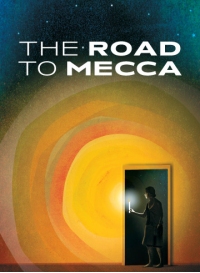
The Road To Mecca – Review

The Road To Mecca is having its Broadway premiere. Set in 1974 (and written in 1984) it is a story based upon a real Afrikaan woman; Miss Helen.  Written by Athol Fugard (Master Harold…, etc.) and directed by Gordon Edelstein (The Homecoming) this production stars Rosemary Harris.

This three person, two act play centers on Miss Helen’s future.  Her young friend Elsa (Carla Gugino) has arrived unexpectedly out of concern for Miss Helen.  Elsa, a British South African, has traveled 800 miles (to the middle of nowhere) to connect with her dear friend.  The third character, Marius (Jim Dale) does not arrive until just before intermission.  Miss Helen’s oldest friend, the reverend Marius is certain he knows what is best for her.  It seems an artist, close to 70, living alone in rural South Africa and surrounding her home with large cement sculptures, is a bit troubling to others.

There are issues with this play, but none whatsoever with the performances.  Rosemary Harris is simply awe inspiring.  The character, as written, is not terribly eccentric or unusual, and Ms. Harris does not add any forced mannerisms to compensate.  She is such an honest actor, we don’t hesitate for a moment to believe that Miss Helen is a quiet, unimposing woman who has to create.  (It is interesting to consider if the real Miss Helen was as devoid of manner, or if this is the playwright’s daring interpretation.  Artists, more often than not, are portrayed as borderline mad.)  While I was mildly self-conscious of my admiration for Ms. Harris’ stamina and memorization skills, I’d like to think my ageism was reinforced by the play itself.  Ms. Harris (in her 80s) is playing a woman nearing 70 whose faculties are beginning to slightly diminish.

Carla Gugino (Desire Under The Elms) is absolutely lovely.  Elsa is a bit of a rebel in her politics and manages to create a bit of a stir in her upscale world.  Her compassion and awareness for the world around her is genuine and she struggles to muster the same compassion for herself.  She has driven all day to the Karoo village, after receiving a concerning letter from Miss Helen.  It is a believable motivation as Miss Helen lives without electricity let alone a telephone.

The first act is too long and too repetitive.  Mr. Fugard seems to struggle with assigning worth to words.  They are not all equal.  There are questions and motivations left unanswered yet metaphors exhausted.  The second act is a marvelous change.  The arrival of (the wonderful) Jim Dale provides the tension needed.  What ensues are wonderful scenes between Marius and Miss Helen, Miss Helen and Elsa and some sly and lovely scenes with all three characters.

The set (Michael Yeargan) and lighting (Peter Kaczorowski) are technically excellent, but might need tone tweaking.  Much is made of Miss Helen’s issues with light and darkness and with her artistic prowess.  Yet, the set (her home) is devoid of much artistry.  There’s a bit of sparkly paint, and some mirrors, and maybe that’s how the real Miss Helen lived, but I’m not sure it works dramatically.  Much of the play is performed in very dim light as the action takes place during one long night.  The lighting, part of the metaphor parade, is distracting.  Each time a candle is lit or extinguished, a spotlight gets its wings.  The actors are not saddled with microphones (hallelujah) but in the sixth row, I sometimes had to strain to hear Ms. Harris.  Audience members further back and not adept at listening, may have difficulty.

If one can ignore the awkward technical bits, and endure the first act, see this play.  The performances are truly wonderful.  I saw this preview for the chance to see Rosemary Harris on stage.  I would do it again.  The final line of the play, spoken by Elsa, packs an emotional wallop not to be missed.  A predictable ending?  Perhaps.  But it works.

 
Leave a comment

Posted by on December 30, 2011 in Uncategorized


Tags: , , , , , , , , , , , ,

Shot Out Of A Cannon

The first person who dropped an olive into a martini or mixed chocolate with peanut butter?  They got nothing on Jim Caruso, who dreamed up the musical partnering of Aaron Weinstein and Christine Ebersole.  Birdland was packet to the rafters last night for this musically stunning, and very funny, cabaret of standards and bebop.

The premise of the show is Mr. Weinstein’s assertion that the violin is the instrument closest to the human voice.  The evening was ostensibly an array of duets featuring Mr. Weinstein’s violin (and electric mandolin!) and Ms. Ebersole’s voice.  The melding was such that on three separate occasions, I searched for Ms. Ebersole’s back-up singers.  Suffice it to say, Mr. Weinstein was right.

Perhaps upon first glance, one might be inclined to see more differences than similarities in this pairing.  Ms. Ebersol (Grey Gardens, 42nd Street) is a Tony award winning Broadway, film and television actress. She has some very impressive experience under her fashionable belt.   Mr. Weinstein (b.1985) is somewhat new to the scene.  Often compared to Groucho Marx, his stage presence and banter belie his age. The genius in this pairing is both musical and personal.  Never have any two people had such fun performing together!  They are both some of the best in their musical class and possess a delightful dry wit.  But oh, it’s their music.

Each time I have seen Mr. Weinstein perform, I am bowled over.  Perhaps jazz violin has been played like this before, but not in my recollection.   Ms. Ebersole is in ridiculously splendid voice.  She growled, purred, soared and even did a little Borscht Belt ditty.  Looking gorgeous and at ease, she confessed that after only two days of rehearsal, she felt shot out of a cannon.  Nothing about this show felt rushed or thrown together.  The evening was a lovely balance of (very funny) repartee and a gorgeous collection of incredibly interpreted music.  A great deal of care was taken to steer clear of any hint of a star solo act.  Ms. Ebersole seemed tickled to share the stage and spotlight and it payed off wonderfully.

As much as their beautiful music is still playing in my mind, its the beauty of the collaboration itself which will stay with me.  How wonderfully creative to pair these two, and what spectacular results!  Producing a creative show which artistically takes a chance will always get a standing ovation from me.

 
Leave a comment

Posted by on November 28, 2011 in Uncategorized


Tags: , , , , , , , , , ,