RSS

Tag Archives: Brenda Tobias

A Bully Plan

There is nothing good to say about bullying.  The very definition (picking on those weaker) is anathema to humanitarianism.  Exposing bad behavior is almost always a good thing.  However there is a fine line between discussing an issue responsibly and throwing a buzz word (in this case “bullying”) over everything.

Tossing buzz words around is irresponsible.  We saw this happen with the word “stress” about a decade or more ago.  Stress became synonymous with anxiety and is now only deemed as negative.  “I’m stressing” became an actual expression.  Between us, there is nothing negative about stress.  Positive excitement is stressful to the body and mind as well.  Is bullying ever good?  Certainly not to my mind.  But suggesting that an adolescent girl killed herself because of bullying…on Facebook, is absurd.  It diminishes her troubles and pain (whatever their genesis) and demonizes the abstract.  Suggesting that she was a victim of her computer and that her screen drove her to death is a wretched portrait to paint of a troubled teenager.  In fact, suggesting that anyone was driven to end their life due to bullying smacks of complacency.

No doubt, as adults we may not remember the turmoil of adolescence.  Everything was Very Important and permanent and fraught with drama.  Rarely were we our best selves.  Our identities only existed as they were reflected back to us by our cohort.  What an awful time it was.  Adolescents (particularly girls in the middle school years) can be pretty nasty as they claw their way to relevance. When we layer this anthropological phenomenon with the current social climate, things can get dire.

Most of us did not grow up in an age of digital cameras and instant (permanent) exposure.  We probably did not grow up in a world of celebrity (for no apparent reason) suggesting we should all live in the spotlight, behave badly, always be styled and airbrushed and party like it’s…you get the idea.  We probably didn’t grow up during a time when college was seen as a given, and the only path to income, yet was academically and financially unattainable to many.  Many of us did not grew up with parents simulating aircraft above our heads.  We were independent-ish and expected to manage our own social and even academic world.  (Note: personal responsibility is the key ingredient for self-esteem.)

Adolescence+increased external pressure+diminished internal resources can add up to a troubled teen.  Luckily, their world is populated by adults.  Teachers, nurses, administrators, coaches and guidance counselors see the good, the bad and the ugly.  Parents are in the best position to see the unhappiness in their child.  Many do and struggle with how best to care for their child.  Depression, either clinical or non-clinical sadness, is frightening in a population known for their lack of impulse control.  A teenager who has lost interest in pleasurable activities, and/or has changed his/her sleeping/eating patterns should be seen as in crisis.

Bullying can most certainly push a vulnerable teenager over the edge.  So can a bad grade or a romantic break-up.  However, when the media hauls out bullying experts our limited attention shifts to the external.  It is the at-risk adolescent that warrants the attention, not the behavior of others.  A healthy and supported teenager will not log on to Facebook if it brings unhappiness.  A healthy and supported adolescent, no matter how quirky, will not be driven to self-harm by the comments of others.  Bullying will always exist, empires were built on it.  Where we need to focus is on those adolescents who need support.
 
Leave a comment

Posted by on January 4, 2012 in Childhood, Media/Marketing


Tags: , , , , , ,

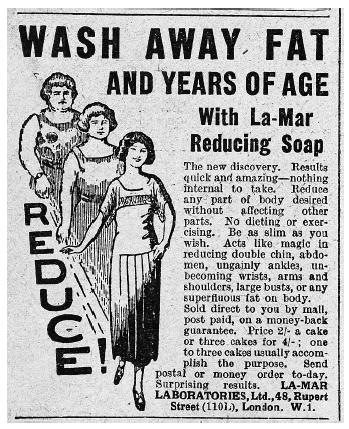
Lose Pounds and Inches Fast!

“Eat our processed food and lose weight!”  “Join this gym and lose weight!”  “Take this pill, shake, herb, tea, suppository, and lose weight!”

And they’re off!  New Year’s is the weight loss industry’s black Friday.  Many millions are reaped throughout the year, but it is January that does wonders for the industry’s bottom line.  As our nation has grown in size so has an industry filled with an abundance of promises and zero standards.  How has this happened?

Whether one considers excessive weight to be a health, behavior or public issue is somewhat secondary to the point that the market feels free to exploit the situation.

If you feel that being overweight is a health issue, what do you make of reality television shows featuring obese contestants being humiliated as a means to bolstering their health?  Do we watch smokers and drinkers being humiliated on reality shows?  Do we honestly think that this programming is not solely about the viewer’s entertainment?  How did other people’s heartbreaking struggle with a health issue become fodder for our entertainment?

If you feel that being overweight is the result of an utter lack of self-control, what do you make of products that reinforce that disconnect between outcome and behavior?  The “behavior” camp asserts that maintaining a healthy weight is the result of not consuming more than one is using.  A sensible diet and a moderate amount of exercise is the permanent method with which to control weight.  If the federal government believes this (and they seem to) why then are companies allowed to sell snake oil?  Why doesn’t every advertisement for Nutri-Jenny-Fast have a big black box across it stating “Eating our fake food is not sustainable & your behavior will not be changed by our program.  You may in fact lose weight while you are our customer, but most people gain it back immediately after leaving our program.”   Too big brother?  Remember, we now have warnings on aerosol bottles to dissuade people from huffing.

If you feel that the public health of our nation is at risk, then we really have to talk.  Whether we should start with the corn subsidies or food labeling, or school lunches makes for good dinner party conversation.  But so do dinner parties for that matter.  All of our habits, from the decline of dinner tables to carbo-loaded toddlers while they burn zero calories riding in a stroller, to wheels on sneakers (children don’t even walk anymore, they roll,) it’s all up for scrutiny.  What about processed foods designed specifically for children?  The baby food industry started the trend with “toddler” jarred foods.  Apparently toddlers find real yogurt and bananas to be daunting.  As they get older, the food industry has graciously provided, fake cheese, yogurt with candy, processed breaded chicken nuggets, lunchables and colored flavored drinks.  For those in the public health camp; why is this even tolerated?  We regulate pill bottle caps, cribs, car seats, window blind cords, but not the food sold for our children?  We are cultivating a lifelong appetite for fake food.

It is a terrible burden to feel as if your size is standing in your way.  Feeling as if your own body is the enemy is an exhausting way to go through life.  For anyone pulling on their new sneakers and heading out into the unknown this January, I say Brava!  It is physics; the first steps are the hardest.  Keep at it, and in about six weeks it will be the new normal.  Eat real food, celebrate meals, enjoy life and save your money.  There are no shortcuts and the only magic is discovering your own strength.


Leave a comment

Posted by on January 2, 2012 in Cultural Critique, Media/Marketing


Tags: , , , , , , , , , ,

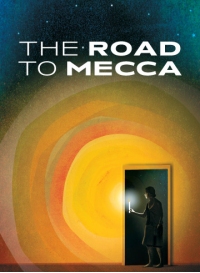
The Road To Mecca – Review

The Road To Mecca is having its Broadway premiere. Set in 1974 (and written in 1984) it is a story based upon a real Afrikaan woman; Miss Helen.  Written by Athol Fugard (Master Harold…, etc.) and directed by Gordon Edelstein (The Homecoming) this production stars Rosemary Harris.

This three person, two act play centers on Miss Helen’s future.  Her young friend Elsa (Carla Gugino) has arrived unexpectedly out of concern for Miss Helen.  Elsa, a British South African, has traveled 800 miles (to the middle of nowhere) to connect with her dear friend.  The third character, Marius (Jim Dale) does not arrive until just before intermission.  Miss Helen’s oldest friend, the reverend Marius is certain he knows what is best for her.  It seems an artist, close to 70, living alone in rural South Africa and surrounding her home with large cement sculptures, is a bit troubling to others.

There are issues with this play, but none whatsoever with the performances.  Rosemary Harris is simply awe inspiring.  The character, as written, is not terribly eccentric or unusual, and Ms. Harris does not add any forced mannerisms to compensate.  She is such an honest actor, we don’t hesitate for a moment to believe that Miss Helen is a quiet, unimposing woman who has to create.  (It is interesting to consider if the real Miss Helen was as devoid of manner, or if this is the playwright’s daring interpretation.  Artists, more often than not, are portrayed as borderline mad.)  While I was mildly self-conscious of my admiration for Ms. Harris’ stamina and memorization skills, I’d like to think my ageism was reinforced by the play itself.  Ms. Harris (in her 80s) is playing a woman nearing 70 whose faculties are beginning to slightly diminish.

Carla Gugino (Desire Under The Elms) is absolutely lovely.  Elsa is a bit of a rebel in her politics and manages to create a bit of a stir in her upscale world.  Her compassion and awareness for the world around her is genuine and she struggles to muster the same compassion for herself.  She has driven all day to the Karoo village, after receiving a concerning letter from Miss Helen.  It is a believable motivation as Miss Helen lives without electricity let alone a telephone.

The first act is too long and too repetitive.  Mr. Fugard seems to struggle with assigning worth to words.  They are not all equal.  There are questions and motivations left unanswered yet metaphors exhausted.  The second act is a marvelous change.  The arrival of (the wonderful) Jim Dale provides the tension needed.  What ensues are wonderful scenes between Marius and Miss Helen, Miss Helen and Elsa and some sly and lovely scenes with all three characters.

The set (Michael Yeargan) and lighting (Peter Kaczorowski) are technically excellent, but might need tone tweaking.  Much is made of Miss Helen’s issues with light and darkness and with her artistic prowess.  Yet, the set (her home) is devoid of much artistry.  There’s a bit of sparkly paint, and some mirrors, and maybe that’s how the real Miss Helen lived, but I’m not sure it works dramatically.  Much of the play is performed in very dim light as the action takes place during one long night.  The lighting, part of the metaphor parade, is distracting.  Each time a candle is lit or extinguished, a spotlight gets its wings.  The actors are not saddled with microphones (hallelujah) but in the sixth row, I sometimes had to strain to hear Ms. Harris.  Audience members further back and not adept at listening, may have difficulty.

If one can ignore the awkward technical bits, and endure the first act, see this play.  The performances are truly wonderful.  I saw this preview for the chance to see Rosemary Harris on stage.  I would do it again.  The final line of the play, spoken by Elsa, packs an emotional wallop not to be missed.  A predictable ending?  Perhaps.  But it works.

 
Leave a comment

Posted by on December 30, 2011 in Uncategorized


Tags: , , , , , , , , , , , ,

A Swinging Birdland Christmas

Christmas is the most romantic holiday of all. American cinema and songbook are overflowing with splendid homage to the holiday. To my mind, the British have the food, drinks and decor holiday market cornered. But one need skip across the pond to bask in the Christmas show business splendor.

As soon as December rolls around, I find myself yearning for Bing to encourage me to have a drink more, because baby it’s cold outside. I catch a glimpse in the mirror and imagine what I would look like in a sequined snood, winding up a mechanical monkey and believing that next year all our troubles will be far away. During the first snowfall, I try running in the street and (quietly) wishing the building and loan a Merry Christmas. The mind reels with the richness of imagery. However, often the heart aches at the lack of real live people embracing and celebrating these traditions.

Imagine the complete and utter joy of discovering that such a thing truly exists and it involves champagne! A Swinging Birdland Christmas is a technicolor dream come true. Christmas standards, jazzy interpretations and re-imagined medleys are performed by Klea Blackhurst, Jim Caruso and Billy Stritch (and the Birdland jazz quartet.) Ms. Blackhurst, a new edition to the show, is utterly charming and of splendid voice. She has a surprise stupendous musical talent up her sleeve, which I will not divulge here. Mr. Caruso is a born showman, and in a decent world would be hosting his own televised variety show. His smooth voice is a natural for the repertoire. Billy Stritch sings like he plays the piano, with rich interpretation. His phrasing is reminiscent of Mel Torme and Frank Sinatra. Together these three make a delightful trio.

The show is a nice mix of solos, duets and trios. A standout solo is that of Mr. Stritch’s “What Are You Doing New Year’s Eve” (Frank Loesser.) I dare anyone not to swoon. Any one of the evening’s songs would put even the most Grinchy into a better mood. But for the hardest heart and coldest soul, there was the tribute to the Osmond’s Christmas Show. Jim Caruso’s Jimmy Osmond will linger in my mind. ( A note to television producers: There is a serious demand for Christmas variety shows!) If all this wasn’t enough to make one feel jolly, a special guest was in the audience last night. For the encore, Christine Ebersole took the stage and performed White Christmas. And when she asked everyone to join in, the barn door swung open (in my mind) and it was in fact snowing. I stood in my red satin, white fur trimmed gown, clutching Rosemary Clooney and Vera Ellen’s hands and thinking; “Oh what a lucky gal am I.”

 
Leave a comment

Posted by on December 25, 2011 in Holiday


Tags: , , , , , , , , , , , , , , , , ,

Do We Have A Witness?

“The Penn State abuse scandal is prompting new legislation that could broaden abuse reporting laws.”  According to an NPR story, Missouri, Pennsylvania and Congress are considering proposals to make every adult a mandated reporter.  Traditionally, mandated reporters are determined by profession (i.e,. social workers, physicians, etc.)  Adults working in these professions are obligated by law to report suspected abuse of children.

Ordinarily, I cringe at legislating decency and/or common sense.  I am troubled that we need laws to enforce adults to differentiate themselves from children, and to exert their inalienable right and responsibility to protect children.  But I am choosing to only see the silver lining in this development.

There are some curious (if not disingenuous) arguments being made against this proposal.  One state commissioner of Children and Family services has suggested legislation is not needed because when; “you walk in and you see somebody sexually molesting a 10-year-old, you don’t need a statute to tell you that that’s a crime.”  Well sir, recent headline stories would dispute that assertion.  Some case managers are concerned about being inundated with unsubstantiated calls.  I would argue a) 18 states currently have mandated reporting laws and calls have increased in some states and decreased in others, and b) so what.  Do we even want to flirt with an argument that might at its core be: we don’t want to increase our ability to protect children because it might result in more work for us?!

The fact that rates of reporting have not increased uniformly in states which have mandatory reporting laws is not necessarily an indication of anything.  We simply don’t know if abusers are less likely to abuse when they know the whole world is watching.

Sometimes reports are unfounded, or simply can not be proved.  That is the nature of society and of law.  Being falsely accused can be devastating to an individual and a family.  However that has always and will always be true.  There is nothing in the world preventing any of us right this second from calling in suspected abuse.  What this new proposal changes is the legal responsibility to do so.  All this really means is that if anyone over the age of 18 should come across a child appearing to be violated in a locker room shower, they will now know exactly what to do.

 
Leave a comment

Posted by on December 21, 2011 in Childhood, Cultural Critique


Tags: , , , , ,