RSS

Tag Archives: Brenda Tobias

Here Comes The Judge

Have you ever met someone without an opinion? They have no preferences; no interest in choosing one film, book, or spouse over another? Probably not (and if you have please try to dissuade them from voting.) Part of having a functioning brain is having the ability to determine preference. There are humans, only moments old, who prefer one breast over another at mealtime. Making determinations about our preferences, sometimes very rapidly, is how we navigate this complex world. Another term for this process is “judgment.” We make judgments, as well as show good or poor judgment in our daily life. There is nothing negative about the word anymore than there is about the word “stress.” We humans are now using these words to express negativity. If we wait a few years, it will pass.

But in the meantime it’s interesting to note what is often lurking behind the cry of; “judgmental!” You’ve only to walk past a high school to hear; “Don’t judge me.” It’s right up there with “That’s so random” and “I’m stressing.” Hey teenagers cannot and should not be separated from their chosen vernacular. If nothing else these words and phrases support their sense of discovering the world anew. But what of grown people who adopt such a phrase as “Don’t judge me” or “Friends don’t judge” or any other Hallmark worthy sentiment? What are they actually saying/pleading? Is it even possible to conjure such an expression if one feels completely confident in their choices or predicament? Have you ever heard anyone say; “Don’t judge me but I’ve decided to stay in a good marriage?” or “Please don’t judge but I’m putting 10% of my income into savings?” I’m gonna go out on a limb and say you haven’t. “Don’t judge me” or “You’re judging me” is basically a daytime television way to communicate; “I am so not comfortable with what I’m saying/doing.” Not convinced? Try this little exercise.

  • If I remarked; “Have you put on weight?” you would feel judged right? Well, only if you had put on unwelcome weight. If you’d been trying to gain (it happens) or in fact hadn’t gained an ounce in years, this comment would not feel judgmental. You might wonder if there was something wrong with my eyes though.
  • If we were at a museum/restaurant/park and I remarked “Is that your child?” you would feel judged if you felt your child was behaving poorly or somehow wasn’t measuring up to some standard you have. But if you were happy and confident you might just answer; “yes.”

We cannot all be 100% confident of every aspect of our lives at every moment. It’s not even a healthy goal. Self doubt can be a wonderful impetus for growth and change. But self doubt is about the self not about what people may or may not be thinking about you.

This sensitivity to perceived criticism often goes hand in hand with the “ha ha who cares” attitude. This nonconformist attitude by another name is called insecurity. Defensive can be used to mask a feeling of self doubt. “I can wear whatever I want, don’t judge me!” or “I don’t care what people think of me.” Okay, let’s stop for a moment. If you really and truly feel you should be able to wear whatever you want at anytime you would be best served living in a community of like minded people. A nudist colony or commune come to mind. If you have any notion or need of venturing into the diverse and enormous populace it is hostile to not respect social custom. If you really don’t care what people think of you I would suggest you might lean towards the atypical of mental healthiness. It is a core human desire to seek and find love and connection. Does love only come to the well groomed and conventionally behaved? Of course not. But we are visual animals (those of us with vision) and we use those powers to process much information about a stranger. Whether it’s entirely accurate or not, when we see a person who has taken a moment on themselves we form an opinion about their orientation to the world. The inverse is just as true. If we do not feel connected to our physical selves we typically do not seek out people who look as if they embrace their physicality. In other words we make judgments. That is what humans (and even some animals) do. The next time you hear the word “judge” or “judgement” (in your head or in your ears) being used not in the legal sense, take a moment.The word itself could be a great internal or external conversation starter.
 
Leave a comment

Posted by on July 12, 2012 in Cultural Critique, Well-Being


Tags: , , ,

Indoor Voices Please

If you’ve ever been in earshot of a small person who has recently acquired language, you have no doubt heard (in your head or in your ears) the cry of; “indoor voices!” The ability to form complete sentences arrives prior to volume control; exemplifying Mother Nature’s sense of humor. There is a real reason for this of course. The awareness of the world around us comes incrementally. Babies begin to explore that world through their mouths (via milk or their own foot.) Others don’t exist beyond what they can do for the baby’s immediate needs. If you’ve ever seen two infants on a play date you can attest to this. Up until toddlerhood babies only engage in parallel play (def: playing side by side without direct interaction. ex: sharing a meal while both parties text others.) By preschool children have developed a sense of a world outside of their own home and needs. They understand that when they leave the zoo the animals don’t cease to exist. (This is why peek-a-boo is not such a mesmerizing game for this age group.) But it’s not until school-age that children have a fully formed sense of otherness.

At about 5 years old children are aware of others and how they differ from themselves. Gender becomes somewhat of a fascination as little boys and girls discover that some are fancy on the inside and some are fancy on the outside. (This is the age that is often cited as time to give different gendered children their own bedroom.) Children at this age learn to whisper and tell secrets (a clear indication of an awareness of others.) They learn, or are reminded, that there are behaviors that should remain private. Kindergarten teachers have spent more time than they care to consider telling little people to remove their fingers from noses, mouths or worse.

Historically, activities outside of school have existed to assist in socializing little people. Team sports, scouting, dance class and birthday parties traditionally began at this developmental stage. Beside the obvious life skills taught (how many times have you found yourself grateful for the skills of perfect turnout, bugling, or catching in your daily life?) what’s really being taught is group dynamics. Learning to work, play and live with others is the foundation of most structured activities. It is quite plausible that the average child spends thirteen years having these skills drummed reinforced on a daily basis. Some parents consider ‘socializing’ to be a top priority in their job description. You can see them guiding their little people in the ways of social graces and niceties. They are the ones dining out and instructing on how to sit, talk, order and eat. The child is learning that eating in the backseat of the car is not the same as eating in the presence of strangers. You can see these ‘lessons’ at museums, movies, theatres, libraries, or anywhere there are other people.

Whether it’s school, scouts or parents, or any combination thereof, there is consensus that childhood leads to adulthood, And with the right kind of guidance we hope to produce adults who will be; strong, confident, and kind. Yet with all these efforts to teach children how to interact with others, adults don’t always do such a gold star job in their own implementation. As you go through your day you will notice a lot of grown people using their outdoor voices (literally or figuratively.) Someone will have a conversation (with their phone or with a person in their physical presence) that will be loud and very personal. You will be subjected to gruesome details and possibly glared at for not having the ability to close your ears. (It’s as if by not wearing headphones you are now eschewing social mores.) You may be lucky enough to be enjoying a lovely meal in a beautiful restaurant. You are there not just for the food but for the specialness of it all. Then without warning there appears at the entrance a couple. The light shines from the open door behind them. You can see silhouettes only, wait they are stepping in, and there it is; baseball caps, shorts and sleeveless undershirts. Does the management have the right to refuse them? Probably. But only the snootiest of establishments feel they should/could. So you decide to start dining at home and save your money for the snootiest establishments. How about the theatre? Let’s try sitting up front in the most expensive seats. Surely people who have overpaid will have an appreciation of the specialness of the occasion? Unless by “specialness” you mean texting throughout the performance, or sipping a big gulp, then the answer would be no.

One explanation to at least the restaurant and theatre behavior is that we’ve all become terribly spoiled. We consider what was once “special” to be quite commonplace. We’ve had money or at least credit to spend and our definition of ‘bare essentials’ has expanded. But that doesn’t really explain wearing underwear as outerwear in places of worship or to stroll the streets. Increased standards of living don’t touch upon personal grooming in public or loud personal conversations in the presence of strangers. No doubt contagion and fashion is in play. As the volume around us increases, we are likely to raise our own voice. As style changes we are apt to discard and adopt accordingly. It can be exhausting to swim upstream day in and day out. It is risky to call out to strangers; “indoor voices, no touching, use your words, phones down, say; excuse me, thank you, please, you’re welcome.”   But there are times (more frequent than we possibly care to recognize) when we would relish a booming voice from above instructing us all to play well with others.

 
Leave a comment

Posted by on July 10, 2012 in Childhood, Cultural Critique


Tags: , , , , , , , , ,

Macbeth – Review

When a mind is lost where does it go? If you are Alan Cumming at Lincoln Center you venture into the world of William Shakespeare’s Macbeth; not the man, the play. In this ostensibly one-man play Mr. Cumming plays all the most vivid and recognizable parts while a patient in an institution. He descends into custody after a criminal event. The play opens to the stirring pantomime of him being undressed by attendants (Ali Craig and Myra McFadyen.) Evidence is collected, gently and cooly from; beneath his nails, inside his wounds and mouth. He is allowed to hold onto one evidence bag. A bag we assume holds the emotional evidence of the crime. The attendants climb the stairs and reach for the door as the first audible lines are spoken; “When shall we three meet again.”

So begins the tour de force that is this Macbeth production from the National Theatre of Scotland. It is a Herculean undertaking this play within a play. To convincingly construe a device to deliver a one-man Macbeth is no easy feat. Directed by John Tiffany and Andrew Goldberg this stunning production hits the mark with only one or two relatively small hiccups. The creative alchemy of the; storyline, set (Merle Hensel,) sound (Fergus O’Hare,) image (Ian William Galloway,) characterization and staging work to keep the audience mesmerized. Without the excellent staging or performance it would be impossible to follow this play. Mr. Cumming easily transforms himself into (at times dueling) characters. He often achieves this with only his body and voice although there is a prop or two also engaged. We are helped to follow these transitions with real time projections.

What is most remarkable about this Macbeth is not Macbeth. It is a tale, told through Macbeth of a man’s descent into insanity. Clever devices such as the attendants appearing to periodically anesthetize Cumming, or the closed circuit cameras (producing the projections) in his locked ward remind us of what we’re watching. We are forced outside of Macbeth at the appearance of the Lady’s bloody hands. The lady’s hallucination becomes the patient’s hallucination becomes stigmata as the attendants look fruitlessly for a source for the blood. We are reminded of the ill man on display during more than one emotional collapse. A heart wrenching yet contained Cumming dissolves and curls into himself. One of these devolutions has an attendant carrying him to the bed. This event can only be called a pas des deux. There is much beautiful movement (Christine Devaney) in this production, but it is this particular dance that clutches the heart.

It can be seductive to forget that we are not watching a Macbeth, but a man who is lost in the world of Macbeth. Cumming’s portrayal of all the characters is so convincing (and at times very funny.) He manages to capture the sexual chemistry between husband and wife with nothing more than his own body. Toward the end of the play we discover the content of his evidence bag. Our imaginations easily construe countless plausible explanations for this man’s psychiatric demise. It is not clear he will ever recover. The last words spoken are; “When shall we three meet again” suggesting we are inside the endless loop that is his mind.

 
4 Comments

Posted by on July 9, 2012 in Uncategorized


Tags: , , , , , , , , , , , , , ,

Pretty Woman (Walking Down The Street)*

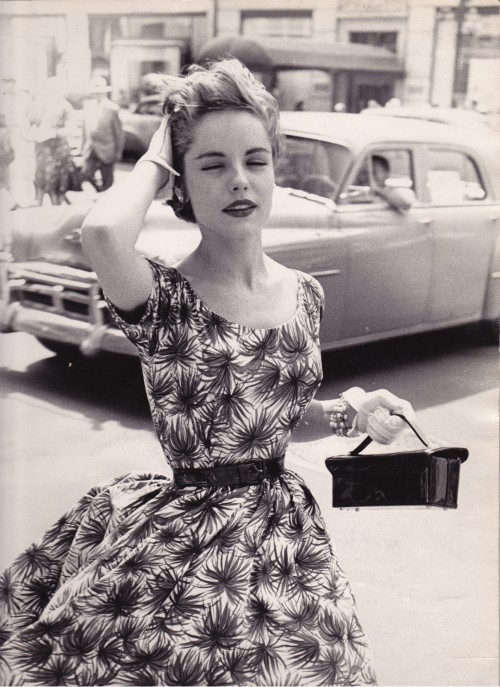
When I saw a woman walking on the street in just a bathing suit I did not say anything. I told myself there could be any number of reasons for such a thing. “Out patient” came to mind, as did “house fire” or “luggage lost.” My therapeutic self wondered if she’d yet to find closure for an unfortunate childhood experience. I decided that a woman walking down the street (of a major metropolis) in only a bathing suit was if not entirely a one-off well then certainly an anomaly. And then I saw another one. However this one was not alone. She was walking with a male companion and talking on the phone (indications of someone sane enough to be socializing.) She was walking right up the avenue, if you will, on the Upper East Side. (For those unfamiliar with this territory think: uber-conventional, traditional, a “society” kind of reputation. There was a time you would find actual blue haired ladies in the area. Today those ladies are tightly pulled, puffed & have their many hued long hair blown straight.) There she was, strolling along in her two scraps of fabric, dyed jet black & white hair, and ink intensive tattoo spanning shoulder to shoulder. No doubt coming from a fitting, choosing a hat or on her way to plan a brunch.

I’ll admit a heat wave is a natural enemy of style. When the temperature slips north of 90 nobody wants anything touching them. A waistband, a sleeve or even a proper shoe could send chills up the spine (which probably would feel refreshing!) A straw hat is practically a must, which causes a muss of the hair. Which is actually fine because who in the world is going to take a blow dryer to their head in this heat? It’s certainly tempting to forgo proper foundation garments because lifting and separating can also be sweaty and suffocating. So style slippage is understandable. Walking around town in a bathing suit is not.

If we were to ask the young lady what exactly she was thinking when she put together her little ensemble; no doubt she would cite “comfort” as her biggest inspiration. Comfort’s great. Ya know what’s comfortable? Bed, bed is very comfortable. But you see being in public is not the same as being in private. Making the choice to leave your house (when it’s not on fire) involves some cerebral cortex functions. Keys? Check. Phone? Check. Lights off, stove off? Check and check. Wearing clothes? Not really. If a bathing suit was clothing a) it wouldn’t have a special name b) it wouldn’t have a special section in the department store c) it wouldn’t only be sold in the summer. No doubt there are times when wearing only a bathing suit while walking is perfectly acceptable; at a marina perhaps or on the boardwalk. But context is king is it not?

We all live in the world. The world is not exactly the same as our living room. Clipping nails on the subway, playing with or styling one’s hair in public (over my lunch) are hostile acts. Choosing to ignore context is tantamount to giving the world the finger. You needn’t dye your hair blue or don a sweater set and pearls to walk the street, but you need to put on some clothes. Without them we will assume that walking the streets is what you “do”.

Not that there’s anything wrong with that.

*Pretty Woman (1964) Roy Orbison & Bill Dees

 
4 Comments

Posted by on July 6, 2012 in Style


Tags: , , , , , ,

Life, Liberty And A Parade

Independence Day is so inherently celebratory and stress-free it seems odd to think of it as a holiday.  There are no cards or gifts; there is no real family obligation.  There is no food preparation or turning one’s home upside down.  What there is though are oodles of ways to celebrate (and zero societal expectation to really do so.)  Eat a hot dog, wear the colors, hold a sparkler and you’re part of the festivities.  Sit at home and read historical doctrines and you’re in.  Drive on the right side of the road and feel grateful & you’ve partied. Regardless of personal politics or religion, it’s hard to bristle at the substance of the holiday.  Declaration of Independence? Birthday Party? What’s not to like.

Fireworks are nice, though I prefer mine small, local and muted.  Barbecues and picnics are just an excuse for that berry flag cake for me.  What really makes me happy and filled with that 4th feeling is a small town parade.  I’m not sentimental enough to care whose small town or where.  I just want to see kids pulling wagons or riding their decorated bikes. I want my Uncle Sams and scouts of all ages and I want to be pelted with candy from fire trucks. Truth be told without the incentive of impending candy pelting, I’m not sure I would find some of the marchers so endearing. So this 4th, in pursuit of a parade I suited up and crossed a bridge for my slice of the patriotic pie.

At the first sight of re-enactors I knew I’d found the place.  I’m afraid I can’t get more specific than “re-enactor” as the men were dressed in Revolutionary garb, the women were dressed in 19th century dresses and they were all playing Dixie.  The local Republican Party and local Democratic Party were in modern dress and marched with their banner.  I’m accustomed to politicians (elected or running) marching, but these were just party members.  I know we think that there are only two political parties in this country but that doesn’t actually make it true.  They are of course recruiting for their locality and why not?  But what about the disproportionate representation of the military at the parade?  I am all for honoring those who serve but I find it difficult to consider the Fourth of July as a military holiday.  If the military marched to represent service to our country where was the contingent from Teach For America, Americorps and the Peace Corps?  If they were marching to represent our ‘freedoms’ how about a media float or marching judges and voting booths?

I know I was at a small town parade, but that’s the point isn’t it?  Our country is made up of these towns and on some level they really do represent how Americans feel and think.  I’ve no doubt that there were parades around this country that were broad and inclusive.  But the majority were probably more like my sample of one. I’m not convinced though that we need to forfeit quaint and charm to avoid reductionism.  Sitting in my shady spot, trying to blend into the fauna and flora, I learned about what mattered to my sample of one; a small suburban town 20 minutes outside of New York City.  To the naked untrained eye, the marchers and spectators seemed to be of the same ethnicity and perhaps religion.  They were not overly enthusiastic about children (the cars participating outnumbered the children participating 2:1) and they really liked bagpipes and kilts (not one, but two marching groups!)  They are a generous people, supplying spectators with; candy, flags, candy, pinwheels, candy & temporary flag tattoos.  And you did not need to be Jane Goodall to detect that they really like firetrucks.  At least 12 of them were wheeled out at the end (a la Santa Claus.)  One dozen firetrucks.  For a small town whose most popular form of architecture is brick colonial homes.

As the final four firetrucks made their way down the route, I put on my straw hat, grabbed my mini flag and headed cross the river.  No, I had no powdered wig, and yes I was technically headed in the wrong direction, but a little poetic license with one’s re-enacting can be festive.

 
Leave a comment

Posted by on July 5, 2012 in Cultural Critique


Tags: , , , , , , , , , , , ,