RSS

Tag Archives: Brenda Tobias

Shameless

The University of Colorado, Denver has been conspicuously silent about their former graduate student turned gunman. There’s nothing particularly surprising about that. Universities are loath to discuss their students or alumni unless doing so will bring glory to the institution. Universities are also part of the elite group of organizations known as suffering from acute “litigation paranoia.” But onlookers accept the silence as being a vague yet misguided attempt at protecting someone’s privacy.

If what we were discussing was a physical disease or impairment, patient privacy would be a valid and even laudable motivation. As a society we’ve determined that patient privacy, even when a diagnoses could involve potential contagion, is necessary. We’ve also determined that when a disease poses an imminent public threat the afflicted will be quarantined (and thereby outed.)  In other words; public good trumps the individual. On the most basic level we apply this same principal to mental health as well. If a person states (unequivocally) that he/she is going to hurt him/herself or others, they are held (usually for a very short period) until they can be examined and either sent on their way or hospitalized.

This flaccid approach to protecting individuals and the public stems from the deinstitutionalized of mental healthcare several decades ago. The “expression of specific harm” is employed to prevent people being hospitalized against their will. One only need sit with the preceding sentence a bit to see the absurdity of this approach. People struggling with mental health issues rarely are clear and conscientious enough to seek hospitalization on their own. We leave it to the ill to state clearly their intentions to do harm before highly trained professionals are allowed to intervene. That’s a problem.

Adding to that little issue is the fact that we are freaked out by mental health issues. Yes, we’ve been Oprahfied enough to (sometimes) toss around the right terms. But we are glaringly uncomfortable dealing with real life mental health. If we see someone, day in and day out, who we consider odd, what do we do? Maybe we mention it to a friend, but beyond them who would we actually tell? And what is exactly do we say? Is the guy who only comes out at night and keeps his door covered in aluminum foil a danger to anyone? Are his odd behaviors actually highly honed coping skills for his illness? Maybe he sees a psychiatrist every day and is adequately medicated. Maybe he’s just eccentric (versus ill.) More often than not, we say nothing and just hope to avoid someone who makes us uncomfortable.

There is somewhere where aluminum foil should send an observer directly to the phone, and that’s at a university. Most students (graduate and undergraduate) are under 30 years of age; a primetime for the onset of very serious mental illnesses. Students are often sent away to school already presenting symptoms and perhaps fully medicated. The beauty of a controlled environment (like a university) is that elaborate and accessible systems are in place. A professor who observes disturbing behavior knows exactly how to report it immediately. No doubt, they sometimes do. But too often we err too heavily on the side of our own discomfort (which we shroud in “patient privacy” rhetoric.) It’s very unsettling to be the person who may upend someone’s life. However it’s far worse to be the one who stayed silent.

When we stop seeing mental health issues as being somehow shameful we will be a safer and more humane society. When newsreaders no longer intone (in sotto voce;) “He even spent time in a mental hospital” we will be further ahead. When a political candidate gains sympathy points for a spouse with a physical illness and looses popularity for one with a mental illness, we will be further ahead. When we stop using the word “rehab” (invoking images of large sunglasses and hangovers) as a euphemism for mental health facility, we will be further ahead. And when celebrities stop claiming to be suffering from “exhaustion” (as if it’s the 1900s) versus having depression, we will be much further ahead. There is no shame in illness of any kind. The only shame is silence.

 
Leave a comment

Posted by on August 27, 2012 in Cultural Critique, Education


Tags: , , , , , , ,

What Comes After We Choose To Go To The Moon?

During the 1960s there were lots of little kids jumping into newly fallen snow and shouting “First Man On The Moon!” when their boots left a print. Little boys (and some liberated little girls) dreamed of and played at being astronauts. Even if children weren’t old (or sophisticated) enough to follow NASA’s doings, there was I Dream of Jeannie. Popular culture was drenched in all things space-age and planetary. The space program was in the air if you will. Being an astronaut was to a 1960s kid what being a cowboy was to a 1950s kid. Adventure, exploration, and glamour were all packaged into a very cool outfit. Astronauts, like cowboys, even had special food. They had belts that held their lifesaving apparatus. But they also had science. For a kid who loved rocks, or space, or climate, or chemistry, he/she too could dream of being a superhero.

No one will dispute that the space program has lost some of its glamour and pizzazz over the decades. Space is not new anymore. Technology has progressed and men and women in space suits are no longer required to achieve the mission. NASA has shrunk and no one dreams of being an astronaut any longer. But what has taken its place in the imagination of children? What is there today that encompasses exploration, science and glamour? Surely there are lots of careers that hit on 2 out of 3. But is there anything, not involving sport, celebrity for celebrity sake, or undefined means of accumulating wealth, that is universally compelling to children today?

One could posit that computer programming (in the form of gaming, biomedical, etc.) is our new space program. It is the new frontier. But only for a select few and there’s nothing particularly heroic about it. On a more practical level how in the world do you play “computer programmer” in the backyard? (But then again, does anyone freestyle play in the backyard anymore?) Even if it were fun to do so, only a small percentage of children would ever aspire to sit at a desk and write code. Every kid everywhere played cowboy (1950s) or astronaut (1960s.) Did a kid from the Bronx really stand a chance of homesteading and ranching someday? (Could his mother have survived it?) Did a rural kid with an allergy to moon dust and zero interest in science make it into the space program? Not without a miracle and some sudafed. But they had a shared dream/fantasy.

For all the glamour of being an astronaut (and the sports cars, groupies and ticker-tape parades add up to a whole lot of glamour) it was a serious (and at times deadly) profession. The space program was staffed with; test pilots, scientists and engineers. These were highly educated people with talents and skills of, well of rocket scientists. There was a whole lot of there there. They were glamorized for having the right stuff. Children were right to idealize these grown-ups. Their play, whether building cardboard box rocket ships, or jumping into snowbanks, was rooted in something real and admirable. For too long we have not provided children (and therefore humanity) with a universal dream. We once heeded the call to do something not because it was easy but because it was hard. Perhaps it’s time to suit up and have another go at it.

 
Leave a comment

Posted by on August 26, 2012 in Childhood, Cultural Critique


Tags: , , , , , , ,

What’s Your (Post-Secondary) Motivation?

Recently, during a higher education panel, the issue of “following one’s passion” arose. More than one participant grew visibly uncomfortable with the concept. Sure it’s a lovely thought and one that’s uttered ad nauseum in coming of age films/novels. But does it actually make sense when discussing 17-18-year-old’s education and career decisions?

It is the rare adolescent who knows that being a surgeon/lawyer/steam-pipe fitter is his/her destiny. It does happen, but it is rare. Most jobs/careers aren’t exactly a calling. There aren’t a whole lot of financial analysts or fundraisers who dressed in little bland casual Friday outfits and played number crunching as children. If we’re lucky work is mostly a pleasant environment in which we are fairly compensated for utilizing a majority of our talents. Encouraging a teenager to pursue post-secondary education as a means to one’s passion is not useful. It not only ignores the reality of the workplace and economy but also is misleading for the student.

“Following one’s passion” in regards to employment is about as useful a term as “having it all.” They both smack of a certain entitlement and haughtiness. They are vague enough to be appropriate for waiting room posters and meaningless in one’s actual life. What does “following one’s passion” mean in terms of a teenager choosing an educational/training path? Do we really mean to suggest that what an 18-year-old finds exciting will never alter? (I shudder to even consider that suggestion.)  Wouldn’t it be far more helpful to discover what a teenager finds interesting?

Getting good grades in English doesn’t necessarily mean you should be an English major and then find a job in an English-y field. Depending on the curriculum of said class, a good grade might reflect; being a good analytical thinker, a good writer, a good communicator or having a finely tuned ear for language or that the reading selections for the class were just of particular interest to the student. Grades only tell part of the story. A poor student is not necessarily a poor learner. He/She may be wildly curious about a subject outside of the academic curriculum. He/She might be incredibly gifted with their hands; an artist, baker, craftsmen.

Secondary education/training (for better or worse) is no longer about staring off onto the idyllic ivy-strewn quad and thinking deep thoughts. It is (at times) a very expensive undertaking that must deliver a return on investment. For many it is also a one-time only offer. Life doesn’t always allow for continuing education. What will put a young person in good stead is to pursue post-secondary training/education that is of interest and is useful. Pursuing an area of interest ensures that one will feel engaged with one’s work/studies. “Interest” is far more lasting and tangible than “passion.”

For those teenagers who will not be concerned with earning a living; follow your passion or lie by the pool. But for everyone else it is probably best to remember that the world simply cannot support that many ballerinas. If you pay close attention you will find work that makes you happy and supports a life that allows you to dance.


3 Comments

Posted by on August 23, 2012 in Education


Tags: , , , , ,

GO TO BED!

When tragedy strikes it is not the time to analyze. If the incident is close to home we are too stunned or numbed to think. If we are an empathetic spectator it is unseemly to appear as if we are callous enough to be analytical. But after the passage of time, with a healthy dose of respect and empathy, we can at times seek answers and perhaps future preventive measures.

We need only look at the recent gun control rhetoric (the term “rhetoric” is used here intentionally as “conversation” would suggest that people in leadership positions are actually saying anything on the subject) as an example of “preventive analysis.” In this case the cry for gun control is obvious and rather simple. The underlying issue of mental illness and how we treat/ignore/fear the afflicted is much more complicated and doesn’t fit nicely into a soundbite or tweet. But the thing about real answers to real problems is that they usually are a bit messy and uncomfortable.

While suburban or rural shootings capture our imagination (and our horror) city streets and playground shootings are far more frequent. Reasonable people would agree that if guns didn’t exist, people wouldn’t get shot. But if you think it through (or if you’ve seen West Side Story) you will also agree that there are other ways to hurt people. People will always hurt people; it’s human nature; as is love and caring. People with nothing to lose are more prone to violence and crime. People who feel ignored or worthless are more likely to lash out at others. We know all this. We also know that boredom is an incendiary device for adolescents. We also know that bad things happen at night. The only person who has ever uttered; “Whatever can happen at 3:00 in the morning can happen at 3:00 in the afternoon” is a 15-year-old fighting over a curfew. Night brings darkness. It is easier to hide and harder to detect danger. The night often brings a higher level of intoxication. While people should be free to socialize outdoors in the evening, it’s not clear that babies and children should join them. You’ve only to walk down a city street or past a playground to see little tiny people out and about after 11:00, 12:00, 1:00… Perhaps it’s the product of younger parents wanting to be young and not having access to childcare. Perhaps it’s the family that plays together stays together. But whatever the motivation it is simply not a great idea. Should people have to live in lockdown because illegal guns plague their neighborhood? Of course not. But do babies need to be awake and out of doors after 9:00 PM?

Unfortunately this is not uniquely a summer in the city phenomenon. Ask any city schoolteacher about tardy or sleep-deprived students. So while it may offend some or even smack of elitism I will issue the soundbite/tweet: “Get your children to bed!” Do children get hurt in their own home? Of course they do. But if we can start teaching a generation of tiny people that the streets are not their home maybe we can make a difference.


Leave a comment

Posted by on August 20, 2012 in Childhood, Cultural Critique


Tags: , , , ,

The Fork In The Road

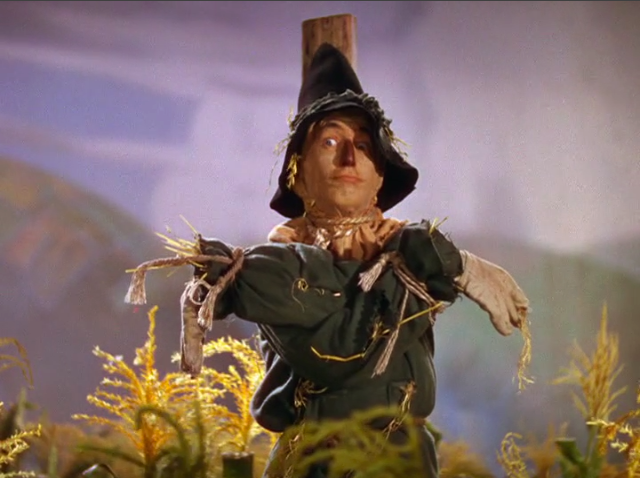
When Dorothy comes to a fork in the yellow brick road her ruby slippers come to a screeching halt. She is startled that her mantra; follow the yellow brick road, is no longer enough to get her to where she wants to be. She considers advice from a man of much straw but no brain and eventually just chooses a path. The journey is then fraught with scary trees, flying monkeys and opiates. Maybe she’d have had a more pleasant journey if she had taken one of the rejected paths. But would arriving in the Emerald City and then back home had been less extraordinary if it hadn’t been such a challenging journey?

Most of us do not get sucked into tornados or land a house on a witch (resulting in the gifting of one fabulous pair of shoes) and then find ourselves in an alternate universe.  But we do (hopefully) journey through life in pursuit of our heart’s desire. And we do at times find ourselves not recognizing our own universe. There are junctures in life that find us struggling to find our way. When we get to that fork in the road how do we choose which way to go?

The two most common forks that we seem to approach are those on the road to romance and those in the path of career.

Romance can be wonderful but it also is quite disorienting. It is easy to get caught up in something and sometimes that may involve wishful thinking. A good rule of thumb to determine whether you are in a romantic relationship or having a physical relationship is this: are you excited/relieved when he/she contacts you or are you happy to hear from them? Excited/relieved means you aren’t entirely sure where you stand with the person (aka physical relationship.) Happy to hear from someone means you’re a smitten kitten.

So when the smitten kitten finds him/herself wondering if “This Is It?” how do they know?  If you are really struggling with the question the answer is probably; no, this is not it. But if instead you are just trying to be your best adult self and putting serious thought into a lifetime decision, ask yourself these two questions:

  1. Am I the very best version of myself when I am with him/her?
  2. Is this the person I can’t live without (versus the person I can live with)?

If you’ve answered yes to both it may be time to get yourself to the chapel.

Then there is the more “eating one’s vegetables” life issue; career. If we are fortunate we have income earning choices in our life.  Whether because of education and/or talent we may have some flexibility in how we earn a living. When we find ourselves at a juncture, perhaps brought on by boredom, lay-off or age we can feel a bit paralyzed. How do you know when it’s time to move on?

  1. If you find yourself with a pit in your stomach on Sunday thinking of the week ahead, it’s time.
  2. If your feelings about your work are having a negative impact on your life and the people around you, it’s time.

Yes it can be frightening to start something new. It can be almost paralyzing to realize you can be practically anything you want to be. That is the downside of free will. Keep in mind that it’s really just about putting one foot in front of the other. It is the journey that makes our lives worth living not the destination. Yes, there may be a flying monkey or two along the way. But just make sure you’ve got a few good friends by your side and perhaps a little dog too.


Leave a comment

Posted by on August 18, 2012 in Well-Being


Tags: , , , ,