RSS

Tag Archives: Brenda Tobias

Texting And Driving: TFU

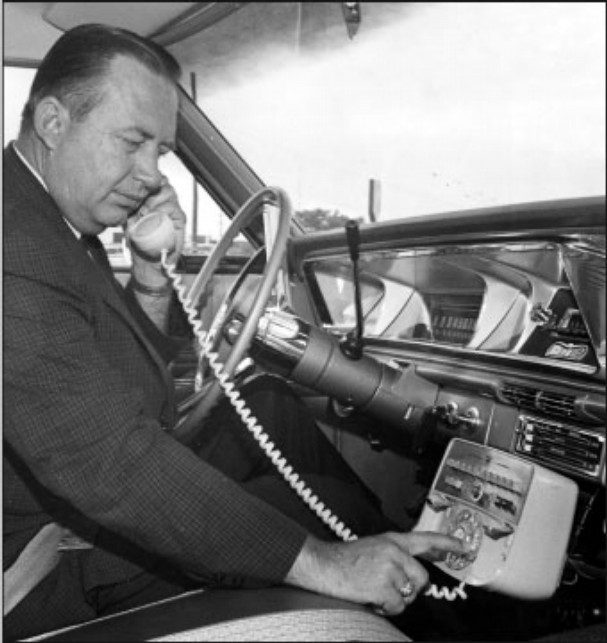
A large mobile phone business is taking a stand against texting while driving. The public’s initial reaction will most probably span from; ‘that’s nice’ to ‘who cares.’ Regulators and legislators will take notice however as the corporation ceases their lobbying efforts (against regulation.) As we speak (or text) there are clusters of thinkers and tinkerers coming up with fail safe ways to thwart human stupidity. Apps are being considered that will sense when a person is driving and shut down typing options. (Let us not strain ourselves considering how that works and/or how it would affect passengers’ use of devices.)

Nobody loves big corporations (except the stockholders.) But the notion that somehow the makers of a device are responsible for people using it in a dangerous manner is absurd. Where would this leave gun manufacturers? Okay, that’s a bad example. Where would that leave the manufacturers of kitchen knives? Or apple peelers? People have been known to use cars, not for transportation, but to cause harm (ex., Baby Jane and Blanche, or many an aggrieved spouse victimizing a prized lawn or flower bed.) Should car manufacturers design a device that can detect vengeance? People using products in ways not intended is not new. While it is questionable whether makers of oven spray are responsible for a teenager’s boredom and unquenchable drive for experimentation, there are now warnings on any and everything aerosol. You’d also be hard pressed to find a plastic bag that does not warn that ‘this is not a toy.’ It’s not clear if anyone has ever unwrapped their dry cleaning, taken a second look and sputtered; “Dear G-d in heaven, it’s NOT!?” I’m guessing most people probably know that plastic bags and children might not be the best combination. But the plastic bag manufacturers have done their part and now the rest is up to humanity.

These warning labels (which in essence are a parental scolding) are only meant to reinforce the true intent of a product. We (correctly) feel differently and strongly about creating or augmenting safe products. Automobile manufacturers have made incredible strides in past decades. In the 1950s (or even 1960s) there were no seat belts or car seats. Kids were tossed in the back and told to be quiet. Granted you were driving a mass of steel (versus the plastic of today) but so was everyone else! Then came seat belts, then came seat belt laws. All to protect you from the hazards of automobile travel.

There is no way to protect people from the hazards of themselves. Before texting, there were people reading while driving, doing their nails/make-up while driving, eating while driving, and probably doing other things we need not mention while driving. Driving while doing any of things, including texting, is driving while impaired and we should treat it as such. People should be ticketed and punished as they would had they been driving while intoxicated. The officer on the scene need only look at the device to prove it had been used while the driver was behind the wheel. Repercussions severe as that of a D.W.I. will make people think twice. Many people have drank less, or not driven for fear of being caught. Has drunk driving stopped? Of course not, but it’s no longer the wild wild west out there.

There will always be new and exciting ways to act like an idiot. Trying to idiot-proof the planet is absurd. Making it really uncomfortable to be an idiot is much more prudent.

 
Leave a comment

Posted by on September 20, 2012 in Cultural Critique


Tags: , , , ,

Seizing Semantics

Have you noticed that once widely available words have been appropriated and winnowed down to the most streamlined of meaning? Take the word; family, for instance. Family once meant people one was connected to who did not fall into the category of friends. Hence the phrase; friends and family. Family could mean one’s family of origin, including generations past. Family could also reference those brought into the holiday fold year after year. Family could also be self-constructed, augmenting a loss of familial connections. The word was open to subtle interpretations but maintained a overall meaning of connectivity. These days you might hear several phrases touting the word ‘family’ that have nothing to do with human connection. For instance:

  • Family Values – Whose family values? Have you MET my family!? Or do you really mean ‘conservative values?’
  • Family Friendly – I think the phrase you may be searching for is “Child-centric” no? I assure you, your themed restaurant is not friendly to my family, it is our 7th circle of hell.
  • Working Families – Now if the children are actually grabbing their briefcase and headed for the 7:15, you have my full support.

Of course the same wholesale take-over of terminology is not new. “Faith” and “patriotism” have come to mean very specific beliefs and practices. Believing in the potential of human beings to be their best selves and to reach out and help up is a definition of faith. Believing that how we treat others is directly connected to the health of our souls is faith. But when we hear the word being bandied about it’s meant to communicate an adherence to an organized religion. When we hear calls of “patriotism” it most often is in reference to military support or flag waving. Those fighting; to separate church and state, or for freedom of speech or press are rarely referred to as patriots.

Politics and verity make strange bedfellows, that’s certain. But there’s no reason in the world the rest of us need follow and adopt the constricting definitions. Language is many things, including contagious. If we commit to using terminology that strikes us as more accurate or inclusive, others may very well follow. Our words are the most lasting and telling clues to our inner self. Our ability to create meaningful language is what in fact makes us human.

 
2 Comments

Posted by on September 18, 2012 in Cultural Critique


Tags: , , , , , , , , , , ,

Race From The Top


It’s delicate to talk about race. It’s downright incendiary to do so about a race outside of one’s own. Of course it’s the 21st century and we should have matured beyond this point by now. We think nothing of discussing religion, politics or sex at the dinner table or loudly into our phones on public transport. But race? Well, that’s a horse of a different color.

Race matters, as does religion. Many people define themselves by, well by their people. When asked to describe themselves in three words, many will default to; race/religion, gender, politics (or romantic affiliation depending on context/election year.) How we define ourselves is based somewhat on our affinity to a minority group. If one is a white Christian male, he may define himself in terms of profession or hobby. For truth be told, the majority venture through life a bit differently than anyone in an underrepresented group. (It can be confusing to consider women, who are 51% of the population as “underrepresented” but when we do so, we are referencing their position in society.) In the broadest terms, a white Christian male experiences, on the whole, fewer incidents of exclusion. They likely don’t have shop owners looking at them askew, or taxi drivers refusing their fare. They don’t have people assuming they’re the nurse (versus the surgeon) or the flight attendant (versus the pilot.) They don’t look upon the White House Christmas/Easter celebrations, year after year after year, and think; “Where do I fit into this Christian country?”

Almost any minority narrative is peppered with “where do I fit in.” We look at the culture as represented in entertainment, commerce, and leadership. We seek something familiar, someone with whom we can identify. With each decade our popular culture becomes incrementally diverse. If we were to grab the television remote today, and try very very hard, we could probably find positive depictions of more than the majority race. We may even find gay and lesbian people/characters who weren’t playing the perennial punch line. Women are more prominent in serious roles on television. But without a lofty film career or British citizenship on their resume, they are still mostly (two packs-a-day, dabbling in harmful behaviors) underweight and equipped with perfectly symmetrical faces. But they do vary in shades (if not body type.) The lighter darker skinned woman is much more prevalent on the small and sometimes larger screen. Many primetime dramas have a principle cast that includes women of (near of far) eastern, Latina or African American background. Most (if not all) are quite light. You can’t say the same for men of color in television or film. We could all probably rattle off at least a dozen high-powered/profile big box-office actors who are on the darker side. Some of these accomplished actors also wear the mantle of sex symbol. Can we think of even one actress with dark skin who is a) big box-office or b) a sex symbol? (This question is not rhetorical, please post comments.)

Recently the casting of a (n unauthorized) film about Nina Simone was leaked. Ms. Simone was a breath-taking talent (and civil rights advocate) and a dark skinned woman. The actress selected is Dominican/Puerto Rican and quite light skinned. While color blind casting can work, it does not when the subject matter is inextricably linked to race. Most likely there is no grand conspiracy at work here. More likely it is a general industry consensus that lead actresses need to appeal to the majority white male. Walk into any hair salon in any neighborhood and ask the women of any race, religion, and ethnicity if they would throw Denzel Washington or Jamie Foxx out of the bedroom. Go ahead, I’ll wait. But women, to be considered desirable by popular culture, must look somewhat related to Barbie. She can be Barbie’s tanned cousin, but her features (i.e., hair, face) must still look as if they belong on the Mattel family tree.

The good(?) news is that we have made some progress in the area of dark skinned leading men (no doubt Sidney Poitier was getting very lonely.) But the much more disturbing news is that women must still conform to a perceived majority male ideal. Is there any market research to bear this ideal out? Or is it simply that there are just a handful of people in any real power in Hollywood and what we see is in fact their own personal preference? Dark skinned actors are fine, because these male producers (probably) don’t want to sleep with them. They want to hang out with them (because in their worldview of race, this will make them cooler.)

 
Leave a comment

Posted by on September 13, 2012 in Cultural Critique


Tags: , , , , , , , , ,

Put Your Hand In My Hand*

“This guy’s walking down the street when he falls in a hole. The walls are so steep he can’t get out.” A doctor passes by and the guy shouts up, ‘Hey you. Can you help me out?’  The doctor writes a prescription, throws it down in the hole and moves on.” Then a priest comes along and the guy shouts up, ‘Father, I’m down in this hole can you help me out?’  The priest writes out a prayer, throws it down in the hole and moves on” Then a friend walks by, ‘Hey, Joe, it’s me can you help me out?’ And the friend jumps in the hole. Our guy says, ‘Are you stupid? Now we’re both down here.’ The friend says, ‘Yeah, but I’ve been down here before and I know the way out.'”

This story, written by Aaron Sorkin for The West Wing, never fails to bring an enormous lump to my throat. Human beings have a tremendous capacity for kindness and empathy. We are at our best when we jump into the hole knowing the way out.

Chances are that unless you sleep upon 20 mattresses stacked to the ceiling, something unpleasant has happened in your life at some point. Life happens to us, mostly for better, but sometimes for worse. It’s what we do with the worse that makes us better. If we are wise and fortunate we have strong connections to others. These people may have not been in the same hole, but they know how to hold a hand and make a cup of tea. That often can be more than enough.

There are some circumstances however that cry out for a hole guide. Illness, addiction, bereavement, and violence can result in a trauma that benefits from others’ past experiences. Support groups (and some chat rooms) are built on this premise. During the blinding vortex of trauma (that feels anything but temporary) there’s great comfort in hearing; “Me too.” The ideal gathering will include those who have found their way out of the vortex of trauma. They stand at the top of the hole, torch in hand. We may not take the exact steps they did to reach to top. We may have to stop at times, or even slide backwards. But we keep our eyes on their torch and commit to putting one foot in front of the other.

There is power in reaching out; to comfort or in search of comfort. It takes courage to continue to ask for help (after having bits of paper tossed upon your head.) It takes compassion and a touch of bravery to jump down back into the hole after finding one’s way out. It’s us humans at our very best.


*Nothing’s Gonna Stop Us Now – Starship (1987)

 
Leave a comment

Posted by on September 12, 2012 in Well-Being


Tags: , , , , , , , , , ,

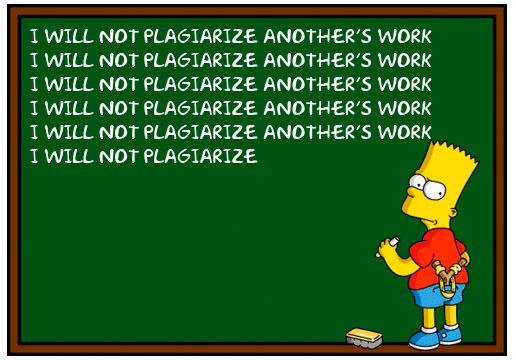
Cheating Cheaters Who Cheat

Have you heard? It’s all over the news: people cheat! That’s right; human beings actually cheat. Next thing you know they’ll be lying as well. (Cheating and lying being close relations of the “I want what I want” family.) All (or most) flippancy aside, we probably can all agree that cheating is hardly news, or new. There’s a good chance that the guy who invented fire was really just the guy standing behind the guy who invented fire and felt the urge to push him into the flame, create a “do you smell something burning” diversion and declare; “My word! What is this I have made? Let us call it fire.” Maybe he didn’t get enough attention as a child, maybe his father dragged his mother around by the hair one too many times, or maybe his cave was in the wrong part of town. But more likely than not, he was just some guy who wanted to be the one who invented fire.

So why in the world do we (feign) surprise when hearing of business, government or humans involved in cheating? Why is it simply cataclysmic when students (from good schools!) cheat? The recent ‘outbreaks’ at Stuyvesant High School and Harvard have sounded alarm bells in the education and parenting community. How could this happen to academically gifted individuals? The assumption is that cheating is not for people who need only work hard to get what they want. Than who exactly is it for? Cheating by any other name is simply a short cut. The notion that people with resources (intellectual or financial) would not engage in short cuts is absurd.

Of course it would appear that these pumpkin eaters are not to blame. Oh no, apparently they can not resist how very easy cheating has become. Evidently (or so the argument goes) the internet causes cheating (and pornography, adultery, obesity, gambling and shopping addiction.) When Harvard students were given a take-home exam they could not resist the sweet siren song of the internet. We must assume then that their parents and grandparents were able to resist the charms of the extensive Harvard library system because, well because Boston is cold damn it. There’s getting an A and there’s staying warm for heaven’s sake. In class cheating has been made all the more tempting with smart-phones. No longer must students burden themselves with the arduous mechanics of passing notes! Just type your question on the phone that has no business being in the classroom. And what of wikipedia?! Certainly there is no way a person could be expected to see that the operative word in “copy and paste” is ‘copy!’

Blaming the internet is fun but it’s also cheating. It is avoiding doing the real work to find the answer. Could it be that there is an increase in cheating because there is an increase in testing? Could it be that once we made every kid an honor student or worthy of a “best snack provider” trophy, we robbed them of an interest in working hard for something they want? Could it be that growing up in a world of leaders who cheat and lie with impunity has an effect on children? Maybe it’s a little of everything or a bit of nothing. But what it isn’t, is a side effect of the internet.

 
1 Comment

Posted by on September 8, 2012 in Education


Tags: , , , , , , , , ,