RSS

Tag Archives: Brenda Tobias

In Good Hands?

gecko

Everyone has a medical insurance horror story. They may differ in what end of the beast one has wrestled; (getting insurance, updating insurance, filing a claim, disputing a claim, etc.) but the blood boiling frustration is the same. It is the rare insurance experience that is summarized with; “Oh how I enjoy working with my particular carrier. I pay them and they make my life easier when I’m most vulnerable and provide much needed access to care.” It is much more likely the case that hours (if not days) have been lost trying to get answers and coverage. In the most heinous cases, professionals need to be hired to force insurance companies to pay for coverage.

Medical insurance companies are in the catbird seat. They don’t need to advertise they only need to lobby. Most coverage does not happen through individual purchases. Coverage is purchased in bulk through employers. In this way they differ greatly from automobile insurance. Which is one reason you don’t see an animate gecko or (wee wee wee) pig selling medical insurance. You’ll never see an advert of a medical emergency in which a wise soothing man with a voice like Barry White comes to the rescue. Medical insurance doesn’t need to promise (or deliver) anything except the belief that we need it to survive. And we do believe that. We have made considerable efforts to expand coverage to individuals including dependents well into adulthood. We are now moving towards insuring everyone regardless of employee plans. Somewhere along the way we’ve equated insurance with healthcare.

Insurance companies do not make money by providing healthcare. However they do increase the cost of healthcare by their very existence. There is a complex economy that exists between healthcare and insurance companies. Medical practitioners need to charge more to support the additional staff needed to process claims. Expensive tests are casually ordered if they are ‘covered.’ Insurance companies negotiate discounted reimbursement rates for pharmaceuticals and medical care, which in turn drives up the cost for the uninsured, which feeds into the notion that medical insurance is necessary.

Would it be such a radical notion to abolish medical insurance? We did not always have insurance in this country. In fact historically speaking it’s a relatively new concept. True our medical advances are quite expensive and need to be paid for in some way. We live longer now, partly due to medical interventions that cost money. But how much money does it cost to support the medical insurance beast? How much time is lost in productivity of employees pursuing claims? How many staff of every company offering medical insurance is needed to wrangle the companies and attempt to explain the plans to employees? How many medical offices could dramatically lower the price of an office visit by dropping medical insurance? But what would become of the medical insurance staff? Well the doctors and nurses whose job it is to review (aka deny) treatment for people they have never met will do just fine. Everyone else on staff has an equally transferable skill; there are no typesetters or farriers to retrain.

There is something inherently problematic with a (highly) profitable product that positions itself as non-negotiable but with which we have zero consumer input or control. What we actually need is not an inflated labyrinth payment method but healthcare. High quality, easily accessible, holistic healthcare is what is needed. What is needed is healthcare that focuses on preventative care throughout a lifetime. Adding a layer for payment processing which often gets in the way of care is not what is needed. Heralding a product whose very raison d’être is to make money not to provide care, as a panacea is not what is needed.

 
Leave a comment

Posted by on March 8, 2013 in Cultural Critique


Tags: , , , , , ,

All aTwitter

comicbooks

There are two (polar opposite) views of modernity. There are the early adopters who froth and queue up for new and shiny gizmos and gewgaws and then there are the progress curmudgeons. These curmudgeons sit on their metaphorical porches and attribute the downfall of society to; ‘those dadgum moving picture shows.’ Most of us fall somewhere in the middle of these two opposing views. The early adopters aren’t a new concept (please don’t tell them that it would just kill them) people have been running to buy what’s being sold since the first wheel kiosk opened. It’s the progress curmudgeons that are far more fascinating. Nobody is born a progress curmudgeon. Every kid is intrigued by something newer, faster, and shinier. No, a curmudgeon must be created. They must find a time in history and stick with it. Any and all things that came after these glory days must not be trusted.

This is not an entirely irrational perspective; some things simply aren’t made as well as they once were. For instance clothes used to be made to last a lifetime, although who would want to wear the same clothes for their entire life alludes me. Cars were far less disposable, but they were also lethal (both for riders and for anyone in the car’s path.) Certainly items were easier to use once upon a time. Picking up the phone and asking the operator to connect you was easier than…pushing a speed dial button? Well a typewriter was certainly easier to use than a computer. You only need insert a ribbon (use lye to remove the ink from your fingers,) insert paper, reinsert paper after you realize the lye missed some spots and ink has leached onto the paper, insert paper again with carbon paper (use lye to remove carbon from fingers) commence typing, commence searching for white-out, miraculously finish letter, try and type address onto envelope, give up and handwrite envelope, find stamp, walk to mailbox, repeat. Fine, communication is easier but what about music. Don’t you miss records? You remember records don’t you? There were those paradoxically highly fragile yet extremely heavy items you had to lug around with you through life. They crackled and skipped and sounded nothing like the real thing.

I think we can all agree that progress is just that; progress. We don’t have to like it and we don’t have to adopt it, but we cannot argue with the fact that it is progress. No one wants to feel left behind or to have his/her rituals upended. But discounting progress, or worse imbuing progress with negative consequences is misguided. How many times have you heard people blaming modern movies and videos for increased violence (as if silent movies weren’t horrifically violent)? And what of this notion that social media is to blame for increased bullying. It’s not lax parenting, or the soul crushing experience of a Kindergarten graduation ceremony that leads to the self-esteem issue that is always at the root of bullying. Nope, it’s social media that is to blame. The same social media that allows for positive reinforcement that simply does not exist in any other domain of the real world with the exception of group therapy. Before the advent of (social media) Linkedin did anyone ever publicly endorse your skills? Whether it is a meaningful gesture or has any validity at all is beside the point. It is a public attaboy that simply did not exist in the past. Before we tweeted, did we publicly support other’s views or endeavors? Do we even remember a life before Facebook and the villages it’s created? When, beside a reunion (family or class) did we ever cheer accomplishments, offer sympathies and coo over baby pictures?

Expanding our sense of community is always a good thing. It reinforces our attachment and obligation to the larger world. Humans despite their many differences are at their core the same; they need to be connected to other people. It is not the gaming or chatting that encourages antisocial behavior; it’s the fact that people are using these outlets to avoid social behavior. In that sense the video game is no more detrimental than the comic book (which was also decried as the downfall of civilization.) The progress doesn’t create maladjusted people, it’s that maladjusted people still crave human interaction, simulated or not. Banning or demonizing the tangible is always more tempting than dealing with the elusive. The only way to reach troubled people is to reach out to troubled people. Blaming something we don’t care for or don’t understand is distracting and disingenuous. Social media, comic books, dime novels or pool do not create trouble. Troubled people are drawn to things that make them feel less alone.


Tags: , , , , , , , , , , ,

The Smoking (Gun) Section

Anti-smoking campaign launched

C. Everett Koop made a mark on public health in America. He was a forceful advocate for rational scientific facts that were at times in opposition to his own personal beliefs. He refused to imbue abortion with (unsubstantiated) claims of lasting psychological damage. He forced a (seemingly) reluctant administration into acknowledging and fighting AIDS. He may very well be the only surgeon general whom we can all name and picture and that is in no small part due to his anti-smoking campaign. Dr. Koop was the catalyst for the most dramatic change in social behavior in our time. Alarmed by the effects of smoking Dr. Koop, and without much support from his administration, he went up against the powerful tobacco lobby and took to the podium (in his impressive uniform.) He appealed directly to the nation to change their ways. He issued a report about second-hand smoke and campaigned for smoking restrictions in the workplace and restaurants. Through his efforts, both academic and rallying; Americans began to change their attitudes towards smoking. Smokers gradually went from the freedom to smoke anywhere in a restaurant, to doing so in a designated area, to doing so outdoors. People grumbled and even got angry, but they moved and public health improved. The air quality improved for all and smoking diminished (dramatically) overall.

Smoking became a personal behavior that must stay personal. What if we were to do the same with gun ownership? What if we were to treat guns as we do smoking, as a public health issue? People can own guns, they can shoot guns, but they most do so in the shooting section. Guns must be registered and licensed and be stored at a registered and licensed gun club. The clubs provide shooting ranges and would be allowed to sell ammunition. Licensing and registering a personal (at home) handgun would require the purchase of a gun safe. Gun security in a house in which children are allowed or live would be treated like cars and car seats. Any adult caught having an unsecured gun in proximity of a child would be subjected to the same penalties a person driving with an unrestrained child. Hunting is already a highly regulated endeavor. There are times of year in which a person is allowed to hunt particular animals and there is licensing. Hunting guns would be registered, licensed and stored at a hunting lodge (or a locker in the state police barracks.) Gun owners would be fined and have their license revoked if they don’t abide by the rules.

Would creating a ‘smoking’ section prevent illegal firearm sales or guns ending up in the wrong hands? Maybe, maybe not. But by changing what we consider normative behavior, we do change everything. What Dr. Koop did was shift our society’s perception of smoking. We moved from glamorizing a behavior to recognizing it for the blight on public health that it is. If we no longer accept that an individual’s right to gun ownership trumps that of the public good we will be that much closer to protecting our children and ourselves. If we begin to see that guns, like cigarettes, are a personal choice that must remain personal we are that much closer to controlling gun violence. People who choose to own and use guns responsibly should embrace this notion and extricate themselves from any organization that preaches personal freedoms above that of a safe and secure society. They should tear up their membership cards and visibly step away from an organization whose solution to violence is to arm elementary schools. There is a name for groups whose use of violence creates a general climate of fear in a population.

 
Leave a comment

Posted by on March 4, 2013 in Cultural Critique


Tags: , , , , , , , , , ,

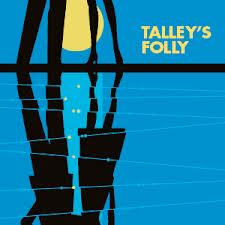
Talley’s Folly – Review

talley's folly

The curtain-less stage, set for Talley’s Folly (by Jeff Cowie) is impossible to ignore. The southern weathered boathouse littered with rusted and discarded objects begs for the arrival of Miss Havisham. The small apron of the Laura Pel’s stage is festooned in large cartoon-like flowers, setting the stage if you will for this realistic play that knows it’s a play.

Lanford Wilson’s 1979 Pulitzer Prize play begins with eliminating the fourth wall. Matt Friedman (Danny Burstein) walks through the house and onto the stage and announces how long the play will be and why he’s there. He repeats his opening speech (at a higher speed) for latecomers. For audience members who cling affectionately to the fourth wall, this is somewhat terrifying. But before we have time to rethink our choices, a halting and delicate story unfolds and we are immersed, enthralled and utterly smitten. We meet Sally Talley (Sarah Paulson) whom Matt has traveled to woo. Theirs is not an easy courtship. In fact at times it would seem that whatever courtship there is only exists in Matt’s mind. Sally is a lovely blonde woman from a wealthy family that is less than thrilled with the existence of the obviously Jewish and vaguely European Matt. That the play takes place during World War II is interesting but not all that relevant. The family’s attitude is timeless as is the story of Matt and Sally. To outline what occurs between them in the course of 90 minutes would deny potential audiences the real pleasure of this play.

Mr. Burstein who if truth be told, owns any role he plays, is Matt Friedman. True the role will always conjure its creation by Judd Hirsch’s (in 1979), but Mr. Burstein is not in anyone’s shadow. He is larger than his physical self yet not in anyway overblown. He plumbs the humor while swallowing the pain. Matt Friedman could easily become pitiable, but Burstein never allows that to occur. Ms. Paulson could easily become set dressing in his presence but under Michael Wilson’s direction they shine equally upon the stage. While we at times we become frustrated by Sally, we never once doubt her. The actors capture the realism and the poetry of Matt and Sally; we ache for them and we cheer for them.

The Roundabout Theatre’s Talley’s Folly opens on March 5th

 
Leave a comment

Posted by on February 28, 2013 in Uncategorized


Tags: , , , , , , , , , , , , , ,

It’s Work After All

ww2-19

So a book publicist and an agent walk into a bar (okay not a bar, a reception area of a media conglomerate) and discover they represent the same issue du jour. “Bring it on,” says one in a clumsy attempt to appear secure (if not woefully out of date with her slang.) “This will be fun” says the other in what can only be called utter insincerity. They were clearly uncomfortable with confrontation and/or competition and poetically the issue du jour with which they’d been charged was women in the workplace.

The issue of work/life balance is not new, it’s been bandied about since women were told they could “have it all” (cue Veruka Salt) which would’ve been somewhere around the mid-to-late 1990s. There has been a push by women (that has buy-in from some men) to tailor the workplace to the personal needs of employees. There have been talking heads and studies supporting the edict that ‘happy employees are productive employees.” For the record you can always find a study to support your own position (e.g., divorce? happy parents make happy children. drinking while pregnant? a glass of wine makes the woman happy & calms her uterus. childfree? people without children are happier…) The fact that workplace balance is almost always a veiled reference to ‘women in the workplace’ is not a coincidence. Not since the industrial revolution has the workplace changed as dramatically as it has with the inclusion of women in real numbers and positions. But to somehow suggest that these employees work differently or need allowances to be productive is offensive.

Women (particularly post 1970s) do not need to be told how to conduct themselves in the workplace or boardroom. We’ve been doing it for decades thank you. The fact that some women are doing it in software (or other male-dominated fields) doesn’t make it uncharted territory. There was a time when everything (save teaching and nursing) was a male dominated field. So please don’t tell me to lean in and/or work harder. It’s called ‘work’ after all isn’t it? It’s really not all that complicated to get to the top (which isn’t to say it’s easy to do.) Please don’t suggest that those women who’ve made it to the corporate top can sprinkle their success fairy dust on the cubicles below. I don’t need special dust or treatment; I just need for you to be a good boss/leader. And while we’re at it, please keep my personal life out of the workplace. What I choose to do outside of work is just that; outside of work. I will choose a job and/or career that suit my personal needs. These needs will change over my lifetime, as will my work choices. I do not need or want the world of work to alter its nature to honor my personal life. It’s called work after all.

What I would like is affordable childcare (not for women or for men but for children.) I’d like reasonable family and medical leave time (for maternity, parenting or other personal needs.) I’d like flexible working arrangements when they either do not impede the work or in fact advance the work. I would like equitable medical and dental benefits and have people pay for the amount of coverage they need. I would like a workplace free of harassment and hazard. I would like fair compensation for the work done not the position held. And if I may borrow some fairy dust for a moment; I would like hiring and promotion tactics to occur on merit alone.

A little advice to that anxious publicist and agent; relax there’s enough 15 minutes of fame to go around.

 
Leave a comment

Posted by on February 27, 2013 in Cultural Critique, Media/Marketing


Tags: , , , , , , , , , , ,