RSS

Tag Archives: Brenda Tobias

Everybody’s Fancy*

YE6MG00Z

Everyone is entitled to be the person they wish to be; adults, teens, children; everyone. As long as you are not hurting anyone, you can live your life exactly as you see fit. Society does expect some level of conformity of course, mostly to avoid utter chaos. We can stomp our feet or roll our eyes at the notion of conformity, but we look rather adolescent doing so. The world is large and diverse; there are a lot of us living on this relatively small planet. We make certain accommodations to ensure a modicum of tranquility. Nobody enjoys waiting on line but as a society we’ve decided it’s efficient. We’d probably prefer if the bus took us directly to our front door, but that’s not how a public bus works.

Public education is just that; public. No one person’s rights are more important than that of anyone else. Yet recently there was a report of a public school being pressured to behave otherwise. A transgendered elementary school student’s parents wanted her to use the girls’ bathroom. This arrangement worked until it didn’t. As the student got older there were parents (and perhaps girl students) who grew uncomfortable. A gender neutral bathroom was provided by the school, but the parents found this option ostracizing. Teachers and administrators had always used the (adopted) female pronouns for the student, which would indicate efforts of inclusion.

On the surface one might think; “They’re kids! Let them use whatever bathroom they choose.” But there’s a reason that bathrooms are divided by gender. Sometime around age 5 (otherwise known as; school-age) children become aware of gender differences. If we asked the parents of the transgender student they would probably recall their child expressing frustration at having boy parts (versus girl parts) at around age 5. Children develop a (healthy) curiosity about gender (both physical and social) at this age. Role playing games start around this age (ex. house, office, etc.) They often explore their own and other’s bodies. There’s nothing perverse about the curiosity. But like all behavior in children, it needs to be monitored. Children have much of the same physical anatomy they will in adulthood, but that doesn’t mean they should be engaged in adult behavior. They also have the physical ability to smoke and tie one on. But even the most precocious child is not equipped for adult situations.

It is easy to think of a child (at any age) feeling coerced and/or frightened by situations. It is also easy to imagine a bathroom frequented by children of all grades and unmonitored by adults. All kinds of things happen unbeknownst to adults in a school bathroom. This in no way is to suggest that a transgendered student is any kind of aggressor. Far from it. But why should a girl child be exposed to a biological boy child in the most private of ways? What if that girl child is significantly younger than the transgendered child? What if the girl child has been victimized at home? In other words; how are the rights of one student more valid than that of another?

The fact is that they are not. No one person is entitled to anymore than anyone else. Equal opportunity means just that; equal. Sticking to the bathroom motif; anyone who has stood on line for a public restroom because the people in the front of the line avoid the handicapped accessible stall, know this to be true. The Americans with Disabilities Act was enacted so that people had equal opportunity, not so that there was a private unoccupied bathroom stall available at all times. Everybody’s fancy, everybody’s fine and everyone is equal. We need to accept (not tolerate) all people. We need to allow for all points of view. But we also all need to live together, and sometimes that means not getting every last thing one wants. Sometimes we need to consider how others are impacted by our behavior. Sometimes we need to use the private bathroom.

*Some are fancy on the outside.
Some are fancy on the inside.
Everybody’s fancy.
Everybody’s fine.
Your body’s fancy and so is mine.

Boys are boys from the beginning.
Girls are girls right from the start.
Everybody’s fancy.
Everybody’s fine.
Your body’s fancy and so is mine.

Girls grow up to be the mommies.
Boys grow up be the daddies.
Everybody’s fancy.
Everybody’s fine.
Your body’s fancy and so is mine.

I think you’re a special person
And I like your ins and outsides.
Everybody’s fancy.
Everybody’s fine.
Your body’s fancy and so is mine.

Fred M. Rogers (1967)
 
2 Comments

Posted by on March 19, 2013 in Childhood, Cultural Critique, Well-Being


Tags: , , , , , , , , , ,

Hand-Picked For College

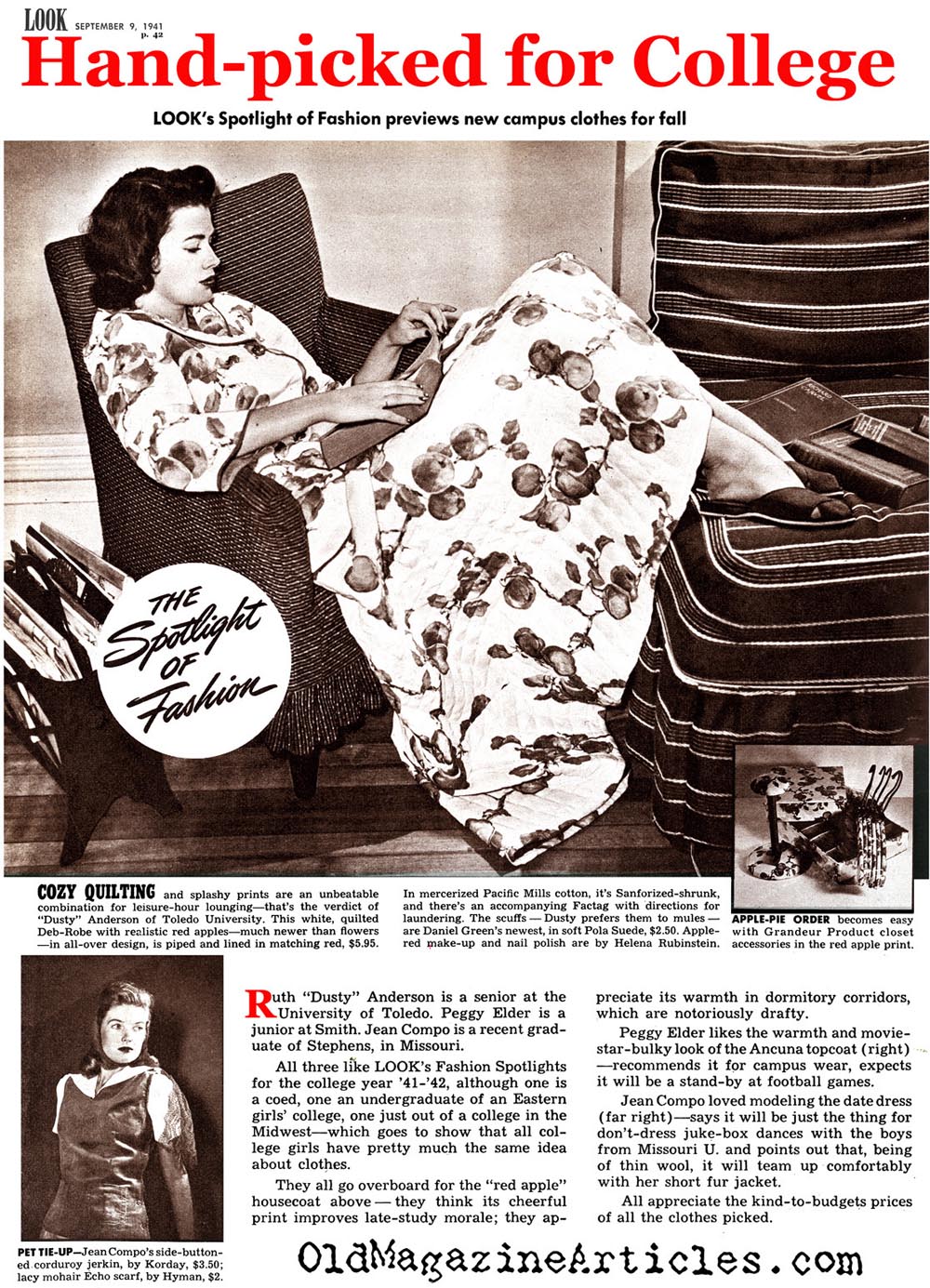
1941_college_fashion_0001

According to today’s paper better colleges fail to lure talented poor students. If it’s true the reason is simple; it’s complicated. While it is not complicated to identify and recruit academically gifted poor students, it is more involved to ensure that they succeed.

Many if not most financial aid packages do not include monies for housing and/or dining. There are rarely stipends for books, computers or travel. There are several periods during the academic year in which dormitories close and dining plans evaporate. Students who come from great distances and/or do not have the funds to travel are left utterly unmoored, often during a holiday. Colleges and universities now invite not just parents, but entire families to weekend events on campus. Families with limited means could not attend and students might be affected. Student activities occur throughout the years that cost money (not supplied by aid). Joining the Greek system (aka fraternities & sororities) is not free. Attending sporting events, senior class events, or arts events are rarely free. Without a meaningful stipend a university would ensure a second-class status to poorer students.

The more complex issue is that of social and/or emotional support. Attending classes and getting good grades is only one part of the college experience. If the idea of luring talented poor students to ‘better’ colleges is for them to get more out of the college experience (than they would’ve attending their local college) then more has to be done for them. Academic advising would need to be aggressive and include tutorials on research opportunities, graduate schools, and career opportunities. Student services would need to help foster networking opportunities to ensure the students reap the benefit of the stellar student body. Adjusting to college life is never all that easy. The environment always feels just a bit foreign, and the expectations daunting. For poorer students the culture itself could be off-putting and/or foreign. If a student has left an economically struggling family behind, it can feel disorienting to be among people with plenty. There can be issues of guilt if a family could use the student at home.

Finding talented students who are poor is not difficult. Every high school in the nation can identify their top 10% and SATs do a fine job of categorizing people. Many universities already recruit students from big cities (which no doubt offer a pool of talented, poor and ethnically or racially underrepresented students.)  Many schools have institutionalized support programs for students from ethnically/racially-underrepresented groups. If the ‘better’ schools are to recruit poor students from more remote locations they will need to create a similar model of institutional support programs. Recruitment and admission are only the very very beginning of the higher education journey. If colleges and universities take an aggressive role in recruiting students they must take seriously their obligation to ensure success.

 
1 Comment

Posted by on March 17, 2013 in Education


Tags: , , , , , , , , , , , , ,

Crime Of The Mind

Edgar Allan Poe

In New York City a man has been convicted of conspiring to kidnap and could be sentenced to life imprisonment. He did not in fact kidnap or hurt anyone, but did type extensively about his desire to do so. It is conceivable that this 28-year old man could spend the rest of his life in prison for having creepy thoughts. This in a land in which people who’ve been convicted of actual crimes serve their time and are released. What in the world does it mean for thoughts to be illegal?

Was the fact that this man a N.Y. police officer too emotionally charged for the jury? Was the jury swayed by the graphic nature of the defendant’s writing? Was the fact that the writing occurred in cyberspace perceived as more threatening than a handwritten journal? Was it that the defendant engaged with other typists in these fantastical plans? Something must have clouded the jury’s vision to render such a verdict. Is there reason to be concerned about the judgement of this police officer? Absolutely, but that’s a personnel issue, no? Were the messages so convincing that the jury was concerned about imminent danger? Perhaps, but that is why probation, monitoring and court mandated treatment were invented.

By equating thought with action we set a dangerous precedent. What does this mean for all crime writers for example? What does it mean for anyone who’s ever put pen to paper (or fingers to keyboard)? And what of those who engage with the dangerous writing? Are book clubs or theatre audiences aiding and abetting these dark thinkers? While no one will ever confuse Sweeney Todd with the contents of a chat room, the overarching premise is the same. The fact that the chatting, posting, emailing and texting wasn’t particularly well written or the least bit musically engaging doesn’t mean it wasn’t an exercise in creative writing. Creative writing by a man of questionable mental health of course.

But questionable mental health is not a crime. Do we want people with questionable mental health to be carrying a gun and be charged with protecting people? No. Do we want real and meaningful treatment for those who are not entirely well and who harbor violent thoughts? Without a doubt. Imprisoning (for any length of time) because of mentally illness is a black eye for us all. It is an ugly bruise of a reminder of how inept and misguided we are in matters of mental health.

 
4 Comments

Posted by on March 13, 2013 in Cultural Critique, Well-Being


Tags: , , , , , , , ,

Where Have All The Good Hosts Gone?

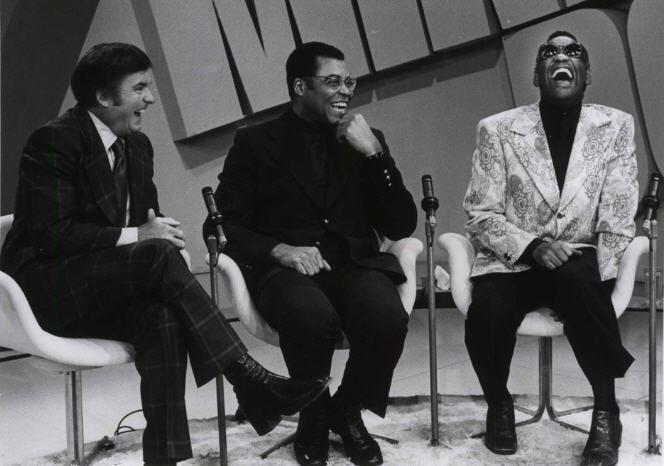
TV - Mike Douglas, James Earl Jones, Ray Charles - 19740204

Does anyone remember Mike Douglas? Not Kirk’s son, but the singer, or more to the point the talk show host. If you’re old enough to know what the dial is in “don’t touch that dial” you remember talk shows. There were the urbane slightly sexy late-night variety, that is still offered, though diluted, today. Mike and his contemporaries; Dinah Shore and Merv Griffin were on during the daytime hours. They had each been singers during the big band era and were all incredibly affable.

Each weekday, Mike, Dinah and Merv would host guests, sing a little tune and perhaps perform in an iffy sketch. But it was the guests one really tuned in for. The known and unknown would flock to the couches (and chairs) to chat. Maybe they would perform a bit, but mostly they were there to chat. There was nothing being sold or pitched or positioned. The host (whether M, D or M) would engage the guest (as a good host does) and entertain us with their conversation. The guests were incredibly varied and included political and controversial figures (they also included dancing dogs.) Many of the guests were boldfaced names of Broadway and Hollywood. Others were simply great conversationalists. Some guests were clearly friends of M, D or M, some just dropped by while passing through town. The guests would not then reappear spouting the exact same quips on the couch of the remaining M, D or M. There wasn’t a circuit being run guided by handlers.

Daytime television has changed much over the decades. The popular rhetoric is that people are not home during the day to watch television. But of course this does nothing to explain the spate of news-lite talk shows. For at least a decade the networks, and others, have filled their morning programming with chattering, relatively unscripted talk shows. There are usually a gaggle of hosts sitting around drinking out of large mugs and perhaps a guest drops by to sell his/her wares. There are a small handful of afternoon talk shows built around a host. Every pilot season a new “oh is that what happened to him/her?” celebrity is packaged and (hopefully) sold as a talk show host. Some find their groove some do not. It hardly matters for the guests are exactly the same on each and every show. The questions asked are the same (as written and contracted by handlers) the answers and ‘ad libs’ are the same. The movie, book, show, image, is pitched, the host fawns and everyone goes home happy. You could spend a week clicking the remote and see and hear the exact same thing on each and every show. There is no longer a place for Tiny Tim (look him up), Norman Mailler, a yogi, Martin Luther King Jr., Liberace, Truman Capote or Spiro Agnew (look him up) on the couch, unless of course they were selling their reality show.

Is memory rose colored? One would desperately hope. Who wants to spend their later years remembering anything but hazy romantic perfectly lit moments? But even if the memories are completely faulty and that of a child, even if Minnie Pearl was in fact selling a line of hats, wouldn’t it be grand to have Mike, Dinah and Merv back on the air? How much more entertaining would it be to hear extended conversations without being sold anything besides soap and canned soup? Wouldn’t it be fun to see stars of yesteryear and the yet undiscovered side by side? How interesting would it be to hear from actual writers and artists and even politicians? And to have all of it delivered with a thousand watt smile and a song? Don’t touch that dial.

Merv Griffin Show Theme Song

 
8 Comments

Posted by on March 12, 2013 in Cultural Critique, Media/Marketing


Tags: , , , , , , , , , , , , , ,

Corseted Voices

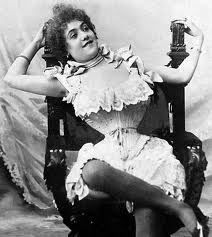
corset

The teeny tiny breathy voice caught my attention. At first I attributed it to the elderly woman sitting at the front of the bus. The fragile smallness of the tone certainly fit the profile. But then I noticed the breathy almost Marilyn quality beneath the tinny squeak. The come hither tone coming from the throat rather than the diaphragm could be the result of a pulmonary condition, but it sounded too controlled, too intentional to be medical in origin. After a few unsubtle craning of the neck I spotted the source, a young woman in her early 20s. Where on earth did she learn to speak like a sexy grandmother? And how do I wrangle an introduction to her grandmother?

Since that mass transit incident I’ve come in contact with hundreds of women ranging in their late teens to late 20s speaking in tiny breathy voices. How did this happen? As little girls did they dream of one day sounding like sexy grandmas? Did they foresee a lucrative career in senior phone sex? Or was it just an adolescent affectation, like dotting ‘i’s’ with hearts, that simply got way out of hand? And what kind of teenage girl wants to sound decrepit? Or could it be what you and I hear as fragile breathy grandma, these uber-indoor voiced gals hear as submissive and thereby somehow enticing? We’ve all been there; the home perms, the blue eye shadow, the clogs. We’ve all done our time in the adolescent hall of mirrors, trying on one misguided identity after another. But I’d like to think had I continued on any of my (many) misguided paths one parent or another would have said something. In fact they did. During the height of my adolescent years I spent all of 5 minutes with an affected voice; having just spent an enriching day with some upper east side girls. I was told in no uncertain terms to unlock my jaw and open my mouth immediately. My country club affectation was quashed before I even made it up to my room, let alone onto a public bus.

Do parents not hear their own children? Does their adoration tinker with their ears giving every utterance the deep solid tones of a young Helen Reddy? Do teachers no longer send students to speech therapy? Do doctors not notice the panting and squeaking? And what of peers; merciless, punishing, unrelentingly critical peers? Shouldn’t there be taunting and antagonizing? Where are the Depends jokes, the lockers draped in support hose? Or are the geriatric geisha voiced gals admired?! Is having a tiny voice whose sole purpose is to entice men, the 21st century equivalent of a 16-inch waist or the ability to play the harpsichord? Is fragile the new black? Are young woman creating virtual corsets resulting in smaller people with diminished voice? If so, to what end? Surely the job interviewing process is not aided by appearing weak and tremulous. My guess is that by 30, their mouths start to open and they find their real voice. Traditionally that’s what metaphorically happens in one’s thirties. The alternative is simply too hideous to contemplate! No one wants to hear quarterly projections or medical test results in a breathy shaky voice. It would be hard to believe the state of the union is anything but doomed hearing it spoken in a squeak. But just in case these women don’t naturally grow out of the contrivance, congratulations to all you vocal coaches and speech therapists, your ship has come in!

 
Leave a comment

Posted by on March 11, 2013 in Cultural Critique, Well-Being


Tags: , , , , , , , , ,