RSS

Put Me In Coach

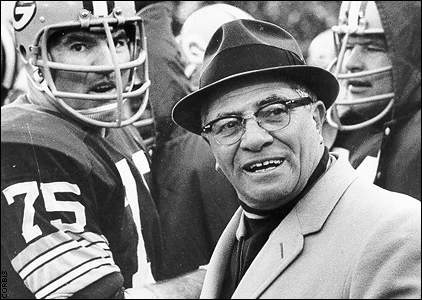
The first time I heard the expression “life coach” I assumed it was a play on words.  However this was twenty years ago or so, and since then I have heard of “breastfeeding” and “marriage proposal” coaches.  Evidently, if there is a life stage to be navigated, there is a complementing coach.  People of every age and walk of life can hang out a “life coach” shingle in the same way we can all (legally) call ourselves “therapists.”  For the record, I would suggest there is far less room for tragic endings with the untrained calling oneself a life coach than a therapist.

In the grand, or even not so grand scheme of things, who really cares what people do with their money.  If there’s an extra couple of hundred dollars hanging around, why not spend it on someone who will tell you what to do next?  I do however find it more than just a bit bizarre that universities (of renown) now offer life coach certification.  Maybe I just need to catch up.  There was a time before “stylists” too.  (You hear that design schools?  There’s a certificate program just waiting to be created.)

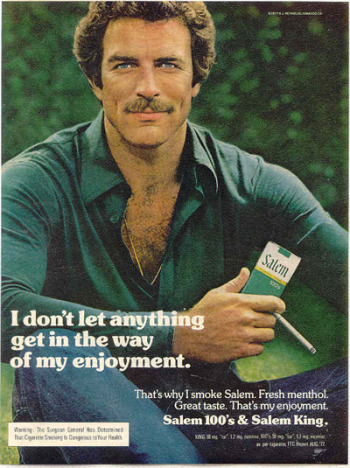
I enjoy picturing the expressions on the faces of our 1960s ancestors, if we tried to explain these professions.  “Life coach?” the real life manifestation of Betty Draper would repeat while exhaling a plume of unfiltered cigarette smoke.  She would drop her chin an inch or two, raise her eyebrows and lower her voice; “Really? Is that a thing?”  As we tried to explain, she would drop a saccharin into her dainty cup of coffee, shake her head ever so forlornly and declare; “That is so sad, to not have friends.”

In the spirit of universal friendship might I offer the following (gratis) coaching:

  • Relationships: Does she or he cause you unhappiness?
    • If yes, reconsider your commitment
    • If no, proceed to: Am I the best possible version of myself in this relationship?
      • If yes, stay, if no, go
  • Work: Am I happy on Sunday night thinking of the week ahead?
    • If yes, don’t change a thing
    • If no, proceed to: If I won the lottery today, how would I spend my days?
  • Relocation: Should I stay or should I go?
    • If you are considering moving for the sake of moving, keep in mind that wherever you go, there you are.  Geography is not destiny and will not change who you are.
  • Behaviors: Whether it’s smoking, fitness or carbs, once you do anything for six (long hard) weeks, it becomes a learned behavior.  Begin now.

I’m afraid our time is up.  Thank you, now go out there and live!

 
2 Comments

Posted by on January 29, 2012 in Cultural Critique


Tags: , , , , ,

Have A Nice Day

The third Monday of January has long been recognized as the most depressing day of the year.  This no doubt refers to it being a day that collectively, most people find to be depressing.  It should in no way mitigate the individuals’ own special personal days of bleakness.  But, it is said, that like New Year’s Eve, Thanksgiving and the like, the third day of January is a shared celebration.  No silly hats, champagne or mini-marshmallows, this communal experience has more to do with hiding under the covers.  It is the day on which we presumably realize the extent of our December expenditures and the temporary nature of our resolutions.

Well the third Monday has come and gone, and it’s safe to say the gloom lingers.  If December is the month of “goodwill towards man,” January is the month of “get the hell out of my way.”  The general crankiness simply can not be ignored.  Ordinarily I chose to react to Scrooge McDuckery with thoughts of “oh that poor man must not be feeling well.”  I force myself to consider the health emergency that woman (screaming into her cell phone on the bus) must be having.  I am now running out of scenarios and patience.  Even dear Pollyanna would be exhausted at the end of January.  When the grumpy old man visiting my upstairs neighbor cursed at me in the elevator, I actually cried.  Even the sturdiest of us does not wither from an old man’s curse.  When the woman pawing through boxes of shoes as if looking for hidden treasure, pulled them all down upon me, I got a little sad.  When she told me to move because now the piles of boxes and crumpled me were in her way, I got a little angry.  And that must be how it starts.

The artificially induced good cheer of December is gone.  Bills have mounted, social events have dwindled, the news is filled with political sniping, and we did not succeed at quitting smoking and losing 20 pounds.  We start our day cranky, and then we are forced into a world with other cranky people.  Even in the virtual world, you can see a spike in snark,  I have not conducted an actual study, but observations would suggest that tweets and blog comments today are as dark as 5:00 on a January afternoon.  There you are, reading through a news site, interested in the (potentially) insightful comments made by other readers and BAM!: the equivalent of schoolyard taunting and/or graffiti appears.  Never insightful, rarely humorous, these remarks are the equivalent of a toddler’s tantrum.  “Look at me” they scream, “I am SO relevant.”  Of course these small minded snarks are always around, but during other months they don’t appear often on serious news sites.

It’s January.  I’m no groundhog, but I’m going to estimate we have at least two months left of winter.  Might I suggest we take a collected cleansing breath.  Let’s remind ourselves that it is January now but soon it won’t be.  The bills will get paid, one way or another.  Spring is always a better time to start a physical fitness regime.  And the best way to make the world seem a little cheerier is to be a little cheerier.  Smile at someone.  Hold a door open.  Let today be the day you do not stand in front of the subway door.  Ask the tourist if they need directions.  And remember, just because you have thought of a snarky comeback, doesn’t mean you have to say it out loud.  If Clarence the angel paid you a visit today, don’t you really want to see all the people in your past not having their feelings hurt?

 
5 Comments

Posted by on January 25, 2012 in Cultural Critique


Tags: , , , , , , , , ,

Look Back In Anger – Review

Look Back In Anger was written by John Osborne in 1957.  It was considered the first of the anti-drawing room plays and introduced to the stage the “angry young man.”  Fifty five years later, he is still quite angry. The play has been produced recently at home (London) and abroad, it has also been made into a film.  This Roundabout Theatre production directed by Sam Gold is a four character interpretation of the play.

Jimmy (Matthew Rhys) a working class university graduate is married to Alison (Sarah Goldberg) the daughter of a colonel.  Jimmy runs a sweets stall with Cliff (Adam Driver) who also lives with the couple.  Later they are joined by Alison’s actress friend from childhood, Helena (Charlotte Parry.)  The fifth character, the most prominent of players, is the set.  The stage at the Laura Pels is reduced to a depth of six feet.  It is the bleakest and filthiest of sets you are likely to ever see.  Dishes, laundry, trash, and food litter the floor and a stained mattress is propped in a corner.  The filth only grows as the play progresses.  The (relatively) tiny stage and the use of a lit “offstage” work to reinforce the utter claustrophobia of the characters’ lives.  Having the actors sit on the aisle (on the edge of the audience) is not distracting but it also does not add anything.  It is just one device that is employed to add elements of realness and rawness to this production.

Jimmy is a character you have seen portrayed often.  He is filled with self-loathing and expresses it through verbal abuse and absolute derision for those he loves.  He is above all else, a victim.  His regal looking wife Alison spends much of the first act in an open dressing gown, half-slip and bra.  She dutifully irons her husband’s underwear as he hurtles insults her way.  To avoid boredom, Jimmy also goes after Cliff, often physically.  While these goings on are certainly tedious, the performances are riveting.  The actors are so thoroughly immersed in their characters it is impossible to remember their past performances (of which I’ve seen several.)  There is a comfort with their characters which is rarely seen.  This is a very physical play, with much wrestling (fight direction by Thomas Schall) in a very small space.  Not once, did any of the tousling look staged.  There is also much silliness, mostly in the form of animal imitations, which would look forced and moderately humiliating in lesser hands.

Helena arrives later in the play, looking groomed and radiant and reminding us that not everyone lives amidst such squalor.  Discovering the way in which her friend is living and taking into consideration Alison’s yet to be announced pregnancy, she arranges to send Alison back to her family.  I have to admit that I did not see that coming.  I wasn’t necessarily hoping for Alison to stay with Jimmy, I’m just not sure of her motivation to leave.  Needless to say, Helena and Jimmy start up an affair.  I say “needless to say” from a theatrical perspective, not a psychological one.  It’s not clear what either of these women see in Jimmy.  Now if they had fallen for his friend Cliff, I could understand.  Cliff is the only sympathetic character around.  He is loving and filled with an inexplicable optimism.

The house lights are used throughout the production to create mood, or anti-mood as the case may be.  Both acts begin with full house lights.  There are several minutes of silent action that occur fully lit.  The effect is lost on an audience who would rather talk amongst themselves.  Call it Pavlovian, but the full house simply would not silence until they were plunged into darkness.  Their talking was actually less distracting than was my empathy for actors being ignored.  The curtain-less (does anyone use curtains anymore?) six foot deep stage feels like a thrust, and the fully lit “wings” add to the intimacy.  I found so much full lighting and lack of “off-stage” just a wee bit distracting.  The acting really speaks for itself here.

The staging itself is beautiful, as is the acting, but the play simply left me cold.  While Cliff is a most sympathetic character, nothing much happens to him.  As the play came to a close, the previously excruciatingly well behaved woman seated next to me started to rustle in her purse.  I could not discern what in the world she would be doing, until she brought a tissue to her nose.  “Oh,” I thought, “she has a cold.”  No.  She was crying.  Did something sad happen?  Now, I am not made of stone.  I have been known to well up over curtain calls.  But I found nothing particularly moving about these characters, or their lives.  I had a bit of trouble believing that anyone would actually make a salad while sitting on the floor and toss the unused bits around the floor.  If the play was making the leap into surrealism, I would have been fine.  But clearly the claim to fame for this particular play and production is its realism.  However, I would see it again for the performances alone.
 
Leave a comment

Posted by on January 23, 2012 in Uncategorized


Tags: , , , , , , , , , , , ,

Wessonality

I hear that taxi receipts are going to be emblazoned with advertising soon.  In theory, that passes the laugh test, no?  For anyone who has ever been handed a mangled 2-inch receipt with blurry ink, it sounds ridiculous.  Unless it’s an ad for a better receipt mechanism, we might want to rethink this initiative.

Advertisers for the most part are hitting the right note in placement.  The industry has matured and is adept at following (and even predicting) trends.  Traditional platforms are still in the game, but new media has prompted creative delivery initiatives.  With our hand-held devices, web-based platforms and the like, we are bombarded with new forms of ads.  Only the most rural of us leave our homes without entering a technicolor world of advertising.  Those taxis about to get the smudgy receipt ads?  Most of their roofs are festooned with a large (illuminated) table tent of an ad.  Almost all cabs now have advertising (posing as network news) playing on a monitor in the backseat.  There really isn’t much to malign about the ubiquity of advertising.  If it hurts anyone, it’s the product/client not the user/consumer.  How in the world do you make yourself heard above all that noise?

One of the oldest ways to get noticed is celebrity endorsement.  Since there were celebrities there was celebrity endorsement.  If anyone had thought to market apples, I’m guessing they would have approached Eve.  Throughout the years most endorsements and advertisements have been quite obvious.  But what happens when advertising not only becomes more ubiquitous but more embedded?  What happens when a celebrity is famous for selling themselves as a brand (versus being a performer?)  There is a potential for conflict of interest as well consumer confusion.

Let us take a recent example of Paula Deen, a woman whose gimmick has been selling mayonnaise and butter laden dishes.  She is a southern woman who got her start making sandwiches for local workers.  With no culinary training but an innate understanding of showmanship, she is a perfect example of today’s celebrity brand.  She announced her (three year old) diabetes with her drug company endorsement in hand while declaring that her diet has nothing to do with her disease, thereby protecting her brand.  When asked on air if she was a paid spokesperson for the drug company she retorted; “I’m compensated just like you are.”  Well, not exactly.  The newsreader is being compensated by the network to do a good job for the network (and probably to cross promote the network’s other programming.)  Not many people watching the show think he is doing it for free.  The issue with not declaring (in a big black box) that “Miss Paula Deen is a paid spokesperson for this company” is that we are not the most educated of consumers. Sometimes public health has to trump capitalism.  Our country is just getting heavier.  Miss Deen has a loyal rural and southern following who may very well be suffering from diabetes themselves.  To hear a (very healthy looking) famous person declare that “diabetes has nothing to do with what you eat and if you take this lovely drug like I do there’s nothing to worry about,” is troubling.  Miss Deen is allowed to sell whatever she chooses, and the drug company is allowed to hire whomever it pleases.  Hence, the black box.  The drug company could also do themselves a big public relations favor by prefacing all their messaging with “maintaining a healthy weight is proven to have a positive impact on diabetes management.”

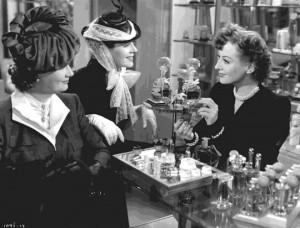
Users/consumers are becoming increasingly inundated with advertising, and may be a bit numb.  A million years ago, the novelty of Judy Garland selling Max Factor was so unique the consumer would think; “Look it’s Judy Garland selling Max Factor!” (and most fans knew that Max Factor was the make-up artist for the movie studios.)  Now that everyone is famous and ads are everywhere, being intuitively savvy is a challenge.  The harm is not to the product or advertisers but to the consumers.  Regulating advertising to protect consumers is not new.  You may remember when some paperback books had full-age cigarette advertisements.  Liquor and cigarette advertisements were once on television all the time.  Public health concerns change over time and in my estimation will always trump profit.  A simple black box hurts no one, not the product and not the paid spokesperson.  All it will do is remind the consumer that they are in fact experiencing an advertisement.

 
3 Comments

Posted by on January 20, 2012 in Cultural Critique, Media/Marketing


Tags: , , , , , , , , ,

There’s Gotta Be Something Better To Do*

The world of work has changed dramatically in this country during the past fifty years.  If we conjure “work” from the early 1960s, most of us will flash on some sort of variation on Mad Men.  Homogeneity in the workplace was de rigueur, and many retired from the very same company with which they began their work life.  Unskilled labor opportunities were somewhat divided between manufacturing and the service industry.  Labor was pretty well organized during this period and again it would not be unusual to retire from the same factory/department store where one began their work life.

While we still have a fair share of light manufacturing in this country, most would agree that the service industry makes up the majority of our unskilled labor industry today.  The funny thing about the service industry is that the world sees you working.  Most of us would have little cause to witness an administrative assistant at work, but we’ve all probably seen a home health aide or shop assistant.  And from where I’m standing, it would appear that we are the only people watching.

Recently I have observed a desire by (what we consider) unskilled workers to make their job as small as possible.  Some of this should be attributed to self-check out for customers, automated phone trees and the like.  But some of it is clearly a lack of training and professional development programs.  No doubt most of us had (or have) jobs at which the clock moves very very slowly.  It makes the day all the more endless to do less!  When the check-out woman at the (relatively gourmet) food store tells me to move my reusable shopping bags to exactly where she likes them, I have to wonder.  Her arms are fully engaged in checking her cell phone, so we know it’s not a mobility issue.  Her eyes do not need to scrutinize prices, as she only need sweep them in the general vicinity of the scanner.  She is not distracted by the register as I am checking myself out with a credit card.  There is no heavy lifting to speak of as gourmet tidbits rarely come in bulk.  So why would she want to make her job as robotic as possible?  No doubt she tires of waiting on people who might be paying a bit too much for that pound of coffee.  However, acting sullen and hostile is not always the most direct path to management.  Where exactly is her supervisor in this story?

The service industry can be a very rewarding career option.  Working in retail needn’t be the least bit mind numbing or dead end. The same is true for any number of service sector jobs.  The industry, by its very nature, often attracts those with the least amount of formal education.  All classes and cultures have a slightly different orientation towards work.  The great equalizer should be the workplace.  It is in the best interest of the employer and the economy, to train workers and illuminate their way towards a lifelong career.  It would not be realistic or sustainable to expect independent companies to have training and professional development guidelines in place.  But certainly any company or agency doing business with any branch of government need to demonstrate their commitment to their employees.  High schools could have a huge impact on workplace readiness, either with mandatory internships or classes.

Work has changed, industry has changed, higher education has changed and work readiness has definitely changed in the last fifty years.  When manufacturing was our largest (unskilled) employer, changes were made to the (once heralded) assembly line to address the needs of the worker.  Our economy is now sufficiently shifted to do the same for service workers.

*There’s Gotta Be Something Better Than This – Cy Coleman & Dorothy Fields, Sweet Charity (1966)

 
Leave a comment

Posted by on January 17, 2012 in Cultural Critique


Tags: , , , , , ,