RSS

C’est Magnifique!

Have you heard the news?  The French are way better than us.  No really.  They are all thin, are good parents, and have as many ways to tie a scarf as we have cable channels.  And that’s just the French, you should get a load of the rest of western Europe.  Now before we all slink back to our McMansions to drown our inferiority in a box of wine; let’s think this through.

Europe is old.  Really really old.  They are the grandparents at the family function, in their appropriate attire, watching the young over-sugared Americans run amok through the catering hall.  It’s not exactly that they are better, it’s that they know better.

They know that food is to savor, not to eat on the subway or in the car.  They know that flavor always trumps portion-size and that good ingredients don’t need sugar or batter.  Meals are social and not a shared experience between the diner and the television.  They also invest in beautiful clothing that lasts a lifetime.  Therefore their size must stay relatively constant.

The French are also in it for the long-haul when it comes to parenting.  They aren’t so interested in ensuring their cherub never knows a moment of woe.  They are committed to raising well-rounded, competent human beings.  They have no need to be their child’s friend, as they relish their adult life.  They do not dress like their children either as they have those gorgeous clothes in their closet.  There is a division between the adult world and the child world that we once actually had in this country.  Perhaps it was the blush of youth, but before we knew any better we were confident.

In New York, a city filled with posh private schools, European parents (here on business) are sending their children to public school.  They find the notion of fancy cafeterias and homogeneous classmates, abhorrent.  Public schools were good enough for them…(you may be old enough to remember hearing that in your house!)  For those who are concerned about their children keeping up with their French, they send them to one of the several bilingual public schools in the city.  Street smarts and competency are more important to them than amenities.  They’ve been around a while, they know what it takes to make your way in the world.  Competency and self-esteem can not be bought.

Let us not despair just yet.  Might I suggest, sitting down for a leisurely cafe au lait, and consider integrating just a bit of La Belle Vie into your own life.  If the idea of stopping at the market every other day for fresh ingredients is a bit daunting, try for just one additional trip a week.  Is the idea of owning one black pencil skirt for twenty years too foreign?  Instead, before you pick up another black skirt at BananaGapTaylor, count to ten.  If letting your child take responsibility for their own homework is just too much of a leap, consider having them cook one night a week.  Take their personal education as seriously as their formal education, and have them sit with you while you pay the bills.

Confidence comes from trying new things.  Succeeding will never be as educational as trying.  Draw inspiration from the French but don’t let them get you down.  They have their own idiosyncrasies; the whole country smokes and they are always on strike.  But they do have the courage of their convictions, and that really is worth emulating.

 
1 Comment

Posted by on February 15, 2012 in Childhood, Cultural Critique


Tags: , , ,

The Mad Men Guide To Life

Does anything more need to be said about the brilliance of Mad Men?  The production value soars above most cable series and the story lines have not faltered.  The series has benefited tremendously from continuously casting relatively unknown actors.  Above else, unlike most retro productions, they get very little wrong.  Credit the producers for perhaps having been alive during the early 1960s or at least having the good sense to hire people who were.  Mad Men is 99.44% anachronism free.

While much of the period perfect depictions seem quaint and distant, there is much that is timeless.  Every generation thinks they are covering new terrain and making new discoveries.  Every twist and turn in life seems unique and in need of a brand-new solution.  But there is much to gain from being reminded of the continuity of life and its annoyances.

Work is Demanding – Long before instant communication, Peggy was working nights and weekends.  Personal lives were impinged upon with after-hours work related functions.  Before technology companies put playrooms and free dry cleaning in the workplace (to keep workers at the office) companies had coffee carts.  Break rooms, sandwich machines and even office bars, were designed to keep workers in the workplace.  Work has never been fair or nice.  Meetings will happen without you, you will be left off of organizational charts and someone might just run a lawn mower over your foot.

Thin and Pretty Sells – There is nothing new about selling a female ideal. Media has been single minded in its affair with pretty, young thin women.  Before Spanx, there were girdles.  Creating a perfect form was a rite of passage for a young woman.  Pointed bras bore no more resemblance to the human breast than the wonderbra of today.  Before diet shakes, there was melba toast and cottage cheese.  Women carried lovely little boxes of (deadly) saccharin in their purses and smoked like chimneys to avoid eating.  Clothing was expensive and spandex wasn’t invented yet, so not being able to zip your dress meant not being able to leave the house.

Marriage is a Mystery – From a wedding guest’s perspective, do any two people really belong together?  Don cheats with the same woman, over and over again.  He craves emotional attachment with an intelligent, professional brunette, but married Betty.  Kitty is happily married to Sal, a man who doesn’t want Ann-Margret, he wants to be Ann-Margret.  Joan, in her early thirties, with a panic she feels deep in her bones, grabs what looks like a gold ring.  There is nothing new about making fear based choices and there rarely is anything good that comes from it.  Joan married beneath her on so many levels, and we wait for the “we regret to inform you” letter from the war department.

Fake it Till You Make It – The only people who don’t at one time or another feel like a fraud are sociopaths.  Everyone, regardless of achievement or talent has feared being found out.  Don struggles with that issue most of his adult life.  Joan, herself her greatest creation, visibly stumbles at times.  Peggy, a woman whose emotional sophistication belies her tender years, forces herself past those moments.  She gets the job, the haircut, the wardrobe, and the office, incrementally and with intent.  She always had the talent, if not the experience, but by the time she’s done with herself, she looks like a competent middle manager (at 23.)

Parenting isn’t Pretty – Glossy magazines aside, there’s nothing pretty about raising children.  Betty didn’t feel the need to self-censor when she likened the presence of her children in her car to that of horse poop.  The children misbehaved and developed strange behaviors, they refused to eat and sleep, they got sick at the most inopportune times and mixed a pretty lousy drink. But parenting was made a little easier, not just because of the drinking and sedatives, but because of a bit of emotional distance.  When little Sally ran amok in the house (with a dry cleaning bag on her head) her mother was concerned about the mess, but not enough to put out her cigarette and interrupt her adult conversation.

Experience Breeds Calm – There is much to savor in getting older, even during the youth revolution of the 1960s.  Bert Cooper is a sage beacon of calm during many a storm.  Sure, he knows firsthand how to succeed in business, but it’s more than that.  His Eastern sensibilities and embracing of modern art, speak to a man who is taking a big bite out of life.  He enjoys the fruits of his labor and has a deep generosity of spirit.  He takes his relationships as seriously as he does his job.  He is not feared but revered, a management lesson, yes, but also a life lesson.

 
3 Comments

Posted by on February 13, 2012 in Childhood, Cultural Critique, Style


Tags: , , ,

One Size Never Fits All

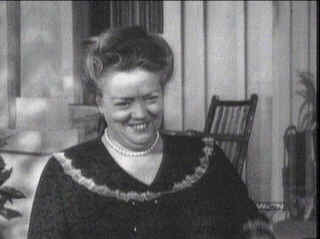
I’m all about staying present, counting my blessings, seeing the glass half-full and all that malarkey.  But sometimes, in my weakest moments, I find myself coveting a celebrity or fictional character’s life.  We’ve all done it.  Standing in that interminable depressing line at the D.M.V., who hasn’t thought “I bet Cher never has to do this?”  It’s not that we really want to be Cher (really. Did you see those towns she played for her “farewell tour?”  After year two, she was probably fantasizing about being me!)  We just want to feel for a moment, that we aren’t part of some populace blob.  Who doesn’t bristle or whimper at being reduced to a statistic?  Which explains why lately, as I tackle big banks, chain pharmacies or my cable provider, I’m prone to fantasize.  Yes dear reader, there are moments when I wish I was Aunt Bee.  It’s not the ample bosom or indistinguishable accent I covet, but the way of life.

Aunt Bee was never told that her $63 check couldn’t be cashed after she had just handed the teller a $400 cash deposit.  Aunt Bee would not have to fill out three bank forms (uniformly dotted with typos) confirming that yes her legal name is in fact her legal name.  Everybody at the bank knew Bee, and if they didn’t they certainly knew Andy. In my pursuit of Bee-ness, I patronize as many small and local businesses as possible.  I enjoy a familiar face that acknowledges they’ve seen me before (and the shopper in me appreciates the variety that comes from independent shops.)  My weekly trip to the flea market is a great outing for my Bee avatar.  There’s always a warm greeting and brief chat with the pickle guys.  The (costume) jewelry lady was a tougher one to crack (I think she has that facial recognition disorder) but she’s up and chatting now!  The pretzel man has a nice smile and knows I like the broken pieces.  He always sends me on my way with a bonus “one for the road.”

There is nothing inherently unfriendly about big business.   Friendly, well-trained staff can be employed in any industry.  The issue is one of implementing policy.  Any time guidelines are instituted for large amounts of people they are going to be very generic and rigid in nature.  The customer is seen as an amalgamation of millions.  You can toss around words like “client” and “guest” but what we really are is just a speck in the blob.  For the record, the “people as blobs” strategy can be quite effective in areas of; crowd control, public health, and emergency preparedness.  In other words, it works well in a crisis.  But everyday, it can be soul crushing.

Any large organization (public or private) needs policy and strategy.  The issue is how these policies and strategies are communicated along the chain.  If the organization has decided (consciously or not) that policy will take the place of critical thinking on the part of employees, my $63 check will go uncashed.  But if people are hired because of their problem solving skills and ability to translate policy into practice, we all have a chance of being Aunt Bee.

Everyone just wants to be recognized.  Navigating the public school system should not be a competitive sport (for parent or child.)  Talking to an actual human in the customer service department should not be seen as a tactical victory.  Apparently our fastest growing industry is the service sector.  If this really is the case, attention must be paid.  While offering any color of car, as long as the color is black, worked for the automotive industry, it does not work for the people industry.

 
Leave a comment

Posted by on February 10, 2012 in Cultural Critique


Tags: , , , , ,

My Funny Valentine

For as long as I remember there has been something or other to boycott. A large portion of my childhood was spent devoid of grapes and iceberg lettuce (the former more of a loss than the latter.) Later there were brands and corporations to eschew. Targets of boycotts, like leggings, go in an out of fashion. The longest boycott I ever participated in was my militant boycott of Valentine’s Day. That’s right; that little pudgy cupid-y holiday filled with cardboard hearts, flowers and candy. “Why?”, you ask. What kind of horrid trauma was bestowed upon me to render me so devoid of romance and “Be Mine” tenderness?

There is no childhood Valentine humiliation to divulge. My brown paper bag Valentine mailbox was as full as anyone’s. I received the same sized heart shape chocolate box from my parents as did my siblings. But I also went to an American high school. Some time between graduation and freshman year of college it dawned on me that Valentine’s Day might not be all hearts and flowers for some people. Specifically, for single people.  And my solidarity was born. I protested the holiday (silently, I did not take to the streets) as a popularity contest with harsh fall-out. Those that benefited (excluding the flower and candy industry) already knew they were beloved. The people who sat at their desks watching the delivery person pass them by, could have lived without the reminder.

Then something strange occurred. I realized that not one person was benefiting from my stance. I stopped kidding myself that denying myself would in some way make anyone feel better. Suddenly the holiday, placed strategically in the middle of the darkest most dismal season, made all the sense in the world. What could be more joyous and hopeful than a celebration of love in the middle of February? I lifted the moratorium, and marched myself to the card store. I now not only accept the annual romantic gift and dining, I gleefully encourage it.  Life is short and any opportunity to express love and affection should be embraced. Romance should not be confused with a grape or a head of lettuce.

 
Leave a comment

Posted by on February 9, 2012 in Holiday


Tags: , , , ,

Myths and Hymns – Review

Adam (Light in the Piazza) Guettel’s1998 collection of songs based on myths and Christian hymns has been molded into play-form by director Elizabeth Lucas and is being staged at The Prospect Theater.

Ms. Lucas had added very little dialogue and a thin storyline centering on a nuclear family.  The set (which I did not recognize until the action suggested it) is an attic, and the contents/props are used to drive the narrative.  The matriarch (Linda Balgord) spends the 90 minutes of the play in the attic remembering her life, although we learn about her children’s lives, but not much about hers.

The play opens with a man (Bob Stillman) in a row boat being pushed onto the stage.  He starts to sing to his soon to be wife (Balgord.)  And he has a body mike.  As does the entire cast.  In a 70-seat theatre.  It is disorienting to realize this in the same moment one is processing a man being pushed in a row boat.  Surely there could be a less jarring start than the juxtaposition of these production extremes?  The microphones will continue to distract throughout the 20 songs.  However, the five member orchestra is not amplified and is positively lovely. The disorientation is not mitigated by Stillman’s song.  Forgive me, but I could not get the image of Michael Bolton out of my head.  (During other numbers I had thoughts of St. Elmo’s Fire and Shenandoah.)

The story, as it were, is that husband meets wife, they have a daughter (Anika Larsen) and son (Lucas Steele) who may or may not be twins.  Ms. Larsen and Mr. Steele are absolutely wonderful to watch.  Ms. Larsen is layered actress with the voice, if you’ll pardon the expression, of an angel.  Fortunately she is given the two songs you would want to hear again.  Life Is But A Dream and How Can I Lose You? are ideal musical theatre songs.  I suspect they were not part of the 1998 concert, as they are so very different from the myth and hymn themed songs.  As the daughter she has the clearest of story lines.  Mr. Steele’s storyline is almost as clear, and he is equally compelling and of great voice.  The mother (Balgord) mostly performs pantomime throughout, and is quite watchable.  She has a presence that can not and should not be ignored.  Not everyone in the cast is suited to the production making it more difficulty to follow.  Many (if not most) of the songs are out of these performers’ range.

Many dramatic devices are employed, including a two-minute ballet, simulated ocean a la Small House of Uncle Thomas, unplanned pregnancy, interracial homosexual romance, suicide, dementia, and a gospel number.  I don’t think a religious or mythical theme need stand in the way of a strong dramatic storyline.  Several years ago, I saw a wonderful example of an engaging myth-centric musical in Hercules in High Suburbia.  What is probably far more challenging, is to find a narrative for songs written for concert.  It is a cart before the horse style of book writing, and without a good book, you’ve got a concert.

Seeing incandescent musicals, such as Light In The Piazza, is one of the great joys of life.  But there is much to gain from seeing productions as they find their form.  As a workshop, Myths and Hymns provides much to consider.  If you find musical theatre intriguing, you might just want to see this show.

 
Leave a comment

Posted by on February 8, 2012 in Uncategorized


Tags: , , , , , , , , , , , ,