RSS

The Ails Of Justice

Anyone with even a cursory (Law & Order watching) understanding of the legal system knows it is rarely a true arbiter of right and wrong.  There are endless shades of gray and bizarre roadblocks.  Most arbitrary of all is that verdicts are often rendered by juries.  Juries made up not of young Henry Fondas and Jack Klugmans, but of people who did not get out of serving.  Outside of the courtroom, media frenzy and/or public sentiment can’t help but find its way into the mix.  In the end, everyone involved in meting out justice is merely human.

None of this however prevents me from shaking my head in bewilderment with the news that the three ivy league college students who poisoned a 19 year old during a fraternity ritual were acquitted.  Even more disturbing is that they were charge with hazing, not with murder.  They filled a teenager with four times the legal limit of alcohol and left him to die.  Granted they are no longer attending the university and the fraternity in question was forced to close its chapter, but these young men are free.  They walk away from what they did without any tangible repercussions save their conscience.  The more you know about this case the more dark assumptions you can make about the wheels of justice.  But even a cursory glance strikes one as odd.

The news is made all the more jarring with the announcement that Peter Madoff is headed to jail.  Yes, it has taken three years, and no he hasn’t actually admitted to anything (but innocent people don’t usually agree to ten years time and $143 billion restitution.)  These cases have absolutely nothing in common except for a shared sense of entitlement.  They should not be compared at all.  That salient fact does not seem to be sinking in for me though.

Many many people’s financial security has been shattered by the Madoffs.  No one would dispute that.  For some people it was their retirement accounts that vanished, for others it was college funds.  There were not-for-profit organizations whose losses left them wondering if they would survive at all.  No doubt there were also people who suspected that investing in something pitched as private and exclusive and guaranteeing a high rate of return, sounded too good to be true, and only lost what they could afford.  But to my knowledge, no one involved in the bilking of billions actually killed anyone.

My rational, “da-dum” “no, you’re out of order” brain knows that there are no physics involved in the law.  There is no relation between what happens in one case and what happens in another (unless we’re actually talking about precedent.)  While our entire popular culture and consumer economy is based on trends, not everything else is.  Looking for patterns in justice is futile and disheartening.  However, humans are wired to understand the world through interpreting the behavior of others.  When we can’t do this, either organically (i.e., autism, brain injury) or because events are indisputably random and haphazard, we feel unease.  There is nothing to gain from looking for a universal logic or explanation for the disparity between two completely unrelated events.  However, I’m certain my brain will hurt for most of the day.

It would be easy to explain away the (perceived) disparity by claiming that money will always trump all else.  It might not even sound entirely heartless to suggest that the Madoff wrongdoings affected far more people than those of the fraternity brothers.  It would be accurate to point out that the country is captivated by the Madoffs (either in a schadenfreude way or in a celebrity way.)  It’s safe to assume that there are very well connected people who want to see the family pay for what they’ve done.  They want to see justice, and they have the power to see that is happens.

One could choose to see it that way I suppose.

 
1 Comment

Posted by on June 28, 2012 in Cultural Critique


Tags: , , , , , , , , , ,

A Letter To A Freshman

Dear Recent High School Graduate – Feels good to be done, doesn’t it?  That ’12 tassel looks kind of cute hanging from your rear view mirror/lamp/mirror/bookcase.  Take a long nostalgic look at it and then turn away.  It’s time to look ahead to a degree which done correctly will make your world as big as you want.  (‘The world is your oyster’, ‘the future is yours’, and every other platitude you read on those cash containers called greeting cards is actually true.  But happy endings are not a given and you need to be in the driver seat.)

You’ve already chosen where you will spend your freshman year.  (You may have chosen the absolutely positively most perfect place for you.  Great!  If that’s not the case however, keep in mind that transferring is always a very viable option.)  You probably have been hearing about the dismal employment prospects for recent graduates.  You may even have an older sibling who is living proof.  However you may have also been hearing from some friends or relatives of questionable maturity, that college should be above all else a social amusement park.  You may have even visited some colleges and universities that bear a striking resemblance to Disney U.  (Hopefully you chose the school that speaks to your goals not the one had the best rides.)  Unless you will never be expected to support yourself, ignore your friends and those relatives chanting ‘Toga Toga” under their breath.  In 2012 (“Yeah! Class of 2012!!”) a college degree should be a tool for job readiness.

To help you achieve that goal here are some key tips:

  • College is your job now.  Show up to class, be prepared and do a good job.
  • Before you choose a major look at job requirements.  Think about the industry or job that appeals to you and find out what course of study and/or credentials are required.  Speak to people in the profession.
  • Before you choose a major consider how far you want to go in your studies.  There are baccalaureate degrees that are meant to be a starting point in higher education and some that are meant to be the finish line.
  • Find the right adviser for you.  You’re paying for this experience.  If the adviser you’re assigned doesn’t work for you, find another, and even another if need be.  Good advising will open up the world to you and could save you from wasting time and money.
  • Get a job.  If it’s a requirement of your work/study package great, if not, go find one.  Even if it’s only 5 hours a week.  A college job will provide you a respite from student life/studies.  A job is also a good way to find out what you absolutely do not want to do.
  • Make a point of getting to know people entirely different from yourself.  (Remember this whole experience is about making your world bigger.)
  • Try something so not you.  Take a class you would never ordinarily consider (you can always drop it after one or two sessions.)  Attend an event that sounds ridiculous to you.  Volunteer for something odd.

You are about to learn so many new things; about the world and yourself.  It’s really just the beginning.  Life above all else is a learning experience.  Take the biggest bite possible out of the next few years.  Don’t worry too much about making any mistakes.  Embarrassing yourself in public or failing an exam or class doesn’t count as mistakes.  The only mistakes that really count at this point are those that limit your choices later on.


1 Comment

Posted by on June 25, 2012 in Education


Tags: , , , , , , ,

A Place Of One’s Own

Do you remember hearing about people who kept an uncle in the attic?  Was that just my family?  The attic seemed to be where relatives who might not be entirely suited to living in society, were stashed.  You never hear these references any longer.  We could chalk that up to the demise of the cohabiting extended family, but I doubt it.  If there ever really were uncles up there, they’re long gone now.  The modern generation of uncles is more mainstreamed or perhaps people don’t have attics any longer.  The extended family does seem to still be cohabiting, but now it’s the adult children.  And they seem to not be in the attic or basement but be in their old room.

You’ve heard countless reports of adults in their 20s (or older!) living with their parents.  They don’t seem to be there to offer support to parents presumably in their senior years, but to live as they did as a teenager.  They live in the manner they’ve grown accustomed with; reliable climate control, plumbing, food, laundry, cable, wireless, and perhaps access to a car.  You’ve no doubt heard that unemployment is the cause of this phenomenon.  No doubt for some it is.  But there’s something else in play too, no?

Let’s think back, way back (cue flashback music and wiggly screen.)  There you are headed off to college.  You’ve got your new comforter, milk crate of albums, a hotpot and every stitch of clothing you own.  Maybe a parent drove you to campus.  If so they’re long gone by the time you start to unpack.  Those first few hours are filled with nervous meetings of roommates and suite-mates and a growing euphoria of having left home.  Yes, the university is nice.  Yes, the classes seem mildly interesting.  But YOWZA, you don’t have to live with your parents anymore!!!!  You go through the next four years jerry-rigging yourself into a major that will render you employable.

Ah the world of work and the demoralizing entry-level position.  You probably worked weekends, maybe even graveyard shift.  You’d stumble home to your apartment, careful not to wake your roommates sleeping on the couch.  You’d collapse in your bed, lucky to share an actual bedroom with just one other person.  Most nights you’d be too tired to boil up a generic hot dog or open a can of no-frill baked beans.  In the morning you’d wake up 10 minutes early to avoid the maddening crush of all your roommates fighting over the shower.  Our developmental milestones were measured in how many roommates we were able to discard.  Living alone was the ultimate brass ring.  I’m not so sure that’s the case any longer.

There is now more than one generation that has no familiarity with sharing a childhood bedroom let alone a bathroom.  Colleges and universities know this and have been churning out “singles” at an impressive rate.  There is also little romance now associated with being ‘poor.’  There have been too many post-Reagan decades for communes and ‘living off the land’ to hold any mystique for people under 40.  We all spend money in ways that would have floored our generic hot dog eating selves.  Bottles of water?  Cups of coffee for $5?  Electronics?  New cars?  It’s fair to say we considered making a long-distance call a luxury back then.

There are no doubt many young(er) people living with their (extraordinarily generous) parents who have simply had a bad run of luck.  They chose a path to a degree that they could afford.  They chose a course of study that should lead to employment.  They’re ready willing and able to share a garage apartment in the suburbs with three strangers.  But nothing has gelled for them.  They are cooking all the family meals, taking care of the home and generally making themselves an asset to their parents while they look for employment and housing 8 hours a day.

And then there’s everyone else.

There’s Brandon, whose parents paid his tuition entirely and set him on a debt-free course, only to have him drop in and out of the workplace.  He currently lives at his parents’ home while working on his web business, or saving up for a condo (home ownership is now a birthright by the way.)

Emma has college debt, some of it avoidable no doubt.  She eschewed starting at a community college and floundered a bit for it.  Her 4-year degree took 5 1/2 years, but she’s done!  Yes, $200K is a staggering amount of debt for anyone, but surely a dance major can find well-compensated work?

And then there’s dear sweet Madison.  She/he (who knows with a name like Madison!) worked her way through a school she could afford.  She applied for every grant, fellowship and scholarship and even got a free ride to graduate school.  Madison has a good job with a bright future.  She lives with her parents because it makes everyone happy.

Are unemployment rates high?  Of course.  Are students being trained in areas which have projected job growth?  Perhaps.  Has our culture changed radically in the past 20 years?  Absolutely.  That flashback you, bolting through the door of your parents’ home towards your own life is now quaint.  If you had been raised in the child-centric universe that exists today, you may have been less eager to jump into adulthood.  It would seem that the most important takeaway from the “more adult children are living with their parents” buzz is that it may very well not simply be the result of high unemployment.

 
Leave a comment

Posted by on June 24, 2012 in Childhood, Cultural Critique


Tags: , , , , , ,

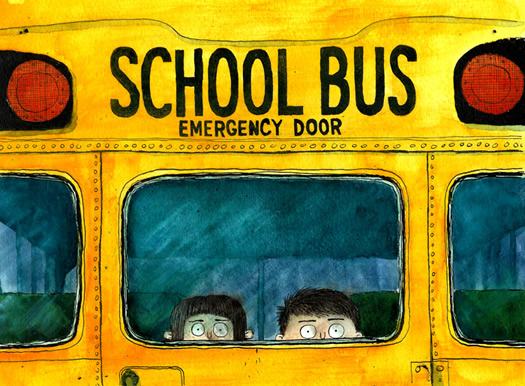
The People On The Bus

I never had to ride a bus to school, and that was a blessing.  To this day I’m still a little wary of them.  Rare class trips confirmed that they were the ideal breeding ground for my anxiety; an enclosed space with mysterious and opaque social rules and customs.  Where you sat and with whom was evidently meaningful to other riders.  On those rare trips I knew enough to stay clear of the back of the bus.  Even as a very small person I sensed that no good could come from being so far away from an adult.  As a younger child those seats seemed very high and quite conducive to hiding bad behavior.  Bad behavior has always frightened me.

A story of a bus matron (which we did not have on our class trips) being verbally abused by children does not surprise me.  Children are people.  Some people are lovely some are disgusting and some fall somewhere in-between.  What does seem inconceivable to me however is that this behavior would have continued for any amount of time.  It stands to reason that at least a handful of children on that bus are little versions of me.  They were frightened by the behavior.  The thought of getting on that bus every morning made their stomachs hurt.  They told their parents.  They asked to be driven to school.  They explained that they’re bad kids on the bus.  There is no vow of secrecy or non-disclosure agreement on the bus.  These are not members of organized crime.  They’re just kids that happen to live along the same bus route.  Someone (if not many) told.  Kids tell.

Following that theory (and it is just a theory, devoid of any factual support whatsoever) could it be that the parents did nothing to stop it?  Once we get past our shock, it does sound plausible, no?  Don’t we tend to assume that things are not our business?  Don’t we usually duck and dive under a bush to avoid any form of confrontation (unless it’s from the confines of our car and involves obscene gestures, or through anonymous comments on the web?)  Despite all government pleading, how many times do we really see something and say something?  Do we “suffer” through a broken streetlight, or wonky elevator?  Or do we fill out a maintenance report?  Do we gape, horrified at teenage girls pulling their tops up on the side of the highway?  Or do we explain how those photos they’re taking might someday limit their options in life?

Hopefully we speak up.  Hopefully we’ve been on the planet long enough to understand the dangers of silence.  Hopefully every day we choose to tip the balance away from disgusting and towards lovely.

 
Leave a comment

Posted by on June 23, 2012 in Childhood, Cultural Critique


Tags: , , , , , ,

Nobody’s Watching You

A therapist friend recently asked me for advice.  (No this isn’t the opening remark at the American Psychiatric Association convention.)  She was feeling remiss about starting, and not keeping up with, a blog.  What with her practice and her actual life, her energies didn’t seem to be directed into blogging.  I actively listened (until she took a long breath, I’m only human after all) and asked her “why do you want a blog?”  “I guess I don’t, I just thought I should” she replied.  I assured her that no one is watching.

Doing things that have no (positive or negative) impact on anyone else because you feel you should is exhausting.  Time and energy is in fact finite, and to habitually spend any of it on activities that simply don’t resonate for us seems rather self-sabotaging.

Of course I don’t mean to suggest the key to a self-actualized life is to only do what one wants.  Not at all.  There will always be things we must do (i.e., teeth cleanings, insurance wranglings, tax filings, etc.)  There will always be things we do because doing so means something to someone we love.  We will attend partner’s high school reunions (and duck out frequently to text friends back home) we will be by the bedside of a sick and frightened loved one, we will babysit a “I have a permanent marker and I’m not afraid to use it” toddler so his mother can get her hair cut.  Relationships by definition are two-way streets, and no doubt people similarly treat us with generosity.

There is a difference between engaging in the world and with our loved ones and reacting to trends or external pressure.  The tricky part is that the only way to detect what actions resonate for us personally is to listen very closely.  There are some people who love nothing more than staying up until midnight making 60 homemade cupcakes frosted with each classmates’ initials.  These people no doubt love the sense of creativity and accomplishment that comes from such an activity.  But the person next door might be doing the same thing because he/she thinks it is expected.

By whom this activity is expected is an interesting question of course.  No one is watching.  Do we project an exacting parent’s expectations onto strangers?  Maybe.  Do we really think that the world cares that much about what we do or don’t do?  Maybe.  Do we look at the world in a very critical manner ourselves and therefore assume everyone else does as well.  Perhaps.

Not much good can come from living one’s life as if on stage.  Humanity is far too wrapped up in their own lives than to sit and watch ours.  If you find yourself dragging your feet or having a gastrointestinal disturbance when faced with an activity; take a moment.  Are you going to book club or yoga because you love the experience, or because you feel ‘this is what I should do?”  There are enough built-in “should do”s in grown-up life.  Read whatever book you want.  Find a physical activity that makes your heart soar (literally) and blog only if all the words in your head desperately need to get out.

 
Leave a comment

Posted by on June 19, 2012 in Well-Being


Tags: , , , , ,