RSS

The Generational Divide is Garbage

Social scientists (and critics) are forever trying to decipher a generational fulcrum that transcends the year one was born. What is today’s quick and easy litmus test to discern wherein lies your allegiance? A dozen years ago email was the magic crystal. Those who preferred it to telephone calls were clearly in the “What’s an answering machine?” camp. How one experiences media is a favorite litmus of seers today. Still watching television on a television? It might be time to up your iron and ginkoba. Still reading printed materials? Have you updated your long-term care policy lately?

The sticking point with some of these formulas is that they tend to rely too much on new technology. While it’s true that in broad terms, younger people are more intrigued/gullible and will adopt any and everything new, it is also true that some older people will do the same. There are younger people (we’ll call them hipsters) who actually eschew technology and/or gadgets. They choose to demonstrate their rugged individualism by roughing it with LPs, land lines, a pocket full of quarters and a mental map of pay phones. There are people well past their retirement age who are wickedly plugged in. Some of these seniors use technology to literally and figuratively connect with their grandchildren (“hey if I buy something new, Braydon/Aiden/Jayden will come over and set it up.”) Other older tech adopters actually like technology and enjoy staying current.

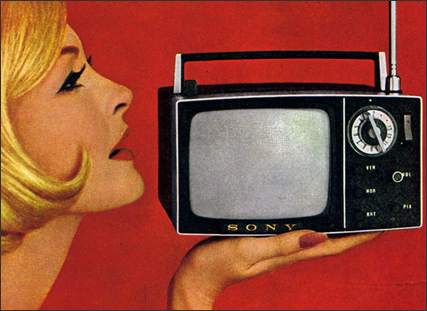
What might be a more useful tipping point is that of consumption habit. Without any data whatsoever, and armed only with a dark sinking sense of the world leaving me behind, I posit that generation Y and incoming Zs, view major consumer goods as disposable. There was a time when purchasing a television (that thing that older people use to watch programs) was a major event. They were expensive and the size of a credenza. They got smaller but remained pricey for quite some time. A 30-inch color television set was a lavish retirement or 35th anniversary gift. If something went awry with the set a repairman could be summoned to the house. When is the last time you saw a television repair shop? Was it somewhere near a pay phone? People not only toss a set into the trash when it falls ill, but toss perfectly healthy sets when it’s time to “upgrade.” As televisions get smaller, flatter and then bigger again, people buy them. The programs haven’t changed, but we feel more accomplished watching it on a brand-new device. Now, it’s not a hard and fast rule, but you’d be hard pressed to find people of a certain age tossing out perfectly good appliances. Generation X and boomers may adopt new technology, but they don’t necessarily toss the old stuff out. (Is it all that surprising that older people see the worth in older things?) Don’t believe me? Let’s take a virtual road trip to Florida. Fear not, I have a cooler of whole foods and an iPod set on shuffle. We’ll be fine. Let’s pull into a gated retirement community shall we? Now surely there are no discarded t.v.s dotting the sidewalks. And good thing too, can you imagine the hazard to pedestrians and golf cart drivers? After visiting many of these communities you will see that…Oops, what’s that?! A rather new looking set with a friendly sign stating; “perfectly good set. my son the big guy with the fancy banking job bought me a new set. if you can show me how the hell to turn it on, this perfectly good set that I liked very much is yours for free.”

Things aren’t made as well as they once were. No one would argue that. But cars really should last more than ten years, no? Furniture (unless it came with a plate of swedish meatballs) should last between twenty years and forever. Though you wouldn’t know it to look at a landfill, appliances do in fact last longer than their style or color fashion. However there are generations without any first hand knowledge of a depression, military draft or odd and even days at the gas station, whose orientation to big ticket items is that of disposability. Capitalism, consumerism, it’s what makes the world go round. There’s nothing wrong with that. But there is something telling about generations who covet the newest iPod simply because it’s new. To put it into generation X terms; Do you remember how you clutched that hard won walkman with all your might? Do you remember the months of babysitting, lawn mowing or burger slinging that bought you that little box? How much birthday/christmas/graduation pleading led to that cherished high tech gadget? You kept that sucker past the ill-fated discman didn’t you? There is no shame in that, but for the record you’re now probably too old to take up wakeboarding; says the woman who ain’t too proud to tweet she prefers David Cassidy to Justin Bieber.

 
2 Comments

Posted by on July 30, 2012 in Cultural Critique, Media/Marketing


Tags: , , , , , , , , , , ,

This Land Is Our Land

Even if you’ve been buried in sand (umbrella drink in hand) or up to your elbows in zucchini plants, you’ve probably heard certain rumblings of the past two weeks: Where are the statements from the president or presumptive nominee on gun control? Could there possibly be a better time or a more receptive nation to which to deliver a strong message? Are the “candidates'” faith in the electorate such that any poking of the NRA with a stick is simply not worth the risk? No doubt you have heard or made all of these arguments over dinner, at the farmer’s market or in the cabana. It is hard for us mere mortals, those of us not actively working on a presidential campaign, to wrap our minds around the silence. To most of us there is nothing politically incorrect about limiting access to semi-automatic weapons.

No doubt the “candidates” have their eyes on a much larger picture than you or I. But it’s hard to imagine what could be more significant or legacy building than diminishing carnage. It’s a given that both political parties have clever people working for them who perhaps specialize in artistic wordsmithing. A powerful, compassionate statement is easily within their reach. A statement, which in fact even the NRA would not take serious issue. A statement that addressed the human lives snuffed out every single day, while honoring the intent of the second amendment.

What is encouraging is that people, who are not running for the highest office in the land, are speaking out. Mayors, religious leaders and the police are talking publicly about mental health, limiting firearm purchases, creating safe havens, changing the culture, etc. While it doesn’t change our unease with the ear splitting silence at the top, it offers hope. The NRA’s power stems from being a well-organized group of like-minded individuals. Yes, their power probably cannot be overstated, and yes they have succeeded in being just as threatening as the products they defend. But that doesn’t mean they cannot be successfully challenged. Bullies in fact rarely back down because an authority figure orders them to do so. More often it is the bullied, often times collectively that gives the bully a mighty cease and desist ass kicking. The timing is right for all of us to get ticked off and lay our own claim to the constitution (and while we’re at it the flag.)

 
Leave a comment

Posted by on July 28, 2012 in Cultural Critique


Tags: , , , , , , , , ,

The Cost Of Creativity

The playwright Sarah Ruhl (In The Next Room) has written an essay about her choice to stage a review-less production. Ms. Ruhl will direct her work Melancholy Play as part of the 13P. It is a very limited run without previews or press invitations. This aligns with 13P’s mission of producing plays versus developing plays. The goal presumably is to get a play in front of an audience without interference. Ms. Ruhl elegantly defends this artistic process in her essay. And there would be no argument with any of her assertions if it wasn’t for the fact that the audience is being asked to purchase tickets. (I would also add that using the press to promote a play in which the press is not invited could be construed as a bit designing.)

Ms. Ruhl is using 13P to its best advantage and getting experimental with her own play. The addition of live music is adding costs, complications and creativity to one of her older works. Supposedly that is why she asserts; “It didn’t feel fair to me to burden the production team with the pressure of reviews when we were already embarking on something so insanely ambitious given our resources.” There are just a few too many flaws in that assertion to ignore:

  • Working in a vacuum is rarely a good idea; art needs air.
  • Directing one’s own work is a slippery little endeavor and unchecked can often become what is commonly known as a ‘private behavior’
  • Criticism is not the enemy
  • Reviews are for the benefit of an audience

Ms. Ruhl goes on to say that “…the press desires more bravery from artists and yet, in its very call for bravery, ends up eliciting timidity because of asrtists’ fear of public opinion.” This may very well be true for many artists (poets and visual artists come to mind.) But anyone who writes for the stage, directs for the stage or gets up on a stage is doing so for an audience (aka public opinion.) Plays don’t hang on gallery walls and actors don’t live on shelves. They come alive in front of an audience. Unlike a gallery or bookstore, there hasn’t been curation for 13P. In fact the very mission of 13P is to avoid the critiquing process that often stalls a play before it can get to production. Discouraging reviews, which in essence are post-production curation, and charging patrons is the equivalent of charging people to walk through studios of random artists. An audience wants to be moved, they want to see something anew, they want to feel as if they are part of the experience not just paying for someone’s hobby.

In the end a review wouldn’t have impacted an 11 performance run of a play in any discernible way. I dare say it is not the production that is being protected here but the reputation of the creative team. Nobody likes being told that what’s important to them is not important to someone else. But real art cannot grow if artists are concerned with being liked. I agree with Ms. Ruhl that there needs to be room to try new things with limited risk. If we are to have any chance of avoiding a world in which the majority of staged productions are the result of a book-to-film-to-stage deal we need to make space for creativity. But surely we are creative enough to do so without asking strangers to blindly support the development of new work. We have workshops, showcases, readings and friends for this reason.

 
1 Comment

Posted by on July 26, 2012 in Uncategorized


Tags: , , , , , , ,

Parent Orientation

In just a few weeks your child will be leaving for college for the first time. How could this be happening? How could a person who puts empty cartons back into the refrigerator, and doesn’t seem to know there’s an off-position for lights, be ready to go to college? Trust me, he/she is wondering the same exact thing. Have you noticed things have become a bit testy? Are there some old fights/issues cropping up? Have you caught her/him reading Winnie-the-Pooh? Don’t worry, everything’s fine. It’s completely and utterly normal for everyone to be a bit skittish right now. The only reason to worry is if in fact there is something over which to worry. (If your child has health issues [physical or mental] please take their behavior seriously, they may be trying to tell you they’re not ready.) For everyone else there are some pointers to help mitigate the “I can’t wait to get the hell outta here/OMG I’m going to miss you so much” anxiety.

  • Eliminate ambiguity – some anxiety stems from so much unknown. Discuss what your mutual expectations are (i.e., visiting schedules, spending money & how it should be used, academic achievements, communication plans)
  • Take your packing cues from the incoming freshman. Do you really want to spend every waking moment for the next few weeks discussing the state of his/her room? Part of what will make your student feel confident is if he/she has control over his/her domain. Ask if he/she wants you to shop/pack with him/her. If not, go put your feet up.
  • Discuss all incoming requirements (doctors appointments, forms, etc.) and then back away. End the tug of war while getting used to his/her new independence.
  • Discuss sex and personal safety.
  • Discuss drinking and drugs in terms of real danger (i.e., date rape, death) not in terms of your own personal preferences.
  • Discuss how you want their world to be as big as possible and to not do anything that might limit his/her options.
  • Remind him/her how proud you are and how excited you are for them

Now that you’ve done all that, pour yourself a cold glass of something. Make yourself comfortable and try to remember where you keep the rubber bands. Place one on your wrist and snap it hard every time your resolve starts to crumble. When you start reaching for your phone to make his/her physical appointment; Snap! When you find yourself surfing the Bed, Bath & Beyond site; Snap! As you sit sipping, admiring your new bracelet, remember; this is what you dreamed about. You did it! You helped to make a person who is going off into the world, hopefully to leave it better than he/she found it.

 
4 Comments

Posted by on July 24, 2012 in Childhood, Education


Tags: , , ,

A Moment Of Outrage

It is inevitable that shortly after a massive shooting the volume of the gun control debate increases. It’s not that shootings don’t occur every single day. It’s not even that victims don’t amount to the double digits every day. Our response is more connected to how and where a critical mass was attacked. We are understandably shaken to the core to consider the fact that we too have been to; movie theaters, high schools, daycare centers or grocery stores. It is completely natural and normal to respond strongly to something to which we can personally relate. We may (fortunately) have never lived in a neighborhood rife with gun violence. We may have never played in parks where gun toting teens hangout. But when violence happens to people not associated with “unfortunate circumstances” we pay attention. Headlines are rarely grabbed for what we consider commonplace. (Case in point: a house fire that killed three children and two adults in Connecticut was on the front page [literally and figuratively] for days if not weeks. A house fire killing three children and two adults in Newark is on page 17 today.) Considering that change often occurs when people in power decide to make a difference, we have the luxury of seeing this inequity in a positive light.

Most of us would agree that there are people who enjoy guns. They like to hunt, or collect or grab this particular right as if it’s all they have left of the American Dream. But anyone who states (with a straight face) that how we should deal with a mad gunman using semi-automatic weaponry is by arming everyone with a handgun is not a gun enthusiast. They are lots of other things; but not a gun enthusiast. Even if all those teens (and babies) and suburban adult moviegoers were sharp shooters they could not neutralize the affects of a madmen with semi-automatic weaponry. Even movies that glamorize violence are more realistic than that. There is no legitimate reason (which I can discern) why semi-automatic weapons fall under any right to bear arms protection. There is no rational reason that it is so very easy to purchase such weaponry.

We would be much further along in the gun control conversation if we focus on classes of firearm. If we decide as a society that we as individuals are not “entitled” to weapons of warfare we would be much further ahead.

As critical as examining the sanity of the weaponry ‘free market’ is how we examine and treat the mentally ill. How many times do we turn a blind eye to that woman or man who seems off? How many times has a seriously mentally ill person been turned away from a facility because they are not in immediate danger? How many institutions employ or teach very fragile individuals without providing them support? Why are we so frightened of mental health issues? We were shamed into tearing down the worst of our nation’s snake pits and walked away relieved. “Well, that’s done!” We have done nothing concrete or systemic since deinstitutionalization. People of good intentions try to help individuals and are often left in a labyrinth of closed doors and catch-22s. The system is designed to protect the rights of the mentally ill individual. By definition someone experiencing mental illness is not in his/her right mind. Somewhere between the snake pits of yesteryear and the benign neglect of today lie compassion, humanity and a solution.

 
2 Comments

Posted by on July 21, 2012 in Cultural Critique


Tags: , , , , , , , ,