RSS

What’s Your (Post-Secondary) Motivation?

Recently, during a higher education panel, the issue of “following one’s passion” arose. More than one participant grew visibly uncomfortable with the concept. Sure it’s a lovely thought and one that’s uttered ad nauseum in coming of age films/novels. But does it actually make sense when discussing 17-18-year-old’s education and career decisions?

It is the rare adolescent who knows that being a surgeon/lawyer/steam-pipe fitter is his/her destiny. It does happen, but it is rare. Most jobs/careers aren’t exactly a calling. There aren’t a whole lot of financial analysts or fundraisers who dressed in little bland casual Friday outfits and played number crunching as children. If we’re lucky work is mostly a pleasant environment in which we are fairly compensated for utilizing a majority of our talents. Encouraging a teenager to pursue post-secondary education as a means to one’s passion is not useful. It not only ignores the reality of the workplace and economy but also is misleading for the student.

“Following one’s passion” in regards to employment is about as useful a term as “having it all.” They both smack of a certain entitlement and haughtiness. They are vague enough to be appropriate for waiting room posters and meaningless in one’s actual life. What does “following one’s passion” mean in terms of a teenager choosing an educational/training path? Do we really mean to suggest that what an 18-year-old finds exciting will never alter? (I shudder to even consider that suggestion.)  Wouldn’t it be far more helpful to discover what a teenager finds interesting?

Getting good grades in English doesn’t necessarily mean you should be an English major and then find a job in an English-y field. Depending on the curriculum of said class, a good grade might reflect; being a good analytical thinker, a good writer, a good communicator or having a finely tuned ear for language or that the reading selections for the class were just of particular interest to the student. Grades only tell part of the story. A poor student is not necessarily a poor learner. He/She may be wildly curious about a subject outside of the academic curriculum. He/She might be incredibly gifted with their hands; an artist, baker, craftsmen.

Secondary education/training (for better or worse) is no longer about staring off onto the idyllic ivy-strewn quad and thinking deep thoughts. It is (at times) a very expensive undertaking that must deliver a return on investment. For many it is also a one-time only offer. Life doesn’t always allow for continuing education. What will put a young person in good stead is to pursue post-secondary training/education that is of interest and is useful. Pursuing an area of interest ensures that one will feel engaged with one’s work/studies. “Interest” is far more lasting and tangible than “passion.”

For those teenagers who will not be concerned with earning a living; follow your passion or lie by the pool. But for everyone else it is probably best to remember that the world simply cannot support that many ballerinas. If you pay close attention you will find work that makes you happy and supports a life that allows you to dance.



3 Comments

Posted by on August 23, 2012 in Education


Tags: , , , , ,

GO TO BED!

When tragedy strikes it is not the time to analyze. If the incident is close to home we are too stunned or numbed to think. If we are an empathetic spectator it is unseemly to appear as if we are callous enough to be analytical. But after the passage of time, with a healthy dose of respect and empathy, we can at times seek answers and perhaps future preventive measures.

We need only look at the recent gun control rhetoric (the term “rhetoric” is used here intentionally as “conversation” would suggest that people in leadership positions are actually saying anything on the subject) as an example of “preventive analysis.” In this case the cry for gun control is obvious and rather simple. The underlying issue of mental illness and how we treat/ignore/fear the afflicted is much more complicated and doesn’t fit nicely into a soundbite or tweet. But the thing about real answers to real problems is that they usually are a bit messy and uncomfortable.

While suburban or rural shootings capture our imagination (and our horror) city streets and playground shootings are far more frequent. Reasonable people would agree that if guns didn’t exist, people wouldn’t get shot. But if you think it through (or if you’ve seen West Side Story) you will also agree that there are other ways to hurt people. People will always hurt people; it’s human nature; as is love and caring. People with nothing to lose are more prone to violence and crime. People who feel ignored or worthless are more likely to lash out at others. We know all this. We also know that boredom is an incendiary device for adolescents. We also know that bad things happen at night. The only person who has ever uttered; “Whatever can happen at 3:00 in the morning can happen at 3:00 in the afternoon” is a 15-year-old fighting over a curfew. Night brings darkness. It is easier to hide and harder to detect danger. The night often brings a higher level of intoxication. While people should be free to socialize outdoors in the evening, it’s not clear that babies and children should join them. You’ve only to walk down a city street or past a playground to see little tiny people out and about after 11:00, 12:00, 1:00… Perhaps it’s the product of younger parents wanting to be young and not having access to childcare. Perhaps it’s the family that plays together stays together. But whatever the motivation it is simply not a great idea. Should people have to live in lockdown because illegal guns plague their neighborhood? Of course not. But do babies need to be awake and out of doors after 9:00 PM?

Unfortunately this is not uniquely a summer in the city phenomenon. Ask any city schoolteacher about tardy or sleep-deprived students. So while it may offend some or even smack of elitism I will issue the soundbite/tweet: “Get your children to bed!” Do children get hurt in their own home? Of course they do. But if we can start teaching a generation of tiny people that the streets are not their home maybe we can make a difference.


Leave a comment

Posted by on August 20, 2012 in Childhood, Cultural Critique


Tags: , , , ,

The Fork In The Road

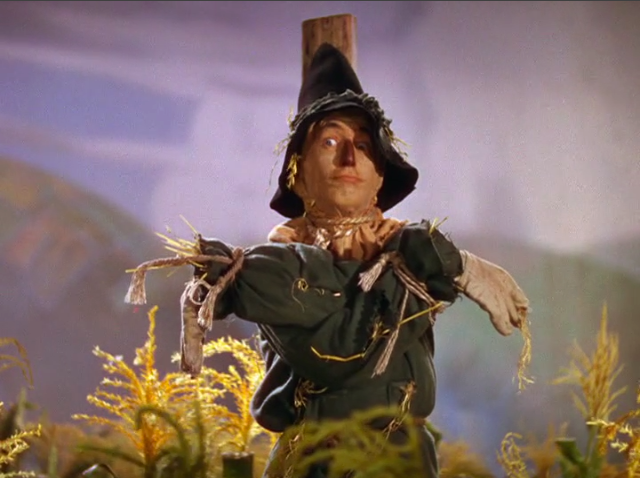
When Dorothy comes to a fork in the yellow brick road her ruby slippers come to a screeching halt. She is startled that her mantra; follow the yellow brick road, is no longer enough to get her to where she wants to be. She considers advice from a man of much straw but no brain and eventually just chooses a path. The journey is then fraught with scary trees, flying monkeys and opiates. Maybe she’d have had a more pleasant journey if she had taken one of the rejected paths. But would arriving in the Emerald City and then back home had been less extraordinary if it hadn’t been such a challenging journey?

Most of us do not get sucked into tornados or land a house on a witch (resulting in the gifting of one fabulous pair of shoes) and then find ourselves in an alternate universe.  But we do (hopefully) journey through life in pursuit of our heart’s desire. And we do at times find ourselves not recognizing our own universe. There are junctures in life that find us struggling to find our way. When we get to that fork in the road how do we choose which way to go?

The two most common forks that we seem to approach are those on the road to romance and those in the path of career.

Romance can be wonderful but it also is quite disorienting. It is easy to get caught up in something and sometimes that may involve wishful thinking. A good rule of thumb to determine whether you are in a romantic relationship or having a physical relationship is this: are you excited/relieved when he/she contacts you or are you happy to hear from them? Excited/relieved means you aren’t entirely sure where you stand with the person (aka physical relationship.) Happy to hear from someone means you’re a smitten kitten.

So when the smitten kitten finds him/herself wondering if “This Is It?” how do they know?  If you are really struggling with the question the answer is probably; no, this is not it. But if instead you are just trying to be your best adult self and putting serious thought into a lifetime decision, ask yourself these two questions:

  1. Am I the very best version of myself when I am with him/her?
  2. Is this the person I can’t live without (versus the person I can live with)?

If you’ve answered yes to both it may be time to get yourself to the chapel.

Then there is the more “eating one’s vegetables” life issue; career. If we are fortunate we have income earning choices in our life.  Whether because of education and/or talent we may have some flexibility in how we earn a living. When we find ourselves at a juncture, perhaps brought on by boredom, lay-off or age we can feel a bit paralyzed. How do you know when it’s time to move on?

  1. If you find yourself with a pit in your stomach on Sunday thinking of the week ahead, it’s time.
  2. If your feelings about your work are having a negative impact on your life and the people around you, it’s time.

Yes it can be frightening to start something new. It can be almost paralyzing to realize you can be practically anything you want to be. That is the downside of free will. Keep in mind that it’s really just about putting one foot in front of the other. It is the journey that makes our lives worth living not the destination. Yes, there may be a flying monkey or two along the way. But just make sure you’ve got a few good friends by your side and perhaps a little dog too.


Leave a comment

Posted by on August 18, 2012 in Well-Being


Tags: , , , ,

Playing Dress-Up


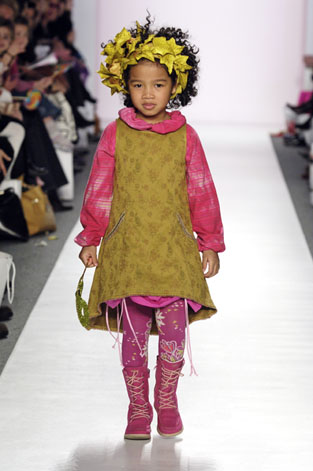
Been shopping lately? Have you noticed how the children’s apparel market has grown? Sizes that included 2T and 6X were once relegated to an upper floor of a department store, suggesting that only after adults clothe themselves would they consider fashion for babies. We now have entire chains dedicated to children’s fashion as well as adult clothiers that have created children’s fashion lines. It’s not as if children of the 1970s and 1980s ran around barefoot and naked. So why the market glut of teeny tiny clothes?

Most children do not do their own shopping and most do not have their own income stream, so presumably big people are buying wee clothes. Now if you are to believe the media and your own bank statements, these are not exactly flush times. Of course these chain stores for the toddling set are not pricey, but the only way they are staying in business is if lots of inventory is being liquidated often. A child’s entire wardrobe does not need to be replaced every season (unless the child has a rapid growth syndrome.) A winter jacket can usually make it through two New Years. Even children without siblings could be wearing second hand clothes. And maybe they do. But if so, why all these shops? It’s hard to believe that stores filled with teeny fashion trends are actually going after the “necessity market.” Fake fur shrugs and sequined mini-skirts speak more to child styling versus child dressing.

In this great country of ours it is usually the female parent who is doing the shopping and dressing of the smalls. Could it be that for some of us, dress up is fun? Could it also be that dressing a little person is easier because of it being baggage free? Anything “mini” is by definition cute. No toddler ever thinks; “Wow those pull-up pants make my ass look huge.” Whether mommy’s behind is bigger than it once was or than desired, it takes a lot more effort to dress oneself than one’s child. There really are no Garanimals for adults, and sticking a color-coordinated bow in our hair doesn’t make an outfit as much as it begs the question; What DID ever happen to Baby Jane? Having an adult sense of style means knowing what suits you and that of course means having some self-awareness.

There is nothing wrong with dressing your little person in short pants and a jaunty derby. But if you are walking by his side in sweats or shapeless dreary apparel, there is a problem. Children are not Chihuahuas and shouldn’t be used as accessories or a way to deflect attention. They learn from example and one of the best lessons they can experience is that their parents are first and foremost people worthy of attention and care.

 
Leave a comment

Posted by on August 16, 2012 in Childhood, Style


Tags: , , ,

Setting A Tone

When is the last time you saw someone dressed? I mean really dressed? Most people (beyond the set of Downton Abby) don’t dress for dinner these days. Certainly, by the looks of things, no one dresses to go into town either. A hat and pair of seasonally appropriate gloves were once practically a requirement for trolling the department stores. Lunching outside the home involved outfitting oneself with care and precision. But time passes and with it goes formality. Dining outside one’s home is no longer an occasion, dining at home is. Traveling, sightseeing or shopping is done with enough frequency to no longer fuss over appearance. Is there something a wee bit unsettling about sitting in a crush velvet Broadway seat next to someone in flip-flops and a tank top? A tad, but it’s really the close proximity to their big gulp slurpie that rankles the nerves. (Will that infernal plastic straw squeak ever end? Are they really going to play with the ice throughout the entire show? Is that neon infused corn syrup abomination going to land in my lap?)

When others treat an occasion with all the frivolity of hanging out in their own background, it tends to dilute the experience a bit. But you will probably still enjoy the show or even dinner if you keep your eyes straight ahead. But what of an occasion at which one must mingle and therefore move one’s eyes? What if our (and practically every society’s) traditions encourage a certain style of dress? What if it is in fact guests that help make an event an occasion?

At any number of weddings this summer, guests have taken it upon themselves to draw focus from the marrying couple. They will do this by over or underdressing, or by wearing white. These are not guests who have dressed in compliance with invitation instructions (i.e., it’s a white wedding for all! beach attire requested! black tie only!) these are guests who a) are not adept at social cues b) have nothing else to wear or c) the airline lost their luggage. (A word about white: even if the bride is not wearing white, even if there is no bride but instead two grooms, it is not a good idea for guests to wear white. Rational or not, other guests will be focused on the woman in white versus the marrying couple.)

Of course these slip-ups are not just reserved for the start of married life, but apply to the end of life as well. While there really is no one from whom to steal focus at a funeral, it’s best to not wear white (unless your tradition suggests otherwise.) Wearing black is no longer required, but somber tones are best. Any flash (sequins, excessive jewelry, statement shoes) should really be avoided, in other words; tone it down. Like a wedding, all attendees are helping to set the tone. And unless the deceased played in the major leagues that tone should not include baseball caps.

Dressing is the only way we humans have of communicating in a blink of an eye and in a universal language. While there are those of us who may long for more formal everyday attire, in the end it’s simply a matter of taste. But attending a wedding or funeral is not about us; it’s how we support people who are important to us. Showing up to a funeral in a strapless white eyelet mini-dress is the equivalent of screaming; “I’m here!!!!” Whereas a navy knee-length shirtdress whispers to the bereaved; “I’m here.”

 
2 Comments

Posted by on August 9, 2012 in Style


Tags: , , , , ,