RSS

Where There’s A Will

When is the last time you took a look at you will? Your will. You have one don’t you? What’s that you say; you’re not Thurston Howell III? Well, it’s not about money (entirely.) Nor is about great “I gotchyas” from beyond the grave. (The image of Christina and Christopher Crawford being inexplicably iced out comes to mind.) Wills can of course be used to have one’s last say but that’s not the true intent. We have wills so as not to leave a mess behind. It is our final act of cleaning up after ourselves.

Of course wills are crucial in dispersing of scads of real estate, stocks and bonds. But they are also key in identifying who will clean up financial and legal logistics. Without a will anyone even slightly related to you, could be left with quite a mess. Wills are not for the wealthy; they are for the conscientious (and can be purchased on line for quite a reasonable sum.)

Wills when written usually are done when expecting the arrival of a child or upon remarriage. But it’s not an archive; it’s a document that needs regular tending. Consider it less of a social security card and more of a driver’s license or passport. Your last will and testament needs to be renewed. If more than five years passes before reviewing the document you might be in for some surprises. Imagine discovering that you had bequeathed your jewelry to someone with whom you’ve lost all contact? What if the executor you named has in fact pre-deceased you? What if the cat to whom you’ve left your millions now has a brother? Things change, life happens, and a will should as well.

Now that you’re convinced to a) write a will b) review a will on a regular basis; there’s one more step. Inform those mentioned in the document that they are in fact mentioned in the document. They needn’t know details (and in fact in some cases they shouldn’t. You wouldn’t want junior to necessarily live his life as if he is receiving an inheritance, would you?) they need only to know that they are mentioned. An executor who has not consented is not going to be much of an executor. This person(s) needs to know where the document is and what, if any (funeral) arrangements have been made.

Writing a will, making funeral arrangements, and discussing it, will not hasten your demise. If you believe (and I’ve known those who don’t) that our time on the planet does have an expiration date; planning for that time is just part of life. Nobody wants to believe that his or her stay on the planet was meaningless. We try, as we stumble along to make some sort of positive impact. Leaving behind bereaved people who must divine or recall your wishes and intentions is simply not a great legacy.
 
2 Comments

Posted by on September 27, 2012 in Cultural Critique


Tags: , , , , , , , , , ,

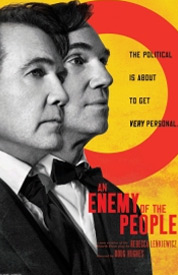
An Enemy Of The People – Review

Boyd Gaines and Richard Thomas sparring with seething and faltering restraint may be the finest five minutes on Broadway this year. There is a moment so powerful that the full house holds its collective breath. What good fortune that there is more than five glorious minutes to An Enemy Of The People.

Rebecca Lenkiewicz has adapted this Henrik Ibsen play, which was previously adapted by Arthur Miller. While there are many sparks of modernity in the dialogue it is still clearly Ibsen’s treatises. Mr. Gaines’ Dr. Thomas Stockmann is the voice of the playwright, driven by his pursuit of truth in black and white. Mr. Thomas plays his brother and town mayor Peter Stockmann. The mayor has an enormous investment in the small town’s baths business. He is also the benevolent benefactor arranging for his brother’s employment with the baths’ administration. The bohemian medical brother with his boisterous family is in stark contrast to the restrained top hat and walking stick mayoral brother. Their differences grow starker as the good doctor receives confirmation of his suspicions of water contamination in the baths. It is then that all hell breaks loose.

Many will experience the positions and platforms of journalism, politics and economics to be achingly timely, but in fact they are timeless. The shifting positions and arguments sound excruciatingly familiar but that is because they never change. The masses are not necessarily equipped to lead. Truth may feel more important than commerce, but eating is important. Loudly chanting rhetoric doesn’t make the rhetoric true. People tend to worship the one wearing the fanciest hat. Where these powerful themes fall short is in their obvious biographical nature. It becomes challenging during some of the more heated tirades to see past an angry playwright. The ending moment of the production reinforces this response.

It is through the powerful and nuanced performances which include; Gerry Bamman(Alaksen,) Michael Siberry (Morton,) John Procaccino (Hovstad) that the whole becomes flawless. Directed elegantly by Doug Hughes, the characters and action seem to float. The staging and sound (David Van Tieghem) of the town meeting scene is simply fantastic. The audience, with very little fanfare, seamlessly morphs into the townspeople. We are not just being told how mob mentality develops we experience it firsthand. John Lee Beatty’s set is starkly apt and very cleverly designed. It’s less of a set and more of a world.

This Manhattan Theatre Club production should be seen for the very fine performances, intriguing themes, splendid production, and believe it or not; the laughs.

 
Leave a comment

Posted by on September 23, 2012 in Uncategorized


Tags: , , , , , , , , , , , , , , , , ,

Inheritance Allowances

According to reports, retirees are distributing (what would have been) inheritance to their children while they are still very much alive. This is not a new phenomenon; it is just going by an awkward and clumsy new name. “Early distribution of inheritance” is also known as supporting your adult children. The reasons for the life support are somewhat varied. There are adult children who come upon unavoidable and devastating life experiences, and need a hand. Thank goodness for family. But the stories that seem to bubble up, and are told rather defensively, seem to be of a different ilk.

Married retirees speak of their adult children “needing” health insurance and suggesting that it would be tantamount to eating one’s young to have these grown-ups go uninsured. Spend your money on whatever you’d like Mr. & Mrs. Retiree, but no one ‘needs’ health insurance (yet.) What your elderly children need is healthcare. Purchase hospitalization or cataclysmic insurance if you must. But they can go to doctors and pharmacists on their own. If they can’t afford those bills, chances are that they (or at least their children) qualify for assistance. Don’t confuse what your children “need” with what you or they may “want”. If you do that you might end up paying off your elderly child’s six-figure student loan debt.

Yes much of higher education is ridiculously expensive. But so are sports cars, and sable coats. Before buying sable most people would have to do a little R.O.I. exercise. “Will I miss the money that I would spend on this coat?” “Do I have a life which will enable me to get use out of this coat?” It’s pretty much a given that this exercise does not include “How high is the credit limit on all my cards?” If you can’t afford it, you don’t buy it. If you live in a warm climate, or have a casual way of life, you don’t buy it. For many people, attending any kind of institution of higher education will demand incurring debt. But it never should be more than the projected career can support. The high school teacher with $100,000 in debt either had very poor advice or experienced some sort of catastrophic event. Four years of a private liberal arts education is a luxury few can afford. Two years at a community college followed by two years in an accredited college/university can be made affordable by most. Savings, grants, awards, and work-study (students do better academically when they have a job) can make a serious dent in what needs to be borrowed. For the graduate who wants to teach; you might want to look into public school systems that pay for your master’s degree.

Of course not all baby boomers are supporting their adult children with large chunks of change. Some choose a more homey approach, and modify their existing dwelling, or move to a larger abode to accommodate elderly children and their families. Many extol the old-fashioned virtues of multi-generational living. But often there is something a little less sweet simmering beneath the Norman Rockwell imagery. The retiree might not have pictured a lifetime of parenting of a seemingly developmentally typical son/daughter. The retiree might have niggling thoughts of how they might have contributed to this situation. One thing is pretty certain; these ‘kids’ are not worried about an inheritance. For an adult living with his parents, time has pretty much grinded to a halt. The relationship dynamic has not shifted yet. The two-way street of adult child/parent relations has not been paved. No one is getting older and no one is ever going to die. Chances are they’ve never even heard of Sugar Mountain.

 
Leave a comment

Posted by on September 22, 2012 in Cultural Critique, Education


Tags: , , , , , , , , , ,

Texting And Driving: TFU

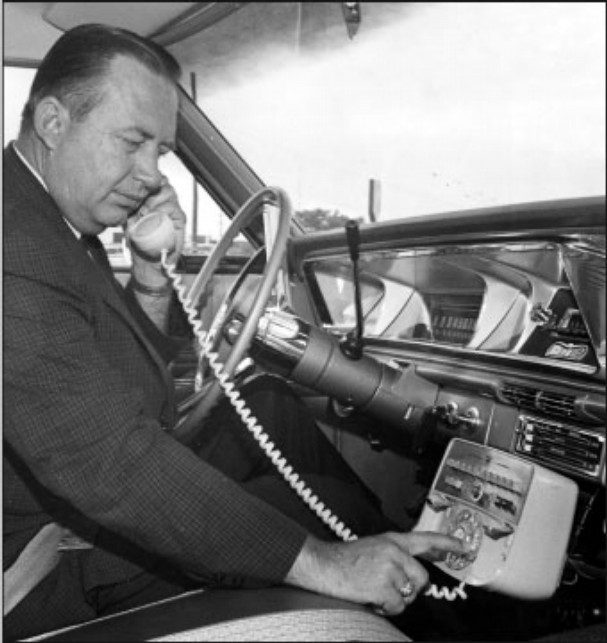
A large mobile phone business is taking a stand against texting while driving. The public’s initial reaction will most probably span from; ‘that’s nice’ to ‘who cares.’ Regulators and legislators will take notice however as the corporation ceases their lobbying efforts (against regulation.) As we speak (or text) there are clusters of thinkers and tinkerers coming up with fail safe ways to thwart human stupidity. Apps are being considered that will sense when a person is driving and shut down typing options. (Let us not strain ourselves considering how that works and/or how it would affect passengers’ use of devices.)

Nobody loves big corporations (except the stockholders.) But the notion that somehow the makers of a device are responsible for people using it in a dangerous manner is absurd. Where would this leave gun manufacturers? Okay, that’s a bad example. Where would that leave the manufacturers of kitchen knives? Or apple peelers? People have been known to use cars, not for transportation, but to cause harm (ex., Baby Jane and Blanche, or many an aggrieved spouse victimizing a prized lawn or flower bed.) Should car manufacturers design a device that can detect vengeance? People using products in ways not intended is not new. While it is questionable whether makers of oven spray are responsible for a teenager’s boredom and unquenchable drive for experimentation, there are now warnings on any and everything aerosol. You’d also be hard pressed to find a plastic bag that does not warn that ‘this is not a toy.’ It’s not clear if anyone has ever unwrapped their dry cleaning, taken a second look and sputtered; “Dear G-d in heaven, it’s NOT!?” I’m guessing most people probably know that plastic bags and children might not be the best combination. But the plastic bag manufacturers have done their part and now the rest is up to humanity.

These warning labels (which in essence are a parental scolding) are only meant to reinforce the true intent of a product. We (correctly) feel differently and strongly about creating or augmenting safe products. Automobile manufacturers have made incredible strides in past decades. In the 1950s (or even 1960s) there were no seat belts or car seats. Kids were tossed in the back and told to be quiet. Granted you were driving a mass of steel (versus the plastic of today) but so was everyone else! Then came seat belts, then came seat belt laws. All to protect you from the hazards of automobile travel.

There is no way to protect people from the hazards of themselves. Before texting, there were people reading while driving, doing their nails/make-up while driving, eating while driving, and probably doing other things we need not mention while driving. Driving while doing any of things, including texting, is driving while impaired and we should treat it as such. People should be ticketed and punished as they would had they been driving while intoxicated. The officer on the scene need only look at the device to prove it had been used while the driver was behind the wheel. Repercussions severe as that of a D.W.I. will make people think twice. Many people have drank less, or not driven for fear of being caught. Has drunk driving stopped? Of course not, but it’s no longer the wild wild west out there.

There will always be new and exciting ways to act like an idiot. Trying to idiot-proof the planet is absurd. Making it really uncomfortable to be an idiot is much more prudent.

 
Leave a comment

Posted by on September 20, 2012 in Cultural Critique


Tags: , , , ,

Seizing Semantics

Have you noticed that once widely available words have been appropriated and winnowed down to the most streamlined of meaning? Take the word; family, for instance. Family once meant people one was connected to who did not fall into the category of friends. Hence the phrase; friends and family. Family could mean one’s family of origin, including generations past. Family could also reference those brought into the holiday fold year after year. Family could also be self-constructed, augmenting a loss of familial connections. The word was open to subtle interpretations but maintained a overall meaning of connectivity. These days you might hear several phrases touting the word ‘family’ that have nothing to do with human connection. For instance:

  • Family Values – Whose family values? Have you MET my family!? Or do you really mean ‘conservative values?’
  • Family Friendly – I think the phrase you may be searching for is “Child-centric” no? I assure you, your themed restaurant is not friendly to my family, it is our 7th circle of hell.
  • Working Families – Now if the children are actually grabbing their briefcase and headed for the 7:15, you have my full support.

Of course the same wholesale take-over of terminology is not new. “Faith” and “patriotism” have come to mean very specific beliefs and practices. Believing in the potential of human beings to be their best selves and to reach out and help up is a definition of faith. Believing that how we treat others is directly connected to the health of our souls is faith. But when we hear the word being bandied about it’s meant to communicate an adherence to an organized religion. When we hear calls of “patriotism” it most often is in reference to military support or flag waving. Those fighting; to separate church and state, or for freedom of speech or press are rarely referred to as patriots.

Politics and verity make strange bedfellows, that’s certain. But there’s no reason in the world the rest of us need follow and adopt the constricting definitions. Language is many things, including contagious. If we commit to using terminology that strikes us as more accurate or inclusive, others may very well follow. Our words are the most lasting and telling clues to our inner self. Our ability to create meaningful language is what in fact makes us human.

 
2 Comments

Posted by on September 18, 2012 in Cultural Critique


Tags: , , , , , , , , , , ,