RSS

Crime Of The Mind

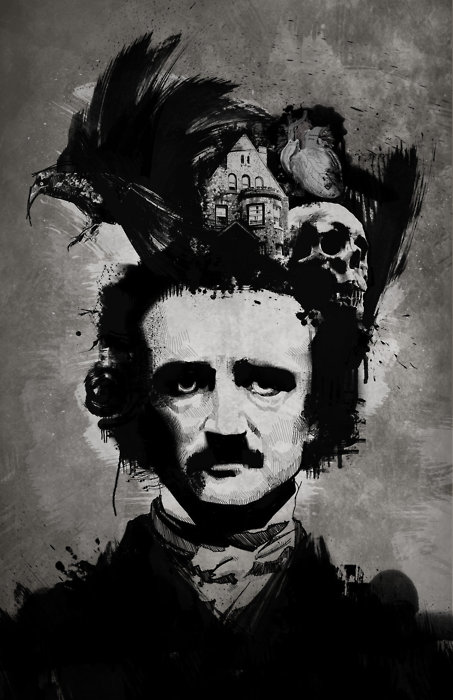
Edgar Allan Poe

In New York City a man has been convicted of conspiring to kidnap and could be sentenced to life imprisonment. He did not in fact kidnap or hurt anyone, but did type extensively about his desire to do so. It is conceivable that this 28-year old man could spend the rest of his life in prison for having creepy thoughts. This in a land in which people who’ve been convicted of actual crimes serve their time and are released. What in the world does it mean for thoughts to be illegal?

Was the fact that this man a N.Y. police officer too emotionally charged for the jury? Was the jury swayed by the graphic nature of the defendant’s writing? Was the fact that the writing occurred in cyberspace perceived as more threatening than a handwritten journal? Was it that the defendant engaged with other typists in these fantastical plans? Something must have clouded the jury’s vision to render such a verdict. Is there reason to be concerned about the judgement of this police officer? Absolutely, but that’s a personnel issue, no? Were the messages so convincing that the jury was concerned about imminent danger? Perhaps, but that is why probation, monitoring and court mandated treatment were invented.

By equating thought with action we set a dangerous precedent. What does this mean for all crime writers for example? What does it mean for anyone who’s ever put pen to paper (or fingers to keyboard)? And what of those who engage with the dangerous writing? Are book clubs or theatre audiences aiding and abetting these dark thinkers? While no one will ever confuse Sweeney Todd with the contents of a chat room, the overarching premise is the same. The fact that the chatting, posting, emailing and texting wasn’t particularly well written or the least bit musically engaging doesn’t mean it wasn’t an exercise in creative writing. Creative writing by a man of questionable mental health of course.

But questionable mental health is not a crime. Do we want people with questionable mental health to be carrying a gun and be charged with protecting people? No. Do we want real and meaningful treatment for those who are not entirely well and who harbor violent thoughts? Without a doubt. Imprisoning (for any length of time) because of mentally illness is a black eye for us all. It is an ugly bruise of a reminder of how inept and misguided we are in matters of mental health.
 
4 Comments

Posted by on March 13, 2013 in Cultural Critique, Well-Being


Tags: , , , , , , , ,

Where Have All The Good Hosts Gone?

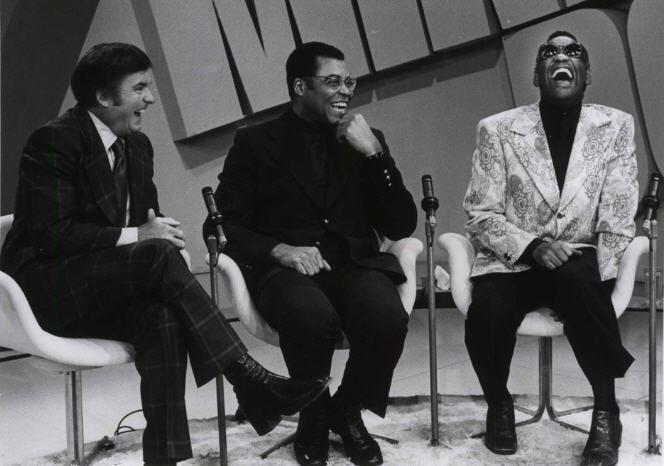
TV - Mike Douglas, James Earl Jones, Ray Charles - 19740204

Does anyone remember Mike Douglas? Not Kirk’s son, but the singer, or more to the point the talk show host. If you’re old enough to know what the dial is in “don’t touch that dial” you remember talk shows. There were the urbane slightly sexy late-night variety, that is still offered, though diluted, today. Mike and his contemporaries; Dinah Shore and Merv Griffin were on during the daytime hours. They had each been singers during the big band era and were all incredibly affable.

Each weekday, Mike, Dinah and Merv would host guests, sing a little tune and perhaps perform in an iffy sketch. But it was the guests one really tuned in for. The known and unknown would flock to the couches (and chairs) to chat. Maybe they would perform a bit, but mostly they were there to chat. There was nothing being sold or pitched or positioned. The host (whether M, D or M) would engage the guest (as a good host does) and entertain us with their conversation. The guests were incredibly varied and included political and controversial figures (they also included dancing dogs.) Many of the guests were boldfaced names of Broadway and Hollywood. Others were simply great conversationalists. Some guests were clearly friends of M, D or M, some just dropped by while passing through town. The guests would not then reappear spouting the exact same quips on the couch of the remaining M, D or M. There wasn’t a circuit being run guided by handlers.

Daytime television has changed much over the decades. The popular rhetoric is that people are not home during the day to watch television. But of course this does nothing to explain the spate of news-lite talk shows. For at least a decade the networks, and others, have filled their morning programming with chattering, relatively unscripted talk shows. There are usually a gaggle of hosts sitting around drinking out of large mugs and perhaps a guest drops by to sell his/her wares. There are a small handful of afternoon talk shows built around a host. Every pilot season a new “oh is that what happened to him/her?” celebrity is packaged and (hopefully) sold as a talk show host. Some find their groove some do not. It hardly matters for the guests are exactly the same on each and every show. The questions asked are the same (as written and contracted by handlers) the answers and ‘ad libs’ are the same. The movie, book, show, image, is pitched, the host fawns and everyone goes home happy. You could spend a week clicking the remote and see and hear the exact same thing on each and every show. There is no longer a place for Tiny Tim (look him up), Norman Mailler, a yogi, Martin Luther King Jr., Liberace, Truman Capote or Spiro Agnew (look him up) on the couch, unless of course they were selling their reality show.

Is memory rose colored? One would desperately hope. Who wants to spend their later years remembering anything but hazy romantic perfectly lit moments? But even if the memories are completely faulty and that of a child, even if Minnie Pearl was in fact selling a line of hats, wouldn’t it be grand to have Mike, Dinah and Merv back on the air? How much more entertaining would it be to hear extended conversations without being sold anything besides soap and canned soup? Wouldn’t it be fun to see stars of yesteryear and the yet undiscovered side by side? How interesting would it be to hear from actual writers and artists and even politicians? And to have all of it delivered with a thousand watt smile and a song? Don’t touch that dial.

Merv Griffin Show Theme Song

 
8 Comments

Posted by on March 12, 2013 in Cultural Critique, Media/Marketing


Tags: , , , , , , , , , , , , , ,

Corseted Voices

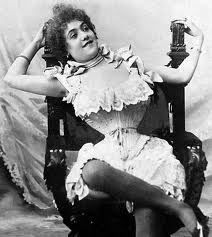
corset

The teeny tiny breathy voice caught my attention. At first I attributed it to the elderly woman sitting at the front of the bus. The fragile smallness of the tone certainly fit the profile. But then I noticed the breathy almost Marilyn quality beneath the tinny squeak. The come hither tone coming from the throat rather than the diaphragm could be the result of a pulmonary condition, but it sounded too controlled, too intentional to be medical in origin. After a few unsubtle craning of the neck I spotted the source, a young woman in her early 20s. Where on earth did she learn to speak like a sexy grandmother? And how do I wrangle an introduction to her grandmother?

Since that mass transit incident I’ve come in contact with hundreds of women ranging in their late teens to late 20s speaking in tiny breathy voices. How did this happen? As little girls did they dream of one day sounding like sexy grandmas? Did they foresee a lucrative career in senior phone sex? Or was it just an adolescent affectation, like dotting ‘i’s’ with hearts, that simply got way out of hand? And what kind of teenage girl wants to sound decrepit? Or could it be what you and I hear as fragile breathy grandma, these uber-indoor voiced gals hear as submissive and thereby somehow enticing? We’ve all been there; the home perms, the blue eye shadow, the clogs. We’ve all done our time in the adolescent hall of mirrors, trying on one misguided identity after another. But I’d like to think had I continued on any of my (many) misguided paths one parent or another would have said something. In fact they did. During the height of my adolescent years I spent all of 5 minutes with an affected voice; having just spent an enriching day with some upper east side girls. I was told in no uncertain terms to unlock my jaw and open my mouth immediately. My country club affectation was quashed before I even made it up to my room, let alone onto a public bus.

Do parents not hear their own children? Does their adoration tinker with their ears giving every utterance the deep solid tones of a young Helen Reddy? Do teachers no longer send students to speech therapy? Do doctors not notice the panting and squeaking? And what of peers; merciless, punishing, unrelentingly critical peers? Shouldn’t there be taunting and antagonizing? Where are the Depends jokes, the lockers draped in support hose? Or are the geriatric geisha voiced gals admired?! Is having a tiny voice whose sole purpose is to entice men, the 21st century equivalent of a 16-inch waist or the ability to play the harpsichord? Is fragile the new black? Are young woman creating virtual corsets resulting in smaller people with diminished voice? If so, to what end? Surely the job interviewing process is not aided by appearing weak and tremulous. My guess is that by 30, their mouths start to open and they find their real voice. Traditionally that’s what metaphorically happens in one’s thirties. The alternative is simply too hideous to contemplate! No one wants to hear quarterly projections or medical test results in a breathy shaky voice. It would be hard to believe the state of the union is anything but doomed hearing it spoken in a squeak. But just in case these women don’t naturally grow out of the contrivance, congratulations to all you vocal coaches and speech therapists, your ship has come in!

 
Leave a comment

Posted by on March 11, 2013 in Cultural Critique, Well-Being


Tags: , , , , , , , , ,

In Good Hands?

gecko

Everyone has a medical insurance horror story. They may differ in what end of the beast one has wrestled; (getting insurance, updating insurance, filing a claim, disputing a claim, etc.) but the blood boiling frustration is the same. It is the rare insurance experience that is summarized with; “Oh how I enjoy working with my particular carrier. I pay them and they make my life easier when I’m most vulnerable and provide much needed access to care.” It is much more likely the case that hours (if not days) have been lost trying to get answers and coverage. In the most heinous cases, professionals need to be hired to force insurance companies to pay for coverage.

Medical insurance companies are in the catbird seat. They don’t need to advertise they only need to lobby. Most coverage does not happen through individual purchases. Coverage is purchased in bulk through employers. In this way they differ greatly from automobile insurance. Which is one reason you don’t see an animate gecko or (wee wee wee) pig selling medical insurance. You’ll never see an advert of a medical emergency in which a wise soothing man with a voice like Barry White comes to the rescue. Medical insurance doesn’t need to promise (or deliver) anything except the belief that we need it to survive. And we do believe that. We have made considerable efforts to expand coverage to individuals including dependents well into adulthood. We are now moving towards insuring everyone regardless of employee plans. Somewhere along the way we’ve equated insurance with healthcare.

Insurance companies do not make money by providing healthcare. However they do increase the cost of healthcare by their very existence. There is a complex economy that exists between healthcare and insurance companies. Medical practitioners need to charge more to support the additional staff needed to process claims. Expensive tests are casually ordered if they are ‘covered.’ Insurance companies negotiate discounted reimbursement rates for pharmaceuticals and medical care, which in turn drives up the cost for the uninsured, which feeds into the notion that medical insurance is necessary.

Would it be such a radical notion to abolish medical insurance? We did not always have insurance in this country. In fact historically speaking it’s a relatively new concept. True our medical advances are quite expensive and need to be paid for in some way. We live longer now, partly due to medical interventions that cost money. But how much money does it cost to support the medical insurance beast? How much time is lost in productivity of employees pursuing claims? How many staff of every company offering medical insurance is needed to wrangle the companies and attempt to explain the plans to employees? How many medical offices could dramatically lower the price of an office visit by dropping medical insurance? But what would become of the medical insurance staff? Well the doctors and nurses whose job it is to review (aka deny) treatment for people they have never met will do just fine. Everyone else on staff has an equally transferable skill; there are no typesetters or farriers to retrain.

There is something inherently problematic with a (highly) profitable product that positions itself as non-negotiable but with which we have zero consumer input or control. What we actually need is not an inflated labyrinth payment method but healthcare. High quality, easily accessible, holistic healthcare is what is needed. What is needed is healthcare that focuses on preventative care throughout a lifetime. Adding a layer for payment processing which often gets in the way of care is not what is needed. Heralding a product whose very raison d’être is to make money not to provide care, as a panacea is not what is needed.

 
Leave a comment

Posted by on March 8, 2013 in Cultural Critique


Tags: , , , , , ,

All aTwitter

comicbooks

There are two (polar opposite) views of modernity. There are the early adopters who froth and queue up for new and shiny gizmos and gewgaws and then there are the progress curmudgeons. These curmudgeons sit on their metaphorical porches and attribute the downfall of society to; ‘those dadgum moving picture shows.’ Most of us fall somewhere in the middle of these two opposing views. The early adopters aren’t a new concept (please don’t tell them that it would just kill them) people have been running to buy what’s being sold since the first wheel kiosk opened. It’s the progress curmudgeons that are far more fascinating. Nobody is born a progress curmudgeon. Every kid is intrigued by something newer, faster, and shinier. No, a curmudgeon must be created. They must find a time in history and stick with it. Any and all things that came after these glory days must not be trusted.

This is not an entirely irrational perspective; some things simply aren’t made as well as they once were. For instance clothes used to be made to last a lifetime, although who would want to wear the same clothes for their entire life alludes me. Cars were far less disposable, but they were also lethal (both for riders and for anyone in the car’s path.) Certainly items were easier to use once upon a time. Picking up the phone and asking the operator to connect you was easier than…pushing a speed dial button? Well a typewriter was certainly easier to use than a computer. You only need insert a ribbon (use lye to remove the ink from your fingers,) insert paper, reinsert paper after you realize the lye missed some spots and ink has leached onto the paper, insert paper again with carbon paper (use lye to remove carbon from fingers) commence typing, commence searching for white-out, miraculously finish letter, try and type address onto envelope, give up and handwrite envelope, find stamp, walk to mailbox, repeat. Fine, communication is easier but what about music. Don’t you miss records? You remember records don’t you? There were those paradoxically highly fragile yet extremely heavy items you had to lug around with you through life. They crackled and skipped and sounded nothing like the real thing.

I think we can all agree that progress is just that; progress. We don’t have to like it and we don’t have to adopt it, but we cannot argue with the fact that it is progress. No one wants to feel left behind or to have his/her rituals upended. But discounting progress, or worse imbuing progress with negative consequences is misguided. How many times have you heard people blaming modern movies and videos for increased violence (as if silent movies weren’t horrifically violent)? And what of this notion that social media is to blame for increased bullying. It’s not lax parenting, or the soul crushing experience of a Kindergarten graduation ceremony that leads to the self-esteem issue that is always at the root of bullying. Nope, it’s social media that is to blame. The same social media that allows for positive reinforcement that simply does not exist in any other domain of the real world with the exception of group therapy. Before the advent of (social media) Linkedin did anyone ever publicly endorse your skills? Whether it is a meaningful gesture or has any validity at all is beside the point. It is a public attaboy that simply did not exist in the past. Before we tweeted, did we publicly support other’s views or endeavors? Do we even remember a life before Facebook and the villages it’s created? When, beside a reunion (family or class) did we ever cheer accomplishments, offer sympathies and coo over baby pictures?

Expanding our sense of community is always a good thing. It reinforces our attachment and obligation to the larger world. Humans despite their many differences are at their core the same; they need to be connected to other people. It is not the gaming or chatting that encourages antisocial behavior; it’s the fact that people are using these outlets to avoid social behavior. In that sense the video game is no more detrimental than the comic book (which was also decried as the downfall of civilization.) The progress doesn’t create maladjusted people, it’s that maladjusted people still crave human interaction, simulated or not. Banning or demonizing the tangible is always more tempting than dealing with the elusive. The only way to reach troubled people is to reach out to troubled people. Blaming something we don’t care for or don’t understand is distracting and disingenuous. Social media, comic books, dime novels or pool do not create trouble. Troubled people are drawn to things that make them feel less alone.


Tags: , , , , , , , , , , ,