RSS

Testing K-12

images

Could it be? Yes it could. School testing seems to have turned a critical corner in New York. Testing is going beyond the No.2 pencil darkened bubbles. Teacher evaluation is now expanding to domains not suited to multiple choice or True/False standardized tests. Evaluations will now include actual classroom observations and assessment of meaningful classroom work (ex. research papers.) While no one is suggesting shredding those bubble sheets once and for all, this is progress.

This expanded evaluation including areas such as Kindergarten, art, gym and remedial curriculum forces us to ask valuable questions regarding intent and outcomes. Keeping the budget in mind (which one must always do in real life) we now ask ourselves what gym is really all about. Do we feel that an integral part of a child’s K-12 education should be mastering the rules of team sports? Should gym be focused instead on combating inactive lifestyle and obesity? Is gym the euphemism for all things physical and be the source of nutrition, health and puberty education? We can only form meaningful evaluation when we decide why it is we’re doing what we’re doing. The same is true for art in schools. If we decide that the arts (in all forms) supports and expands all areas of K-12 education than art evaluation must be integrated into all evaluations. If art class means making projects than the mastery of those projects should be evaluated.

These examples (gym and art) might initiate conversation about teaching skills versus innate talent. And that is good. For what is any achievement (academic or otherwise) than an amalgamation of innate talent and learned skill? A talent with language, math, abstraction, memorization or analytical thinking is at the core of certain classroom achievements. Having a visual/spatial, physical or musical gift is at the core of (what’s often considered) extra-curricular classes. Which begs the question why? If we believe in (Howard Gardner’s) Multiple Intelligences* (which by the spate of bumper stickers out there, we do) than why shouldn’t all areas of intelligence be equally nurtured and valued? If we believe that the role of public K-12 education is to prepare our children for their place in the world, our focus should be less about specific subjects and more about learning.

There are countries that are leaps and bounds ahead of the U.S. in science, technology and math education and that makes some people nervous. The truth is that there will always be learners who are drawn to science and math and technology can be taught (as anyone who has ever transitioned from a walkman to an iPod can attest.) The role of public education is not to compete with other countries’ strengths but to cultivate the strengths of its own students. Curriculum should not be reactionary and teaching approaches should be designed for the benefit of the learner. Creating critical thinkers, cultivating a love of learning, and providing a well-rounded education will ready graduates for their place in the world.

*Visual-Spatial, Bodily-Kinesthetic, Musical, Interpersonal, Intrapersonal, Linguistic, Mathematical

 
Leave a comment

Posted by on June 3, 2013 in Childhood, Education


Tags: , , , , , , , , , ,

Seeing Differences

tiger7_1508441a

I’m a profiler. Why pretend otherwise? Without any effort whatsoever; the appearance, and speech of a stranger is rapidly calculated and a (metaphorical) card pops out that reads; “tourist” “nanny” “poser”. We all do this to one extent or another. People who can not assess people by visual and verbal cues are often taken to a specialist. There is an actual biological origin and motivation for this ability. Our senses exist to take in information and to assess danger. We may not know everything about the tiger say, its hobbies or dreams, but we know it’s a tiger and it’s headed straight toward us.

Most everyone can make certain generalizations about people very quickly. This comes in handy when looking for directions; would you ask a tourist how to get somewhere or would you ask a local? Of course you’d have to be able to identify a tourist and a local. And, this is where people may get themselves into trouble. “Appearance” is not a question of skin tone or pant waist. The way in which someone carries him or herself is an integral part of their appearance and often speaks volumes about who they are. What a person says and not just how they say it is also key. Grammar, syntax and accent are fascinating but may tell you less about someone’s intentions than what it is they’re actually saying. What people say (and don’t say) is probably the best (and perhaps only) reliable indicator of who a person is.

A 20-something in a stuck elevator wailing how ‘this is the single worst thing that’s ever happened to me in my entire life’ has led a charmed life, no? The same could be said about a supervisor who without a word, routinely hands you his empty coffee cups. The stranger, who worlessly pushes you to the ground at the sound of an explosion, knows a thing or two about survival. Our past and our sense of our place in the world are continuously communicated. We tell our stories (laced with varying degrees of fiction) literally and figuratively. For those who engage in the literal, it’s always fascinating to see what they include and choose to omit. In their editing, they often tell us more about themselves than they ever intended. Case in point: a woman wrote the story of her small child’s dog attack (just to be clear; the dog attacked the child.) It’s a traumatizing and bloody story that quite frankly is entirely her doing. She has remorse for the trauma and the facial scar but seems to have zero understanding of her role in the mauling. She knowingly created an extremely dangerous situation, not just for her own child but for anyone in proximity. That her children were not removed from the home, she was not imprisoned and was paid to write about her sorrow can only lead me to come to this conclusion; she is privileged. Had she lived in public housing the authorities would be aware of her behavior. If she had been to a public hospital the authorities would know. If she had looked a certain way or talked a certain way, the authorities would know.

It causes me no pleasure that I have engaged in the same act of profiling that perpetuates such inequity. But how do we ever fight for justice if we cannot detect the injustices? The only way to see that people are treated differently is to see the differences. There is nothing immoral or politically incorrect about acknowledging that people are diverse. What is morally reprehensible is to engage in separate and unequal justice.

 
Leave a comment

Posted by on June 1, 2013 in Cultural Critique


Tags: , , , , , , , , ,

In Other Misogynistic News…

feminism-3

The highest court in El Salvador has decided that a 22-year old woman must continue with her life threatening pregnancy and give birth to a baby who if born alive will die immediately. The young woman has lupus and obstetric complications. She also has a small child at home. The court’s justification is the same spouted by anyone looking to control a woman’s body; they are protecting the fetus. The fetus in question is encephalitic and cannot possibly live as a baby for more than moments. There is an actual child who might very well lose his mother to this pregnancy. That this woman is being forced to endure this pregnancy is barbaric. A court ordered pregnancy is holding her hostage. She will witness her declining health and her growing stomach, helpless to alter the tragic outcome.

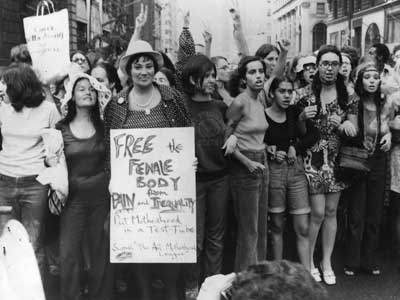
That this is occurring in El Salvador is less relevant today than it might have once been. Twenty or so years ago we may have been horrified but resigned. After all, El Salvador is a very religious country. But guess what? So is America now. Not since the Puritans landed on Plymouth Rock have we had such a powerful religious influence on politics and policy. In 2013 it’s rather difficult to point the finger at any other country’s religious fervor. Almost without exception all organized religions agree on a few points; there is an invisible entity that guides, there is a polarity of good and evil, and women have a place. It is not a coincidence that as the nation (finally) benefits from the feminist fights of the 1970s we are seeing reproductive freedoms erode. Those longhaired, bell bottom wearing woman marched through the streets with signs reading; A Woman’s Place Is In The House And In The Senate. And guess what? They are in the House and in the Senate. Their numbers don’t come close to representing 51% of the population, but it is an improvement. Equity in sports has a long way to go, but just remember what Billie Jean King had to endure. It is no longer legal to hire according to gender. That women still make less than 3/4 of what men earn, is an issue, but still it is progress.

So if it’s no longer legal to keep women out of office, the workplace or sports, what is a misogynist to do!? Well we know for a fact that sexism in medicine is both easy to engage in and rarely questioned. We know that medications are routinely researched and developed according to a male test subject. We know that great efforts have been made to ensure that men can always have sex (while on life-support if need be) but there is still no hormonal male birth control. Most medical machines and devices are designed for male patients (except for that gem, the mammography machine which if any man had ever to place any of his sensitive bits into would be redesigned in an instant.) When we combine the sexism of traditional medicine with the sentimentality of “it’s for the children” it’s far easier to attempt to marginalize 51% of the population. It’s not for the children; it’s never been for the children. If people cared a whit about the children we would have stellar healthcare and nutrition for all and the best K-12 system on the planet. We came close to that reality once, but I think we’ll all agree that there’s been some serious backsliding. It’s not for the children that we force a teenage girl (who is in fact a child) to endure a pregnancy and birth, or to look at a sonogram of her fetus. (How is it that using technological advances to traumatize girls and women is contemplated let alone allowed?!)

The truth is that any group outside of the power structure will suffer as they progress. We’ve seen it happen to every minority group. Homeostasis is a very strong force. There will always be those who feel that people they view as ‘less than’ are infringing on their rights by having rights of their own. But it’s hard to fathom how torturing a 22-year old woman and leaving her small child motherless makes anyone feel better about themselves.

 
Leave a comment

Posted by on May 30, 2013 in Cultural Critique


Tags: , , , , , , , , , ,

Hoarders

firehouse

Reality television is at best a cracked lens on society. The percentage of toddlers wearing hairpieces, spray tans, dentures, and artificial nails is in actuality quite small. Most women don’t call themselves housewives, implant faces and bodies beyond recognition and parent so abysmally. Whether the people who participate in these shows are mentally healthy or not is an interesting question. Voguing for a camera (and hoping to land fame, fortune and book deals) is not currently classified as a mental illness. For the official-certified-it’s listed in the DSM-V, display of mental illness you need to turn to the addiction sub-genre of reality show.

That there is an audience at all to watch people struggle with a mental illness is itself disturbing. But evidently there is, and the proof is the shows focusing on obesity, drug and alcohol addiction and hoarding. You’ll note that there are no shows about mental illness that have a less quantifiable or compelling visual behavior. There’s yet to be a “Watch The Narcissist” show, and to be fair it’s probably due to the redundancy factor. There’ll never be a “Depressed Divas” show as depressed people are never entertaining. A “BiPolar Bonanza” would demand a far too attentive director and shooting schedule (dammit his mood just shifted, where is the camera!) We, the audience, are not very interested in mental illness per se, what we like is wacky behavior. And if that behavior stems from a syndrome all the better. We love nothing more than hearing from a person with questionable credentials (‘therapist’ needs a modifier to mean anything) spout psychobabble about the behavior. The hoarding shows center around this very phenomenon. We see a ‘therapist’ gently talking the hoarder into parting with the petrified pet. In the next scene she actively listens to distraught and frustrated family members and explains ‘the process’ to them. We sit in our over-accessorized homes, eating chips and dip out of a chip and dip bowl, as we wear our ‘tv watching’ outfit and snort over the wasteful accumulation. “That’s f*&^ed up” we say as we accidentally tip over the tower of DVDs.

This interest in wacky behavior doesn’t just guide free cable programming decisions. It also seems to guide political policy and expenditure. There are currently 85 communities across this country that consider hoarding to be a serious public health hazard. Hoarding, of course is not necessarily a health hazard. No one has been physically harmed by a Madame Alexander doll or Thomas Kinkade collection. Possibly a more apt description for the kind of behavior with which the authorities are concerned is ‘filth’. There’s a method that’s been used since the dawn of filth for such scenarios; it’s called condemning. There are no soft-spoken ‘therapists’ or understanding fire chiefs necessary. If a home poses a genuine risk to the public, shut it down. Anything else is utterly disingenuous. Hoarding and living in filthy squalor is only the presenting behavior. There’s a reason people engage in barricade building. Convincing someone to part with a few carcasses and some urine soaked newspaper may make the helpers feel better, but dollars to dozens and dozens of donuts, that home is going to fill the hell up again. And why shouldn’t it?! What business is it of anyone’s how someone else chooses to live? This is when someone pipes up and says “It’s a public heath issue”. Is it? Not always. If the person lives rurally it’s not. If it really and truly is then shut it down. But wait, what’s to become of the hoarder? Well, if we really believe that the person is a danger to themselves and others (and if they’re not we have no business bothering them) than they need to live in a protected environment.

That homes are being cleaned out, very slowly and often at taxpayer expense, by community officials is troubling. On its surface it appears that we care about our most fragile neighbors. If that is even remotely true why aren’t the same resources being used to remodel shantytowns? Surely people living in doorways, under bridges and in tunnels are also worthy of a clean dwelling. It stands to reason that people living on the street, presumably without access to health care also pose a public health hazard. It is always better to err on the side of helping, but it is the responsibility of the strong to be clear about who exactly they are helping and why. Wrapping ourselves in rhetoric to impinge on someone’s autonomy is not helping anyone but ourselves.


Tags: , , , , , , , , , , , , , , , ,

Please (Don’t) Stand By

Unknown

An awful violent attack occurred in London yesterday. A soldier was massacred in a very public and calculated manner to make a political point. No doubt attacks with this level of brutality happen around the world all the time. But that it happened in London, a country not embroiled in a homeland war, captures attention. That the attack was structured and played out to garner as much social media attention as possible adds to the awareness. The men who hacked a soldier to death lingered at the site in an effort to broadcast their motive. Cell phone cameras and London’s extensive close-circuit televisions obliged the murderers.

Video captures what appears to be a street painted red, the murderers, with bright red hands holding cleavers, spew forth their message. The images will sear and scar. But there is something beyond the horror in the tableau. There is a woman, of a certain age, talking with a blood-covered man. She stands close enough to him (knifing distance if you will) to be in serious danger. He is still holding his cleavers as he tells her why they did what they did. Beyond them you can see clusters of people looking on and holding up their phones. But this woman stands alone with an attacker. Ingrid Loyau-Kennett had gotten off the bus hoping to aid the murdered soldier and found herself face to face with a murderer. She immediately set upon disrupting whatever he intended to do next and distracting him until help arrived. Later, when asked why she would put herself in such danger she seemed baffled. Why wouldn’t she do what she did? When a reporter insisted “But you could’ve been killed.” She replied; “Better me than a child.” There were no children in her care at the moment. She was in no immediate danger when she got off the bus. She could have kept walking, or stood on the sideline taking photos or video. Instead she inserted herself into clear and present danger because she felt it was the right thing to do.

It is a stunning thing to do and one most of us never would or could attempt; walking directly into the path of crazy and danger. How many times have we rationalized our way out of inserting ourselves into far less lethal circumstances? How many times have we seen an adult manhandle or berate a child, and kept walking? Have we passed a visibly confused or distraught person assuming someone else will help? If we live anywhere that’s inhabited with other people, we probably make these kinds of decisions weekly if not daily. And they are decisions. Walking past a person in need is no less a decision than approaching a blood soaked cleaver wielding murderer. Turn your phone camera on someone rather than lend a hand (or walk away) is a decision.

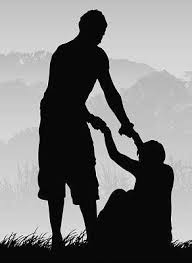
The brutal murder of an innocent person can never be justified or excused. But if we can look at the actions of Ms. Loyau-Kennett as a personal guiding light, we can make the world slightly better. We will never be rid of crazy or rage, or calculated killings, but we can care more. The next time we see a situation that catches our eye and creates an uneasy feeling in our stomach, we can ask ourselves what would Ms. Loyau-Kennet do?

 
Leave a comment

Posted by on May 24, 2013 in Cultural Critique


Tags: , , , , , ,