RSS

Category Archives: Well-Being

Hoarders

firehouse

Reality television is at best a cracked lens on society. The percentage of toddlers wearing hairpieces, spray tans, dentures, and artificial nails is in actuality quite small. Most women don’t call themselves housewives, implant faces and bodies beyond recognition and parent so abysmally. Whether the people who participate in these shows are mentally healthy or not is an interesting question. Voguing for a camera (and hoping to land fame, fortune and book deals) is not currently classified as a mental illness. For the official-certified-it’s listed in the DSM-V, display of mental illness you need to turn to the addiction sub-genre of reality show.

That there is an audience at all to watch people struggle with a mental illness is itself disturbing. But evidently there is, and the proof is the shows focusing on obesity, drug and alcohol addiction and hoarding. You’ll note that there are no shows about mental illness that have a less quantifiable or compelling visual behavior. There’s yet to be a “Watch The Narcissist” show, and to be fair it’s probably due to the redundancy factor. There’ll never be a “Depressed Divas” show as depressed people are never entertaining. A “BiPolar Bonanza” would demand a far too attentive director and shooting schedule (dammit his mood just shifted, where is the camera!) We, the audience, are not very interested in mental illness per se, what we like is wacky behavior. And if that behavior stems from a syndrome all the better. We love nothing more than hearing from a person with questionable credentials (‘therapist’ needs a modifier to mean anything) spout psychobabble about the behavior. The hoarding shows center around this very phenomenon. We see a ‘therapist’ gently talking the hoarder into parting with the petrified pet. In the next scene she actively listens to distraught and frustrated family members and explains ‘the process’ to them. We sit in our over-accessorized homes, eating chips and dip out of a chip and dip bowl, as we wear our ‘tv watching’ outfit and snort over the wasteful accumulation. “That’s f*&^ed up” we say as we accidentally tip over the tower of DVDs.

This interest in wacky behavior doesn’t just guide free cable programming decisions. It also seems to guide political policy and expenditure. There are currently 85 communities across this country that consider hoarding to be a serious public health hazard. Hoarding, of course is not necessarily a health hazard. No one has been physically harmed by a Madame Alexander doll or Thomas Kinkade collection. Possibly a more apt description for the kind of behavior with which the authorities are concerned is ‘filth’. There’s a method that’s been used since the dawn of filth for such scenarios; it’s called condemning. There are no soft-spoken ‘therapists’ or understanding fire chiefs necessary. If a home poses a genuine risk to the public, shut it down. Anything else is utterly disingenuous. Hoarding and living in filthy squalor is only the presenting behavior. There’s a reason people engage in barricade building. Convincing someone to part with a few carcasses and some urine soaked newspaper may make the helpers feel better, but dollars to dozens and dozens of donuts, that home is going to fill the hell up again. And why shouldn’t it?! What business is it of anyone’s how someone else chooses to live? This is when someone pipes up and says “It’s a public heath issue”. Is it? Not always. If the person lives rurally it’s not. If it really and truly is then shut it down. But wait, what’s to become of the hoarder? Well, if we really believe that the person is a danger to themselves and others (and if they’re not we have no business bothering them) than they need to live in a protected environment.

That homes are being cleaned out, very slowly and often at taxpayer expense, by community officials is troubling. On its surface it appears that we care about our most fragile neighbors. If that is even remotely true why aren’t the same resources being used to remodel shantytowns? Surely people living in doorways, under bridges and in tunnels are also worthy of a clean dwelling. It stands to reason that people living on the street, presumably without access to health care also pose a public health hazard. It is always better to err on the side of helping, but it is the responsibility of the strong to be clear about who exactly they are helping and why. Wrapping ourselves in rhetoric to impinge on someone’s autonomy is not helping anyone but ourselves.


 

Tags: , , , , , , , , , , , , , , , ,

Put The Baby Down

roger

Picture if you will a lovely restaurant: equal parts festive and posh, a place where you’re as likely to spot birthday celebrations as celebrities. The lights are dim, the tablecloth routinely brushed to hide your shame and the prices are calibrated to reflect all this. It’s a proper time of night to be dining; somewhere between post early bird special and post theatre. It’s late enough that generous amounts of skin and inebriation are on display. As are the babies. And by ‘babies’ we are not casting dispersions on the nieces/dates of men eligible for monthly federal checks and movie discounts. We instead refer to actual babies too young to sit, let alone eat solids. Why? Why are babies having their night feeding in an upscale restaurant (late in the evening)? The babysitter canceled at the last minute? Perhaps, but that would suggest that a babysitter was procured in order for the adults to have an adult experience. If that were the case, upon cancelation wouldn’t the take-out menus come out? It’s more probable that the baby makes three, in every conceivable way.

The particular baby in question was silent (to the point where someone who maybe had one too many french martinis would’ve thought it was a doll and the whole thing was a prank.) Yet the (assumed) father futzed and fussed over the infant seat throughout the meal. There were bottles, there was bouncing, there was picking up and walking about (for a silent baby.) There’s a pretty good chance that the person being comforted was the father. Not everyone is comfortable in social situations. There is quite a continuum between introversion and extroversion, and most people are a wee bit closer to introversion. Sometimes a little psychic or physical prop is all that’s needed to smooth the way. Smoking once served that purpose. One could take long breaks from patter with a drag a flick or a light. Drinking has always served that purpose (and many more.) Having a glass of champagne while dressing, meeting for a drink before dinner, or ordering a drink before dinner are all ways to smooth out the awkward edges. There are people who use their own appearance to distance themselves and/or gain comfort in social situations. Style can be used as armor or distraction or even take the place of conversation. A grown person who’s dyed their hair bright blue sends a message of “let’s just talk about my hair.” A person who’s dressed in baggy neutrals while toting a small person styled for her/his close-up, is saying “please just focus on my child.”

The child as “detractor” is at its roots more neutral than noxious. If we had to choose only one of two parenting approaches, focusing on the child rather than ignoring the child would win hands down. But somewhere past “focusing” on the child lies “using” the child and that’s just plain icky. Children are not accessories and should not pave the way for adults. Using your child to ease your social phobias is no more kosher than using your child to fulfill your waylaid dreams. Sure there could be other reasons that baby or toddler is at the restaurant, wedding, funeral (!) or dinner party. But it is challenging to imagine any explanation that is actually in the best interest of the child. Children (of any age) actually benefit from other’s care. Creating a fear of non-family members increases the odds that a child will ‘inherit’ social phobias. A babysat child learns that other adults are trustworthy and that the world is not comprised of strangers. The child gains knowledge and perspective from other adults, and the parent creates/maintains/nurtures his/her own identity and relationships, which is an important thing to model for a child.

 
3 Comments

Posted by on April 29, 2013 in Childhood, Cultural Critique, Well-Being


Tags: , , , , , , , , ,

You (version 6.1)

lifeoftheparty
We are our stories. Some of us scour ancestral records looking for the ‘truth’. Some of us pick and choose what elements best tell our story. Some of us (a la Holly Golightly) create our own stories. But in the end we are our stories.
Whether we cling to family names and lore or change our names and run from the past, we are saying the same thing to the world; we are who we say we are. It often helps us to find our footing in the world, these narratives. Perhaps Mr. Romanoff never would have opened a successful restaurant if he didn’t claim a royal title. Perhaps Dale wouldn’t have won friends and influenced people had he not changed the spelling of his last name; giving the impression he came from a more distinguished family. People have been changing their names for as long as they’ve been changing their stories. Often for reason of life and death, but also for the pursuit of happiness.
We could argue the definition of happiness but we agree on what happiness isn’t; misery. There is much research on the resilience of human beings. There are people who have withstood the most horrific and miserable of circumstances and not just survived but thrived. There are other people who shatter like antique glass under much less harrowing ordeals. Why? If we are all made from (very) similar biological stuff, why is there such a discrepancy in our resilience? It would seem there is little correlation between optimism and resilience. Someone in the throes of anguish doesn’t bounce back because they believe the sun will come out tomorrow. It must be more about self-definition. A person having a strong sense of themselves can separate (not disassociate) from their circumstances. They can walk through hell and keep walking. A person who defines themselves by external stimuli (including the manner in which they’re treated) believes that hell is their new mailing address.
If this is true how do we help ourselves (and others) create a strong sense of self. The very first way is the stories we are told or tell to to the small. Children with a sense of ‘where they come from’ have a better sense of where they’re going. If their creation was mainstream/traditional the storytelling is pretty straightforward. If there is anything that veers slightly from “when a mommy and daddy love each other very much they want to be close as possible…” children must be told in an age-appropriate manner. The way we tell these stories is as important as the stories themselves. No parties should ever be demonized as children can do simple math (if my biological father was an evil son of a bitch what does that make me?) Having a sense of one’s ancestry creates solid roots on which to grow.
Beyond our narrative of origin what can help make us strong? External rewards are often kryptonite to a strong sense of self. Awards, honors and trophies are based as much on others’ performance as they are our own. You can’t win any kind of accolade unless others lost. The only way to feel accomplished is to accomplish something; at any age (ex. riding a 2-wheeler, taking the bus unescorted, learning to drive.) Finding things that we’re good at is one of the more rewarding ways of bolstering a sense of self. When we know we’re good at something (ex. raising ferrets, making goulash, painting murals, investing money, etc.) it matters little what others think and thereby diminishes any inclinations we might have towards external definition.
In the end we are exactly who we say we are. We decide how to pitch our own story. If we cull our life stories, most of us could create a compelling Lifetime move script. But to what end? (Have you ever watched one of those films?!) What do we gain from being the lead in a bad made-for-tv-movie? Why not go back and look at what happened in between the hardships and tell that story? Whatever happened, either despite it or because of it made you who you are today. More importantly you are still here. It’s never too late to reframe or update your story. No one is keeping track of how many versions there are.

 
1 Comment

Posted by on March 25, 2013 in Childhood, Well-Being


Tags: , , , , , , , , , , ,

Everybody’s Fancy*

YE6MG00Z

Everyone is entitled to be the person they wish to be; adults, teens, children; everyone. As long as you are not hurting anyone, you can live your life exactly as you see fit. Society does expect some level of conformity of course, mostly to avoid utter chaos. We can stomp our feet or roll our eyes at the notion of conformity, but we look rather adolescent doing so. The world is large and diverse; there are a lot of us living on this relatively small planet. We make certain accommodations to ensure a modicum of tranquility. Nobody enjoys waiting on line but as a society we’ve decided it’s efficient. We’d probably prefer if the bus took us directly to our front door, but that’s not how a public bus works.

Public education is just that; public. No one person’s rights are more important than that of anyone else. Yet recently there was a report of a public school being pressured to behave otherwise. A transgendered elementary school student’s parents wanted her to use the girls’ bathroom. This arrangement worked until it didn’t. As the student got older there were parents (and perhaps girl students) who grew uncomfortable. A gender neutral bathroom was provided by the school, but the parents found this option ostracizing. Teachers and administrators had always used the (adopted) female pronouns for the student, which would indicate efforts of inclusion.

On the surface one might think; “They’re kids! Let them use whatever bathroom they choose.” But there’s a reason that bathrooms are divided by gender. Sometime around age 5 (otherwise known as; school-age) children become aware of gender differences. If we asked the parents of the transgender student they would probably recall their child expressing frustration at having boy parts (versus girl parts) at around age 5. Children develop a (healthy) curiosity about gender (both physical and social) at this age. Role playing games start around this age (ex. house, office, etc.) They often explore their own and other’s bodies. There’s nothing perverse about the curiosity. But like all behavior in children, it needs to be monitored. Children have much of the same physical anatomy they will in adulthood, but that doesn’t mean they should be engaged in adult behavior. They also have the physical ability to smoke and tie one on. But even the most precocious child is not equipped for adult situations.

It is easy to think of a child (at any age) feeling coerced and/or frightened by situations. It is also easy to imagine a bathroom frequented by children of all grades and unmonitored by adults. All kinds of things happen unbeknownst to adults in a school bathroom. This in no way is to suggest that a transgendered student is any kind of aggressor. Far from it. But why should a girl child be exposed to a biological boy child in the most private of ways? What if that girl child is significantly younger than the transgendered child? What if the girl child has been victimized at home? In other words; how are the rights of one student more valid than that of another?

The fact is that they are not. No one person is entitled to anymore than anyone else. Equal opportunity means just that; equal. Sticking to the bathroom motif; anyone who has stood on line for a public restroom because the people in the front of the line avoid the handicapped accessible stall, know this to be true. The Americans with Disabilities Act was enacted so that people had equal opportunity, not so that there was a private unoccupied bathroom stall available at all times. Everybody’s fancy, everybody’s fine and everyone is equal. We need to accept (not tolerate) all people. We need to allow for all points of view. But we also all need to live together, and sometimes that means not getting every last thing one wants. Sometimes we need to consider how others are impacted by our behavior. Sometimes we need to use the private bathroom.

*Some are fancy on the outside.
Some are fancy on the inside.
Everybody’s fancy.
Everybody’s fine.
Your body’s fancy and so is mine.

Boys are boys from the beginning.
Girls are girls right from the start.
Everybody’s fancy.
Everybody’s fine.
Your body’s fancy and so is mine.

Girls grow up to be the mommies.
Boys grow up be the daddies.
Everybody’s fancy.
Everybody’s fine.
Your body’s fancy and so is mine.

I think you’re a special person
And I like your ins and outsides.
Everybody’s fancy.
Everybody’s fine.
Your body’s fancy and so is mine.

Fred M. Rogers (1967)

 
2 Comments

Posted by on March 19, 2013 in Childhood, Cultural Critique, Well-Being


Tags: , , , , , , , , , ,

Crime Of The Mind

Edgar Allan Poe

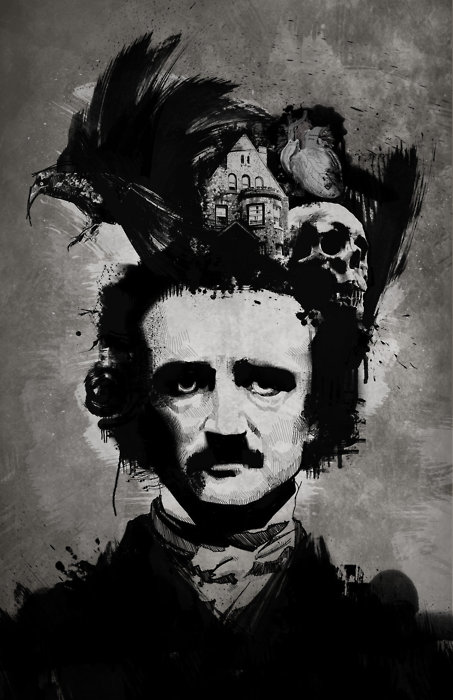
In New York City a man has been convicted of conspiring to kidnap and could be sentenced to life imprisonment. He did not in fact kidnap or hurt anyone, but did type extensively about his desire to do so. It is conceivable that this 28-year old man could spend the rest of his life in prison for having creepy thoughts. This in a land in which people who’ve been convicted of actual crimes serve their time and are released. What in the world does it mean for thoughts to be illegal?

Was the fact that this man a N.Y. police officer too emotionally charged for the jury? Was the jury swayed by the graphic nature of the defendant’s writing? Was the fact that the writing occurred in cyberspace perceived as more threatening than a handwritten journal? Was it that the defendant engaged with other typists in these fantastical plans? Something must have clouded the jury’s vision to render such a verdict. Is there reason to be concerned about the judgement of this police officer? Absolutely, but that’s a personnel issue, no? Were the messages so convincing that the jury was concerned about imminent danger? Perhaps, but that is why probation, monitoring and court mandated treatment were invented.

By equating thought with action we set a dangerous precedent. What does this mean for all crime writers for example? What does it mean for anyone who’s ever put pen to paper (or fingers to keyboard)? And what of those who engage with the dangerous writing? Are book clubs or theatre audiences aiding and abetting these dark thinkers? While no one will ever confuse Sweeney Todd with the contents of a chat room, the overarching premise is the same. The fact that the chatting, posting, emailing and texting wasn’t particularly well written or the least bit musically engaging doesn’t mean it wasn’t an exercise in creative writing. Creative writing by a man of questionable mental health of course.

But questionable mental health is not a crime. Do we want people with questionable mental health to be carrying a gun and be charged with protecting people? No. Do we want real and meaningful treatment for those who are not entirely well and who harbor violent thoughts? Without a doubt. Imprisoning (for any length of time) because of mentally illness is a black eye for us all. It is an ugly bruise of a reminder of how inept and misguided we are in matters of mental health.

 
4 Comments

Posted by on March 13, 2013 in Cultural Critique, Well-Being


Tags: , , , , , , , ,