RSS

Category Archives: Media/Marketing

The Generational Divide is Garbage

Social scientists (and critics) are forever trying to decipher a generational fulcrum that transcends the year one was born. What is today’s quick and easy litmus test to discern wherein lies your allegiance? A dozen years ago email was the magic crystal. Those who preferred it to telephone calls were clearly in the “What’s an answering machine?” camp. How one experiences media is a favorite litmus of seers today. Still watching television on a television? It might be time to up your iron and ginkoba. Still reading printed materials? Have you updated your long-term care policy lately?

The sticking point with some of these formulas is that they tend to rely too much on new technology. While it’s true that in broad terms, younger people are more intrigued/gullible and will adopt any and everything new, it is also true that some older people will do the same. There are younger people (we’ll call them hipsters) who actually eschew technology and/or gadgets. They choose to demonstrate their rugged individualism by roughing it with LPs, land lines, a pocket full of quarters and a mental map of pay phones. There are people well past their retirement age who are wickedly plugged in. Some of these seniors use technology to literally and figuratively connect with their grandchildren (“hey if I buy something new, Braydon/Aiden/Jayden will come over and set it up.”) Other older tech adopters actually like technology and enjoy staying current.

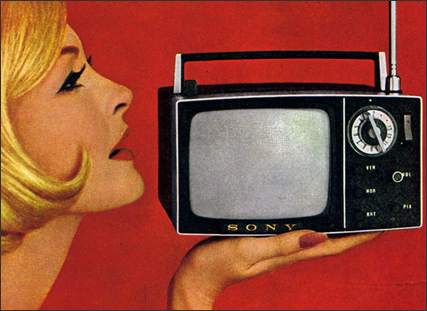
What might be a more useful tipping point is that of consumption habit. Without any data whatsoever, and armed only with a dark sinking sense of the world leaving me behind, I posit that generation Y and incoming Zs, view major consumer goods as disposable. There was a time when purchasing a television (that thing that older people use to watch programs) was a major event. They were expensive and the size of a credenza. They got smaller but remained pricey for quite some time. A 30-inch color television set was a lavish retirement or 35th anniversary gift. If something went awry with the set a repairman could be summoned to the house. When is the last time you saw a television repair shop? Was it somewhere near a pay phone? People not only toss a set into the trash when it falls ill, but toss perfectly healthy sets when it’s time to “upgrade.” As televisions get smaller, flatter and then bigger again, people buy them. The programs haven’t changed, but we feel more accomplished watching it on a brand-new device. Now, it’s not a hard and fast rule, but you’d be hard pressed to find people of a certain age tossing out perfectly good appliances. Generation X and boomers may adopt new technology, but they don’t necessarily toss the old stuff out. (Is it all that surprising that older people see the worth in older things?) Don’t believe me? Let’s take a virtual road trip to Florida. Fear not, I have a cooler of whole foods and an iPod set on shuffle. We’ll be fine. Let’s pull into a gated retirement community shall we? Now surely there are no discarded t.v.s dotting the sidewalks. And good thing too, can you imagine the hazard to pedestrians and golf cart drivers? After visiting many of these communities you will see that…Oops, what’s that?! A rather new looking set with a friendly sign stating; “perfectly good set. my son the big guy with the fancy banking job bought me a new set. if you can show me how the hell to turn it on, this perfectly good set that I liked very much is yours for free.”

Things aren’t made as well as they once were. No one would argue that. But cars really should last more than ten years, no? Furniture (unless it came with a plate of swedish meatballs) should last between twenty years and forever. Though you wouldn’t know it to look at a landfill, appliances do in fact last longer than their style or color fashion. However there are generations without any first hand knowledge of a depression, military draft or odd and even days at the gas station, whose orientation to big ticket items is that of disposability. Capitalism, consumerism, it’s what makes the world go round. There’s nothing wrong with that. But there is something telling about generations who covet the newest iPod simply because it’s new. To put it into generation X terms; Do you remember how you clutched that hard won walkman with all your might? Do you remember the months of babysitting, lawn mowing or burger slinging that bought you that little box? How much birthday/christmas/graduation pleading led to that cherished high tech gadget? You kept that sucker past the ill-fated discman didn’t you? There is no shame in that, but for the record you’re now probably too old to take up wakeboarding; says the woman who ain’t too proud to tweet she prefers David Cassidy to Justin Bieber.
 
2 Comments

Posted by on July 30, 2012 in Cultural Critique, Media/Marketing


Tags: , , , , , , , , , , ,

Wedding Announcement Theory: 101

It has been said that for some, wedding announcements are comparable to sport pages. What little I know of sport or its dedicated sections, I suspect there is a similarity in the density of statistics in both narratives. If you have any interest in human behavior or family dynamics; wedding announcements are a treasure trove, Hours can simply slip away as you theorize how people live and love. Areas of theoretic discipline are usually divided into; “how did parents of ‘x’ professional background raise a child of ‘y’ professional inclinations?”, “spouse #1 family background is diametrically opposite spouse #2 family background; what will their Thanksgivings be like?”, “both spouses are artists without benefit of employment; how do they live?” There is enough rich content in the average Sunday style supplement, that a hard-core wedding theorist would never waste time reading the generic couples. Rarely is there intrigue (that makes into the social section of the newspaper) about couples from old families or from rarefied locations. The real sport is in theorizing around breaking of traditions and expectations.

The tradition itself of wedding announcements is not that old and has evolved in a surprisingly timely fashion. Stepparents are now included in the details as are the qualifications of the officiant. (As anyone without benefit of any certification can ‘perform’ a wedding ceremony, it is always interesting to read the qualifying statements that follow an officiant’s name:) “George Jetson, the groom’s father’s friend from college, but not the first college he attended and didn’t do so well, but that other one, received his ordination from ‘doyouhaveawitness.com’ and performed the marriage along with the couple’s two myna birds (from a previous marriage)”

Scattered throughout the announcements are also “announca-stories”; little vignettes meant to inspire or placate someone important. These announca-stories are by and large rather dull, but periodically there is some actual data woven into the narrative. There is a subcategory of announcement analysis known as the ‘where’s Waldo” pursuit. Hidden (clearly not very well) is a word or two of snark. The adept ‘where’s Waldo” theorist can easily spot a cleverly worded but poorly masked; “they met when the groom took a cigarette break from his wife’s deathbed” or a “shortly after they announced their engagement they began divorce proceedings from their previous spouses” For the theorist it is interesting to note what passes as appropriate social column content.

These days there is a whole new addition to the topical additions to the wedding announcement: credits. No, not the usual “so and so got married, please buy her book” or “so and so got married, please visit his web business.” No, no, no. The credits I reference are those of the parents. “The bride’s father is an author” has been replaced with “The bride’s father has published the following books; …” No doubt the announcement will soon include ISBN and hyperlinks. A year or two ago you might have read; “The bride’s father is an actor.” Today it isn’t unusual to have his roles listed. The same resume shout-outs occur for parents’ cottage industries and web businesses. What intrigues me is how these announcements come to be. Maybe there’s a public relations intern involved, maybe not. But how does the subject of product placement even come up? Is it at the engagement party? Is it part of the wedding costs negotiations? Is it never discussed but passive aggressively achieved through “Don’t worry son/daughter of mine, I will take care of the announcement?” Doubtful. People are far too conscious of their public life to leave something like that to a parent. Surely there are difficult conversations that have always occurred around the content of the announcement. “How do we gloss over daddy’s current incarceration?” “Does that green card marriage need to be mentioned; and hey what ever happened to that $10,000 anyway?” “So he’s not actually divorced yet? Not a problem, they myna birds need never know.” It’s fascinating to consider that the “putting the best face on the family” has morphed into parental professional press releases. Of course it’s a big deal for a parent to marry off a child. Of course there’s much reason to puff up a bit. But what exactly is the point of a resume or vita in one’s child’s wedding announcement? Do casting directors scan the announcements? Has anyone ever bought a book or service because it was mentioned in a wedding announcement?

We may never know the answers to these questions. What we do know is that another category of theory must be added to the wedding announcement school of analysis. Still in the incubator phase we will bestow upon it the placeholder: “scrapbooks full of me in the background” theory.


Tags: , ,

That Which We Call A Rose

No one is immune to the volcanic force of language.  An altered preposition, an inflection or a simple nuance can change the course of events if not our mood for the day. This awesome power is acknowledged before we even arrive on the planet. Our names will be labored over (sometimes literally.)  First names, middle names even last named will be constructed to pay respect or foretell character traits or ensure we’ll never have a seat on the supreme court. The words we are first taught, those we are allowed to hear and those we are punished for saying are all overseen with a scrutiny befitting a bank manager. Our legal system and our government are keen on the minutia of language and are poised to change and limit it all the time.  (Lest we think only of the dangers of limiting free speech, let us remember that screaming “fire” in a movie theater is simply not prudent.)  As a society we are continuously reexamining what words and terms are inflammatory or used to incite.

One of the most potent uses of language is that of branding.  There are words and phrases whose intent is spin.  Over the course of time we have found ways to passively (aggressively) brand people or things.  When a grown woman is continuously referred to as a girl, it just sounds more polite than repeating, “you are less than a man.”  Almost any person who’s affiliated with an underrepresented group could offer examples of this paradigm.  As groups become more visible and vocal, words and labels change.  People and groups are still labeled but with new words that have yet to ring as offensive to our ears.  No doubt there is a predictable timeframe of revision that is in play.  What sounds innocuous in 2012 will probably be horrifying in 2032.  We need only think back to what a compliment it was in the 1950s to be called a ‘housewife.’  In the 21st century it is considered an insult (to houses or wives, I’m not sure.)  People now stumble and scramble over terms such as: ‘stay at home mother’ (which suggests an ankle monitor) or “work in the home” (which could mean anything from novelist to parenting to piecework.)  Lots of awkward vague phrasing which rarely accurately communicates anything.

Of course where this less than graceful terminology stems from is the discomfort we’re currently experiencing around women, work, and parenting in the 21st century.   There is much anxiety around the freedom of choice that some women experience.  The anxiety is only exacerbated by the fishbowl we now inhabit.  Even a person 100% certain about his/her choices is barraged by confidence shaking messages.  Culturally we are reacting vigorously to the fact that women now do have choices (perhaps not enough but far more than any other time in recent history.)  If you were a Martian and found yourself at a magazine stand you would think it was in fact the 1950s.  Women are cautioned and coached on how to keep a man interested.  Fashion consists of girdles (with naughty names) sky-high heels, artificial hair (all the better to swish ‘round a pole) dark lacquered nails (requiring daily maintenance) and false eyelashes (forcing perfect posture so as not to inadvertently drop one onto someone’s lap or lunch.)  Now of course no one would confuse a fashion magazine for anything but a nicely bound advert delivery system.  But people are buying them and presumably reading them (which takes all of 10 minutes.)

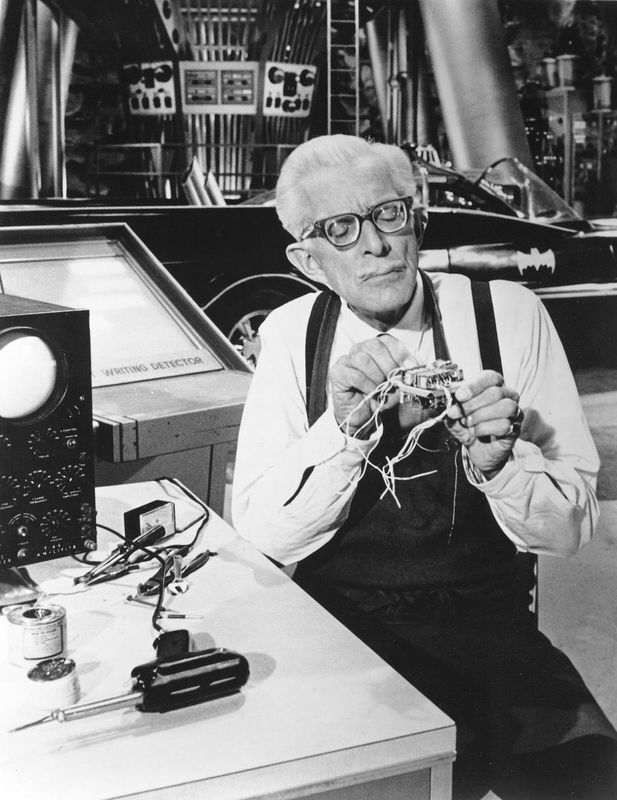
Is it any wonder that in the midst of what can appear to be a pop culture feminist backlash we find ourselves peppered with the ‘man’ prefix?  It all probably started innocently enough with the first utterance of “male nurse.’  As if we are French and need gender defining articles preceding our nouns.  We now find ourselves in a sea of ‘man caves’ ‘man bags’ ‘bromance’ ‘manny’ ‘manscape’ and countless others I’ve been fortunate enough to ignore.  I’m not sure when a tote bag became feminine or why male friendships need a new name.  Having had male sitters as a child, I’ve no idea why nannies need gender identity.  Manscape?  Really?  It’s called grooming.  What really sticks in my craw however is the ‘man cave.’  If this was a real cave, one in which caped crusaders worked on mammoth computers and were served tea by stiff-upper-lipped British man-servants, I’d be all over it.  But alas, it’s not.  It is a reference to an abode or part of an abode that is reserved for a man.  You know, like how Ward Cleaver had his den and Don Draper had his office because the home was really the woman’s domain?  Look, I’m no Martian (or am I?) but it’s beginning to look a bit like the late 1950s.  Women molded into a Betty Boop silhouette (surgically or through the miracle of spandex) teetering on heels, men sequestered in their “he-man women hater no girls allowed’ space looks an awful lot like there is a yearning to get the genie back into the bottle.

Whether there is something worthwhile in this yearning for a time with clearly defined roles is an interesting concept.  It could be illuminating to tease apart our feelings and desires around equality and options.  But to do so, to have a discourse which goes beyond soundbite or 1000 word blog post we need to know what we’re actually saying.  Understanding ourselves, let alone each other is not facilitated by euphemism or trendy semantics.  There is a difference between using language that is respectful and using language to obfuscate.


Tags: , , , , , , , , , , , , ,

We Got Trouble*

A study has been conducted which examines depression and computer usage.  The researchers evaluated participant’s indications of depressive characteristics and correlated those to computer usage.  People who viewed email compulsively, or viewed a lot of videos on-line also showed signs of depression.  The report concludes with recommendations for a software to alert users of depressive behaviors.  Any intervention or awareness regarding mental illness is a good thing.  But before we start organizing a keyboard awareness day or choosing a color for our ribbons and rubber bracelets, let’s consider this study.

Isn’t the very crux of depression that of an inward orientation?  Are we at all surprised that people who are depressed are not out in the world socializing?  Isn’t the desire to turn on the computer actually a positive sign?  (Versus drawing the curtains and taking to one’s bed?)  Virtual connections are virtual, but sure beat cutting off all contact with the world.  Why would the researches make such a concerted effort to ignore the possibility that increased screen time leads to depression?  I’m not trying to start a rumor or anything, but could it be that they were funded by a mental health software company.

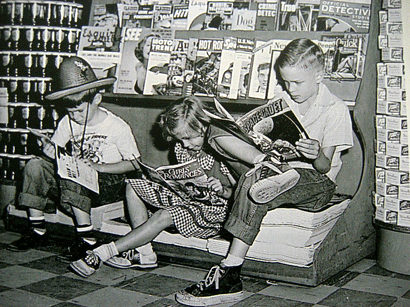
In the end, all this internet sound and fury is reminiscent of the Great Television Scare or Video Game Scourge of years past.  Comic books, dime store novels and packs of sen-sen conjured these same fears once. None of these trends/novelites have the power to ruin.

Depression is an illness it is not an allergic reaction to circumstances.  Do people enter a depressive state due to cataclysmic life events?  Certainly.  But that is a depressive state not depression.  Potato Potahto?  Not exactly.  There are many serious differences between a normative response to sad and/or traumatic events and that of a state of being.  For one thing a depressive state has a beginning, middle and end and a cause.  Knowing there is a cause to feeling so bad is the difference between night and day.  Having your world close in and become gray and fuzzy for no discernible reason is both frightening and self-perpetuating.  Our natural inclination is to move towards pleasure and away from pain.  If you can not see pleasure, if everything you see and feel is dark and thick and unrelenting, you’ve no reason to believe that there is a different world.  The darkness is the reality and it can be difficult to claw your way towards something you can’t detect.

Social isolation can certainly exacerbate depression.  Humans (even the most anti-social of us) are meant to interact.  (As a species we would perish without the desire to mingle.)  However people with depressive tendencies are a diverse group.  Their depression can be triggered or worsened by physical changes (hormonal transitions, illness, sleep deprivation, etc.) by life changes (moving, job changes, marriage, divorce, etc.) by nature (cycles of the moon, seasons, etc.) or by a myriad of other triggers/events.  That said, as an illness whose hallmark is inward focus, forced external interaction can be very effective.  Volunteer work can alleviate symptoms of depression.   It would seem that the very act of doing something for someone else, gives the brain a break from its persevering.

Living in a culture which extols the virtue of self above all else is powerful nourishment for the growth of depression.  If we were to pay attention to all the messaging, we should be painstakingly obsessing over every body part/function and moment in our lives.  We are to chronicle every; party, meal, trip, pee stick, grade promotion, softball game, and sonogram to the world and thereby give us the patina of great significance (Because It Happened To Us.)  We are encouraged not to experience life and its many moments, but to “create memories.”  So much self-consciousness is not good for the self.  Isn’t it a culture of; “your special day” “best snack provider-friendliest-rookie-player trophy” and general sense of entitlement that is far more socially isolating than technology?

When the first books were mass printed, the townspeople were up in arms.  What would happen to communal oral storytelling traditions.  There goes the neighborhood!  The first home radios caused some anxiety no doubt.  Families were now holed up in their living rooms staring at a box.  Little did they know, that box-staring was just beginning.  Television took people out of communal movie theaters (which were/are communal only in the sense of shared germs, smells and noise, not in any actual ‘communing’)  Personal music devices were said to be bad, yet I have never seen a campaign to bring back the boom-box, and I’ve never quite understood how the iPod affects behavior any differently than transistor radios did.

Invention and innovation do not come from the sky to do evil to our land.  They are not the flying monkeys.  Products/progress succeeds because there is a hunger that it satiates.  The fact that consumers represent the population and are thus diverse and include those with mental illness, is expected.  How one behaves, with or without technology will always be a lens into an individual’s inner workings.  Unfortunately it will always be far more tempting to design research or blame which looks to demonize the new and inanimate.  Mental illness, criminal behavior, gambling and pornography obsession are real issues.  Spending our valuable resources to shout; “No, no, look over here, the internet is to blame” does not seem wise.

*The Music Man – Meredith Wilson (1957)

 
3 Comments

Posted by on June 17, 2012 in Cultural Critique, Media/Marketing


Tags: , , , , , , , , , ,

Dear Ms. Magazine

Happy Birthday Ms. Magazine!  It seems like only yesterday when you were born.  It must be annoying to hear that over and over again.  40, wow!  You look great!  Really you do.  Don’t give me that look, it’s okay to care about your looks if you’re a feminist, don’t try that on me.  You look great, really.  You know a lot of other magazines have very bloated advertising, and a rather eerie glossy finish.  But not you.  Yes you’ve freshened yourself up over the years, but that’s what keeps you modern and relevant.

Do you remember the first time you came to my house?  Me neither.  But I remember you being there in those early years.  My housewife mother must have heard about you at her consciousness-raising group and invited you home.  I’m guessing you got passed around a bit.  Household expenditures were tightly monitored (it was the 70s after all, things were tough all over.)  Come to think of it, it took some chutzpah to start a magazine outside of the standard advertising model on the cusp of the recession, didn’t it?  But you never did shy from a challenge.  They laughed at you.  I know you remember that.  Who did you think you were?  A serious magazine for women?  A business run by women?  They said a lot worse too.

It must have been hard at times, all that bullying.  They even made fun of your name.  You know, that name that is now a standard fixture in the English language; appearing on all official documents and forms?  You were the first to talk about abortion openly, instigating untold honest conversations and sharing in homes across the country.  You shone the spotlight on domestic violence, helping to place the shame where it belongs; on the perpetrators.  You gave voice to issues that often had no visible champion.  You helped us to understand our bodies and minds and how they can work.

You never have been popular.  I don’t mean that to be hurtful, it’s actually praise.  Who wants to be adored by the masses?  It’s far more satisfying to be loved by those who ‘get us.’  You did come along at the right time, that’s for sure.  No one was rolling out a red carpet or anything.  No, no.  But the swelling of bias and bigotry awareness of the early 1970s was a boon to Ms. and feminism.  Even the most misogynistic would begrudgingly admit that 51% of the population should be treated equally.  Not so far as enacting the ERA or anything, but wait, no sad stories, this is your birthday!

Milestone birthdays can be affirming but they can also be a bit jarring.  It’s a gift to age, to survive!  While no one wants to live in the past, it is the shared memories that give us a feeling of being a collective.  How many remember when grown women were routinely called ‘girls?’  Remember when we didn’t even have names?!  We were Mrs. Robert Smith or Mrs. Nathan Green.  We not only keep our first and last names now, but sometimes a man actually takes a woman’s name (gasp!)

I remember that you were the only magazine in our house, quite possibly ever.  I’ve no doubt you played some part in my mother returning to school and becoming the writer she always longed to be.  You probably had a hand in the household responsibilities being distributed to all family members (yeah that was just great, thanks!)  I can see your handiwork now, in my own outlook on life.  I struggle, like I know you do, with the backlash of some of our progress.  There are times I thought we’d be further ahead by now.  I know you know.  We still have work to do don’t we Ms.?  Maybe 40 really is the new 30!  Happy Birthday Ms. and thank you.  Now get back to work.

 
1 Comment

Posted by on June 14, 2012 in Cultural Critique, Media/Marketing


Tags: , , , , , , , ,