RSS

Category Archives: Media/Marketing

Hoarders

firehouse

Reality television is at best a cracked lens on society. The percentage of toddlers wearing hairpieces, spray tans, dentures, and artificial nails is in actuality quite small. Most women don’t call themselves housewives, implant faces and bodies beyond recognition and parent so abysmally. Whether the people who participate in these shows are mentally healthy or not is an interesting question. Voguing for a camera (and hoping to land fame, fortune and book deals) is not currently classified as a mental illness. For the official-certified-it’s listed in the DSM-V, display of mental illness you need to turn to the addiction sub-genre of reality show.

That there is an audience at all to watch people struggle with a mental illness is itself disturbing. But evidently there is, and the proof is the shows focusing on obesity, drug and alcohol addiction and hoarding. You’ll note that there are no shows about mental illness that have a less quantifiable or compelling visual behavior. There’s yet to be a “Watch The Narcissist” show, and to be fair it’s probably due to the redundancy factor. There’ll never be a “Depressed Divas” show as depressed people are never entertaining. A “BiPolar Bonanza” would demand a far too attentive director and shooting schedule (dammit his mood just shifted, where is the camera!) We, the audience, are not very interested in mental illness per se, what we like is wacky behavior. And if that behavior stems from a syndrome all the better. We love nothing more than hearing from a person with questionable credentials (‘therapist’ needs a modifier to mean anything) spout psychobabble about the behavior. The hoarding shows center around this very phenomenon. We see a ‘therapist’ gently talking the hoarder into parting with the petrified pet. In the next scene she actively listens to distraught and frustrated family members and explains ‘the process’ to them. We sit in our over-accessorized homes, eating chips and dip out of a chip and dip bowl, as we wear our ‘tv watching’ outfit and snort over the wasteful accumulation. “That’s f*&^ed up” we say as we accidentally tip over the tower of DVDs.

This interest in wacky behavior doesn’t just guide free cable programming decisions. It also seems to guide political policy and expenditure. There are currently 85 communities across this country that consider hoarding to be a serious public health hazard. Hoarding, of course is not necessarily a health hazard. No one has been physically harmed by a Madame Alexander doll or Thomas Kinkade collection. Possibly a more apt description for the kind of behavior with which the authorities are concerned is ‘filth’. There’s a method that’s been used since the dawn of filth for such scenarios; it’s called condemning. There are no soft-spoken ‘therapists’ or understanding fire chiefs necessary. If a home poses a genuine risk to the public, shut it down. Anything else is utterly disingenuous. Hoarding and living in filthy squalor is only the presenting behavior. There’s a reason people engage in barricade building. Convincing someone to part with a few carcasses and some urine soaked newspaper may make the helpers feel better, but dollars to dozens and dozens of donuts, that home is going to fill the hell up again. And why shouldn’t it?! What business is it of anyone’s how someone else chooses to live? This is when someone pipes up and says “It’s a public heath issue”. Is it? Not always. If the person lives rurally it’s not. If it really and truly is then shut it down. But wait, what’s to become of the hoarder? Well, if we really believe that the person is a danger to themselves and others (and if they’re not we have no business bothering them) than they need to live in a protected environment.

That homes are being cleaned out, very slowly and often at taxpayer expense, by community officials is troubling. On its surface it appears that we care about our most fragile neighbors. If that is even remotely true why aren’t the same resources being used to remodel shantytowns? Surely people living in doorways, under bridges and in tunnels are also worthy of a clean dwelling. It stands to reason that people living on the street, presumably without access to health care also pose a public health hazard. It is always better to err on the side of helping, but it is the responsibility of the strong to be clear about who exactly they are helping and why. Wrapping ourselves in rhetoric to impinge on someone’s autonomy is not helping anyone but ourselves.


Tags: , , , , , , , , , , , , , , , ,

Sideshow

freaks

It’s now been several generations since we considered a carnival sideshow an acceptable form of entertainment. Today photos or drawings from early 20th century circuses tend to evoke gasps. It’s jarring to consider that people who had an unconventional appearance were put on display and were considered entertainment. What societal limitations caused people to take to the circus tent? What kind of people would take pleasure in viewing a ‘freak show’? We will cover these and other questions in Intro To Reality Television: Evolution and Devolution.

After the Elephant Man heyday of the late 19th century and early 20th century, Americans got hold of themselves and backed away from such voyeurism and exhibitionism. Later, with the advent of political correctness we bowed our heads in shame and taught our children not to point. If we came across a midnight showing of Freaks (1932) we watched it in the dark, with a certain amount of guilt. And then we got our base groove back. Sometime during the Reagan boom years we found comfort in gawking at the rich. It’s okay to gawk and make spectacle of those (economically) better off, right? Robin Leach was the mid-1980s barker of Lifestyles of the Rich and Famous and we gawked. He paved the way for us to release our pent up desires. Soon the business of celebrity boomed, to feed our insatiable appetite for fodder. It was okay to gawk and poke fun at people who had what we did not. But like any indulgence, it lost its ability to satisfy. Soon it wasn’t enough to see a child actress implode in front of our eyes. After a dozen or so of those kids, it ceases to impress.

Media abhors a vacuum, and can spot a hole in the market from space. Cue the new wave of reality television. A modern audience would not be satisfied with viewing a stock still anomaly on a stage, we are happier to see these specimens in their ‘natural’ habitat. We want to see people with their; 6,8,12,18,20 children going about their daily lives. Viewing wealthy people’s staged homes is no longer enough. We need to see them in prompted dramas. We need to see them dressed in award ceremony gowns to attend barbecues. We want to see them squabbling and behaving like junior high school students. We care little that there is no real wealth (and often bankruptcy.) Who cares that a title has been purchased, the hair is synthetic and the faces could be used as flotation devices? What we love is the sideshow behavior. It matters not that the behavior is created for our viewing pleasure. Who really cares that a toddler’s beauty pageant (in a sad little rural motel) is the most boring event one could ever imagine? With enough manufactured histrionics and adept editing, it’s more fun than a cross-dressing General Tom Thumb. Having a messy house, clipping coupons, or choosing a dress, are a snore fest. But throw in a few “No she didn’ts” or a litany of psychobabble and you’ve got yourself a show. The more fragile a participant is, the better the show. Make them cry, make them sound certifiable, and we’ll grab our chips and put down the remote. Emotional instability not your thing? Fear not, we’ve got shows about little people, the conjoined, the fattest man, the fattest woman, and the tattooed. Sound familiar? P.T. Barnum would be so proud.

In preparation of our next session: Professions Made To Look Glamorous; please review Baking, Trucking, Fishing shows and the newest addition to the golden age of television: The Search Is on for the Best Hooker in America.


Tags: , , , , , , , , , , , , , , , , , ,

Behind The Scenes Reality

nymed

You can’t make it through a week in New York City with out spotting a Haddad’s dressing room trailer. Movies and television shows are shot continuously throughout the year and throughout the boroughs. Whether the shot is an exterior (there is no substitute for the real city) or interior, the streets are lined with trailers and crews. In certain neighborhoods it’s next to impossible to not be in a background shot. Less elaborate shooting is harder to spot but most likely happens more frequently. Student films, illegal shoots (done without permit and too much attention), news crews, ‘celebrity’ interviews at events (oft times the category of ‘celebrity’ is broad enough to include those recognized only by their extended family), and the creator of ‘celebrity’; reality shows.

In this town, you can not swing a restylane filled cat without hitting a reality show participant or shoot. Cooking, chatting, mating, dieting, contest, gossip & housewife shows are all shot here. In addition there are several more niche shows that go in and out of production. There was a restaurant show, not a sitcom like It’s A Living (that was a nice little show) but a behind the scenes show (like anyone wants their worst fears of what happens in a restaurant kitchen confirmed). Currently a hospital reality show is being shot in NYC. A previous season was shot at a Boston hospital and now it’s our turn. If memory serves; an intern (or two or three) are followed and recorded and we learn a bit of their personal life (or it being a perpetually on-call intern; their lack of a personal life.) I suppose the premise is interesting for anyone contemplating a life in medicine. If it’s an interest in blood & gore one has, there are shows that do that kind of thing better. This series almost poses as eduinfotainment. Almost.

Ignoring for a moment the ethics (or simply good taste) of filming people experiencing a medical emergency (and it’s always a medical emergency being filmed; elective surgery rarely provides drama.) Let us instead consider the reality of this reality show. I was on set (otherwise known as accompanying someone to the E.R.) yesterday and had the opportunity to witness the sausage being made. Upon check-in I noticed a gaunt unnaturally white man clad in scrubs and carrying a handheld television camera like it was a scythe. There he was in Admitting. Oh look who’s that guy in Radiology? Wait didn’t I just see you in the ambulance bay? He’s Waldo sniffing out an ’emergency.’ And like a good made for T.V. movie, his prayers were answered. An elderly woman arrived in the throes of anaphylactic shock. She could speak and she could breathe, but it was serious. It was as if a bomb went off; the floor emptied and every nurse, doctor, and other scrub wearing personnel crammed into the bay. The 10 foot by 10 foot space came to resemble a clown car, with countless people entering and exiting. There was not a single nurse or physician available to the other patients in the E.R. for 45 minutes. The woman was intubated and moved to a room within 15 minutes. So what’s wrong with the math? Why did it take at least a dozen people to intubate a compliant elderly woman? Why did a 15 minute procedure waylay personnel for 45 minutes? Waldo. Not only did each doctor retell the horror and drama directly to the camera, a nurse slowly enacted calling for a room (which was already procured) for the camera. Doctors spoke fervently about the extreme danger and mystery of anaphylaxis and then disappeared back into the bowels of the hospital. The granddaughter of the patient, a weeping shaking teenager was all alone; except for the hospital handler guiding her to speak to the camera. If you’re still reading this, you might want to stop now.

For the next hour the nurses, interns, and attending physicians chatted excitedly about the event. Overheard was; “Oh my god I was like okay we can do this” and “Wow that was wild.” Now if I’m not mistaken an emergency room (in a world famous teaching hospital) sees its fair share of emergencies. Anaphylaxis is dangerous and certainly an emergency but is it rare? Is any emergency rare enough to warrant an OMG from the staff? The chatter, tempo and general ambience was that of a junior high school fire drill. Was it all for the benefit of Waldo? Does the very presence of a camera alter people’s behavior? Usually. Were there personnel that showed up for this particular emergency knowing the footage would make it into the final cut? A quick Google search verified those emergency guests are regulars on the show.

My guess is that this event will make for 10 minutes of footage (5 real minutes and 5 slow motion & recap moments.) What won’t make it onto the show are the patients that we left alone for 30-40 minutes at a time. We’ll never see the elderly incoherent patient never seen by a hospital handler let alone an actual doctor. The camera did not pick up on the man left on a gurney in the hallway for 7 hours while many bays were empty. The camera missed the attending physician checking on a patient without looking at the chart or asking any questions. The audience will never see this doctor making a surreal diagnosis completely unrelated to the presenting issue, answering his cell phone, and rushing out for his one-on-one with Waldo. Maybe I’m darker than most, but I’d watch that show.


Tags: , , , , , , , ,

5 Reasons This Article Is Useless

tang
When did it start these articles solely comprised of numerical lists? Is it the natural evolution from magazine covers;”50 New Looks For Spring” “15 Ways To Make Him Swoon” “10 Tricks To Getting A Proposal”? At some point it was discovered that people respond to Arabic numerals. (You will never see a magazine cover emblazoned with “Twelve Ways To Spruce Up Your Pantry” or “IX Ways To Rock His World”.)

Numerical lists are really only compatible with the most practical of subjects. No one needs flowery exposition on stain removal. Just tell us which 10 items will work best on synthetics. Anything that involves shopping certainly warrants only lists and photos. The average person will slip into unconsciousness having to read anything about high-waisted pants beyond; ‘buy them now’. But articles about human relationships, education, politics, and culture do not lend themselves to bullet points. However numbered lists sell and therein lays the conundrum.

The writer who pens a fully fleshed out piece is pressured to insert numbers (in the title and the body). A writer seeking readership might resort to creating lists versus narrative. There is usually some measure of disappointment for the reader in discovering that the “10 Guys You Should Avoid At All Costs” is a list of 5 guys whose description is vague enough to cover every man who’s walked the earth and 5 guys who are such caricatures as to be more suited to science fiction.

Part of the appeal of these lists passing as content is our attention span as readers. We’re at the point at which we consider a 140 character Tweet to be ‘wordy’. If an email stretches beyond a paragraph (and it better be a tight paragraph) we’ve lost the reader. This love of condensed and concentrated delivery unfortunately extends to the theatre as well. Theatre producers regularly consider the length of a play before mounting a production. Some artistic directors even apologize for a full-length production. The good news is that the trend can’t continue forever. We are not going to devolve into communicating solely through grunts and emoticons. We will probably never revert back to four-hour movies (with intermissions). But some bounce back will occur. People will tire of Tang, they usually do. A new generation is bound to ‘discover’ meaningful and full-length content.

Now I did promise to list 5 Reasons This Article Is Useless. But I trust you dear reader to compile that list on your own.

 
Leave a comment

Posted by on March 28, 2013 in Media/Marketing


Tags: , , , , , , , , ,

Where Have All The Good Hosts Gone?

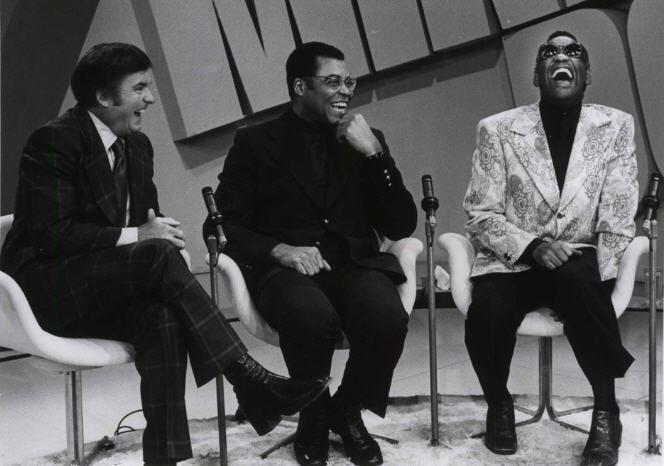
TV - Mike Douglas, James Earl Jones, Ray Charles - 19740204

Does anyone remember Mike Douglas? Not Kirk’s son, but the singer, or more to the point the talk show host. If you’re old enough to know what the dial is in “don’t touch that dial” you remember talk shows. There were the urbane slightly sexy late-night variety, that is still offered, though diluted, today. Mike and his contemporaries; Dinah Shore and Merv Griffin were on during the daytime hours. They had each been singers during the big band era and were all incredibly affable.

Each weekday, Mike, Dinah and Merv would host guests, sing a little tune and perhaps perform in an iffy sketch. But it was the guests one really tuned in for. The known and unknown would flock to the couches (and chairs) to chat. Maybe they would perform a bit, but mostly they were there to chat. There was nothing being sold or pitched or positioned. The host (whether M, D or M) would engage the guest (as a good host does) and entertain us with their conversation. The guests were incredibly varied and included political and controversial figures (they also included dancing dogs.) Many of the guests were boldfaced names of Broadway and Hollywood. Others were simply great conversationalists. Some guests were clearly friends of M, D or M, some just dropped by while passing through town. The guests would not then reappear spouting the exact same quips on the couch of the remaining M, D or M. There wasn’t a circuit being run guided by handlers.

Daytime television has changed much over the decades. The popular rhetoric is that people are not home during the day to watch television. But of course this does nothing to explain the spate of news-lite talk shows. For at least a decade the networks, and others, have filled their morning programming with chattering, relatively unscripted talk shows. There are usually a gaggle of hosts sitting around drinking out of large mugs and perhaps a guest drops by to sell his/her wares. There are a small handful of afternoon talk shows built around a host. Every pilot season a new “oh is that what happened to him/her?” celebrity is packaged and (hopefully) sold as a talk show host. Some find their groove some do not. It hardly matters for the guests are exactly the same on each and every show. The questions asked are the same (as written and contracted by handlers) the answers and ‘ad libs’ are the same. The movie, book, show, image, is pitched, the host fawns and everyone goes home happy. You could spend a week clicking the remote and see and hear the exact same thing on each and every show. There is no longer a place for Tiny Tim (look him up), Norman Mailler, a yogi, Martin Luther King Jr., Liberace, Truman Capote or Spiro Agnew (look him up) on the couch, unless of course they were selling their reality show.

Is memory rose colored? One would desperately hope. Who wants to spend their later years remembering anything but hazy romantic perfectly lit moments? But even if the memories are completely faulty and that of a child, even if Minnie Pearl was in fact selling a line of hats, wouldn’t it be grand to have Mike, Dinah and Merv back on the air? How much more entertaining would it be to hear extended conversations without being sold anything besides soap and canned soup? Wouldn’t it be fun to see stars of yesteryear and the yet undiscovered side by side? How interesting would it be to hear from actual writers and artists and even politicians? And to have all of it delivered with a thousand watt smile and a song? Don’t touch that dial.

Merv Griffin Show Theme Song

 
8 Comments

Posted by on March 12, 2013 in Cultural Critique, Media/Marketing


Tags: , , , , , , , , , , , , , ,