RSS

Category Archives: Cultural Critique

Seizing Semantics

Have you noticed that once widely available words have been appropriated and winnowed down to the most streamlined of meaning? Take the word; family, for instance. Family once meant people one was connected to who did not fall into the category of friends. Hence the phrase; friends and family. Family could mean one’s family of origin, including generations past. Family could also reference those brought into the holiday fold year after year. Family could also be self-constructed, augmenting a loss of familial connections. The word was open to subtle interpretations but maintained a overall meaning of connectivity. These days you might hear several phrases touting the word ‘family’ that have nothing to do with human connection. For instance:

  • Family Values – Whose family values? Have you MET my family!? Or do you really mean ‘conservative values?’
  • Family Friendly – I think the phrase you may be searching for is “Child-centric” no? I assure you, your themed restaurant is not friendly to my family, it is our 7th circle of hell.
  • Working Families – Now if the children are actually grabbing their briefcase and headed for the 7:15, you have my full support.

Of course the same wholesale take-over of terminology is not new. “Faith” and “patriotism” have come to mean very specific beliefs and practices. Believing in the potential of human beings to be their best selves and to reach out and help up is a definition of faith. Believing that how we treat others is directly connected to the health of our souls is faith. But when we hear the word being bandied about it’s meant to communicate an adherence to an organized religion. When we hear calls of “patriotism” it most often is in reference to military support or flag waving. Those fighting; to separate church and state, or for freedom of speech or press are rarely referred to as patriots.

Politics and verity make strange bedfellows, that’s certain. But there’s no reason in the world the rest of us need follow and adopt the constricting definitions. Language is many things, including contagious. If we commit to using terminology that strikes us as more accurate or inclusive, others may very well follow. Our words are the most lasting and telling clues to our inner self. Our ability to create meaningful language is what in fact makes us human.

 
2 Comments

Posted by on September 18, 2012 in Cultural Critique


Tags: , , , , , , , , , , ,

Race From The Top


It’s delicate to talk about race. It’s downright incendiary to do so about a race outside of one’s own. Of course it’s the 21st century and we should have matured beyond this point by now. We think nothing of discussing religion, politics or sex at the dinner table or loudly into our phones on public transport. But race? Well, that’s a horse of a different color.

Race matters, as does religion. Many people define themselves by, well by their people. When asked to describe themselves in three words, many will default to; race/religion, gender, politics (or romantic affiliation depending on context/election year.) How we define ourselves is based somewhat on our affinity to a minority group. If one is a white Christian male, he may define himself in terms of profession or hobby. For truth be told, the majority venture through life a bit differently than anyone in an underrepresented group. (It can be confusing to consider women, who are 51% of the population as “underrepresented” but when we do so, we are referencing their position in society.) In the broadest terms, a white Christian male experiences, on the whole, fewer incidents of exclusion. They likely don’t have shop owners looking at them askew, or taxi drivers refusing their fare. They don’t have people assuming they’re the nurse (versus the surgeon) or the flight attendant (versus the pilot.) They don’t look upon the White House Christmas/Easter celebrations, year after year after year, and think; “Where do I fit into this Christian country?”

Almost any minority narrative is peppered with “where do I fit in.” We look at the culture as represented in entertainment, commerce, and leadership. We seek something familiar, someone with whom we can identify. With each decade our popular culture becomes incrementally diverse. If we were to grab the television remote today, and try very very hard, we could probably find positive depictions of more than the majority race. We may even find gay and lesbian people/characters who weren’t playing the perennial punch line. Women are more prominent in serious roles on television. But without a lofty film career or British citizenship on their resume, they are still mostly (two packs-a-day, dabbling in harmful behaviors) underweight and equipped with perfectly symmetrical faces. But they do vary in shades (if not body type.) The lighter darker skinned woman is much more prevalent on the small and sometimes larger screen. Many primetime dramas have a principle cast that includes women of (near of far) eastern, Latina or African American background. Most (if not all) are quite light. You can’t say the same for men of color in television or film. We could all probably rattle off at least a dozen high-powered/profile big box-office actors who are on the darker side. Some of these accomplished actors also wear the mantle of sex symbol. Can we think of even one actress with dark skin who is a) big box-office or b) a sex symbol? (This question is not rhetorical, please post comments.)

Recently the casting of a (n unauthorized) film about Nina Simone was leaked. Ms. Simone was a breath-taking talent (and civil rights advocate) and a dark skinned woman. The actress selected is Dominican/Puerto Rican and quite light skinned. While color blind casting can work, it does not when the subject matter is inextricably linked to race. Most likely there is no grand conspiracy at work here. More likely it is a general industry consensus that lead actresses need to appeal to the majority white male. Walk into any hair salon in any neighborhood and ask the women of any race, religion, and ethnicity if they would throw Denzel Washington or Jamie Foxx out of the bedroom. Go ahead, I’ll wait. But women, to be considered desirable by popular culture, must look somewhat related to Barbie. She can be Barbie’s tanned cousin, but her features (i.e., hair, face) must still look as if they belong on the Mattel family tree.

The good(?) news is that we have made some progress in the area of dark skinned leading men (no doubt Sidney Poitier was getting very lonely.) But the much more disturbing news is that women must still conform to a perceived majority male ideal. Is there any market research to bear this ideal out? Or is it simply that there are just a handful of people in any real power in Hollywood and what we see is in fact their own personal preference? Dark skinned actors are fine, because these male producers (probably) don’t want to sleep with them. They want to hang out with them (because in their worldview of race, this will make them cooler.)

 
Leave a comment

Posted by on September 13, 2012 in Cultural Critique


Tags: , , , , , , , , ,

Throwing Weight Around

Why in the world is it okay to make fun of (New Jersey) Governor Chris Christie’s weight? The barbs and remarks began to gain momentum when he ran for office. By now they’ve become practically a requirement when his name is mentioned. These (usually very un-funny) jibes aren’t political in nature (though likely invoked by non-supporters.) They don’t reference his platform or governing. They’re more of the junior high school “fatty fatty” genre.

Why? Is it merely because it’s so easy? We see a large person in front of us and the (lame) comments come to mind? Probably not. Is it because he’s not just obese but bombastic? If he were affable, less caustic and perhaps a bit humble, would we not feel the need tease? Maybe.

People in the political spotlight will always endure some teasing. It’s how we manage our “Stars! They’re just like us!” issues. For at least a decade we’ve made every joke (and non-joke) about HIllary’s pantsuits. Sarah Palin’s choice of clothes, hairstyles and accessories were more newsworthy than her speeches. Male candidate’s hair is often the subject of junior high school-ey note. But these all seem playful (slow news day) observations versus the mean spirited remarks about Christie’s weight.

Perhaps people see the accumulation of his poundage as the result of his character. Maybe, despite every marketing attempts of the diet industry, we really do believe that obesity is the result of our own doing. Maybe, as we ‘grow’ as a nation we are also increasing our sense of self-loathing. Or maybe we just don’t like what the guy says or stands for and we’re not terribly clever in how we express it. Hopefully that is not the case. There are many valid reasons to dislike the governor and they should be expressed. Making fun of his weight isn’t just distasteful it detracts from what we should be discussing.

 
2 Comments

Posted by on August 29, 2012 in Cultural Critique


Tags: , , , ,

Shameless

The University of Colorado, Denver has been conspicuously silent about their former graduate student turned gunman. There’s nothing particularly surprising about that. Universities are loath to discuss their students or alumni unless doing so will bring glory to the institution. Universities are also part of the elite group of organizations known as suffering from acute “litigation paranoia.” But onlookers accept the silence as being a vague yet misguided attempt at protecting someone’s privacy.

If what we were discussing was a physical disease or impairment, patient privacy would be a valid and even laudable motivation. As a society we’ve determined that patient privacy, even when a diagnoses could involve potential contagion, is necessary. We’ve also determined that when a disease poses an imminent public threat the afflicted will be quarantined (and thereby outed.)  In other words; public good trumps the individual. On the most basic level we apply this same principal to mental health as well. If a person states (unequivocally) that he/she is going to hurt him/herself or others, they are held (usually for a very short period) until they can be examined and either sent on their way or hospitalized.

This flaccid approach to protecting individuals and the public stems from the deinstitutionalized of mental healthcare several decades ago. The “expression of specific harm” is employed to prevent people being hospitalized against their will. One only need sit with the preceding sentence a bit to see the absurdity of this approach. People struggling with mental health issues rarely are clear and conscientious enough to seek hospitalization on their own. We leave it to the ill to state clearly their intentions to do harm before highly trained professionals are allowed to intervene. That’s a problem.

Adding to that little issue is the fact that we are freaked out by mental health issues. Yes, we’ve been Oprahfied enough to (sometimes) toss around the right terms. But we are glaringly uncomfortable dealing with real life mental health. If we see someone, day in and day out, who we consider odd, what do we do? Maybe we mention it to a friend, but beyond them who would we actually tell? And what is exactly do we say? Is the guy who only comes out at night and keeps his door covered in aluminum foil a danger to anyone? Are his odd behaviors actually highly honed coping skills for his illness? Maybe he sees a psychiatrist every day and is adequately medicated. Maybe he’s just eccentric (versus ill.) More often than not, we say nothing and just hope to avoid someone who makes us uncomfortable.

There is somewhere where aluminum foil should send an observer directly to the phone, and that’s at a university. Most students (graduate and undergraduate) are under 30 years of age; a primetime for the onset of very serious mental illnesses. Students are often sent away to school already presenting symptoms and perhaps fully medicated. The beauty of a controlled environment (like a university) is that elaborate and accessible systems are in place. A professor who observes disturbing behavior knows exactly how to report it immediately. No doubt, they sometimes do. But too often we err too heavily on the side of our own discomfort (which we shroud in “patient privacy” rhetoric.) It’s very unsettling to be the person who may upend someone’s life. However it’s far worse to be the one who stayed silent.

When we stop seeing mental health issues as being somehow shameful we will be a safer and more humane society. When newsreaders no longer intone (in sotto voce;) “He even spent time in a mental hospital” we will be further ahead. When a political candidate gains sympathy points for a spouse with a physical illness and looses popularity for one with a mental illness, we will be further ahead. When we stop using the word “rehab” (invoking images of large sunglasses and hangovers) as a euphemism for mental health facility, we will be further ahead. And when celebrities stop claiming to be suffering from “exhaustion” (as if it’s the 1900s) versus having depression, we will be much further ahead. There is no shame in illness of any kind. The only shame is silence.

 
Leave a comment

Posted by on August 27, 2012 in Cultural Critique, Education


Tags: , , , , , , ,

What Comes After We Choose To Go To The Moon?

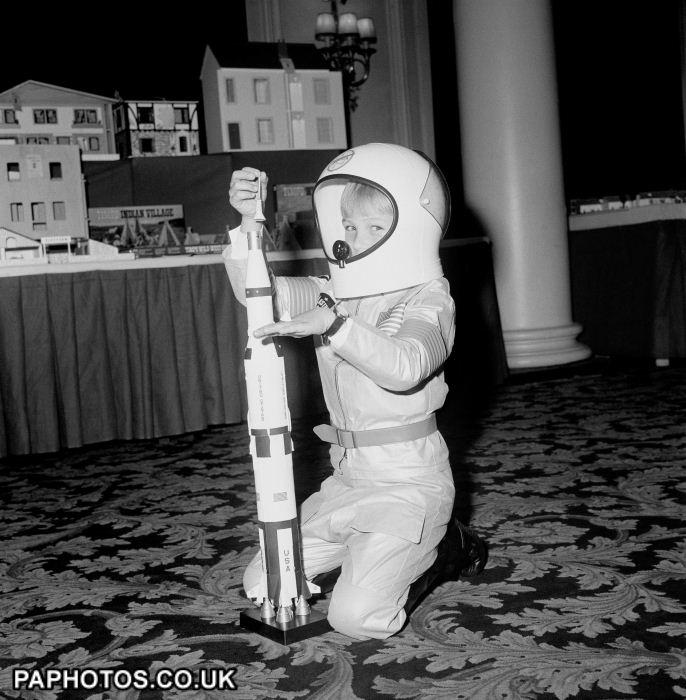
During the 1960s there were lots of little kids jumping into newly fallen snow and shouting “First Man On The Moon!” when their boots left a print. Little boys (and some liberated little girls) dreamed of and played at being astronauts. Even if children weren’t old (or sophisticated) enough to follow NASA’s doings, there was I Dream of Jeannie. Popular culture was drenched in all things space-age and planetary. The space program was in the air if you will. Being an astronaut was to a 1960s kid what being a cowboy was to a 1950s kid. Adventure, exploration, and glamour were all packaged into a very cool outfit. Astronauts, like cowboys, even had special food. They had belts that held their lifesaving apparatus. But they also had science. For a kid who loved rocks, or space, or climate, or chemistry, he/she too could dream of being a superhero.

No one will dispute that the space program has lost some of its glamour and pizzazz over the decades. Space is not new anymore. Technology has progressed and men and women in space suits are no longer required to achieve the mission. NASA has shrunk and no one dreams of being an astronaut any longer. But what has taken its place in the imagination of children? What is there today that encompasses exploration, science and glamour? Surely there are lots of careers that hit on 2 out of 3. But is there anything, not involving sport, celebrity for celebrity sake, or undefined means of accumulating wealth, that is universally compelling to children today?

One could posit that computer programming (in the form of gaming, biomedical, etc.) is our new space program. It is the new frontier. But only for a select few and there’s nothing particularly heroic about it. On a more practical level how in the world do you play “computer programmer” in the backyard? (But then again, does anyone freestyle play in the backyard anymore?) Even if it were fun to do so, only a small percentage of children would ever aspire to sit at a desk and write code. Every kid everywhere played cowboy (1950s) or astronaut (1960s.) Did a kid from the Bronx really stand a chance of homesteading and ranching someday? (Could his mother have survived it?) Did a rural kid with an allergy to moon dust and zero interest in science make it into the space program? Not without a miracle and some sudafed. But they had a shared dream/fantasy.

For all the glamour of being an astronaut (and the sports cars, groupies and ticker-tape parades add up to a whole lot of glamour) it was a serious (and at times deadly) profession. The space program was staffed with; test pilots, scientists and engineers. These were highly educated people with talents and skills of, well of rocket scientists. There was a whole lot of there there. They were glamorized for having the right stuff. Children were right to idealize these grown-ups. Their play, whether building cardboard box rocket ships, or jumping into snowbanks, was rooted in something real and admirable. For too long we have not provided children (and therefore humanity) with a universal dream. We once heeded the call to do something not because it was easy but because it was hard. Perhaps it’s time to suit up and have another go at it.

 
Leave a comment

Posted by on August 26, 2012 in Childhood, Cultural Critique


Tags: , , , , , , ,