RSS

Monthly Archives: April 2013

The Assembled Parties – Review

Unknown

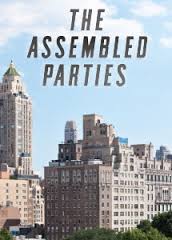
Anyone who has even suffered the slightest twinge of real estate envy should stay away from the Manhattan Theatre Club’s The Assembled Parties. The play, set in a lavish 14-room apartment on Central Park West (designed by Santo Loquasto) would make even the 1% pea green with envy. This imperfect play by Richard Greenberg takes place in two discreet times periods; 1980 and 2000, on the same day. At times the two acts even feel like two discreet plays. This is not a unique theatrical phenomenon and can work, but it’s a terrific hurdle to clear. Recently, the device was used in Clybourne Park and there wouldn’t have been a play without it. The key to its effectiveness is to create two acts, or time periods of equal force.

The first act is a rapid and rotating collage of a family assembled on Christmas. Christmas could easily be replaced by Thanksgiving or Passover for this Jewish family, as it’s just an excuse to gather and overeat. The curtain rises on Julie (Jessica Hecht) in the kitchen (the size of most living rooms) with her eldest son’s friend Jeff (Jeremy Shamos). Jeff is young and socially out of his league in the presence of the glamorous (former movie actress) Julie. She speaks in a cadence not usually found in nature and is dressed in a jumpsuit created by her mother (a renowned designer.) Julie teases Jeff with obvious affection and Jeff seems on the edge of pinching himself throughout. He is a first-semester Harvard Law student, the son of first generation Jews and he’s spending Christmas at the captain’s table. Julie’s husband Ben (Jonathan Walker) appears and we learn of another (much younger) son who is upstairs with a cold. The set then starts its rotation and the apartment and the family dynamics unfold. We meet Julie and Jeff’s two sons; Scott (Jake Silberman) and Timmy (Alex Dreier). Ben’s sister Faye (Judith Light) arrives with her husband Mort (Mark Blum) and her lumpish daughter Shelley (Lauren Blumenfeld). Director Lynne Meadow has the women characters use pronounced accents & Ms. Blumenfeld’s is beyond enjoyable. Shelley grew up (and stayed) in Roslyn, an unambitious and perhaps intellectually challenged 30-year-old single woman. Her blank face and very low center of gravity is a wonderful counter to the rapid fire speech and movement of her extended family. And the first act does move. Just when we’ve learned something new, the set rotates once again and more story unfolds. Faye is not happy, in that; “I miss Miltown” way. Ms. Light (as we saw in Other Desert Cities) is superb at portraying complicated women entirely at ease with their shortcomings. She is splendid and is given an embarrassment of riches of one-liners with which to work. You could create a fabulous twitter feed out of her zingers (both English and Yiddish) and pronouncements. This is not to suggest that her performance relies upon these quips. Not at all. But one does wonder if Mr. Greenberg wrote these gems with Ms. Light in mind.

That niggling little thought got in my way during the sedate second act. The curtain opens to a non-rotating large living room set that bares no resemblance to the fist set. We spend several moments wondering if the family (what little there is left of it) has moved. The husbands have died and Scotty (who looked a bit flush in the first act) died in 1981. Ms. Light delivers the line that informs us that Scotty died from AIDS; from a blood transfusion in a New York City hospital in 1981. Now it’s possible that if we combed medical records from 1981, this might have actually happened; but it probably would never have ever been identified as such. Scotty had just spent time overseas and could have easily been killed off by a myriad of diseases. That this implausible death was created and spoke of by Ms. Light (a longtime AIDS activist with a famed association with Ryan White) was distracting. There are other distracting theatrical devices that unfold in the second act which weaken the impact of what should be a moving play. One definite asset to the second act is Mr. Silberman; ill at ease as Scotty in the first act he flourishes as grown-up Timmy.

It’s clear in the first act that the character of Timmy is a device. His little boy self, ensconced in Star Wars sheets is ignored by his parents (on Christmas) and his existence is never explained (it’s not customary to have two children 20 years apart.) Yet the other characters or so wonderfully and fully formed. Mr. Greenberg captures the subtleties of middle-class New York Jews so perfectly and to utter delight. There are cultural conflicts and tensions beautifully and delicately rendered. None of these illuminations are delivered in a “The More You Know” public service announcement, but as real and integral dialogue.

There is much to love about The Assembled Parties. The performances alone are worth the very fast 2 1/2 hours.

 
1 Comment

Posted by on April 17, 2013 in Uncategorized


Tags: , , , , , , , , , , , , , , , , , , ,

Tackling College Athletics

images

Spelman College has dropped all sports and has picked up fitness. They plan to use their athletic facilities and budget to create healthy bodies and habits. Dr. Beverly Tatum, Spelman’s president, chose this path after making disturbing observations about the dollars spent per student athlete and the physical condition of students and young alumni. No doubt every college/university administrator has made these observations at some time. But Dr. Tatum has made an unpopular but wildly responsible move to create meaningful change.

Higher education costs have been rising exponentially for some time. At the same time, a bachelor’s degree has become a minimum requirement for most jobs. College, which was once for ‘some’ people, has become necessary for most people. Colleges and universities in the race to remain competitive have felt compelled to spend extraordinary amounts of money on features giving them an edge. For some schools, an edge means stellar facilities, for others it means technology programs that by their very nature are an insatiable repository of funds. Smaller programs, particularly liberal arts programs, fall to the wayside in some schools as they don’t provide the most obvious return on investment. An institution can sacrifice language programs, performing arts and soft sciences with its eye on higher education dominance.(Nobody ever got on a Top 10 University list by virtue of its wonderful poetry department.)

There has been a collective consensus in recent years that higher education is no longer simply an institution of thinkology. There are only so many resources (public, private, endowment) to go around. Yet athletic programs are still an assumed part of the college experience. Why is that? Why at a time when student debt AND the level of obesity is skyrocketing, do we think higher education athletics is simply a given? Now before you start waving your pennants or foam fingers at me; let’s have a word about school spirit. Piffle. Nobody ever got a better education or a leg up in life from painting their face and wearing overpriced sweatshirts. Is playing on a team fun? Yes, and so is performing in a play. Is cheering on ‘your’ team a kick in the pants? Probably, but so is watching the debating team wipe the floor with the competition. Do team sports teach team skills? One would think. But if we agree that team skills are important (and I’m not convinced they are) can’t they be built in class or on a Habitat For Humanity project?

But what of the schools who actually make a significant portion of their budget from playing sports at an elevated level? Quite frankly I would say; huh?! Is that really what we want higher education to be in 2013? If we really want to train young men and women to be professional athletes, can’t we just create technical sport schools? If we had a crystal ball we may very well see that these schools with profitable athletic programs will in essence become technical sport schools. But for every other school allocating large parts of their budget to athletic programs while their tuition skyrockets, it’s time to reevaluate. Yes the alumni will be up in arms, and yes perhaps some students too. But part of being a charismatic leader is being able to communicate why change is beneficial. The Spelman athletic director (with 25 years on the job) is on board and in agreement with Dr. Tatum’s directive. Dr. Tatum is currently fielding calls from college/university presidents questioning the value of athletics to higher education.

Great leadership should involve more than getting one’s institution’s name in the paper. Great leaders must make difficult and at times unpopular decisions for the betterment of the institution and the people it serves. Cutting costs by cutting sparsely populated (but wonderful) programs is not an act of bravery or long-term solution to higher education costs. We are now into overtime with the issue of higher education affordability. Too many qualified students cannot afford tuition (which is why they have such debt.) Pulling the plug on an expensive program that is not an integral part of a baccalaureate or graduate degree should be a serious consideration.

 
2 Comments

Posted by on April 14, 2013 in Cultural Critique, Education


Tags: , , , , , , , , ,

Turning Back Time

Unknown

If you are over a certain age or have any sense of social history you may find yourself living a flashback. How in the world is reproductive freedom still up for dispute in this country? Forgetting for a moment the legality of reproductive choice; how is the subject still even a subject? Why would any person, let alone group, take up a cause that was settled decades ago? Is there a grassroots anti-prohibition movement underway somewhere? Are slogans being developed to appeal the Americans with Disabilities Act?

The common wisdom is that anti-choice supporters come at their crusade from a place of religious conviction. It certainly often looks like that, no? But the logical extension of such a premise is that these people would feel passionate about imposing all of their religious convictions upon others. It’s hard to see how or where this is happening. Even if their only religious conviction is that life (including sperm and egg) shall be preserved at any and all costs, it doesn’t seem to be happening. If it were, shouldn’t the same people protesting reproductive rights be protesting war and pollution? Shouldn’t the placards and protesters be blocking the headquarters of tobacco and gun manufacturers? Wouldn’t the crusaders be impassioned about veteran care and elder care?

The fact that there has never been any anti-choice movement that has taken up the cause of the born and at-risk reinforces the myopia of ‘the cause.’ If all the noise were really about ‘the children’ we would see a groundswell of domestic adoption of older and needier children. We would see zero-tolerance of any form of abuse or neglect of children. There would be full access to excellent health (including dental) care for every child. But almost 500,000 children languish in the foster care system. Children are abused and neglected every single day. These children might feel that being unloved is worse than being unborn.

I’ve no doubt that there are some people who consider it their one-way ticket to heaven to save even one embryo. But I also suspect that the momentum is the message. It’s appealing to belong to a group of like-minded people. It’s equally attractive to have a cause that one can brand as being on the side of ‘good.’ But there are so many crusades that fulfill these requirements. Why women’s reproductive issues? Could it possibly be that it’s ‘women’ that we’re talking about? Hmmm

If it really was about the sperm and the egg, why is there no furor over erectile dysfunction medication? Why is no one protesting the pharmaceutical transport of millions of wayward sperm? Why is there no political movement opposing artificial reproduction? Do you know how many zygotes are lost with each attempt? Has anyone calculated how many zygotes are sloughed off during implantation attempts? Do we know how many stay in the deep-freeze until the end of time (or next black-out)? Do we know how many of the little cell clusters never even make it out of the petri-dish alive? Wouldn’t it stand to reason that anti-choice advocates would be up in arms about such carnage? Isn’t it likely that the number of manufactured zygotes who do not become embryos are equal or greater to the number of abortions in this country? If you believe that life begins at conception, this should be quite troubling.

But none of those issues involve a woman’s body. Controlling a woman’s body would appear to be the only socially acceptable way to control a woman. Legally she has access to voting, employment and even some sports. Legally she must be viewed as equal, even as she earns 77 cents to every dollar a man earns. Really, the only way to stall or turn back progress would be to block her control over her own body. If this is packaged as a morality/religious issue, and if enough bright lights and pretty colors are used to distract us all from the completely illogical crusade to protect ‘life’ only once it’s inside a woman and becomes her choice; perhaps it has a chance of working. It is up to us, those of us who are scratching our heads wondering how the hell this is still an issue, to shine the spotlight on the hypocrisy. It is not enough to simply stake our claim to being pro-choice. We must not shrink from talking about biology (including how several forms of birth control do not prevent fertility but conception.) We must discuss artificial fertility and ignore fear of repercussion. We must preserve our right to determine what we do with our reproductive parts by shining a light on those who fervently desire to turn back time.

 
Leave a comment

Posted by on April 10, 2013 in Cultural Critique


Tags: , , , , , , , , , , , , , , ,

Behind The Scenes Reality

nymed

You can’t make it through a week in New York City with out spotting a Haddad’s dressing room trailer. Movies and television shows are shot continuously throughout the year and throughout the boroughs. Whether the shot is an exterior (there is no substitute for the real city) or interior, the streets are lined with trailers and crews. In certain neighborhoods it’s next to impossible to not be in a background shot. Less elaborate shooting is harder to spot but most likely happens more frequently. Student films, illegal shoots (done without permit and too much attention), news crews, ‘celebrity’ interviews at events (oft times the category of ‘celebrity’ is broad enough to include those recognized only by their extended family), and the creator of ‘celebrity’; reality shows.

In this town, you can not swing a restylane filled cat without hitting a reality show participant or shoot. Cooking, chatting, mating, dieting, contest, gossip & housewife shows are all shot here. In addition there are several more niche shows that go in and out of production. There was a restaurant show, not a sitcom like It’s A Living (that was a nice little show) but a behind the scenes show (like anyone wants their worst fears of what happens in a restaurant kitchen confirmed). Currently a hospital reality show is being shot in NYC. A previous season was shot at a Boston hospital and now it’s our turn. If memory serves; an intern (or two or three) are followed and recorded and we learn a bit of their personal life (or it being a perpetually on-call intern; their lack of a personal life.) I suppose the premise is interesting for anyone contemplating a life in medicine. If it’s an interest in blood & gore one has, there are shows that do that kind of thing better. This series almost poses as eduinfotainment. Almost.

Ignoring for a moment the ethics (or simply good taste) of filming people experiencing a medical emergency (and it’s always a medical emergency being filmed; elective surgery rarely provides drama.) Let us instead consider the reality of this reality show. I was on set (otherwise known as accompanying someone to the E.R.) yesterday and had the opportunity to witness the sausage being made. Upon check-in I noticed a gaunt unnaturally white man clad in scrubs and carrying a handheld television camera like it was a scythe. There he was in Admitting. Oh look who’s that guy in Radiology? Wait didn’t I just see you in the ambulance bay? He’s Waldo sniffing out an ’emergency.’ And like a good made for T.V. movie, his prayers were answered. An elderly woman arrived in the throes of anaphylactic shock. She could speak and she could breathe, but it was serious. It was as if a bomb went off; the floor emptied and every nurse, doctor, and other scrub wearing personnel crammed into the bay. The 10 foot by 10 foot space came to resemble a clown car, with countless people entering and exiting. There was not a single nurse or physician available to the other patients in the E.R. for 45 minutes. The woman was intubated and moved to a room within 15 minutes. So what’s wrong with the math? Why did it take at least a dozen people to intubate a compliant elderly woman? Why did a 15 minute procedure waylay personnel for 45 minutes? Waldo. Not only did each doctor retell the horror and drama directly to the camera, a nurse slowly enacted calling for a room (which was already procured) for the camera. Doctors spoke fervently about the extreme danger and mystery of anaphylaxis and then disappeared back into the bowels of the hospital. The granddaughter of the patient, a weeping shaking teenager was all alone; except for the hospital handler guiding her to speak to the camera. If you’re still reading this, you might want to stop now.

For the next hour the nurses, interns, and attending physicians chatted excitedly about the event. Overheard was; “Oh my god I was like okay we can do this” and “Wow that was wild.” Now if I’m not mistaken an emergency room (in a world famous teaching hospital) sees its fair share of emergencies. Anaphylaxis is dangerous and certainly an emergency but is it rare? Is any emergency rare enough to warrant an OMG from the staff? The chatter, tempo and general ambience was that of a junior high school fire drill. Was it all for the benefit of Waldo? Does the very presence of a camera alter people’s behavior? Usually. Were there personnel that showed up for this particular emergency knowing the footage would make it into the final cut? A quick Google search verified those emergency guests are regulars on the show.

My guess is that this event will make for 10 minutes of footage (5 real minutes and 5 slow motion & recap moments.) What won’t make it onto the show are the patients that we left alone for 30-40 minutes at a time. We’ll never see the elderly incoherent patient never seen by a hospital handler let alone an actual doctor. The camera did not pick up on the man left on a gurney in the hallway for 7 hours while many bays were empty. The camera missed the attending physician checking on a patient without looking at the chart or asking any questions. The audience will never see this doctor making a surreal diagnosis completely unrelated to the presenting issue, answering his cell phone, and rushing out for his one-on-one with Waldo. Maybe I’m darker than most, but I’d watch that show.


Tags: , , , , , , , ,

The Epitome Of Class

etonboys1936

The BBC has taken it upon themselves to redefine class. ‘Well of course’ you say ‘and we do love Downton Abby, Call The Midwife and Mr. Selfridge.’ Yes, those decadent and indulgent shows are lavish examples of the British class system in play. But I refer instead to the questionnaire the BBC posted online that over 160,000 completed. Ignoring for a moment the completely unscientific method of this ‘survey’ and also putting aside the very stark reality of who completes online surveys, let us instead consider this tricky terrain.

The British have always been quite transparent about their views and demarcations of class. What (and where) one is born into is often where one stays. There are examples of upward mobility in British society (beyond that of Eliza Doolittle.) But for the most part, where you started is where you’ll stay. If for no other reason than the British are wonderfully observant of clues. (Hello? Sherlock, Miss Marple, Inspector Lewis, anyone?) The slightest hint of a flat ‘a’ or the improper wearing of wellies, and they’ve got you pegged. They have graciously exported this gift to previously colonized locales. You could probably travel the globe and identify where the United Kingdom has ruled simply by observing the (seemingly) arbitrary ‘you’re in’ you’re out’ class systems.

Americans have always prided themselves in eschewing this structure. We still like to fancy ourselves the little rebels who fled from the tyranny of such structure. The truth is that what we do is less honest and more destructive. We pretend that social class doesn’t exist. Oh, we’re happy to discuss real dollars and sense. We take great comfort (or distress) in determining if we economically fall into the middle-class. Politicians love to talk about the middle class. We don’t talk of the lower class or even working class anymore however. No, we call it ‘working families.’ It doesn’t matter if it’s just one person in that ‘family’ or twenty. It’s funny how liberal we can be discussing families in terms of poverty levels but not in terms of legal union.

Taking pains to never associate class with anything but money creates problems. To discuss class in terms of values and cultural proclivities is anathema to Americans. We discuss education and achievement in terms of poverty which is often a thin guise for race. We discuss poverty and race as if they have anything whatsoever to do with achievement, which of course they don’t. There is nothing about any race that impacts learning. There is nothing about how much money a household has which impacts learning. Underfunded and improperly staffed schools impact learning, as do households in which learning is not a priority. We avoid discussing public health and lifestyle behaviors in terms of class. We think nothing of imposing middle values on lower class people, but we’ll never admit that’s what we’re doing. Our entire social and child services structure is built on that very premise.

It’s important to Americans to ignore the real differences of class. But yet we’re wedded to creating a very us vs. them culture. We’re much more comfortable attributing our opposing outlooks and proclivities to religious or political ideals. Sociologists (versus online questionnaires) often explore the gravitation of like-peoples. (Think: lunchroom table configuration studies.) Much more often than not the ‘like-people’ means people of our own religious and ethnic group. But outside of laboratories and research studies what you’re most likely to find in the real world, is that people gravitate towards those of their own class. Being of the same racial/ethnic/religious group is less of an indicator of our shared values than that of class. Would the Rothschilds understand the seder at Sadie’s on Orchard Street? Of course, but after the seder (at 2:00 AM) what in the world would they talk about? If you take a look around at the people with whom you feel most connected they are those with similar values and cultural proclivities. They don’t have identical incomes, they don’t worship in the same way, and their complexions vary in hue. But you all share a similar outlook and a view of the world. That’s class.

 
Leave a comment

Posted by on April 4, 2013 in Cultural Critique


Tags: , , , , , , , , , , , , , , , ,