RSS

Monthly Archives: February 2012

One Size Never Fits All

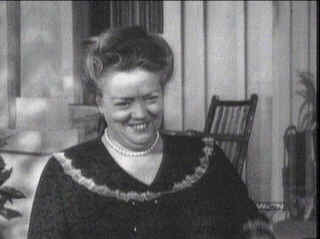
I’m all about staying present, counting my blessings, seeing the glass half-full and all that malarkey.  But sometimes, in my weakest moments, I find myself coveting a celebrity or fictional character’s life.  We’ve all done it.  Standing in that interminable depressing line at the D.M.V., who hasn’t thought “I bet Cher never has to do this?”  It’s not that we really want to be Cher (really. Did you see those towns she played for her “farewell tour?”  After year two, she was probably fantasizing about being me!)  We just want to feel for a moment, that we aren’t part of some populace blob.  Who doesn’t bristle or whimper at being reduced to a statistic?  Which explains why lately, as I tackle big banks, chain pharmacies or my cable provider, I’m prone to fantasize.  Yes dear reader, there are moments when I wish I was Aunt Bee.  It’s not the ample bosom or indistinguishable accent I covet, but the way of life.

Aunt Bee was never told that her $63 check couldn’t be cashed after she had just handed the teller a $400 cash deposit.  Aunt Bee would not have to fill out three bank forms (uniformly dotted with typos) confirming that yes her legal name is in fact her legal name.  Everybody at the bank knew Bee, and if they didn’t they certainly knew Andy. In my pursuit of Bee-ness, I patronize as many small and local businesses as possible.  I enjoy a familiar face that acknowledges they’ve seen me before (and the shopper in me appreciates the variety that comes from independent shops.)  My weekly trip to the flea market is a great outing for my Bee avatar.  There’s always a warm greeting and brief chat with the pickle guys.  The (costume) jewelry lady was a tougher one to crack (I think she has that facial recognition disorder) but she’s up and chatting now!  The pretzel man has a nice smile and knows I like the broken pieces.  He always sends me on my way with a bonus “one for the road.”

There is nothing inherently unfriendly about big business.   Friendly, well-trained staff can be employed in any industry.  The issue is one of implementing policy.  Any time guidelines are instituted for large amounts of people they are going to be very generic and rigid in nature.  The customer is seen as an amalgamation of millions.  You can toss around words like “client” and “guest” but what we really are is just a speck in the blob.  For the record, the “people as blobs” strategy can be quite effective in areas of; crowd control, public health, and emergency preparedness.  In other words, it works well in a crisis.  But everyday, it can be soul crushing.

Any large organization (public or private) needs policy and strategy.  The issue is how these policies and strategies are communicated along the chain.  If the organization has decided (consciously or not) that policy will take the place of critical thinking on the part of employees, my $63 check will go uncashed.  But if people are hired because of their problem solving skills and ability to translate policy into practice, we all have a chance of being Aunt Bee.

Everyone just wants to be recognized.  Navigating the public school system should not be a competitive sport (for parent or child.)  Talking to an actual human in the customer service department should not be seen as a tactical victory.  Apparently our fastest growing industry is the service sector.  If this really is the case, attention must be paid.  While offering any color of car, as long as the color is black, worked for the automotive industry, it does not work for the people industry.

 
Leave a comment

Posted by on February 10, 2012 in Cultural Critique


Tags: , , , , ,

My Funny Valentine

For as long as I remember there has been something or other to boycott. A large portion of my childhood was spent devoid of grapes and iceberg lettuce (the former more of a loss than the latter.) Later there were brands and corporations to eschew. Targets of boycotts, like leggings, go in an out of fashion. The longest boycott I ever participated in was my militant boycott of Valentine’s Day. That’s right; that little pudgy cupid-y holiday filled with cardboard hearts, flowers and candy. “Why?”, you ask. What kind of horrid trauma was bestowed upon me to render me so devoid of romance and “Be Mine” tenderness?

There is no childhood Valentine humiliation to divulge. My brown paper bag Valentine mailbox was as full as anyone’s. I received the same sized heart shape chocolate box from my parents as did my siblings. But I also went to an American high school. Some time between graduation and freshman year of college it dawned on me that Valentine’s Day might not be all hearts and flowers for some people. Specifically, for single people.  And my solidarity was born. I protested the holiday (silently, I did not take to the streets) as a popularity contest with harsh fall-out. Those that benefited (excluding the flower and candy industry) already knew they were beloved. The people who sat at their desks watching the delivery person pass them by, could have lived without the reminder.

Then something strange occurred. I realized that not one person was benefiting from my stance. I stopped kidding myself that denying myself would in some way make anyone feel better. Suddenly the holiday, placed strategically in the middle of the darkest most dismal season, made all the sense in the world. What could be more joyous and hopeful than a celebration of love in the middle of February? I lifted the moratorium, and marched myself to the card store. I now not only accept the annual romantic gift and dining, I gleefully encourage it.  Life is short and any opportunity to express love and affection should be embraced. Romance should not be confused with a grape or a head of lettuce.

 
Leave a comment

Posted by on February 9, 2012 in Holiday


Tags: , , , ,

Myths and Hymns – Review

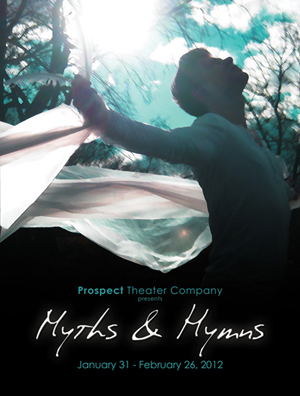
Adam (Light in the Piazza) Guettel’s1998 collection of songs based on myths and Christian hymns has been molded into play-form by director Elizabeth Lucas and is being staged at The Prospect Theater.

Ms. Lucas had added very little dialogue and a thin storyline centering on a nuclear family.  The set (which I did not recognize until the action suggested it) is an attic, and the contents/props are used to drive the narrative.  The matriarch (Linda Balgord) spends the 90 minutes of the play in the attic remembering her life, although we learn about her children’s lives, but not much about hers.

The play opens with a man (Bob Stillman) in a row boat being pushed onto the stage.  He starts to sing to his soon to be wife (Balgord.)  And he has a body mike.  As does the entire cast.  In a 70-seat theatre.  It is disorienting to realize this in the same moment one is processing a man being pushed in a row boat.  Surely there could be a less jarring start than the juxtaposition of these production extremes?  The microphones will continue to distract throughout the 20 songs.  However, the five member orchestra is not amplified and is positively lovely. The disorientation is not mitigated by Stillman’s song.  Forgive me, but I could not get the image of Michael Bolton out of my head.  (During other numbers I had thoughts of St. Elmo’s Fire and Shenandoah.)

The story, as it were, is that husband meets wife, they have a daughter (Anika Larsen) and son (Lucas Steele) who may or may not be twins.  Ms. Larsen and Mr. Steele are absolutely wonderful to watch.  Ms. Larsen is layered actress with the voice, if you’ll pardon the expression, of an angel.  Fortunately she is given the two songs you would want to hear again.  Life Is But A Dream and How Can I Lose You? are ideal musical theatre songs.  I suspect they were not part of the 1998 concert, as they are so very different from the myth and hymn themed songs.  As the daughter she has the clearest of story lines.  Mr. Steele’s storyline is almost as clear, and he is equally compelling and of great voice.  The mother (Balgord) mostly performs pantomime throughout, and is quite watchable.  She has a presence that can not and should not be ignored.  Not everyone in the cast is suited to the production making it more difficulty to follow.  Many (if not most) of the songs are out of these performers’ range.

Many dramatic devices are employed, including a two-minute ballet, simulated ocean a la Small House of Uncle Thomas, unplanned pregnancy, interracial homosexual romance, suicide, dementia, and a gospel number.  I don’t think a religious or mythical theme need stand in the way of a strong dramatic storyline.  Several years ago, I saw a wonderful example of an engaging myth-centric musical in Hercules in High Suburbia.  What is probably far more challenging, is to find a narrative for songs written for concert.  It is a cart before the horse style of book writing, and without a good book, you’ve got a concert.

Seeing incandescent musicals, such as Light In The Piazza, is one of the great joys of life.  But there is much to gain from seeing productions as they find their form.  As a workshop, Myths and Hymns provides much to consider.  If you find musical theatre intriguing, you might just want to see this show.

 
Leave a comment

Posted by on February 8, 2012 in Uncategorized


Tags: , , , , , , , , , , , ,

Only You Can Prevent Obesity

“This is drugs.  This is your brain on drugs.  Any questions?”  Derivatives of this have become part of our cultural punch lines, but there was a time the blurb itself carried quite a punch.  You may remember your own reaction the first few times you saw the advertisement.  It was jarring in its unblinking visuals and straightforward message.  The brilliance of the campaign was its unflinching honesty and shock value.  It was a message that was heard loud and clear.  If memory serves, the previous public service announcement with similar impact was the single tear of the actor playing a Native American.  Throwing trash out your car window wasn’t so tempting if you thought it would make that nice silent man cry.

It’s been quite a number of decades since both of those campaigns.  During that time we have almost all our vices banned or black boxed.  Warning labels are printed on any and everything that might someday be used in a manner that leads to litigation.  You’d be hard pressed to come up with anything left for which to promote consumer awareness.  Awareness is at an all time high.  There is a different colored ribbon for every day of the week, and a rubber bracelet to coordinate.

So what is a city to do when it decides to combat obesity with an awareness campaign?   How far is a city willing to go?  Obesity, unlike drug use or littering, is rife with sensitivity.  That frying egg was not aimed at drug addicts, it was intended as a preventative message.  Littering was never seen as a morality issue, it was just time to do something about the trend.  But obesity?!  First off, the public service announcements are not targeting people who may be considering a life of obesity; they are aimed at the overweight.   People know they are overweight, and have a whole host of feelings about it.  Showing images (photo-shopped or not) of overweight people with moderately small text warning of future medical issues is one big yawn.   There is nothing shocking or even helpful about that messaging.  But it is safe, isn’t it?  Who could you possibly offend?

If you consider the health implications of obesity to be serious enough to launch a campaign, you might just have to offend a bit (or break a few eggs as the case may be.)  Perhaps more effective than showing a larger sized woman climbing up subway steps, would be showing her trying to fit into a subway seat?  Maybe an image of her getting acrylic nails and the tag line “wouldn’t it be nice to have more fashion choices?” Sexist?  Probably.  Instead of manipulating an image of a portly man to indicate limb loss, how about a campaign about libido loss?  Disease is one thing, but impotency is quite another.

How do you do this without offending?  You probably don’t.  But if the point of the campaign is to change behavior, a little bluntness might be just the ticket.  There was a time when our whole country smoked: in elevators and in movie theatres!  It took years, but boy have times changed.  Nobody ever quit smoking due to an advert of a smoker with the message; “smoking leads to disease.”  Why not emulate the success of the No Smoking campaign?  Black box processed foods, eliminate junk food in the workplace, mandate all weight loss systems to include the following declaration; “this is not an education or behavior modification program, effective only while using our product.” and develop jarring public service adverts.

If you believe that body size is too personal to discuss in a blunt and in your face manner, maybe it is in fact personal.

 
4 Comments

Posted by on February 7, 2012 in Media/Marketing


Tags: , , , , , , ,

U.(nidentified)F.(acebook)O.(bjections)

How many times have you read “Facebook” and “privacy” in the same sentence?  It’s not just me, right?  So what exactly is stoking this anxiety?

For decades, I have been bristling (and acquiescing) to being asked for personal information at every turn.  Doctor’s offices, insurance companies, banks, jobs; you name it.  They all want one thing from me; my personal information.  Identifying numbers and dates have been flying around unprotected forever.  There was a time when college identification cards were emblazoned with the student’s social security number.  Personal checks often had the account holder’s driver’s license number printed on the front (to avoid that pesky step of a cashier copying down a customer’s most identifying number at each purchase.)  It was routine in many high schools and colleges to post test results in hallways with “only” the identifier of a social security number.

So what is it exactly that makes some people feel stalked by Facebook?  To establish an account you need to provide a name and an email.  That’s about it.  There’s no financial information and certainly no call for any identifying numbers.  You may choose to provide your birth date, but you needn’t.  I can only assume (and yes I am aware of how dangerous that can be) that the perceived invasion of privacy centers around the actual behavior while on Facebook.  All those “Like” buttons and photo sharing may result in some huge database of T.M.I.?  And then what?  Since data collection (of such mundane points) could only be useful from a marketing standpoint, is it a fear of adverts?  I don’t know about anyone else, but my (real) mailbox and email inbox have been brimming with adverts (tailored just for me!) for about twenty years.  My reactions range from annoyance, to hurt pride (“really, teeth whitening offers?”) to grabbing my coat and going shopping (hey, sometimes they do get it just right.)

To be clear, I am not a lover of pop-up ads or commercials (shout out for the DVR, you beautiful little genius, you!!) but like death and taxes, they’re going to happen no matter what.  Close the pop-up box, delete the message, avert your eyes.  Facebook is free, and free costs.  Think of the adverts as a pledge drive.

But then again, we know what happens when one assumes.

 
2 Comments

Posted by on February 5, 2012 in Media/Marketing


Tags: , , , , ,